
Insurance is one of the few financial products you buy hoping never to use. In the UK the four types most households hold are home, car, travel and pet insurance, and each works on the same principle: you pay a regular premium, the insurer pays out if something goes wrong that the policy covers, and both sides are bound by rules set by regulators and by law. How insurance works, from premiums and excess to cover limits and exclusions, is the foundation for everything else in this guide.
The price you pay is not fixed. Insurers set premiums based on the risk they think you represent, within pricing rules that ban certain practices, and shopping around at renewal is one of the most reliable ways to keep costs down: Independent Age, the older people's charity, publishes guidance on comparing insurance quotes because loyalty rarely pays in this market1. Car insurance is the one type the law requires for almost every driver, and GOV.UK sets out the basic legal position2.
What protects you sits behind the policy. If an insurer collapses, the Financial Services Compensation Scheme (FSCS) steps in and pays most valid claims at 90% or 100%3. If an insurer treats you unfairly, the Financial Ombudsman Service looks at complaints free of charge4. This guide covers both, along with what each main type of insurance covers, how to claim, and how to spot a fake insurer before you pay one.
The four main types of personal insurance
Most households in the UK hold some combination of four types of cover. Home insurance protects the building you live in and the things in it. Car insurance is compulsory for drivers and covers damage and injury you cause to others, with optional cover for your own vehicle. Travel insurance pays out for medical costs, cancellations and lost belongings when you are away. Pet insurance covers vets' bills for cats, dogs and other animals.
Each of these is a general insurance contract: the insurer promises to pay if a defined event happens, and you promise to have given accurate information when you bought the policy. Getting that information wrong, even by accident, can reduce or void a claim, which is why misrepresentation is one of the most common reasons claims are disputed9. The cost of each policy is worked out from the risk the insurer believes you represent, which is covered in detail in how premiums are calculated.
Around these four sit related products: gadget and mobile phone cover, breakdown cover, landlord insurance for rental properties, and protection insurance such as life and income cover, which has its own complete guide. Wedding insurance is another type the Financial Ombudsman Service deals with when things go wrong10. The sections below take the four main types in turn, then explain what happens when things go wrong with any of them.
Home insurance: buildings cover and contents cover
Home insurance comes in two halves that can be bought together or separately. Buildings insurance covers damage to the structure of your home, including the walls, roof, floors and any permanent fixtures1. A provider's own description of its buildings product puts it the same way: it covers the structure of your home and permanent fixtures11. Contents insurance covers the opposite half: your belongings, from furniture to electronics, against theft, fire, flood and other defined events.
The split matters because the two halves answer to different people. If you own a house with a mortgage, the lender will normally require buildings insurance as a condition of the loan, since the building is its security. If you rent, buildings insurance is your landlord's problem, and renters generally do not need buildings cover at all, only contents. Leaseholders in flats face a third arrangement, where the freeholder arranges buildings cover for the whole block and recovers the cost through service charges.
Two decisions shape what a home policy actually pays. The first is the rebuild cost for buildings cover: insure for less than the true cost of rebuilding and you can be treated as underinsured, with the insurer allowed to reduce what it pays in proportion. The second is the level of contents cover and whether it is new for old or indemnity. Add-ons extend the basics: accidental damage cover, personal possessions cover for belongings away from home, and home emergency cover for burst pipes and similar emergencies.
Car insurance: the legal minimum and what happens after an accident
Car insurance is the only mainstream insurance the law forces you to buy. The minimum is third party cover, which GOV.UK describes plainly: it means you are covered if you have an accident causing damage or injury to any other person, vehicle, animal or property2. Higher levels of cover, third party, fire and theft or comprehensive, add protection for your own vehicle, and contrary to what many people assume, comprehensive is not always the more expensive option.
Pricing is driven by the car's insurance group, your driving history and your no claims discount, the reward insurers give for years without claims. After an accident, the claims process has its own mechanics: making a claim, what happens if the car is written off, and whether you must report the accident to the police or tell your insurer about an accident even if you are not claiming.
One point the Financial Ombudsman Service highlights catches many drivers out. Most policies say the insurer can make its own decision about accepting liability after an accident, but the ombudsman finds this has not always been explained to the customer12. In practice this means your insurer can agree a settlement with another driver's insurer that affects your record, and if it does so unfairly, the ombudsman can tell it to change how the claim was recorded so your current premium can be recalculated, refund extra money paid, and pay compensation for distress or inconvenience caused by poor service12.
A policyholder can cancel their policy and set up a new one with a different insurer whenever they want, even if a claim is ongoing, though the claim will affect their no-claims bonus12. If you are hit by a driver who has no insurance or who leaves the scene, the Motor Insurers' Bureau exists to compensate victims. If you cannot afford a lump sum, paying monthly is usually a form of credit and costs more overall.
Travel, pet and gadget cover
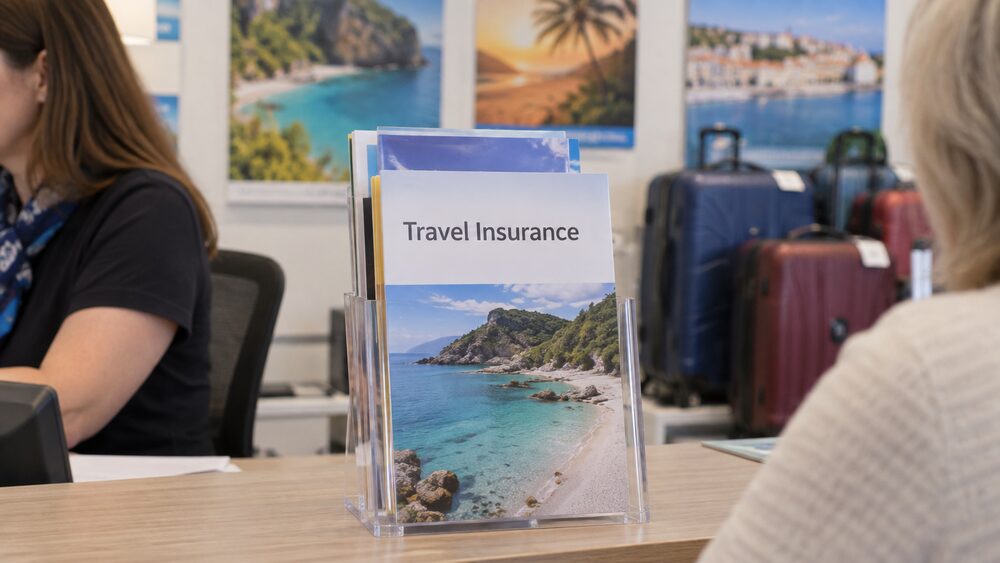
Travel insurance pays for the things that go wrong away from home: emergency medical treatment abroad, cancellations before you travel, and lost or stolen belongings. The single most important rule is to declare pre-existing medical conditions: failing to do so is misrepresentation and can leave a claim unpaid. Older travellers face higher premiums and narrower choice, covered in travel insurance for older travellers, and specialist activities need winter sports cover or similar add-ons. Whether the GHIC card is enough on its own, and when Foreign Office travel advice affects a claim, are questions with precise answers.
Pet insurance covers vets' bills, which can run into thousands of pounds for a single serious illness. The main choice is between lifetime and time-limited cover: lifetime policies reset the claim limit each year, time-limited policies cover a condition only for a fixed period. Insuring an older pet is harder and dearer, and policies carry exclusions and mid-term changes worth checking before you buy. Claims are also time-limited: there are rules on how long you have to claim on pet insurance, and most policies combine a compulsory excess with a co-payment percentage for older animals.
Gadget and mobile phone insurance is the smallest of the three but generates a steady stream of complaints. The ombudsman's approach to mis-sold gadget policies is that where a customer would not have gone ahead had the policy been sold correctly, the fair outcome is to refund the premiums with interest and pay all or part of the claim13. Many people already have this cover without knowing it, through packaged bank accounts or home contents add-ons, so it is worth checking before buying a stand-alone policy.
Flood risk and home insurance: how Flood Re keeps premiums down
Flooding is where home insurance pricing gets hardest, because a home that floods repeatedly can cost an insurer far more than any premium it could fairly charge. Flood Re is the industry's answer. It is a re-insurance scheme, hence the "Re", in which insurers pool the costs associated with higher-risk properties by paying a levy into a non-profit-making fund8. Every domestic policyholder contributes: all domestic policyholders help subsidise the scheme at a cost of about £10.50 each annually14. The scheme is run by the industry, as a commitment to offer insurance in high-risk areas at affordable prices15.
The effect has been substantial. Flood Re was introduced in 2016, and the Welsh Government's assessment is that the affordability of home insurance has been significantly improved through its take-up16. The proportion of households at risk of flooding able to access multiple insurance quotes has risen from 1% in early 2016 to 93%16. Almost 250,000 households have benefited, and four out of five properties that had previously submitted claims for flood damage have seen prices fall by 50%8.
The scheme's design deliberately avoids charging by risk. Its reinsurance rates are based on Council Tax Bands, as a proxy to reflect the householder's ability to pay rather than the risk faced by the property16. That is why two identical houses on the same street can pay different Flood Re-backed premiums: the banding reflects what the occupier is judged able to afford, not what the river will do.
Affordable does not mean identical to everywhere else. A Welsh Government consultation report published in December 2025 found that quoted prices in high-flood-risk areas are 50-55% higher than in lower-risk areas17. The same report notes the limits of the evidence: Flood Re's data on insurance availability is at UK level and limited to only 100 in the sample for those at high risk with former claims, and does not address take-up or those ineligible for the scheme17. Research commissioned by Flood Re from Fathom estimates that flood defences can save households alone £1.15 billion by mitigating damage each year17.
Flood Re's strategy is that premiums and payments should encourage householders to make their properties more flood resilient8, and its Build Back Better scheme pays for resilience measures after a claim. The full detail is in the Flood Re guide, and what to do in the immediate aftermath is covered in what to do in the days after a flood and getting home insurance after a flood.
Flood Re ends in 2039: the planned move to risk-based pricing
Flood Re was never meant to be permanent. It is a time-limited scheme17, and it is due to end in 2039, at which point the intention is to return to a market-based system that reflects risk8. From that point, insurers would be expected to price flood cover according to the actual risk each property faces, without the pooled fund behind them.
For a household in a high-risk area, the transition is the thing to watch. The Welsh Government's consultation work on the scheme's future notes that the data underpinning claims about availability is thin, limited to only 100 high-risk properties with former claims at UK level18, which makes it harder to judge how the market will behave once the subsidy ends. The same documents describe the scheme's purpose as enabling householders in areas of high risk of flooding to get adequate cover at a "reasonable" price16, a standard that a pure risk-based market would not have to meet.
Nothing changes for a policyholder today: Flood Re-backed cover works as described above until the scheme winds down. But anyone in a flood-prone home thinking long term, about insurance costs, about resilience work, or about the value of the property, is planning towards a 2039 deadline that is already fixed in legislation14.
If your insurer fails: the FSCS pays 90% or 100% of claims
Insurance companies can and do collapse. When one does, the Financial Services Compensation Scheme is the backstop. The FSCS pays either 90% or 100% of the claim value if policyholders have valid claims under an insurance policy with a failed insurer3. There is no upper limit on the value of the claim itself for most types: the percentage, not a cap, is what determines the payout.
To be eligible, the company that failed must have been regulated by the Prudential Regulation Authority (PRA)3. The PRA is the Bank of England arm that supervises insurers and other firms for safety and soundness, while the Financial Conduct Authority oversees how firms treat customers; the split is explained in the Bank of England's own description of the PRA19. Most household names meet both tests, but the check matters for smaller or unfamiliar firms.
The percentage depends on the type of insurance and, for some types, on when the firm failed:
| Type of cover | FSCS pays |
|---|---|
| Home, pet, travel and payment protection insurance (PPI) and other general insurances | 90% of your claim5 |
| Motor (first party claims) | 90% of the claim20 |
| Health, dental, property, public liability, warranty | 90% of the claim20 |
| Employers' liability | 100% of the claim3 |
| Insured personal pensions | 100% if the firm failed on or after 3 July 2015; 90% if before20 |
| Pension provider failures (on or after 1 April 2019) | 100% of your claim, with no upper limit21 |
The dates matter for older cases. For PPI, the FSCS pays 90% of the total claim where the firm failed on or after 1 January 2010, but 100% of the first £2,000 per eligible person per firm, then 90% of the remainder, for failures before that date22. A similar rule applied to general insurance for firms that failed between 1 December 2001 and 31 December 2009: 100% protected for the first £2,000, then 90% of the remainder3.
Claims paid in full and claims paid at 90%
The difference between a full payout and a 90% payout is easiest to see in cash terms. On a £20,000 flood claim under a standard home policy, 90% protection means £18,000 from the FSCS; the remaining £2,000 is simply lost to the policyholder. On an employers' liability claim, the same £20,000 would be paid in full3. The reason for the distinction is that some types of insurance protect third parties who had no choice about the insurer: an employee injured at work should not lose out because their employer's insurer failed, so those claims are met without deduction.
For most household insurance, the 90% rule is the one that applies, and it applies regardless of how large the claim is5. There is no excess or minimum: the FSCS pays its percentage of the valid claim value. What the FSCS does not do is restore anything the policy itself would not have covered, so exclusions in the original policy still apply after a failure.
The practical steps after a failure are set out in the FSCS's claims process. It tries to get seamless cover with another insurer, and if that is not possible it looks to arrange the return of the remaining premium23. The dedicated page on what happens if your insurer goes bust covers the process in detail.
Where FSCS insurance protection does not apply
Not every insurance policy is protected. The FSCS lists the types that are not eligible: goods in transit, marine, aviation, credit insurance, and contracts of reinsurance for insurance firms or brokers and financial advisers3. For a household, the ones most likely to bite are marine and aviation cover bought as part of a specialist policy, and credit insurance, which is excluded despite PPI, a form of credit-related insurance, being covered under its own rules22.
Time limits apply too. If a claim relates to business conducted before 14 January 2005, the FSCS is unlikely to be able to help, because it did not exist in its current form before then24. For investment business the equivalent cut-off is 28 August 198824.
Who is claiming matters as well as what is claimed. Under the FCA's compensation rulebook, bodies corporate, partnerships, mutual associations and unincorporated associations which are not small businesses are excluded from claiming in relation to protected non-investment insurance distribution25. In plain terms, large businesses are on their own; private individuals and small businesses are protected. The FSCS also publishes guidance on working out what is protected, including the need to check whether the particular activity the authorised firm was carrying out for you is regulated by the PRA or the FCA26.
Two further gaps are worth knowing. The FSCS does not protect money that a debtor pays under an individual voluntary arrangement arranged by insolvency practitioners, which are not regulated by the FCA, or debt advice27. And its protection checker has a blind spot: mutual insurers do not appear in the checker, except credit unions that can take deposits28, so a policyholder with a mutual insurer may need to contact the FSCS directly rather than rely on the online check.
Getting premiums back when an insurer fails
Cover for the future is one half of an insurer failure; the premium you already paid is the other. If it is your insurance company that has failed, the FSCS will try to get seamless cover with another insurer, and if that is not possible it will look to arrange the return of the remaining premium23. So a policyholder who paid a year's premium in advance and is five months in when the firm collapses should expect either continued cover or a refund of the unused seven months, not both.
Refund rules also come up in ordinary disputes, not just failures. The ombudsman's PPI case studies include a complaint, Mrs E's, where the financial business had not made it sufficiently clear that in the event of early cancellation she would not receive a "pro rata" refund of the insurance premium and interest costs29. The lesson generalises: whether a cancellation earns a refund, and how much, depends on the policy terms, and the ombudsman judges fairness by reference to relevant law and regulations, the regulator's rules, guidance and standards, industry codes of practice and, where appropriate, good industry practice at the time6.
Where a policy was mis-sold, the refund can include more than the premium. For mis-sold mobile phone and gadget insurance, the ombudsman's approach is to refund premiums with interest and pay all or part of a claim where the customer would not have gone ahead had the policy been sold correctly13. For misrepresentation, the ombudsman's approach is proportionate: if the insurer would have applied a £10,000 valuables limit and charged double the premium had it known the truth, it might be fair to apply the £10,000 limit and pay £5,000 on a £10,000 claim9. Underinsurance works similarly: a consumer who paid £400 but should have paid £500 has paid 80% of the premium, and the ombudsman is likely to find it fair for them to receive 80% of the claim value6. Cancelling a policy, including cooling-off rights and refund fees, has its own page.
Complaining to your insurer first: the eight-week rule
Before the ombudsman will look at an insurance complaint, the insurer must have the chance to deal with it. The ombudsman's own guidance sets out the sequence: a formal complaint goes to the company involved first, and if it does not send a final response within eight weeks, or the consumer is unhappy with its response, the complaint can then be brought to the ombudsman4. The eight-week deadline is spelled out in the ombudsman's technical material on underinsurance complaints6, misrepresentation complaints9 and complaints involving accidental damage30, and it applies to fraud marker complaints too31.
Eight weeks is a deadline, not a target, and some firms respond faster. If a firm cannot give a final response in time, good practice is to say so: Help to Buy Wales, for instance, sends a letter with an update on the investigation and the options for dispute resolution, known as the "Eight-week response", if it cannot provide a Final Response within the time limit34. The ombudsman's own page on how long an insurer has to respond covers the detail.
One special case sits alongside the complaint rule. Under the ABI Domestic Subsidence Agreement, if you claim eight weeks or fewer after the start of your current policy, the previous insurer deals with the claim35. This is about which insurer pays, not about complaints, but it shows how the eight-week measure appears in more than one corner of insurance, and it matters for anyone who switches insurers and then discovers subsidence, a subject covered in subsidence and home insurance.
Taking a complaint to the Financial Ombudsman Service
The Financial Ombudsman Service is the free, independent body that settles disputes between consumers and financial firms. Its scale gives a sense of how common insurance disputes are: in the year from 9 July 2021 to 8 July 2022 it received 29,276 insurance complaints from within the UK and 1,264 from outside the UK, against 362 claims management complaints from within the UK36. Its quarterly complaint data shows insurers do not always win: in Q1 2025/26 it upheld 49% of the pet insurance complaints it decided37, and in Q4 2024/25 it upheld 40% of buildings insurance complaints38.
The process is designed for people to use themselves. The service states plainly: "Our service is free and easy to use."4 You fill in its complaint form, and if you are considering using AI to help complete the form, it publishes guidelines: avoid entering personal information you would not want shared, such as health or banking information; only use AI to help you organise information or put it clearly; and check the resulting text carefully7. You do not need to pay anyone to represent you, for example a lawyer or claims management company7.
Timing is strict. You will need to make a complaint to the ombudsman within 6 months from the date on your final response letter7. The ombudsman considers facts and evidence from both the business and the customer, then sets out its findings explaining the decision and what needs to be done to put things right33. The full walkthrough is in complaining about an insurer, and the ombudsman's guidance on bringing a complaint confirms that bringing a complaint is straightforward and will not cost you anything39.
What the ombudsman can award
When the ombudsman finds against an insurer, it tells the firm to put you back where you would have been if it had not made a mistake, and possibly to pay an award for distress and inconvenience40. Its redress principles are illustrated by its published PPI calculations. In one case, mis-sold PPI alongside a loan sold on to a third party, the total redress was £2,995, including interest of £55541. In another, a regular-premium PPI policy taken out in April 2005 at £23.15 per month and cancelled in June 2012, with 86 premiums totalling £1,990.90, produced total compensation of £2,463.1341. A credit card PPI case with complete records produced £3,836.30, and one with incomplete records £2,310.5841.
For distress and inconvenience specifically, the ombudsman's published material gives different figures in different places: up to £300 in one guidance page4, and up to £1,500 in its subsidence complaint material35. The subject has its own page on compensation for distress and inconvenience.
Interest on awards is handled through the tax system. The ombudsman's guidance is that where it says a business needs to pay you interest on an award, the business should deduct income tax from it at the basic rate before paying you, pay the tax directly to HMRC, and give you a tax deduction certificate42. This mirrors how savings interest is taxed: you pay tax on any interest over your allowance at your usual rate of Income Tax42. The compensation itself, which restores money you lost, is not treated as income in the same way.
Accepting a final decision: what it means for going to court
An ombudsman decision is not imposed on you. The ombudsman makes a final decision, and you choose whether to accept it. The consequence of accepting is set out in the service's own guidance:
"If you accept an award made in a final decision, it's unlikely you'll be able to take the business to court for more compensation later"
Financial Ombudsman Service42
In other words, acceptance settles the matter. If you think the insurer owes you more than the ombudsman has awarded, the alternative is to reject the decision and pursue the claim through the courts instead, at your own cost and risk. For most insurance disputes, where the amounts are modest and the ombudsman is free, that trade-off explains why the vast majority of consumers accept.
The same asymmetry is why the ombudsman warns against paying representatives. Claims management companies take a share of an award that is final once accepted, and the service's position is that you do not need one7. The decision on whether to accept belongs to you alone, and the deadline for accepting is stated in the decision letter itself.
Checking an insurer is genuine and avoiding scams
Fake insurers exist, and paying one means paying for cover that does not exist. The Financial Conduct Authority is the go-to contact if you want to check if a firm is legitimate or report a possible scam19. Its Firm Checker lists authorised firms, and the FCA publishes contact details for regulated financial businesses7. The rule that protects you is simple but easy to skip: always use the contact details listed on the register, not the ones given to you in a message. MoneyHelper's scam guidance makes the same point for advance-fee fraud: check the company or organisation contacting you is legitimate by searching for it and using the contact details listed there, not the ones provided in the message43.
Insurance has its own scam patterns, covered in the insurance fraud guide: ghost broking, where criminals sell worthless car policies, often to younger drivers, and crash for cash staged accidents. The ombudsman also handles the aftermath of fraud markers, the database entries that can follow a suspected fraudulent claim, and its guidance is that you complain to the company involved first, and if there is no final response within eight weeks, or you are unhappy with the response, you can complain to the ombudsman31.
Checking a firm is authorised is only half the test. The FSCS's guidance adds a second step: find out whether the particular activity the authorised firm is carrying out for you is regulated by the Prudential Regulation Authority or the FCA26. A firm can be authorised for one thing and not another, and protection follows the regulated activity. The wider subject of who regulates what in UK finance is covered in the financial regulation guide, and current scams in scams and fraud.
Who provides insurance in the UK
Insurance in the UK is provided by insurers, brands you will know from adverts and comparison sites, sold direct, through brokers, through banks and building societies and through comparison websites. GOV.UK notes that you may want to use an insurance broker, particularly for non-standard risks such as a flood-prone home or a classic car2. Some insurers are mutuals, owned by their policyholders rather than shareholders, and as noted above these do not appear in the FSCS's protection checker28.
Behind the brand names sit two categories of firm the consumer rarely sees: claims handlers and policy administrators, who often run the day-to-day administration of a policy on the insurer's behalf, and the reinsurers who insure the insurers, of which Flood Re is a household-relevant example8. A directory of insurers lists the firms behind the brands. Church and charity-owned insurers form a distinct corner of the market, covered in their own guide, as do claims handlers and policy administrators.
What does not vary is the protection. Whoever sells the policy, the FSCS rules above apply if the insurer fails, the ombudsman rules apply if the service fails, and the pricing rules apply to the premium. The differences between providers are in what is covered, the excesses, the service and the price, which is why the pages in this section, from how premiums are calculated to renewals, are where to look before choosing between them.
Sources43 cited
- Shopping around for insurance Independent Age
- Vehicle insurance GOV.UK
- What we cover: insurance FSCS, 2026-09-25
- Misrepresentation and non-disclosure: consumer guidance Financial Ombudsman Service, 2026-09-26
- FSCS protected website leaflet FSCS, 2025-11
- Underinsurance home insurance complaints Financial Ombudsman Service, 2026-09-26
- How to complain Financial Ombudsman Service, 2026-09-25
- Flooding and flood risk briefing House of Commons Library, 2026-09-14
- Misrepresentation and non-disclosure complaints Financial Ombudsman Service, 2026-09-26
- Wedding insurance Financial Ombudsman Service, 2026-09-27
- Buildings insurance RBS
- Fault claims and no claims bonuses Financial Ombudsman Service
- Mobile phone and gadget insurance complaints Financial Ombudsman Service
- Affordable insurance for flood risk properties: Flood Re House of Commons Library, 2026-09-26
- Insurance regulation briefing House of Commons Library, 2026-07-08
- Insurance and Flood Re: a Wales perspective Welsh Government, 2025-03-17
- Flood insurance: a Wales perspective, consultation report and proposals Welsh Government, 2025-12
- Insurance and Flood Re: a Wales perspective, consultation report Welsh Government, 2025-05
- Types of scam MoneyHelper, 2026-09-25
- What we cover: flood and other insurance types FSCS
- What we cover: pensions FSCS, 2026-09-25
- What we cover: PPI FSCS, 2026-09-25
- Making a claim FSCS, 2026-09-25
- Before claiming FSCS, 2026-09-25
- COMP 4.2: eligible claimants FCA Handbook, 2026-03-17
- Guide to investment protection FSCS, 2026-09-25
- FSCS protected badge leaflet FSCS, 2025-11-27
- Can't find your provider? FSCS, 2026-09-25
- PPI case studies Financial Ombudsman Service, 2026-09-18
- Accidental damage complaints Financial Ombudsman Service, 2026-09-27
- Fraud markers Financial Ombudsman Service, 2026-09-26
- Home insurance complaints Financial Ombudsman Service, 2026-09-26
- Consumer credit complaints Financial Ombudsman Service, 2026-09-25
- Help to Buy Wales: complaints Welsh Government, 2026
- Subsidence and types of ground movement Financial Ombudsman Service, 2026-09-26
- Financial Ombudsman Service ADR activity report 2021-22 Financial Ombudsman Service, 2021
- How you pay tax on savings interest GOV.UK, 2026-09-28
- Quarterly complaints data Q1 2025-26 Financial Ombudsman Service, 2025
- Unaffordable lending complaints Financial Ombudsman Service, 2026-09-26
- Quarterly complaints data Q4 2024-25 Financial Ombudsman Service, 2024
- Ombudsman approach to redress for mis-sold PPI Financial Ombudsman Service, 2026-09-27
- Compensation: what to expect Financial Ombudsman Service, 2026-04-01
- Banking and payments complaints Financial Ombudsman Service, 2026-09-25







 MoneyHelperFree, impartial money and pensions guidance, set up by government
 Financial Ombudsman ServiceFree, independent help when a complaint about a firm is not put right
 FSCSProtects your money if a bank, insurer or investment firm fails
 Citizens AdviceFree advice on money, consumer and legal problems in England and Wales
 GOV.UKOfficial information on tax, benefits and government services