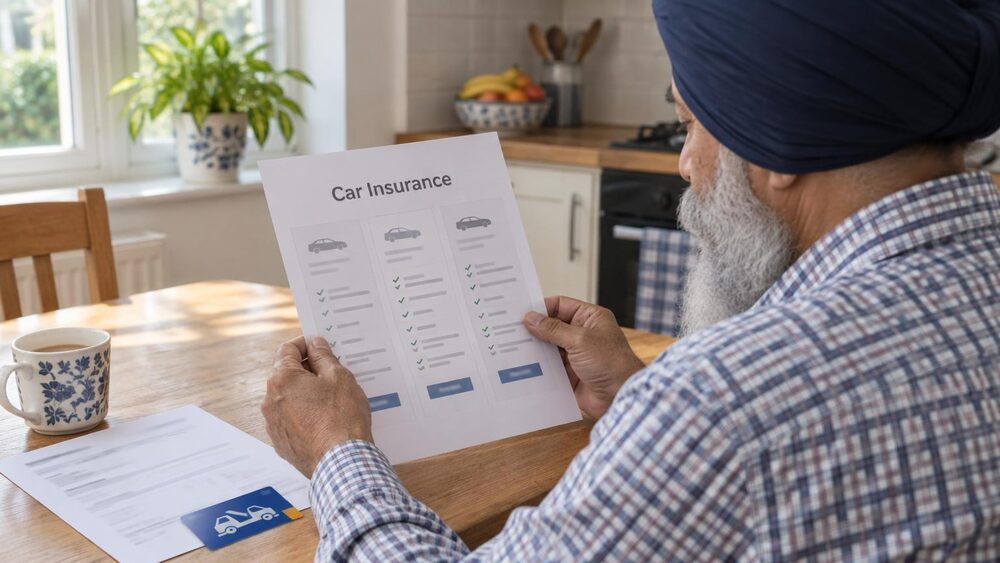
Car insurance is a legal requirement for anyone driving on UK roads, and the minimum level of cover you need is third party insurance, which pays for injury to other people or damage to another car but not repairs to your own1. Above that, there are two further levels: third party, fire and theft, and comprehensive. Comprehensive cover includes everything the lower levels include and also pays for damage to your own car, whether that comes from an accident, a storm, a flood, fire or theft2.
The price you pay is built from two things: the car and the driver. Every car on sale sits in one of 50 insurance groups, and insurers also price according to your age, where you live, your claims history and, on telematics policies, the way you actually drive4. This page explains what each level of cover pays for, how the pricing works, what happens when you claim, and the situations in which an insurer can refuse to pay out.
Three levels of cover side by side
There are three levels of car insurance, and each builds on the one before it. Third party only is the minimum the law requires: it covers injuring someone or damaging another car, but it does not pay for repairs to your own vehicle1. Third party, fire and theft adds cover if your car is stolen or damaged by fire2. Comprehensive cover provides the same cover as third party, fire and theft, and also covers you if your vehicle is damaged in an accident2.
| Level | Other people and their property | Your car, fire and theft | Your car, accident damage | Your car, storm and flood |
|---|---|---|---|---|
| Third party only | Yes | No | No | No |
| Third party, fire and theft | Yes | Yes | No | No |
| Comprehensive | Yes | Yes | Yes | Usually yes6 |
The right level depends on the car and your circumstances rather than on any general rule. Comprehensive cover costs more, but not always dramatically more, and it is the only level that pays for your own car after an accident or bad weather. Third party only and third party, fire and theft policies do not cover storm or flood damage to your own car6. The comparison page on third party or comprehensive car insurance works through the trade-offs.
What comprehensive car insurance covers
Comprehensive insurance covers damage to your vehicle from a wide range of causes, including accidents, fire and theft3. Most comprehensive policies also cover the cost of repairing or replacing vehicles damaged by bad weather, including floods, storms, fallen trees or flying debris6. Cover usually includes damage to upholstery and the vehicle's entertainment system, but the insurer may not pay out for personal possessions left in the vehicle10.
There are limits. Comprehensive car insurance should pay for repairs following an accident, but it will not help with or pay for repairs due to wear and tear11. So a part that fails because it is old or worn out is not a claim, while a part damaged in a collision is. Some insurers may also refuse a claim if they believe you acted recklessly, for example driving through flood water after warnings were issued6.
Comprehensive policies often include extras as standard, and these vary between insurers. NI direct guidance lists some common additions: providing a courtesy car while your car is being repaired, legal expenses, and insurance to recover your uninsured losses, such as your excess2. Because these extras differ so much between policies, the policy document, not the level of cover, is what tells you what you are actually buying.
Car insurance groups: 1 to 50
Every car is assigned to an insurance group, and there are 50 groups. Cars in group 1 carry the lowest price rating and cars in group 50 the highest6. The group is a starting point for pricing: a small, low-powered car in a low group generally costs less to insure than a large or powerful car in a high one.
The group matters most for drivers insurers consider higher risk. On the Motability Scheme, for example, all drivers aged 25 and under are only allowed to drive lower-powered cars falling into insurance group 16 or lower for non-electric cars, or group 21 or lower for electric cars10. That restriction exists because the car's group, combined with the driver's age, drives the expected cost of claims.
Age affects price independently of the group. Insurers generally apply a basic rate to drivers aged 30 to 494. Younger drivers pay more, and premiums usually start to increase once you are 70 and go up significantly after the age of 801. The dedicated page on car groups 1 to 50 explains how the groups are set and how to find your own car's group.
How the Group Rating Panel sets your car's group
The group a car sits in is not chosen by your insurer at random. It is set by the Group Rating Panel, administered by Thatcham Research, with the Association of British Insurers and others on the panel deciding the groups using monthly information from the Motor Insurance Repair Research Centre in Thatcham6. The group reflects what the panel expects the car to cost in claims, and insurers then use the 1 to 50 scale as one input into their own pricing, alongside their own claims experience6.
Because the group reflects expected claims costs, two cars with similar prices can sit in very different groups. A car with expensive body panels and long repair times can be grouped higher than a dearer car that is cheap to fix. This is why the group, along with your own details, is worth checking before you change cars: the same driver can face very different premiums for two cars of similar value.
Your own circumstances still matter more than the group in most cases. The group sets the baseline for the car, but the insurer then applies its basic rate to drivers aged 30 to 49 and adjusts for age, claims history and other factors4. Telematics policies go further and take into account how the vehicle is used when setting the premium12.
Black box policies price the way you drive
Black box insurance, also known as telematics, is a type of car insurance policy that calculates your premium based on the way that you drive5. It uses technology to track your car, with data collected on braking, steering, speed and mileage5. The ABI describes these policies as "pay how you drive" cover, which takes into account how the vehicle is used when setting the premium12.
Telematics cover was first aimed at young or inexperienced drivers, particularly those under 25 who pay much more for car insurance than older drivers, but it has since expanded to drivers of all ages, including low-mileage drivers5. The logic is simple: a policyholder who brakes gently, drives at modest speeds and covers few miles is cheaper to insure than the average driver who looks identical on paper, so the premium reflects the driving rather than just the demographics.
The rules on these policies matter as much as the price. The narrow page on black box policies covers curfews, driving scores and cancellation, which are common features of telematics terms. As with any policy, the conditions are in the policy document, and breaking them can affect the cover.
Named drivers and fronting
A named driver is someone added to your policy who is allowed to drive your car. Named drivers are covered on the policy's terms, and some insurers reward named drivers who do not claim, but only if they renew with the same insurer13. So a named driver can build up a form of discount, but it is not portable in the way a main driver's no claims discount usually is.
Adding drivers changes the price because the insurer prices for everyone who may drive the car. Some breakdown add-on policies can cover up to five named drivers, which can work well if multiple people in your home drive the same car11.
Fronting typically happens when a more experienced driver is named as the main driver of a car actually driven mostly by a younger person, to bring the premium down. The saving is not worth the risk: a refused claim after an accident leaves the driver uninsured for the damage, and a cancelled policy has to be declared to every future insurer.
Excess: what you pay towards a claim
An excess is the amount you agree to pay when you make a claim, before the insurance provider pays anything1. Another way of putting it: the excess is the maximum amount of money you will have to pay if you make a claim14. Policies usually have a compulsory excess set by the insurer and may allow a voluntary excess on top; increasing the excess may make the policy cheaper, but it can leave you out of pocket if you do claim1.
If the accident is not your fault, you do not necessarily have to swallow the excess. You can pay the excess and then pursue the insurer of the other driver to reimburse it once the claim is settled, or take the other driver or their insurer to the small claims court15. Motor legal protection, covered below, exists partly to help recover these uninsured losses2.
The excess interacts with the size of the claim. For a small repair, a high excess can mean the insurer pays little or nothing, so the claim may not be worth making at all. The full explanation of compulsory and voluntary excess, and of excess protection as stand-alone cover, is on the insurance excess page.
Protecting your No Claim Discount
A no claims discount is a reduction in your premium that grows for each year you do not claim. The Financial Ombudsman Service explains the key mechanic: in a lot of policies, a protected no-claims bonus means the amount of your no-claims bonus will not change if a fault claim is recorded, but this does not mean the price is protected16. The discount stays the same, but the insurer can still load the premium because you have claimed.
Not every claim costs you the discount. A claim to get a small chip in a windscreen fixed will not affect your no claims discount17. By contrast, a claim for damage to your own car, such as weather damage, could mean you lose some or all of your no claims discount, depending on your insurer's rules6.
There is a way to keep the discount intact after a minor incident: you do not have to submit your claim to your insurer if you pay for repairs yourself or recover them from the other driver, and doing so preserves your no claims discount15. The calculation is whether the repair costs less than the extra premium you would pay over the following years. The pages on no claims discount and protected no claims bonus cover the mechanics in detail.
Courtesy cars and hire cars after a claim
Many comprehensive policies provide a courtesy car while your car is being repaired, and NI direct lists this among the common additions to comprehensive cover2. But it is not guaranteed: only 15% of policies in one survey would provide a temporary replacement vehicle, as standard, if your car was stolen or written off18. If your car is off the road for weeks rather than days, a courtesy car that only lasts a short period leaves a gap.
After a no-fault accident, a credit hire company may offer to step into that gap. The credit hire company pays for the cost of hiring you another car while yours is being fixed and covers repair costs, then claims those expenses from the other driver's insurer15. The Financial Ombudsman Service warns of the catch: if the third-party insurer refuses to pay, for example where it thinks the accident is your fault or disputes the amount, the consumer might be held responsible for covering the costs19.
Credit hire cars are often hired on rates well above what you would pay yourself, which is why the other insurer may dispute the bill. Before signing anything with a credit hire firm, it is worth checking what your own policy provides and whether your insurer can arrange a replacement. The page on credit hire and credit repair explains how these arrangements work and where they go wrong.
Personal accident, belongings and medical cover limits
Personal accident cover pays a lump sum if you are injured or killed in an accident. Personal accident insurance policies pay out lump sums for accidental death and loss of limbs, but also for broken bones, dislocations, burns and a range of other causes that might result in hospitalisation or your inability to work8. As an add-on to car insurance, the cover limit varies widely between policies: from £1,000 to £150,0008.
Belongings are covered far less generously. Personal property stolen from a vehicle or damaged may be covered under a comprehensive policy, but only up to a certain limit, usually around £1507. That will not stretch to a laptop and a phone, let alone a suitcase of belongings. Anything worth more needs separate cover, such as personal possessions cover on a home insurance policy.
Two rules protect disabled consumers here. It is against the law for a company to refuse to insure you or offer worse terms because you are disabled14. And if you have a complaint about the sale of a group accident policy provided by your employer, you will need to ask your employer to complain to the Financial Ombudsman Service about the sale of the policy20.
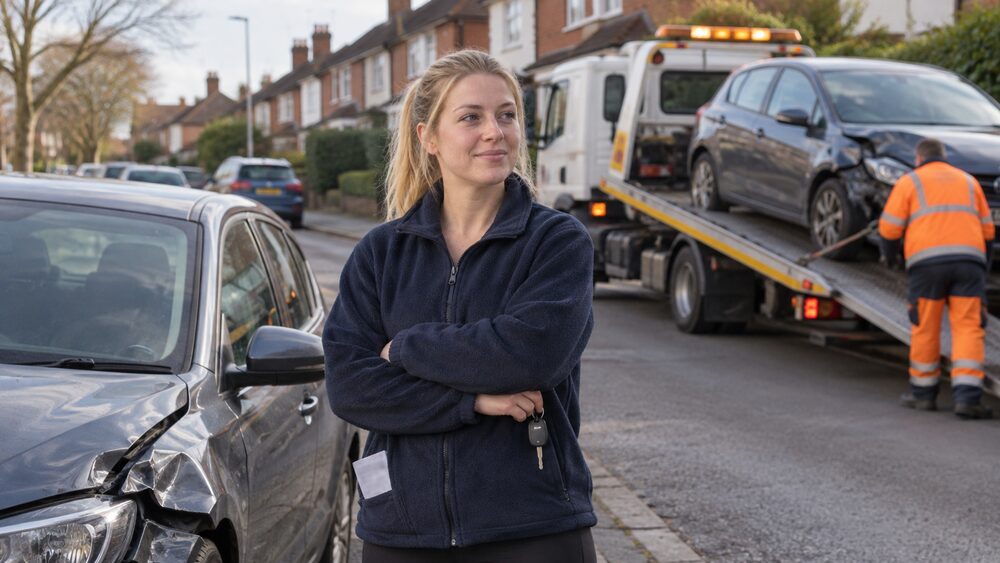
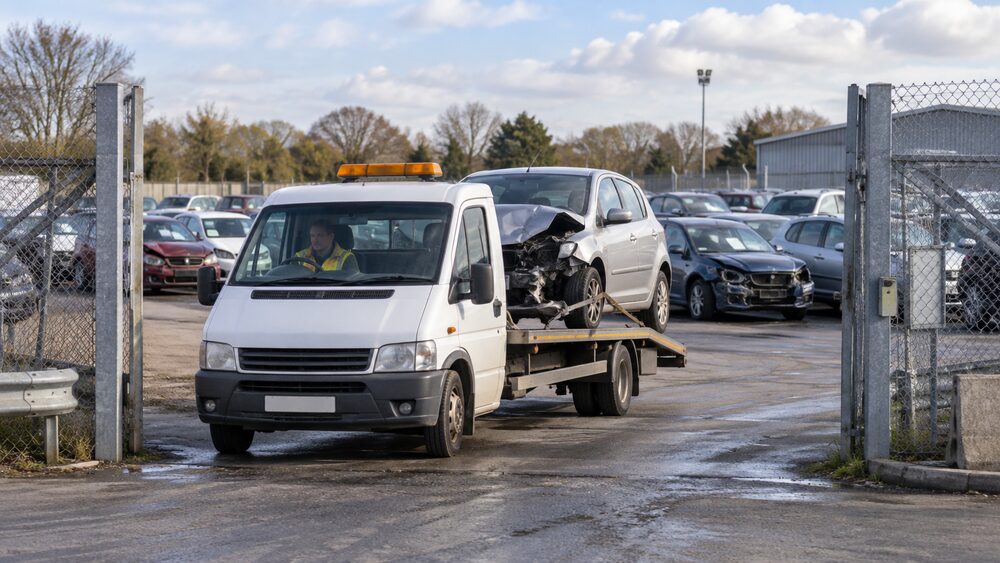
Replacing a new or used car that is written off
When your vehicle is written off, your insurance company pays you the current value of the vehicle, instead of the cost of repairing it9. That single rule causes most write-off disputes: a car you bought a year ago has lost value, and the payout reflects what the car was worth on the day of the accident, not what you paid for it or what a replacement costs.
For new cars, many policies soften this. The Financial Ombudsman Service says most motor insurance policies for new vehicles will provide the owner with a new car if theirs is written off within a certain time and the cost of the repair is more than 60-70% of the current list price21. The time window and the exact percentage vary between policies, so the new car clause in your own policy document is what counts.
For the gap between payout and purchase price, there is a specific product. Gap insurance, short for guaranteed asset protection, is designed to cover the difference between a car insurer's payout and the price paid for the vehicle22. Owners of modified or classic cars can take a different route: an agreed value policy pays out the agreed value if the car is written off, regardless of market value, and is usually more expensive23. Classic car policies also commonly allow up to 90 days driving in Europe, with options to buy cover for longer stays24.
What happens to the car itself depends on its write-off category. If you want to keep a vehicle in category N or S, the insurance company will give you an insurance payout and sell the vehicle back to you9. If you do not keep it, your insurance company will usually deal with getting the vehicle scrapped for you9. The pages on what happens if your car is written off and GAP cover go further.
Optional extras: breakdown cover and legal protection
Most car insurers offer breakdown cover as an added extra8. It is convenient to add, but the cover is often narrower than stand-alone breakdown policies. When adding breakdown cover as an extra feature, most car insurers only offer vehicle cover, meaning only the insured vehicle has breakdown cover, and some providers, such as the AA, offer only one callout per policy term if you include breakdown cover as an add-on11. The basic roadside assistance offered by some car insurance only covers breakdowns more than quarter of a mile away from your home11.
Legal protection, often called motor legal expenses insurance, covers the cost of pursuing or defending a claim after an accident. NI direct lists it among the additions to comprehensive cover, alongside insurance to recover your uninsured losses, such as your excess2. It is the add-on that pays the legal bills if you need to recover money the insurer does not pay, and the page on legal expenses insurance and motor legal protection explains what it covers and what it costs.
Whether either add-on is worth having depends on what you already have. A stand-alone breakdown policy can cover you as a person in any car, and some packaged bank accounts include breakdown membership, so it is worth checking before paying twice. The breakdown cover page compares the options.
Fees and paying monthly
Car insurance comes with charges beyond the premium. In one survey, a quarter of the car insurance policies looked at charged renewal fees, with some providers charging up to £50 each year8. Insurers also charge administration fees for mid-term changes, and these vary between providers, so the figure in your own policy schedule is the one that applies.
Paying monthly rather than annually usually costs more, because the instalments are effectively a credit agreement with interest. The debt charity StepChange warns that automatic renewal ties you in for another year, often at a higher price25. Fair By Design's work on the car insurance poverty premium found customers are paying more for their car insurance due to risks outside of their control, and if they pay in monthly instalments26.
The pages on paying monthly for insurance, insurance renewals and cancelling insurance cover the fees, the cooling-off rules and how to avoid paying twice. If the cost of insurance itself is the problem, shopping around at renewal rather than accepting the automatic price is the single most reliable step.
Where your insurer may refuse a claim
Most refusals trace back to one of a few causes. The first is information you gave, or did not give, when you bought the policy. If you fail to disclose something material, the insurer may cancel your policy and any claims may be rejected27. The Financial Ombudsman Service sets out what an insurer may then do: charge more for the policy, retrospectively apply a restriction, settle a claim proportionately, or avoid the policy altogether27. Penalty points are a common example of a fact that must be declared27.
The second is breaking a policy condition. It will be a condition of your insurance policy that you report an accident to your insurance company within a reasonable time, and what counts as reasonable differs between policies; a failure to report can give your insurance company the right to refuse to cover you in the future15. The third is the cause of the loss itself: most insurance policies exclude claims involving theft by deception, though the ombudsman sometimes decides the insurer has applied this too strictly, for example where violence was used, which is more like car-jacking20. Insurers also turn down vehicle theft claims where they think the key was left inside the vehicle, the vehicle was left unattended, an exclusion clause applies, or a family member took the vehicle without consent20.
If a claim is refused, you can complain to the insurer and then to the Financial Ombudsman Service, which can look at whether the refusal was fair. The pages on why insurance claims are rejected, misrepresentation and complaining about an insurer set out the process, and the page on changes you must tell your insurer about lists what triggers a duty to speak up.
Where to get help
Free, impartial help with car insurance is available from several places. Citizens Advice can help with consumer problems, including issues after buying or repairing a car28. The debt charity StepChange publishes guidance on saving money on insurance for people struggling with the cost25. Scope offers advice on insurance for disabled people and their rights, including that it is against the law for a company to refuse to insure you or offer worse terms because you are disabled14.
For disputes with an insurer, the Financial Ombudsman Service is free to use and can award compensation as well as ordering a claim paid. Its guidance pages on fault claims and no claims bonuses, vehicle theft and write-off valuations explain how it decides these complaints16. If you are unhappy with the outcome of a complaint, the complaints process page explains the time limits and what the ombudsman can and cannot do.
For drivers who cannot afford insurance at all, the consequences of driving uninsured are severe, and the pages on penalties for driving without insurance and the Motor Insurers' Bureau explain what happens to victims of uninsured drivers. Disabled drivers may qualify for the Motability Scheme, which includes car insurance with tyre and windscreen replacement cover as part of the lease29.
Sources29 cited
- Shopping around for insurance Independent Age, 2026-09-26
- Motor insurance explained nidirect, 2026-05-27
- Motor insurance guides British Insurance Brokers' Association, 2023-02-13
- How much will motor insurance cost? British Insurance Brokers' Association, 2026-09-26
- How black box car insurance works Which?, 2026-01-22
- Is your car covered for flood damage? Which?, 2025-11-08
- Vehicle theft British Insurance Brokers' Association, 2026-09-26
- Car insurance add-ons, fees and charges Which?, 2026-01-22
- Insurance write-offs GOV.UK, 2026-09-28
- Does your insurance cover damage caused by bad weather? Which?, 2025-12-08
- Should you buy breakdown cover with your car insurance? Which?, 2025-01-30
- Pay as you drive insurance Association of British Insurers, 2026-09-27
- Can we both accumulate no claims discounts driving the same car? Which?, 2025-01-06
- Insurance advice for disabled people Scope, 2025-10-14
- I've been in a car accident, do I have to claim on my insurance? Which?, 2026-03-31
- Fault claims and no claims bonuses Financial Ombudsman Service, 2026-07-10
- Will claiming for a chipped windscreen make my car insurance cost more? Which?, 2026-03-02
- Legal expenses insurance reviews Which?, 2026-01-22
- Credit hire and credit repair services following a no-fault accident Financial Ombudsman Service, 2026-09-16
- Vehicle theft complaints Financial Ombudsman Service, 2026-09-16
- Vehicle valuations and write-offs Financial Ombudsman Service, 2024-12-04
- Gap insurance explained Which?, 2026-01-22
- Modified car insurance Which?, 2026-01-22
- Classic car insurance explained Which?, 2026-01-22
- Save money on insurance StepChange Debt Charity, 2026-09-25
- The car insurance poverty premium Fair By Design, 2025-07-22
- Misrepresentation and non-disclosure complaints Financial Ombudsman Service, 2026-09-26
- Buying a used car Citizens Advice, 2026-09-25
- Driving and Motability Scope, 2026-07-16




 MoneyHelperFree, impartial money and pensions guidance, set up by government
 Financial Ombudsman ServiceFree, independent help when a complaint about a firm is not put right
 FSCSProtects your money if a bank, insurer or investment firm fails
 Citizens AdviceFree advice on money, consumer and legal problems in England and Wales
 GOV.UKOfficial information on tax, benefits and government services