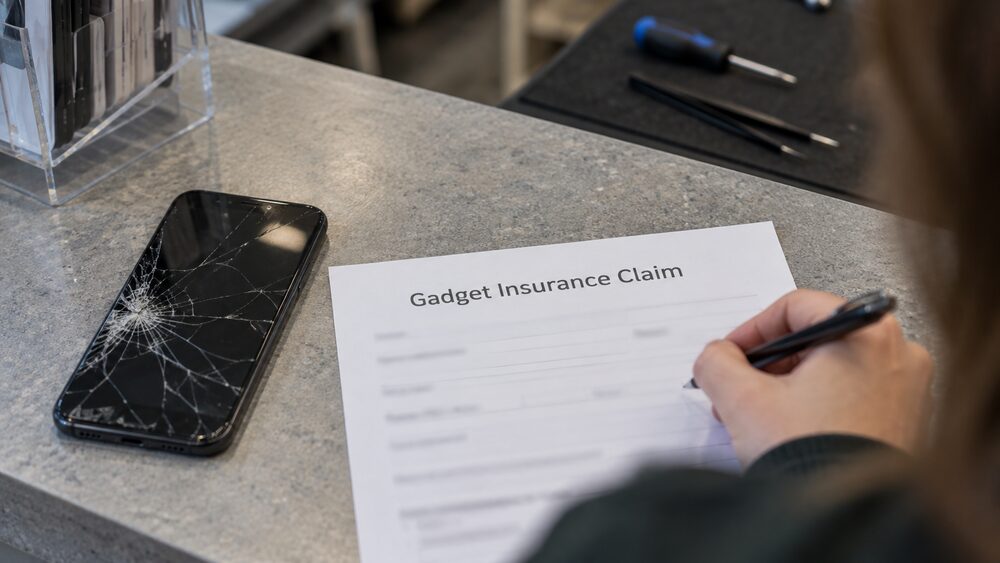
Gadget insurance is stand-alone cover for the portable electronics people carry every day: phones, laptops, tablets, cameras, smartwatches, games consoles and wireless earphones. It usually protects against accidental loss, accidental damage and theft1, and pays out by repairing the device, replacing it, or giving a cash settlement2. Mobile phone insurance works the same way and covers the cost of repairing or replacing a phone that is lost, stolen or damaged3.
The catch is in the detail. Most policies provide refurbished replacements rather than a new device2, most will not pay out if a phone is stolen after being left unattended3, and cosmetic damage that does not stop the device working is normally excluded1. Complaints are common enough that the Financial Ombudsman Service publishes separate figures for them: 21% of gadget insurance complaints and 21% of mobile phone insurance complaints were upheld in the most recent quarters reported4.
Before buying a separate policy, it is worth checking what you already have. Contents insurance can cover a phone through personal possessions cover6, and some packaged bank accounts include gadget or mobile phone cover as a perk7. This page explains what stand-alone gadget cover pays for, where it stops, and what to do if a claim is refused.
What gadget insurance covers: phones, laptops, tablets, cameras and smartwatches
A "gadget" in insurance terms is a portable electronic device with its own power source. One provider's definition includes smart watches, laptops, tablets, wireless earphones and digital cameras, while items that need continuous mains power are not covered7. Another lists mobile phones, smartphones, PCs and laptops including custom built ones, tablets, digital cameras, games consoles, video cameras, camera lenses, Bluetooth headsets and speakers, satellite navigation devices, e-readers, headphones, smart watches and wrist-worn health and fitness trackers8.
The core promise is the same across the market: the policy pays to repair or replace the device if it is lost, stolen or damaged3. Mobile phone policies often add extras that a general gadget policy may not, including unauthorised calls, phone accessories, protection abroad, and downloads such as apps, games, music and other valuable content6. Some policies may also cover the cost of replacing apps and music, but there is often no way to recover the cost of lost photos, messages or contacts, so anything irreplaceable should be backed up separately3.
Some policies extend beyond loss, theft and damage into breakdown. One provider covers the breakdown of a gadget once the manufacturer's warranty expires, as long as the breakdown would have been covered by that warranty. This does not include wear and tear, or parts considered consumable such as batteries8. A provider of cover sold with packaged bank accounts states that a 12-month warranty is provided on its replacements7.
It is also worth knowing that a standard contents insurance policy usually includes electronic devices such as mobile phones and laptops within the home9, so stand-alone gadget cover is mainly about what happens outside the house. Separately from any insurance, the Consumer Rights Act 2015 gives you a remedy where digital content supplied under a contract damages your device: the trader must either repair the damage or compensate you for it, where the damage would not have occurred had the content been produced with reasonable care and skill10. That is a right against the seller, not an insurance claim, and it can sit alongside either route.
Loss, theft and damage: what depends on the policy
Loss, theft and damage are the three pillars of gadget cover, but what each one means in practice depends heavily on the policy wording. The Financial Ombudsman Service, which settles disputes between consumers and insurers, says mobile phone and gadget insurance usually protects against accidental loss, accidental damage and theft1. What counts as "accidental", and what counts as "theft", is where claims come apart.
The most common exclusion is unattended theft. Most mobile phone insurance policies will not pay out if the phone is stolen while you have left it unattended3. A phone left on a table while you order at the counter, or in a bag put in a luggage rack, may fall outside the policy. Some policies exclude loss altogether: one provider's gadget cover has no cover for loss at all, along with no cover for gadgets bought more than 5 years ago, gadgets without proof of ownership, incidents before the policy started, and devices still covered by a manufacturer's warranty7.
Damage has its own boundary. You are normally only covered for damage that stops the phone or gadget working, not cosmetic damage1. A cracked screen that still works, or a dented case, will usually be refused. Where damage is covered, some policies are generous: one provider allows unlimited claims for accidental damage, liquid damage and mechanical damage that is not covered by the manufacturer's warranty7.
The rules on how the policy was sold matter too. Information provided at the point of sale must be clear, fair and not misleading2, and insurers must handle claims promptly and fairly, without rejecting a claim unreasonably2. If an exclusion was buried in wording that was not made clear when you bought the cover, that is something a complaint can be built on. The ombudsman regularly deals with complaints that an insurer wrongly applied an exclusion or limitation2.
For theft, loss or malicious damage claims, one provider requires you to report the incident to the police local to where it happened, ideally within 24 hours of discovery8. For SIM-enabled gadgets, you must also contact your network so it can blacklist the device, which must be done within 24 hours; if you do not, the provider states it will be unable to approve the claim8.
Second-hand and refurbished devices: cover needs good condition and a receipt
Second-hand and refurbished gadgets can often be insured, but the paperwork requirements are stricter and the payouts reflect the device's age. Where a claim succeeds, a cash settlement will generally be the cost of replacing the phone or gadget with one of the same age and condition before the insured event, from a reputable source2. Replacements are usually refurbished rather than new: most policies provide refurbished replacements2, and one provider states outright that replacements come from fully refurbished stock, not brand new7.
To insure a device at all, proof of purchase matters. One provider requires gadgets to have been purchased new or refurbished from a UK VAT registered company, with a proof of purchase supplied; if bought overseas, the company must be registered for the equivalent tax8. For second-hand or gifted gadgets, the same provider requires the original proof of purchase plus a signed letter from the original owner confirming ownership, including the IMEI or serial number, make and model, sale price, and confirmation that the gadget was in full working order at the time of sale8.
Items bought at online auction sites such as eBay can also be covered, on similar terms: either the original receipt plus a signed ownership transfer letter from an individual seller, or a receipt sent directly from a company that includes the IMEI or serial number and full company information8.
The practical lesson is to gather the evidence when you buy, not when you claim. Keep the receipt, note the serial or IMEI number, and photograph the device in the condition you received it. Official guidance on insurance claims generally is to keep copies of all letters, emails and faxes you send or receive, and receipts for any emergency work you paid for, so you can claim the money back11. A device without proof of ownership may be excluded from cover entirely7.
Standalone gadget cover or cover you may already have
Before paying for a separate policy, check what your existing insurance already does. A standard contents insurance policy usually includes electronic devices such as mobile phones and laptops within the home9, and if you have contents insurance you will likely be able to cover your mobile phone by adding personal possessions cover, which extends cover to belongings taken outside the home6. Our pages on contents insurance and personal possessions cover explain how this works.
Adding a phone to contents insurance has trade-offs. It could mean paying a higher excess if you claim, and making a claim could increase your home insurance premiums when you come to renew3. A gadget claim on your home policy also sits on the same claims record as a burst pipe or a burglary, which is a cost that outlasts the phone. Stand-alone cover keeps a gadget claim separate, but costs a monthly premium of its own. How premiums are built up is explained in how insurance premiums are worked out, and insurance excess covers the amount you pay towards each claim.
Packaged bank accounts are a third route. These are current accounts with a monthly fee that bundle insurance benefits, and gadget or mobile phone cover is a common inclusion. One bank states that mobile phone insurance for its packaged bank account is provided by Assurant, a third-party insurer7. Cover of this kind is only worth having if you would otherwise buy it, and our page on insurance in packaged bank accounts explains how to judge that.
Home insurance add-ons vary by insurer. Some contents policies include accidental damage for audio-visual equipment or furniture as standard, sometimes with limits12, while one insurer includes home entertainment equipment, mirrors and glass in furniture under contents cover, with additional possessions cover as an optional add-on13. If your devices are worth a lot, check both the single-item limit on your home policy and what a stand-alone gadget policy would pay, since gadget policies settle on a like-for-like age and condition basis2.
Finally, do not confuse insurance with a warranty. Manufacturer warranties and extended warranties cover breakdown and faults, not loss or theft, and gadget policies typically exclude devices still covered by a manufacturer's warranty7. The two can overlap for mechanical faults, but they answer different risks.
Taking your gadgets abroad: over half of travellers go without cover
Gadgets travel with their owners, and cover abroad is where many people find out too late what their policy does. Some stand-alone gadget policies are explicit: one provider states you are covered worldwide, so your protection includes any country you visit7. Mobile phone policies commonly include protection abroad as one of their standard extras6. But travel insurance and gadget cover are different products, and many travellers have neither in place.
The numbers on travellers going uninsured are striking. A survey by Co-op travel insurance found 57% of Brits go on holiday without insurance14. Around half of UK travellers have taken part in an activity that might not be covered by their policy15. Among those who do buy travel insurance, almost a quarter, 22%, buy the cheapest policy they can find, while only a third, 33%, check that the policy covers the cost of their holiday, luggage and contents16.
Travel insurance can pay for stolen gadgets in the right circumstances. When asked whether a policy would pay out for an iPad stolen from a bag on a bus, the answer from travel insurers was yes, for all three, provided the item was in your possession11. That "in your possession" condition mirrors the unattended theft exclusion in gadget policies, so the same rule follows your devices whichever policy they are claimed under.
If you rely on travel insurance rather than gadget cover, the policy needs to be checked before you go, not after. Our pages on how travel insurance works, when to buy travel cover and single trip or annual travel insurance cover the decisions involved, and hold baggage cover deals specifically with laptops and phones placed in the hold.
How to make a claim and who handles it
A gadget claim is a process with steps, and missing one of them can sink an otherwise valid claim. The first steps happen in the first 24 hours: report the theft, loss or malicious damage to the police local to where the incident happened, ideally within 24 hours of discovery, and for a SIM-enabled gadget contact your network so it can blacklist the device, which must also be done within 24 hours8.
Then gather the evidence: proof of purchase, serial or IMEI numbers, photos of the damage, and any police reference number. One provider lets you make a claim online 24/7 through an online claims portal8, but the claim must be made by the person whose name the policy is in; due to the GDPR and the Data Protection Act 2018, you cannot claim if the policy is not in your name8. That matters for families where one person holds the cover for everyone's devices.
Who handles the claim depends on when the policy was bought. Providers have changed the administrators that run gadget claims over the years, with policies started or renewed after a switch date handled by a different firm from older policies. If your cover has changed hands, the policy documents or the provider's claims pages will name the firm to contact, and our page on claims handlers and policy administrators explains who does what. The rules also require firms that cannot handle a claim notification themselves to forward it to the insurer promptly, or tell the policyholder immediately that they cannot deal with it18.
Keep records throughout. Official guidance is to keep copies of all letters, emails and faxes you send or receive, and receipts for any emergency work you paid for, so you can claim the money back11. Insurers must handle claims promptly and fairly, and should not reject a claim unreasonably2. If the outcome is a repair, a refurbished replacement or a cash settlement based on the device's age and condition2, check it against what the policy promised at the point of sale, because information given there must be clear, fair and not misleading2.
Complaints about gadget insurance: 21% upheld
The Financial Ombudsman Service publishes complaint numbers by product, and gadget and mobile phone cover generate enough disputes to be counted separately. In Q3 2025/26, 21% of gadget insurance complaints were upheld4. In Q1 2026/27, 277 mobile phone insurance complaints were opened and 21% were upheld, alongside 135 gadget insurance complaints5.
For comparison, 26% of contents insurance complaints were upheld in Q3 2025/264, and complaints about packaged bank accounts, the accounts that often bundle gadget cover, had a 21% uphold rate across 2025/2619. Across the insurance sector as a whole, the ombudsman's overall uphold rate was 38% in 2024/2520. Gadget and phone cover therefore sits at the lower end of uphold rates, which can mean either that insurers more often get these decisions right, or that a fair share of complaints rest on misunderstandings of what the policy said.
The ombudsman lists the complaints it sees most often: that the policy was mis-sold; that the policy wording was misleading; that the insurer wrongly refused to pay the claim by applying an exclusion or limitation that should not have been applied; that the insurance policy continued beyond the phone contract; that the policy was automatically renewed; and that the replacement phone or gadget was refurbished and not a new one2. Several of these are about what the customer was told before buying, which is why the point-of-sale rule, that information must be clear, fair and not misleading, matters so much2.
Satisfaction with how insurers handle complaints is low across general insurance. Around three in four, 77%, of general insurance and protection policyholders who complained to their provider about a problem in the 12 months to May 2024 reported low satisfaction with how the complaint was handled21. If a complaint to the insurer goes nowhere, the ombudsman is the next step, and it is free.
Where to get help if a claim is refused
If a claim is refused, the first step is still the insurer. A formal complaint is made by clearly explaining what went wrong from your perspective, heading it "Complaint", including the dates and names of the people you spoke to, and saying how you would like the problem resolved22. Our page on complaining about an insurer sets out the process and the timescales an insurer must meet, which are covered in how long your insurer has to respond to a complaint.
If the insurer rejects the complaint, or eight weeks pass without a resolution, the Financial Ombudsman Service can look at it without charge. Where the complaint is about a claim, the ombudsman may ask the insurer to make the necessary repairs, replace the mobile phone or gadget, offer a cash settlement, or compensate for distress or inconvenience2. Where the complaint is about a mis-sold policy, and the customer would not have gone ahead had it been sold correctly, the ombudsman may ask the insurer to refund the premiums with interest, or pay all or part of a claim2.
Two things can undermine an otherwise good complaint. The first is misrepresentation: under the Consumer Insurance (Disclosure and Representations) Act 2012, where a careless misrepresentation means the insurer would not have entered into the contract on any terms, the insurer may avoid the contract and refuse all claims, but must return the premiums paid23. Answering the insurer's questions honestly and fully at the start protects the claim at the end. The second is exaggeration: in one case the ombudsman examined, it agreed with the insurer's approach and did not uphold the complaint where there had been deliberate non-disclosure24. Our pages on misrepresentation and why insurance claims are rejected cover both in detail.
If the firm that sold the cover has failed or the administrator has changed, the complaint route still exists. The ombudsman can consider complaints about firms it covers regardless of later administration changes, and where an insurer has gone bust, what happens if your insurer fails explains the FSCS protection that applies. For free, impartial help with any of this, insurance explained gathers the site's guides, and the ombudsman's own consumer pages on mobile phone and gadget insurance set out what it can and cannot do1.
Sources24 cited
- Mobile phone and gadget insurance: how we can help Financial Ombudsman Service, 2026-09-27
- Handling mobile phone and gadget insurance complaints Financial Ombudsman Service, 2026-09-27
- Gadget insurance: how to get the best cover Which?, 2025-08-05
- Quarterly complaints data Q3 2025/26 Financial Ombudsman Service, 2025
- Quarterly complaints data Q1 2026/27 Financial Ombudsman Service, 2026
- Mobile phone insurance: how to get the best cover Which?, 2025-08-05
- Gadget insurance Bank of Scotland, 2026-09-27
- Gadget insurance help and support Post Office, 2026
- Which insurance policies are worth keeping? Which?, 2023-08-07
- Consumer Rights Act 2015, Part 1, Chapter 3 legislation.gov.uk, 2015
- What most of us get wrong about travel insurance Which?, 2025-07-15
- Do you need home insurance add-ons? Which?, 2026-09-17
- NFU Mutual home insurance review Which?, 2026-09-17
- Not declaring medical conditions on your travel insurance could cost you thousands Which?, 2025-04-17
- 7 costly travel insurance mistakes and how to avoid them Which?, 2025-12-07
- 7 questions to ask yourself when buying travel insurance Which?, 2024
- Making a home insurance claim BIBA, 2026-09-26
- After a flood: making an insurance claim nidirect, 2024-08-29
- Annual complaints data and insight 2025/26 Financial Ombudsman Service, 2025
- Annual complaints data and insight 2024/25 Financial Ombudsman Service, 2024
- Financial Lives 2024: consumers' experiences of financial services Financial Conduct Authority, 2024
- ICOBS 8: Claims handling FCA Handbook, 2008
- How to complain about your insurance company Which?, 2025-09-10
- Consumer Insurance (Disclosure and Representations) Act 2012 legislation.gov.uk, 2012-03-08




 MoneyHelperFree, impartial money and pensions guidance, set up by government
 Financial Ombudsman ServiceFree, independent help when a complaint about a firm is not put right
 FSCSProtects your money if a bank, insurer or investment firm fails
 Citizens AdviceFree advice on money, consumer and legal problems in England and Wales
 GOV.UKOfficial information on tax, benefits and government services