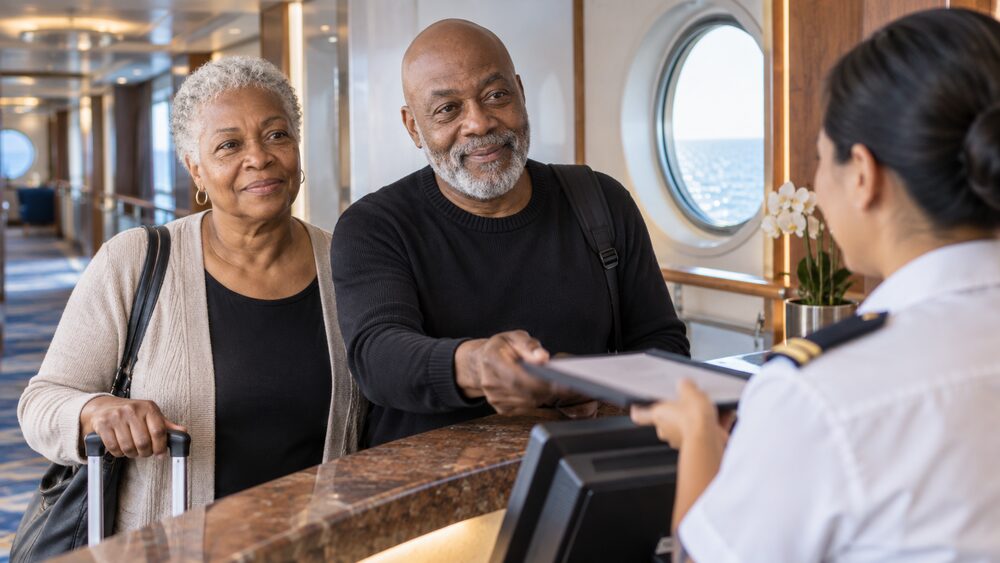
A standard travel insurance policy covers the holiday, not the cruise. It will typically pay for medical treatment, cancellation, baggage and personal belongings, personal liability and delays, but the events that only happen at sea, such as missing a port of call, being confined to your cabin or losing an excursion you could not reach, are usually left out1. Post Office states plainly that these scenarios are not usually covered in standard travel insurance policies, and that cruise providers normally make cruise cover a condition of travelling1.
That is why cruise cover exists as a separate benefit. It is usually an add-on to a standard policy for an extra fee, and it pays set amounts for each missed port, each full day of cabin confinement and each unused excursion, up to a maximum2. Some insurers include cruises as standard, but that is not the same as covering cruise risks: Virgin Money says cruises are covered as standard across its travel policies, and HSBC's Private Banking travel cover says the same, while noting there is no cover for missed ports, unused excursions or a changed itinerary4.
The practical question is therefore not whether standard cover is enough, but which cruise benefit you need and where it comes from. Cruise operators often make cruise cover a mandatory requirement and may ask to see a copy of the policy when boarding1. ABTA's guidance is that a credit card's basic travel cover contains many exclusions and should not be relied on6.
Standard policies cover the trip, not always the cruise risks
The core of a travel policy is the same whether you sail or fly. Independent guidance lists medical cover, cancellation, baggage and personal belongings, personal liability and delays as the typical contents of a travel insurance policy9. What changes on a cruise is the medical side and the geography. BIBA notes that many standard travel insurance policies exclude cruises because in the event of a medical situation an on-board doctor may need to arrange a medical air evacuation, and that specialist cruise cover is suggested because cruising presents particular challenges to medical care10.
The exclusion is not always written as a ban on cruises. It can be a condition buried in the schedule. Aviva's annual multi-trip policy states that claims will not be covered if the trip involves a cruise, unless cruise cover is specifically listed on the policy schedule11. That wording matters: a policy can look like it covers the holiday while the cruise element sits outside it until the add-on is named on the document.
There is also a general rule that shapes cruise claims. Most travel insurance policies do not cover claims if the losses can be recovered from another source3. If a cruise line refunds a missed excursion or compensates for a changed route, the insurer's liability usually falls away, and the policy pays only unrecoverable costs12.
How common is cruise cover as standard? Which? analysed annual-cover policies and found that 11% included it as standard8. For comparison, all 138 annual-cover policies it looked at covered hiking as standard, which shows how far cruise cover sits outside the norm8. The same pattern appears in other add-on areas: winter sports cover is readily available but is not included in standard policies6.
What cruise cover adds: missed ports, cabin confinement and excursions
Cruise cover is a bundle of named benefits rather than one lump of protection. The common ones are missed port of call, cabin confinement, unused shore excursions, itinerary change and denial of boarding13. Each has its own limit, and the limits move with the cover level chosen.
Missed port is the benefit most people ask about. One provider's standard level pays £100 per missed port up to £1,000, and its cruise cover pays for a missed port of call where the ship does not stop at a scheduled port because of bad weather or timetable restrictions7. Post Office's cruise cover pays up to £75 per port to a £225 maximum at its Standard level, up to £50 per port to a £150 maximum at Economy, and up to £300 per port to a £900 maximum where the missed port also involves excursions1.
Cabin confinement pays for time shut in the cabin through sickness or injury. Post Office pays money for each full day of cabin confinement, subject to the cover limit for the chosen cover level, and its product page describes compensation for each 24-hour period2. At its Economy level the benefit is up to £50 a day to a £500 maximum1. Tesco's cruise cover pays £100 per incident up to £50015.
Unused excursions are covered where accident or illness stops you taking a booked shore trip. Post Office's Economy level covers unused excursions up to £5001. Virgin Money's optional cruise cover lists missed port of call, cabin confinement, unused excursions, high and low water restrictions and denial of boarding, with missed shore excursions at £300 at its Red cover level16.
"1. Missed port of call - if the ship doesn't stop at a scheduled port because of bad weather or timetable restrictions 2"
Cruise cover as an add-on or included as standard
There are three routes to cruise cover, and they behave differently.
An add-on to a standard policy. Post Office Cruise Cover is an add-on to its standard travel insurance, and can be added to new or existing policies for an extra fee2. Tesco offers an optional cruise cover add-on at an additional cost, and says it can be added to any travel insurance policy for an extra premium7. The advantage is that the rest of the policy stays as chosen; the disadvantage is that the cruise benefits are only as good as the add-on's limits.
A specialist cruise policy. Some insurers sell cover built around cruising rather than bolted onto a general policy. BIBA notes that a specialist cruise insurance policy will generally be able to cater for increased age limits and people with medical conditions, subject to the normal medical screening, and that some specialist cruise policies allow cover for bookings with departures further in advance than standard policies10. That matters for anyone booking a long cruise well ahead, or travelling with a health condition that needs screening.
Cruise cover included as standard. Some policies state that cruises are covered as standard. Virgin Money says this across its single-trip, annual multi-trip, European, worldwide, medical and activities pages4. HSBC's Private Banking worldwide travel cover says cruises are covered as standard since they are simply another type of holiday, but adds that there is no cover for missed ports, unused excursions or a changed itinerary5. Included as standard is not the same as covering the cruise risks.
Bank account travel insurance and cruises
Packaged bank accounts often include travel insurance as one of their benefits. The Financial Ombudsman Service describes these as ongoing rolling multi-trip policies that renew over a 12 month period, generally provided with a packaged bank account3. The account itself comes with extra benefits such as insurance and roadside assistance, but also charges fees22.
The catch for cruises is what the included policy leaves out. Which? reports that these policies often come with strict rules such as age limits, exclusions for pre-existing medical conditions or short maximum trip lengths, and that winter sports, cruises and gadget cover are often missing23. One bank account travel policy states that if you need cover for cruise-specific events like cabin confinement, missed port and unused excursions, you will need separate cover16. Another packaged account policy covers valuables up to £500 for any single item, which shows the kind of limit that applies to the general benefits24.
If a packaged account policy does include cruises, read the schedule for the cruise benefits rather than the headline. HSBC's Private Banking cover is an example of cruises being included as standard while the cruise-specific events are excluded5. The Ombudsman has handled complaints about packaged accounts being mis-sold and about customers paying for benefits they never used, so it is worth checking what the account's travel policy actually covers before treating it as cruise protection22.
Will standard travel insurance pay out if I miss the ship at a port?
Usually not, and the distinction is between missing a departure and missing a port of call. A standard travel insurance policy will typically cover the costs of a missed departure travelling from the UK on holiday or returning to the UK at the end of a holiday10. That is about you reaching the ship or the flight home, not about the ship failing to stop somewhere on the itinerary.
For a missed port of call, the cover comes from the cruise benefit. Post Office's cruise cover pays up to £75 per port to a £225 maximum at Standard level and up to £50 per port to a £150 maximum at Economy1. Tesco's cruise cover pays £100 per missed port up to £1,00015. Where the missed port also means an excursion is lost, Post Office's combined benefit pays up to £350 per port to a £1,050 maximum at its Premier level1.
There is a timing condition on missed departure claims that catches people joining a ship abroad. BIBA notes that the insurer would typically want a minimum of a 6 hour difference between arrival at the foreign airport and embarkation at the foreign port10. A tight connection between a flight and a cruise terminal is therefore a risk the policy may not carry.
Am I covered if I am confined to my cabin through illness?
Only where the policy includes cruise cover, and the amount depends on the cover level. Post Office pays money for each full day of cabin confinement due to sickness or injury, subject to the cover limit for the chosen cover level, and its product page describes compensation for each 24-hour period2. At Economy level that is up to £50 a day to a £500 maximum1. Tesco's cruise cover pays £100 per incident up to £50015.
The pandemic changed the wording on some policies, and the dates matter. esure states that the exclusion for claims arising from epidemics and pandemics also applies to the additional cruise cover option, so there is no cover in the event of quarantine on board where you are confined to your cabin, for travel started after 23:59 on 12 March 2020; for travel started before that time, you may be covered if you selected and purchased the additional cruise cover26. Club M Account travel insurance excludes claims due to travel or movement restrictions such as local or national lockdowns, quarantines or any need to self-isolate as a result of the pandemic, unless you are actually ill with COVID-1927. Staysure's Cruise Plus is an optional add-on that includes cabin confinement due to a COVID outbreak, which shows that some providers have moved the other way28.
The lesson is that cabin confinement cover is not one thing. It depends on the policy, the cover level and the date the travel started, and the epidemic exclusion can sit on top of the cruise benefit.
Does cruise cover pay for excursions I could not use?
It can, where the policy lists unused excursions as a benefit and the reason falls inside the wording. Post Office's Economy level covers unused excursions up to £5001. Virgin Money's optional cruise cover includes unused excursions, and its policy wording lists missed shore excursions at £300 at the Red cover level16. Holiday Extras describes specialist cruise cover options including missed port insurance, unused excursions and cabin confinement29.
The trigger is usually accident or illness, or a missed port that made the excursion impossible. Tesco's cruise cover describes cover for missed port of call, cabin confinement and unused shore excursions due to accident or illness7. Where the excursion is refunded by the cruise line, the general rule that policies only cover unrecoverable costs applies, and the insurer's liability falls away12.
What happens if the cruise line changes the itinerary?
Cruise passengers do not have a fixed statutory scale of compensation for a changed route. ABTA states that cruise passengers do not have an entitlement to fixed amounts of compensation, that their rights to compensation come under the Package Travel Regulations, and that compensation would not be due where the operator cannot provide the services due to exceptional circumstances or an unforeseen event30.
On the insurance side, itinerary change appears as a named cruise benefit on some policies. Tesco lists itinerary change among its cruise cover inclusions, and Good to Go lists itinerary change alongside cabin confinement, missed port departure, unused excursions and cruise interruption15. Where the policy does not list it, a changed itinerary is unlikely to produce a payout on its own.
Cancellation cover works differently again. Cover is usually provided only if a cancellation or missed flight is caused by a specific event, and changing your mind or missing your flight may not be covered32. Where the Foreign, Commonwealth and Development Office changes its advice to recommend against all travel or all but essential travel to a country after booking, independent guidance says costs as a result of cutting the trip short are covered, including additional accommodation and travel expenses to get home safely12.
Is cruise cover worth adding to a single-trip policy?
The honest answer is that it depends on the trip, and the decision turns on three things: what the cruise line requires, what the standard policy already covers, and what the add-on costs.
Single trip policies cover the risk of a single holiday3. Cruise cover can be added to new or existing policies for an extra fee, so the cost is the extra premium quoted for the add-on rather than a separate policy2. Tesco's cruise cover is optional and can be added to any travel insurance policy for an extra premium15. ABTA's own travel insurance lists cruise cover among its benefits33.
The case for adding it rests on the risks a standard policy will not carry. Post Office states that cruise cover is required by most cruise operators and covers cruise-specific risks that a standard policy will not include34. It also states that specialist cover is both important and mandatory for cruise trips, and repeats the point on its single-trip and backpacker pages35. Cruise cover is often a mandatory requirement, and the cruise operator may not let you on board without it38.
The case against is that a policy which already includes cruises as standard may make the add-on unnecessary, provided the cruise benefits are there. HSBC's Private Banking cover includes cruises as standard but excludes missed ports, unused excursions and a changed itinerary, so the add-on question becomes whether those three events are worth insuring for that particular trip5.
Checking your policy before you sail
The first check is whether cruise cover is named on the schedule. Aviva's wording is the clearest example of why: claims will not be covered if the trip involves a cruise, unless cruise cover is specifically listed on the policy schedule11. A policy that mentions cruises in the marketing but not on the schedule is not the same thing.
The second check is the benefit limits and the excess. Post Office's Standard level carries a £99 excess, and its missed port benefit at that level is up to £75 per port to a £225 maximum, so a single missed port claim can be close to the excess1. The excess applies per claim, and the general rules on how excess works are worth reading alongside the cruise limits.
The third check is the medical side. Pre-existing conditions are handled differently in travel insurance than in private medical insurance: for private medical insurance you will not normally be covered for these conditions, but for travel insurance the insurer may be able to offer cover, sometimes for a higher premium39. Specialist cruise policies are generally able to cater for increased age limits and people with medical conditions, subject to the normal medical screening10. Staysure notes that its standard long stay policies cover cancellation and medical emergencies on board, but that cabin confinement needs the Cruise Plus add-on40.
The fourth check is whether the policy covers the trip at all. Which? found that only a third of people, 33%, check that their policy covers the cost of their holiday, luggage and contents41. Cruise cover is often a mandatory requirement, and the operator may not let you board without it38. Travel disruption cover is another variable: some providers include it automatically, others ask you to pay extra for it42.
If a claim is rejected, the Financial Ombudsman Service can look at it. Its guidance notes that cover is usually provided only if a cancellation or missed flight is caused by a specific event, and that changing your mind or missing your flight may not be covered32. The Ombudsman has published a case study about a cruise cancellation where it explained that, unlike the basic travel insurance policy which provided cover for the cancellation of the holiday, cruise cover only provided a benefit while the policyholder was actually travelling43. That distinction, between cover for the holiday and cover during the cruise, is the one to hold on to when reading any policy.
Sources43 cited
- Cruise travel insurance Post Office
- Cruise and travel insurance guide Post Office, 17 July 2025
- Travel insurance complaints Financial Ombudsman Service
- UK travel insurance Virgin Money
- Private Banking Worldwide Travel insurance HSBC
- Travel insurance tips ABTA
- Cruise travel insurance Tesco Travel Insurance, 26 September 2026
- Is your annual travel insurance still worth it? Which?, 27 July 2026
- Shopping around for insurance Independent Age
- Cruise insurance guide BIBA, 28 October 2022
- Annual multi-trip travel insurance Aviva, 26 September 2026
- Will travel insurance cover a summer holiday to Cyprus or Dubai? Which?, 4 July 2025
- Travel insurance key document Virgin Money
- Travel insurance policy wording Virgin Money
- Annual multi-trip travel insurance Tesco Travel Insurance, 26 September 2026
- Club M Account travel insurance Virgin Money
- Chase Protect travel insurance terms Chase
- Single trip travel insurance Virgin Money
- Annual multi-trip travel insurance Virgin Money
- European travel insurance Virgin Money
- Worldwide travel cover Virgin Money
- Consumer complains a packaged bank account was mis-sold Financial Ombudsman Service, 26 September 2026
- 7 costly travel insurance mistakes and how to avoid them Which?, 7 December 2025
- Gadget insurance Halifax, 27 September 2026
- Consumer feels he's wasted money on benefits he's never used Financial Ombudsman Service, 26 September 2026
- Coronavirus travel FAQs esure
- Coronavirus update Virgin Money
- Coronavirus travel insurance Staysure, 24 June 2026
- Travel insurance with a stroke Holiday Extras, 26 September 2026
- Ferry complaints ABTA
- Cancer travel insurance Good to Go, 6 January 2025
- Problems with travel insurance Financial Ombudsman Service, 14 March 2025
- ABTA travel insurance ABTA
- Over 50s travel insurance Post Office
- Travel insurance Post Office
- Single trip travel insurance Post Office
- Backpacker insurance Post Office
- 7 common travel insurance mistakes to avoid Which?, 27 April 2024
- Insurance jargon buster BIBA, 11 February 2025
- Long stay travel insurance Staysure, 25 June 2026
- 7 questions to ask yourself when buying travel insurance Which?, February 2024
- Flood disruption and damage: what can your insurance pay for? Which?, 31 October 2023
- Amin wanted an insurance refund after his cruise was cancelled Financial Ombudsman Service, 26 September 2026

 MoneyHelperFree, impartial money and pensions guidance, set up by government
 Financial Ombudsman ServiceFree, independent help when a complaint about a firm is not put right
 FSCSProtects your money if a bank, insurer or investment firm fails
 Citizens AdviceFree advice on money, consumer and legal problems in England and Wales
 GOV.UKOfficial information on tax, benefits and government services