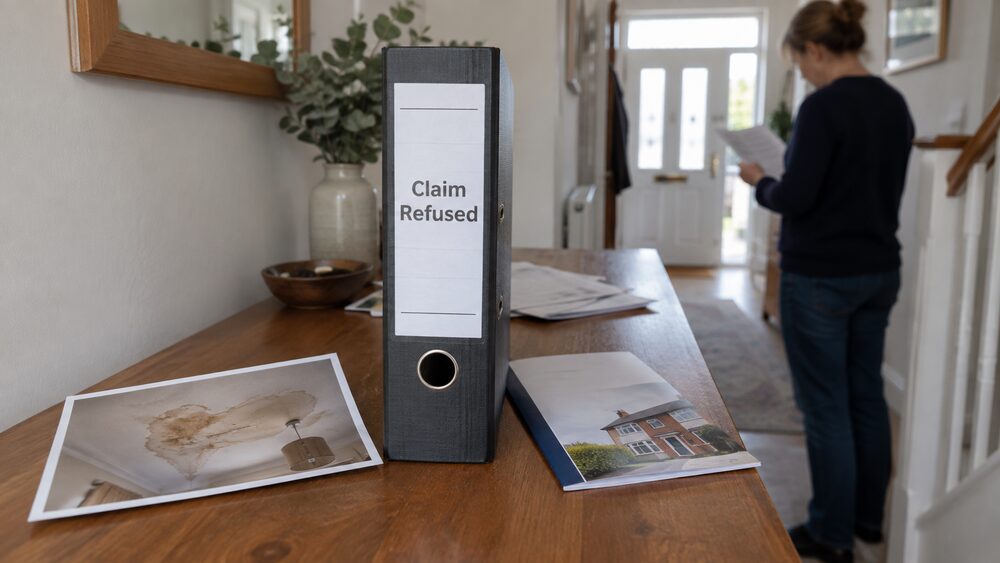
Most insurance claims are paid, but when one is refused or cut down it is usually for one of a small number of reasons: something in the policy that is excluded, damage the insurer says happened gradually rather than suddenly, a sum insured that is too low, or an answer on the application that was wrong. The rules on what an insurer can then do are set by law, by the Financial Conduct Authority's claims handling rules, and by the Financial Ombudsman Service when a customer disputes the decision.
The single most important principle is this: what the insurer would have done if it had been given the right information decides what happens to the claim. If it would have insured you on the same terms, the claim should be paid in full. If it would have charged more, the claim can be reduced in proportion. Only if it would not have insured you at all can the claim be refused and the policy voided, and even then a careless mistake is treated very differently from a deliberate one1.
Why insurers reject or reduce claims
Insurers decline or cut claims for a fairly predictable set of reasons, and knowing them tells you where a decision is worth challenging.
Exclusions. Every policy lists things it does not cover. A personal accident policy, for example, generates complaints where the insurer declined a claim because the death or injury was not caused by an accident, was not "solely and directly" caused by an accident, a specific exclusion clause applied, or the injury or disability was not serious enough to meet the policy's terms6. Travel policies can exclude claims the insurer's legal representatives believe are unlikely to succeed, or where the cost of taking action would exceed any award7.
Gradual damage. Home policies generally exclude wear and tear and damage that builds up over time. The Ombudsman's guidance to insurers is blunt about the insurer's rights here:
"you have a contractual right to decline the claim, as long as gradual damage is excluded in the policy"
Financial Ombudsman Service8
But the cause of damage is often genuinely disputed. In one case, an insurer told a customer that damage to her roof was caused by gradual deterioration and wear and tear rather than storm conditions; the Ombudsman's own investigation found the wind was indeed the cause and the decision did not stand9. The dedicated page on gradual damage and wear and tear claims covers where the line falls.
Conditions not met. With home emergency cover, most policies will not let you arrange your own repair and then claim the money back without contacting the insurer first, and insurers usually reject claims where a customer did just that10. Vehicle theft claims are turned down where the insurer thinks a key was left in the vehicle, the vehicle was left unattended, an exclusion applies, or a family member took the vehicle without consent11.
Underinsurance. An insurer can refuse or reduce a claim if the sum insured does not reflect the true cost of replacing or rebuilding what is insured. One couple's insurer refused to pay out after a burglary, saying they had undervalued their contents12.
Wrong information on the application. An insurer that discovers an answer was wrong when a claim is made can treat the policy as void from the date of the misrepresentation1.
There are limits on how far an insurer can go. The regulator's claims handling rules require firms to handle claims promptly and fairly, and say a claim should not be rejected unreasonably5. For consumer policies taken out or varied on or after 1 August 2017, rejecting a claim for breach of a condition or warranty is unreasonable unless the circumstances of the claim are connected to the breach13. So an insurer cannot refuse a burst pipe claim because, say, an unrelated condition somewhere in the policy was broken. The rules also bite on settlement amounts: if a customer insists on cash when the insurer is willing to repair or replace, the insurer will only pay what the repair would have cost it, which is usually less than market rates because insurers get discounts from suppliers and contractors2.
Underinsurance: when your cover or answers did not match the risk
Underinsurance means the amount you insured for is lower than the amount it would actually take to replace or rebuild. It is one of the most common reasons home claims are cut, and the mechanism used is called the average clause.
The Ombudsman's consumer guidance gives a plain example: if the rebuild cost of your home is £400,000 but you valued it at £200,000 in your policy, you are 50% underinsured, and some insurers would only pay 50% of a claim, leaving you to find the rest14. The same logic applies to contents. The pages on rebuild cost and underinsurance and the average clause explain how to work out the right figures.
Whether applying average is fair is a separate question, and the Ombudsman scrutinises it closely. It will usually say it is not fair to apply the average clause if the insurer did not ask for the full replacement or rebuild cost, or if there is no average clause in the policy14. It is also unlikely to find it fair for an insurer to reduce a claim by applying average without a clearly worded term in the policy3. In practice, the Ombudsman rarely agrees for an insurer to apply average, though there are times when it does3.
Case studies show both outcomes. Bryan's home insurance claim was reduced after a fire because the loss adjuster's valuation said he was underinsured; the Ombudsman decided the insurer should meet the claim as though he was not underinsured, and paid him the money originally deducted15. But in another case, involving jewellery undervalued before a burglary, the Ombudsman decided the insurer had acted fairly in avoiding the policy and not paying the claim16.
The Ombudsman's starting point on redress is to put the consumer back in the position they would have been in if the problem had not happened3. That principle drives everything in the rest of this page.
What the insurer would have done decides the outcome
When an application answer turns out to be wrong, the law does not simply let the insurer refuse everything. The Consumer Insurance (Disclosure and Representations) Act 2012 requires consumers to take reasonable care not to misrepresent, and sets out what an insurer may do depending on what it would have done with the correct information17. Where the misrepresentation was careless, the insurer's response should be based on what it would have done if the consumer had given the correct answer1.
The insurer has to show which of these it would have done, and the Ombudsman tests that against the evidence. In one motor case, the insurer cancelled the policy and turned down a claim after discovering the customer had not mentioned a driving conviction; the insurer said that if the conviction had been disclosed it would not have offered cover at all, and the Ombudsman did not uphold the complaint18. In a travel case, an insurer rejected a claim because a death resulted from complications of planned surgery rather than an accident, and the policy's terms decided the outcome19. In another, a customer was found not to meet the criteria of a lifetime care policy, so the claim was declined20. And in a subsidence case, the insurer agreed to pay superstructure repairs and redecoration while refusing the cost of stabilisation work, and the Ombudsman's investigation found the insurer was liable for the preventative work after all21.
Not every refusal is unfair, and the Ombudsman says so when it is not. Becky and Johnny's travel insurance claim, declined under a war exclusion, was not upheld: the Ombudsman did not think the policy covered the circumstances or that the insurer had acted unfairly22.
There are also things you never had to disclose in the first place. Information need not be given if it is something you did not know or could not reasonably have been expected to know, something the insurer should reasonably be expected to know, information the insurer has waived, information that reduces the risk, or information covered by the Rehabilitation of Offenders Act 19741. The page on misrepresentation covers this in detail.
Paid the same premium either way: the claim should be met in full
If the insurer would have insured you on exactly the same terms had it had the right information, there is no reason in fairness for the claim to be reduced. The Ombudsman is unlikely to find it fair for the insurer to reduce or decline the claim in those circumstances, and it is fair for the consumer to receive the full claim settlement3.
The same reasoning appears across the Ombudsman's travel insurance guidance: where the customer would have bought a different policy that would have covered the claim, the Ombudsman asks the insurer to pay the claim23. Where the customer would have bought the policy but paid extra for an optional cover, the insurer should pay the claim with interest, minus the additional premium23. And where the customer would not have done anything differently and would still have bought the policy, the insurer has done something wrong but does not need to do anything to put things right financially23.
Older published decisions show the same approach at work. A customer whose horse trailer was stolen was paid a sum equivalent to the market value of the trailer at the date it was stolen24. A motor claim for a stolen van was paid even though keys had been left in the ignition, because the doors were locked with a spare key25. A couple sold a whole-of-life policy instead of a savings plan had all their premiums refunded with interest26. And where a policy was reviewed and changed without the customer's knowledge, the provider agreed to reinstate the original level of cover, with premium increases backdated, because her health had not changed since she took out the policy27.
One further protection is worth knowing. Where a firm alleges fraud, it is only entitled to recover payments made in connection with earlier claims if it can show that the customer completed the insurance proposal fraudulently28. An insurer cannot claw back earlier claims simply because it disputes the current one.
Would have charged more: the claim can be cut in proportion
If the insurer would have insured you but at a higher premium, the law allows it to reduce proportionately the amount paid on the claim17. Schedule 1 to the 2012 Act sets this out, and the Ombudsman applies the same arithmetic4.
The examples are straightforward. If you paid £400 but should have paid £500, you have paid 80% of the premium, and it is fair for you to receive 80% of the claim value3. The misrepresentation guidance gives the same shape of example: a customer who paid £100 when they should have paid £150 has paid two-thirds of the premium, so two-thirds of the claim should be paid1.
| What the insurer would have done | What can happen to the claim |
|---|---|
| Same premium, same terms | Claim paid in full3 |
| Higher premium | Claim reduced in proportion to the premium paid4 |
| Different terms, such as a lower limit | Those terms applied to the claim1 |
| Would not have insured at all | Policy avoided and claims refused4 |
The "different terms" route works like this: if the insurer would have applied a £10,000 limit for valuables and charged double the premium, it might be fair to apply the £10,000 limit and pay £5,0001. An insurer may also charge more for the policy where there has been no claim, or retrospectively apply a restriction1.
A related principle protects customers who have already claimed successfully. Where a policy was mis-sold but the customer made a successful claim under it, it is usually unfair for the business to take away the value of that claim from any compensation it pays29. The reduction for a higher premium applies to the claim itself, not as a way of clawing back money already properly paid.
Reductions also appear in other claim contexts. In one case an insurer agreed to reimburse only £1,500 of the cost of an emergency operation abroad, because it said it would have been able to negotiate a reduced fee with the hospital30. The page on how insurance premiums are worked out explains what drives the premium in the first place, which is often the background to these disputes.
Would not have insured you: the claim can be refused and the policy voided
The most serious outcome is avoidance: the insurer treats the policy as if it never existed. The policy is cancelled from the date the misrepresentation occurred, which could be the start of the policy, a later renewal, or part way through the policy term1.
The law distinguishes carefully between degrees of fault. If the misrepresentation was deliberate or reckless, the insurer can avoid the policy and keep the premium, and refuse an ongoing claim1. If it was careless and the insurer would not have entered into the contract on any terms, the insurer may still avoid the contract and refuse all claims, but must return the premiums paid4. Parliament's research briefing summarises the position: if customers do not take reasonable care, insurers may be allowed to void policies and refuse false claims or alter the terms of a policy31.
Non-disclosure has the same effect in other markets. A government guide on buying repaired written-off vehicles warns that failing to disclose a vehicle's total loss history means your insurer can reject any claim on the grounds of non-disclosure32. The underlying principle is an old one: under the duty of disclosure, if the assured fails to make such disclosure, the insurer may avoid the contract33.
Avoidance is not automatic, and the Ombudsman checks whether the insurer really would have refused cover. In the age-related insight briefing, the Ombudsman described a car insurance case where a policyholder in his late seventies did not disclose convictions: on balance, it felt it was reasonable for the insurer to assume it had been given the full picture, and fair to cancel the policy34. But in another case in the same briefing, the Ombudsman thought it reasonable for an insurer to decide to settle a claim it had been advised not to contest because of the claimant's age34. Each case turns on its own facts.
How to complain to your insurer: eight weeks to respond
The first step is always to complain to the insurer itself. Insurers have to give you their final response within eight weeks for most types of complaint2. The same deadline appears in the Ombudsman's guidance on underinsurance and misrepresentation complaints: the business should reply within eight weeks3.
A good complaint sets out, in your own words, what happened and what you think should change. Useful things to include:
- The claim reference and the insurer's stated reason for declining or reducing it
- Why you think the reason is wrong, with any evidence: photographs, receipts, valuations, CCTV
- For underinsurance disputes, what the insurer asked you for when you bought or renewed the policy, and what you answered
- What you want the insurer to do: pay the claim, pay it in full rather than in part, or reinstate the policy
Some sectors have their own response rules. Under shared ownership repair arrangements, a contractor must tell you why in writing within 7 days of receiving the information that supports your claim, tell you that you have the right to challenge the decision, and explain how you can challenge it35. That model, a written reason plus an explanation of how to challenge it, is a reasonable thing to ask any insurer for.
If the insurer does not reply within the time limits, or you disagree with the response, you can bring the complaint to the Financial Ombudsman1. The same rule applies to complaints handled under other regimes: if a business does not send a final response letter within eight weeks, or you are unhappy with the response, you can bring the complaint to the Ombudsman36. The page on complaining about an insurer covers the process in full, and how long an insurer has to respond covers the deadlines.
Taking a rejected claim to the Financial Ombudsman
The Financial Ombudsman Service is free to use and independent. It looks at the facts and evidence from both sides and considers what was, at the time of the event, any relevant law and regulations, the regulator's rules, guidance and standards, industry codes of practice and, where appropriate, good industry practice8.
Its investigations are genuinely substantive rather than a rubber stamp. In a vehicle theft complaint, it investigates the circumstances and asks for evidence such as CCTV footage and photos, considers how close the customer was and whether they could have prevented the theft, and checks whether the insurer clearly highlighted that leaving the vehicle could lead to a claim being rejected. If the customer had a good reason to leave the vehicle or was near enough to deter a thief, it is likely to tell the insurer to pay the claim11. In a legal expenses case, it asked the insurer to obtain a more detailed legal opinion showing why the claim was unlikely to succeed, and told the insurer it would need to let the customer know whether this affected their decision7. In another, it found that funding an independent report was the insurer's responsibility, not the claimant's37.
The Ombudsman also recognises when an insurer has acted fairly, and publishes those cases too. A complaint about misleading claims information given at renewal was not upheld38, and Becky and Johnny's war exclusion claim was not upheld either22. Taking a case to the Ombudsman does not guarantee a different outcome, but it does guarantee an independent look at the evidence.
What the Ombudsman can award
The Ombudsman's general approach is that the consumer should be put back in the position they would have been in if the problem had not happened3. In practice that can mean several things.
Payment of the claim. Where the insurer should have asked for the full contents replacement cost or rebuild cost, its questions were unclear, or the consumer was not warned about the consequences of underinsurance, the Ombudsman will usually say the insurer has to pay the claim in full14. Where the customer would have bought a different policy that covered the claim, it asks the insurer to pay the claim23.
Interest and compensation. Where an insurer is told to pay an underinsurance claim in full, the Ombudsman may also consider interest and compensation for distress and inconvenience3. In one published example, a couple whose contents claim was mishandled after a burst pipe caused £50,000 of damage received up to £300 for distress and inconvenience3. The page on compensation for distress and inconvenience covers what this can include.
Refunds and corrections. Where a claim was recorded unfairly, the Ombudsman can tell the insurer to change how it was recorded so the customer's current premium can be recalculated, refund extra money paid, and pay compensation for poor customer service39. Where a policy was mis-sold, redress can include refunding premiums with interest, or paying all or part of the claim the customer would otherwise have made5.
Putting the policy right. Redress is not only about money. In the whole-of-life case, the provider reinstated the customer's original level of cover27. In travel cases, the insurer may be told to pay the claim with interest, minus the additional premium for an optional cover23.
The Ombudsman's decisions are binding on the insurer if you accept them, and the service is free. If an insurer has failed altogether, the page on what happens if your insurer goes bust explains FSCS protection; that is a separate issue from a rejected claim.
Sources39 cited
- Misrepresentation and non-disclosure: Ombudsman guidance Financial Ombudsman Service
- Home insurance complaints the Ombudsman can help with Financial Ombudsman Service
- Handling underinsurance complaints: Ombudsman guidance Financial Ombudsman Service
- Consumer Insurance (Disclosure and Representations) Act 2012: schedules legislation.gov.uk
- Mobile phone and gadget insurance complaints Financial Ombudsman Service
- Personal accident insurance complaints Financial Ombudsman Service
- Case study: man bitten by a dog on holiday struggles to arrange legal expenses cover Financial Ombudsman Service
- Gradual damage: how the Ombudsman handles complaints Financial Ombudsman Service
- Case study: storm damage claim refused, investigation found wind was the cause Financial Ombudsman Service
- Home emergency insurance complaints Financial Ombudsman Service
- Vehicle theft claims: when insurers turn them down Financial Ombudsman Service
- Case study: insurer unfairly reduced a claim payment Financial Ombudsman Service
- ICOBS 8: Insurance Conduct of Business sourcebook Financial Conduct Authority
- Underinsurance: what the Ombudsman looks at Financial Ombudsman Service
- Case study: consumer questions the loss adjuster's valuation after a fire Financial Ombudsman Service
- Insight: underinsurance, misrepresentation and non-disclosure Financial Ombudsman Service
- Consumer Insurance (Disclosure and Representations) Act 2012 legislation.gov.uk
- Case study: insurer cancelled a policy after an undisclosed conviction Financial Ombudsman Service
- Case study: claim after death from surgery complications Financial Ombudsman Service
- Case study: consumer finds she is not covered under a lifetime care policy Financial Ombudsman Service
- Case study: insurer said it was not liable for preventative work Financial Ombudsman Service
- Case study: Becky and Johnny's travel insurance claim declined under war exclusion Financial Ombudsman Service
- Mis-sold travel insurance: Ombudsman guidance Financial Ombudsman Service
- Ombudsman decisions, volume 85 Financial Ombudsman Service
- Ombudsman decisions, volume 82 Financial Ombudsman Service
- Ombudsman briefing on age and insurance Financial Ombudsman Service
- Case study: whole-of-life policy reviewed and changed without the customer's knowledge Financial Ombudsman Service
- Ombudsman News issue 21: credit unions and fraud Financial Ombudsman Service
- The Ombudsman's approach to redress for mis-sold PPI policies Financial Ombudsman Service
- Case study: insurer would not cover the full cost of an emergency operation abroad Financial Ombudsman Service
- Research briefing on the Consumer Insurance (Disclosure and Representations) Act 2012 House of Commons Library
- Buying repaired written-off vehicles: a consumer guide GOV.UK
- Report on insurance contract law (Marine Insurance Act section 18) Scottish Law Commission
- Ombudsman decisions, volume 25 Financial Ombudsman Service
- Shared ownership scheme: repairs and home improvements GOV.UK
- Complaints about goods or services bought on credit Financial Ombudsman Service
- Case study: funding an independent report was the insurer's responsibility Financial Ombudsman Service
- Case study: consumer complains about misleading information at policy renewal Financial Ombudsman Service
- Fault claims and no claims bonuses: Ombudsman guidance Financial Ombudsman Service



 MoneyHelperFree, impartial money and pensions guidance, set up by government
 Financial Ombudsman ServiceFree, independent help when a complaint about a firm is not put right
 FSCSProtects your money if a bank, insurer or investment firm fails
 Citizens AdviceFree advice on money, consumer and legal problems in England and Wales
 GOV.UKOfficial information on tax, benefits and government services