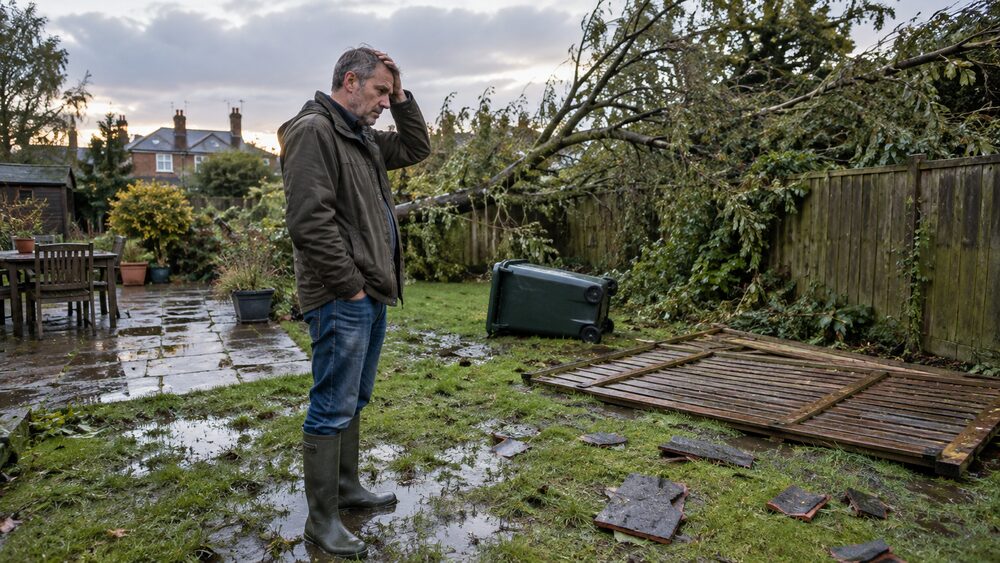
Storm damage is one of the most common reasons people claim on their home insurance, and one of the most disputed. The difficulty is that "storm" is not a single legal definition. Insurers set their own, and the wording in your policy decides whether a claim is paid.
Storm damage is one of the most common reasons people claim on their home insurance, and one of the most disputed. The difficulty is that "storm" is not a single legal definition. Insurers set their own, and the wording in your policy decides whether a claim is paid.
Some insurers use a wind speed test. Halifax, for example, treats strong winds over 55 mph as a storm, and/or hail or snow strong enough to break glass or damage hard surfaces1. Tesco Insurance uses a different set of tests: wind speeds exceeding 55mph, snowfall exceeding 30cm depth in 48 hours, torrential rainfall exceeding 25mm per hour, or hail causing damage to hard surfaces2. A Which? analysis of 133 policy documents from 67 insurers found that 20% contained a storm definition it believed was potentially unfair3.
Buildings insurance should cover damage caused by hail, wind, rain, snow and ice, including broken roofs, burst pipes, falling trees and power cuts4. But the gap between what a policy covers in principle and what an insurer will pay for a particular event is where most disputes arise.
Wind, rain and hail: the signs insurers look for
When an insurer assesses a storm claim, it is looking for evidence that the weather itself caused the damage, not that the damage was already there. The signs it looks for are physical and specific: trees swaying or uprooted, tiles lifting, branches breaking, and debris blowing around. Storms can also bring heavy rain, large hail, or snowfall that puts extra pressure on buildings8.
Buildings insurance should cover damage caused by hail, wind, rain, snow and ice, including broken roofs, frozen pipes, falling trees and loss of power9. That is the starting point. The question is whether the event that caused the damage meets the policy's own definition of a storm.
The Financial Ombudsman Service, which settles disputes between consumers and insurers, says it takes into account official weather reports, the condition of the property, and information about the storm when it looks at a disputed claim10. That means the weather record for your area on the day matters, and so does the state of the property before the storm.
Which? research found that damage caused by high winds, rain or hail was the third most common type of home insurance claim, out of 14 types of claim it surveyed. Accidental damage to property and home emergencies were the first and second most common11.
Storm damage or wear and tear
The most common reason a storm claim is rejected is not that the weather was not severe enough. It is that the insurer decides the damage was caused by wear and tear, or by gradual deterioration, rather than by the storm itself.
Insurers distinguish between sudden, unforeseen events and damage that has built up over time. Sometimes what looks like storm damage is just normal wear and tear, especially on older roofs8. A standard home insurance policy may not cover damage resulting from general wear and tear, such as water entering through a poorly maintained roof9. Halifax states plainly that you cannot claim for damage caused by everyday wear and tear12.
The Financial Ombudsman Service has looked at cases where this distinction was disputed. In one, an insurer declined a claim saying the damage to the roof was caused by gradual deterioration and wear and tear, not storm conditions. The ombudsman upheld the complaint and told the insurer to deal with the claim under the storm damage section of the policy13.
"It told Iris that the damage to her roof was caused by gradual deterioration and wear and tear, not storm conditions."
The condition of the property before the storm matters. If a winter storm arrived and a roof was already cracked, you may not be able to claim if this made an existing problem worse14. Buildings insurance covers storm damage to your roof, but you may not be covered if the roof is in poor condition or shows wear and tear15.
This is where gradual damage and wear and tear claims become relevant, and where the difference between a maintenance issue and a storm event decides the outcome.
Where storm cover does not apply
Even when a storm is accepted, some items are commonly excluded. Fences, gates and outbuildings are often excluded from storm cover16. Santander excludes fences, gates or hedges damaged in a storm5. Halifax states that insurance does not cover storm damage to fences, hedges or gates1. Bank of Scotland says storm damage to fences and gates is not covered, objects left out in a storm are not covered, and wear and tear is not covered6. Tesco Insurance does not cover fences, gates or hedges, or fixed items in the open such as outdoor hot tubs2.
Some policies go further. Uinsure home insurance excludes loss or damage to gates, fences and hedges during a storm, loss or damage caused by a weather event that does not meet the definition of storm in the policy wording, and any loss or damage caused by anything that happens gradually including wear and tear17. Virgin Money Home Insurance excludes loss or damage caused by a weather event that does not meet the definition of storm in the policy wording18.
Home improvements can also fall outside cover. Admiral excludes storm or flood damage to unfinished extensions or alterations19. If you are having work done, check whether the policy covers the property in its current state.
Car insurance works differently. Comprehensive cover usually includes damage caused by floods, storms, fallen trees or flying debris20. But if your insurance is third party only or third party, fire and theft, you will not be covered for storm or flood damage to your own car20. Insurers may also not pay out if they feel you have not taken steps to keep the car safe, such as driving recklessly in a snow storm or deliberately driving through flood water9.
Is flooding from heavy rain treated as storm damage?
Flood and storm are usually separate sections of a home insurance policy, and they are assessed differently. A typical buildings policy provides cover, at least in principle, for damage caused by floodwater entering your home from an external source, including a river or canal bursting its banks, storms and high tides, and heavy rainfall21.
Halifax draws a clear line: rain alone does not count as a storm. If heavy rain of 25mm or more in a day causes damage inside your home, the insurer may review the claim1. That is a different test from the wind speed threshold, and it turns on whether water entered the building.
The Financial Ombudsman Service expects insurers to look beyond a single section of the policy. It says: "We'd expect your insurer to check all parts of your policy, not just the storm damage part, to see if you're covered"10. So if a claim is turned down under the storm section, it may still be payable under the flood section, or under accidental damage cover.
For more on how these claims work in practice, see storm, flood and escape of water claims.
If your storm claim is turned down
A rejection is not the end of the process. The first step is to ask the insurer to explain its decision in writing, including which policy wording it relied on and what evidence it used. The Financial Ombudsman Service says it will take into account official weather reports, the condition of the property, and information about the storm10.
If you are not satisfied with the response, you can make a formal complaint. When a complaint involves accidental damage, the insurer should reply within eight weeks7. If the insurer has not resolved the complaint by then, or if you are unhappy with the outcome, you can take it to the Financial Ombudsman Service. If you have a complaint about an insurance company or claim, it can help22.
The ombudsman has the power to make an insurer put things right. If it thinks an insurer has unfairly turned down a claim, it may recommend that the insurer reconsiders the claim in line with the terms and conditions of the policy, or pays the claim and adds interest to cover the period from the date of the claim until the date the settlement is paid23. It can also ask the insurer to deal with a claim it has rejected, add interest to any claim that should have been paid, pay for more work to be done where a complaint is about repairs, or pay compensation for distress or inconvenience24.
The ombudsman also handles complaints about how a claim was settled, not just whether it was accepted. These include cases where the insurer arranged repairs but has not fixed the damage, where repairs caused additional damage, where the insurer says repair but the customer thinks replacement is needed, where a replacement is not the same as the lost item, where the money offered is not enough, and where there is dissatisfaction with the quality of the insurer-appointed builder's work26.
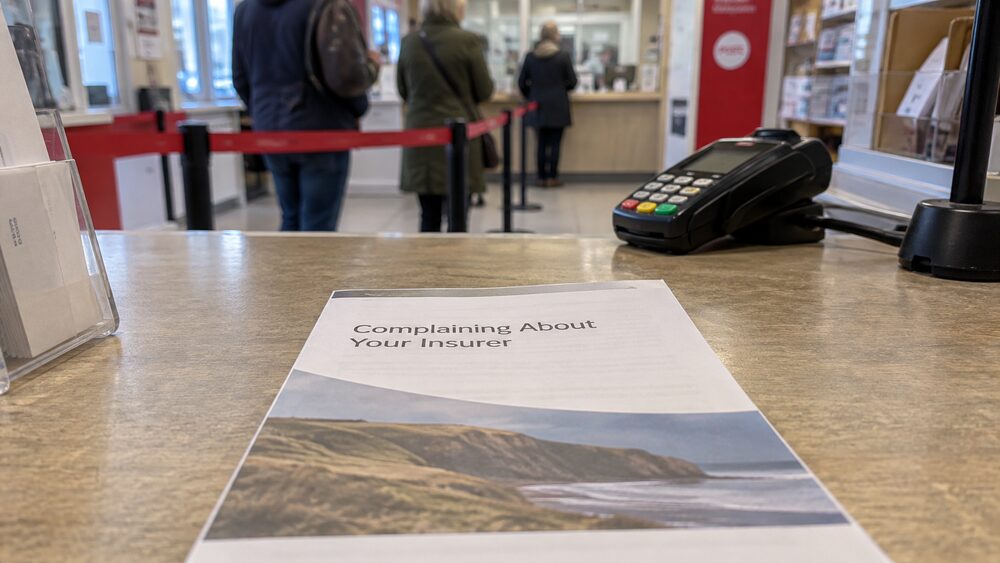
For more on the complaints process, see complaining about an insurer and the Financial Ombudsman Service.
What evidence to keep after a storm
Evidence is what decides a disputed storm claim. The Financial Ombudsman Service considers expert opinions, photos of the damage, a report including photos from a surveyor, loss adjuster or other expert, and customer testimony24.
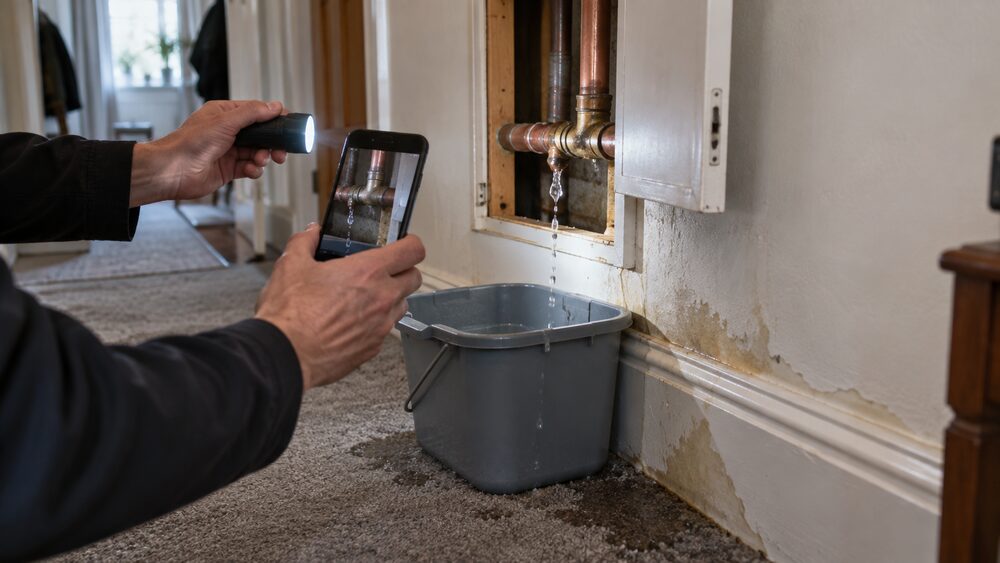
Take photos of any damage caused so you can use them as evidence, and make a note of dates and times when things went wrong. Include copies of photos or other proof when writing, keeping the originals27. Keep a record of dates and times you contact your insurer28.
If the damage is significant, a surveyor's or loss adjuster's report carries weight. The ombudsman will look at expert opinions alongside your own account24. For more on how claims are handled, see how to make a home or travel insurance claim.
Sources28 cited
- Storm damage and home insurance Halifax, 2026-09-27
- Tesco Home Insurance review Which?, 2026-09
- Does your home insurance define storms unfairly? Which?, 2025-11-20
- 5 winter risks your home insurance might not cover Which?, 2026-09-26
- Home insurance Santander, 2026
- Severe weather advice: storm Bank of Scotland, 2026-09-27
- Accidental damage complaints Financial Ombudsman Service, 2026-09-27
- Storm damage insurance esure, 2026
- Does your insurance cover damage caused by bad weather? Which?, 2025-12-08
- Storm damage Financial Ombudsman Service, 2026-09-26
- Do you need home insurance add-ons? Which?, 2026-09-17
- Wear and tear Halifax, 2026-09-27
- Insurer refuses storm damage claim: our investigation shows wind was indeed the cause Financial Ombudsman Service, 2026-09-27
- Extreme weather Santander, 2026
- What is buildings insurance? Lloyds Bank, 2026-09-27
- 6 questions to ask before you choose a home insurance policy Which?, 2025-10-15
- Home insurance The Marsden, 2026-09-26
- Home insurance contents IPID Virgin Money, 2026
- Will your insurance cover home improvements? Which?, 2025-07-26
- Is your car covered for flood damage? Which?, 2025-11-08
- Home insurance and flooding Which?, 2026-09-17
- Insurance complaints Financial Ombudsman Service, 2026-09-26
- Storm damage Financial Ombudsman Service, 2026-09-27
- Accidental damage Financial Ombudsman Service, 2026-09-26
- Settling home insurance claims Financial Ombudsman Service, 2026-09-26
- Minaret damage: design fault or storm damage? Financial Ombudsman Service, 2026-09-26
- Claim compensation if an item or product causes damage Citizens Advice, 2026-09-25
- After a flood: making an insurance claim nidirect, 2024-08-29








 MoneyHelperFree, impartial money and pensions guidance, set up by government
 Financial Ombudsman ServiceFree, independent help when a complaint about a firm is not put right
 FSCSProtects your money if a bank, insurer or investment firm fails
 Citizens AdviceFree advice on money, consumer and legal problems in England and Wales
 GOV.UKOfficial information on tax, benefits and government services