
Contents insurance covers the possessions in your home: your TV, jewellery, furniture and clothes, and anything else that would go with you if you moved house1. A policy pays the cost of repairing or replacing items that are damaged, destroyed or stolen2. It is separate from buildings insurance, which covers the structure of the building itself, and the two are often bought together but do different jobs.
A contents-only policy cost £118 on average in the second quarter of 2026, down 9% (£11) on the same period a year earlier3. Research on low-income households puts the typical home contents policy at £122 a year4. Most policies cap how much they will pay for any single item, typically between £1,000 and £2,500, so expensive jewellery, gadgets or watches may need to be listed separately5.
What contents insurance covers
Contents insurance is cover insuring all the movable contents inside your home against accidental damage and theft7. The test for what counts as contents is a practical one: if the item can be reasonably removed and taken to another home, it is usually part of the contents rather than the building1. Fitted kitchens and bathroom suites generally belong to the buildings policy; the sofa, the television, the clothes in the wardrobe and the bike in the shed belong to contents.
A standard policy pays out when possessions are damaged, destroyed or stolen2. Beyond that core, policies vary in what they throw in. Contents policies may include some cover for the replacement of keys and locks, the contents of outbuildings, money, freezer contents, the loss of metered water, the cost of alternative accommodation, replacement glass, and television aerials and satellite dishes8. None of these should be assumed: the policy schedule sets out what is included and what each part is capped at.
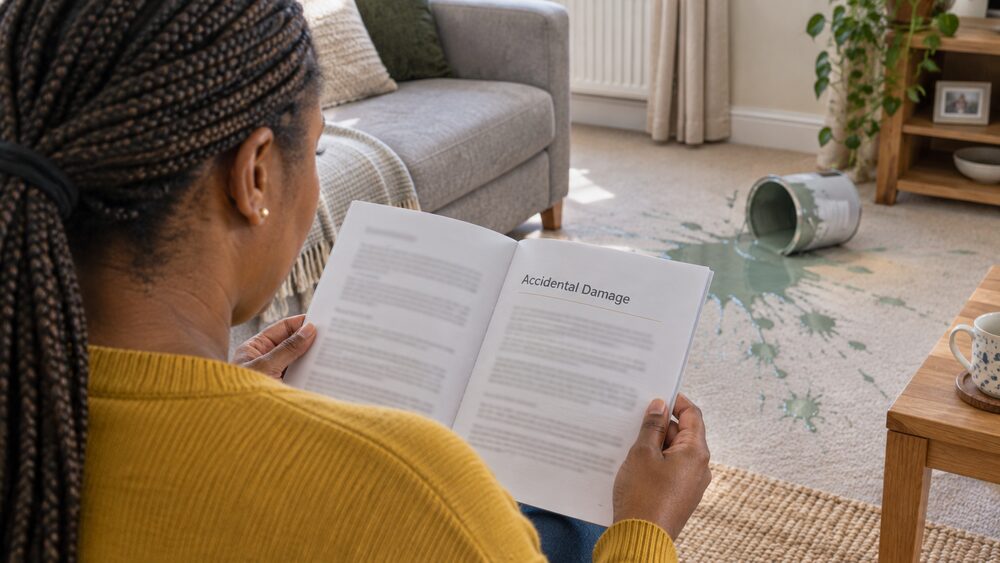
Some accidental damage can be included as standard. With contents cover, this can mean damaged audio-visual equipment or furniture, though the cover is sometimes limited9. Comprehensive accidental damage, which covers a much wider range of mishaps such as spilling paint on a carpet, is usually a paid extra: the section on optional extras below covers this.
Belongings kept outside but within your property boundaries, such as garden furniture, plant pots and barbecues, may be covered by what is known as contents in the open cover10. Again, this varies between policies, so a reader whose garden is full of furniture should check the wording rather than assume.
How a claim is settled also matters. Policies pay out either on a new-for-old basis, replacing a destroyed five-year-old television with a new one, or on an indemnity basis, deducting for wear and tear. The difference can be substantial on a large claim, and the comparison of new for old and indemnity cover explains how each works.
Contents insurance is optional, unlike buildings insurance
Unlike buildings insurance, you do not need contents insurance to buy a house11. Mortgage lenders take the same view: a mortgage provider does not require that you have contents insurance, whereas buildings cover is normally a condition of the loan2. Contents insurance is not a legal requirement either, but it can be valuable if your possessions are lost, damaged or stolen12.
That does not mean it is a fringe purchase. Independent benchmarks of what people need in later life treat it as basic: the minimum standard in the Retirement Living Standards research includes contents insurance only, with no buildings cover assumed13. Research on minimum household budgets goes further and includes the cost of contents insurance with cover for accidental damage in all household budgets14.
So while nothing forces anyone to buy it, the practical question is what it would cost to replace everything at once after a fire, flood or burglary. A policy that costs around £118 a year on average3 spreads that risk across a year, in exchange for an excess and the limits described later in this page. A reader who could not fund a full replacement from savings is the person the product is designed for; a reader who could, and who is comfortable carrying the risk, may reasonably go without.
Renting: tenants insure contents, landlords insure the building
People who rent a property only need to buy contents insurance, because the landlord will be responsible for arranging buildings insurance1. The landlord's insurance will not provide cover for a tenant's belongings: tenants must insure their own possessions at the property15. The same split applies after a flood: while the landlord is responsible for arranging buildings insurance, the tenant needs a home contents insurance policy for their personal belongings16.
Despite this, most renters go without. Around two-thirds of households in the rented sector have no home contents insurance: 63% of social renters and 65% of private renters18. Earlier research in Wales found only 45% of tenants surveyed had general contents insurance19. The gap matters because a tenant faces the same risks as an owner: a fire, flood or burglary destroys a renter's possessions just as thoroughly, and there is no landlord policy to fall back on.
If a rented home floods, the process splits along the same line. A tenant with contents insurance contacts their insurance company, tells them about the flooding and says they want to make a claim for contents; the landlord is asked to contact the company that insures the building20. The guide to rent, rehousing and benefits when a rented home floods covers the wider consequences.
Leasehold owners sit between the two cases. If it is a leasehold flat, the building may be insured by the freeholder, with the cost passed on through the service charge, so the leaseholder's own job is the contents11. The page on buildings insurance for leasehold flats explains how those arrangements work and where complaints about them go.
Cover limits and the single-item limit
Every contents policy has two limits that decide what it will actually pay. The first is the overall sum insured, the total the policy will pay for all contents in one claim. The second is the single-item limit: most contents insurance policies have one, and it tends to range from £1,000 to £2,5005. An item worth more than that is not fully covered unless it is specified on the policy.
Getting the sum insured right is the reader's responsibility, and the consequences of getting it wrong are not obvious. If the total is set too low, an insurer can reduce a payout in proportion to the underinsurance, even for a small claim. The page on underinsurance and the average clause explains how that reduction is worked out and how to value contents room by room.
The single-item limit catches out more people, because it applies however accurate the total is. A £3,000 watch inside a correctly valued £40,000 contents sum is still only covered to the single-item limit if the limit is £2,000. Insurers also apply caps to sets: there may be a cap on how much you can claim for things like expensive jewellery and gadgets, and furniture sets may not be covered for full set replacement2. A three-piece suite damaged beyond repair might be settled for the damaged piece alone unless the policy says otherwise.
High-value items and jewellery: when to name them
Because of the single-item limit, anything worth more than the limit, typically £1,000 to £2,500, needs to be named individually on the policy5. Insurers may ask for proof of value, such as receipts or a professional valuation, particularly for jewellery, watches and gadgets, and there may be a cap on how much you can claim for expensive items even when they are listed2.
The practical steps are straightforward:
- Add up the possessions that exceed the single-item limit before buying, not after a loss.
- Check whether the policy wants valuations, and how recent they must be.
- Keep receipts or photographs somewhere safe, including outside the home.
- Tell the insurer when you buy something new that passes the limit, not just at renewal.
Furniture sets deserve a second look at the wording. Because sets may not be covered for full set replacement2, a claim for one damaged dining chair could be settled on the basis of that chair alone, leaving the owner with a mismatched set. Some policies handle this more generously than others, and it is a fair question to ask before buying rather than during a claim.
Optional extras: accidental damage, personal possessions and bikes
The core policy rarely covers everything a reader expects. Personal possessions cover, comprehensive accidental damage cover and home emergency cover may not be included as standard11. Some things you may need to pay extra for include bikes, and personal items when they are away from your home2.
How these extras appear varies between insurers. In one reviewed policy, contents accidental damage was an optional extra21. In another, home entertainment equipment, mirrors and glass in furniture were included as standard under contents cover, while accidental damage cover for additional possessions was an optional add-on22. The lesson is to compare what is standard and what is chargeable rather than comparing headline prices alone.
Personal possessions cover extends contents insurance outside the front door: it protects your belongings whenever you leave your home, and could even offer protection when you travel abroad23. Without it, a policy generally stops at the boundary of the home. The page on personal possessions cover sets out what it includes and what it costs.
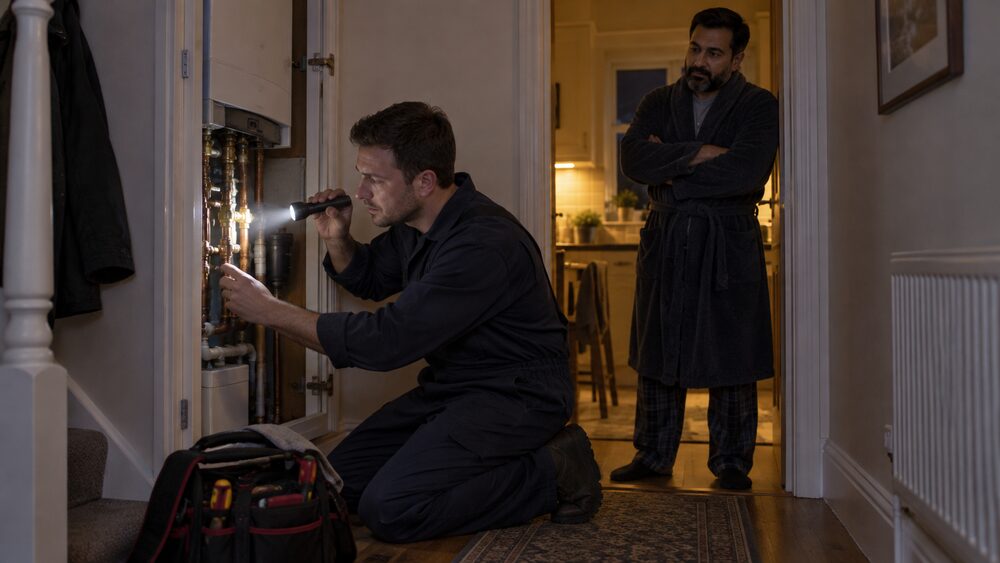
Accidental damage cover is the other common extra, and the page on accidental damage cover explains the difference between the limited version sometimes included as standard and the comprehensive version sold as an add-on9. Home emergency cover, which responds to burst pipes and boiler failures, is explained on the home emergency cover page.
What contents insurance costs: around £118 to £122 a year on average
Contents-only policies averaged £118 in the second quarter of 2026, down 9% (£11) year-on-year, while increasing by £1 compared with the previous quarter3. Research on low-income households puts the typical home contents insurance policy at £122 a year4. A combined buildings and contents policy costs considerably more, averaging £383 a year according to Association of British Insurers figures24.
The averages hide a wide spread. Where a reader lives, the local crime rate, the security on the property and the sum insured all move the price, and the same home can attract very different quotes from different insurers. The page on how insurance premiums are worked out explains the factors behind the number.
Low-income households can pay more for the same cover in ways that have nothing to do with risk. Households paying monthly rather than annually pay an extra £9 a year on average for contents insurance4, and those in more deprived areas pay just shy of £6 extra annually4. Insuring a single appliance rather than the whole home is far worse value: the cost of insuring white goods through single-item insurance is £194 a year4. The page on the poverty premium and low-income pricing covers these gaps in full.
Paying less: security, excess and monthly or annual payment
Several things within a reader's control reduce the premium. You may be able to reduce your home insurance premiums if you have good security, such as alarms, good quality locks or Neighbourhood Watch membership11. Some companies offer cheaper policies for older people, who may be considered lower risk11.
Payment method matters. You can choose to pay once a year or every month, and monthly payment sometimes costs more overall2. People are charged more for paying for things like insurance each month rather than all in one go for the year25, and the measured gap for contents insurance is £9 a year on average4. The page on paying monthly for insurance explains how the extra charge is worked out and what to weigh up.
The excess has a direct trade-off. A higher voluntary excess lowers the premium but increases the amount deducted from every claim, and the page on insurance excess explains the difference between compulsory and voluntary excess. Cheaper policies can also mean less cover rather than better value, so it is worth checking what is included26.
One trap worth avoiding is single-item cover sold at the point of sale. Weekly payment stores may try to sell their own cover, and in many cases it costs less to pay for contents insurance for everything in your home, rather than the one item27. The same logic applies to white goods insurance at £194 a year against a whole-home policy at around £118 to £1223.
Where a claim may not be paid
Claims fail for predictable reasons, and most are avoidable at the buying stage or by telling the insurer about changes. The first is classification: if an item can be reasonably removed and taken to another home, it is usually part of the contents and will not generally be covered by a buildings policy1. A reader claiming a movable item under the wrong half of a combined policy can find the claim refused.
Policy exclusions catch the rest. In one reviewed policy there was no contents cover for damage caused by pets, which around a tenth of policies cover, and it did not cover guests' belongings22. Carelessness is a recurring exclusion: incidents that occur through carelessness are usually not covered, and insurers will often reject claims where you have not taken reasonable care28. The page on why insurance claims are rejected covers the common grounds in detail.
Two situations need the insurer to be told in advance. Most standard policies require that your house is not left unoccupied for longer than 30 days, with some allowing up to 6024, and a home empty for more than 30 consecutive days may need a specialist unoccupied home insurance policy12. The page on how long a home can be empty covers this. Taking in a lodger is the other: tell your home insurance provider you are taking in a lodger, as you may need to update your policy29, and you might need to tell your insurer if you rent out a room, with premiums possibly increasing30. The page on changes you must tell your insurer about lists the rest.
Readers on low incomes should also know that Support for Mortgage Interest, the help available with mortgage interest payments, cannot help pay for any insurance policies on your home, including home insurance and contents insurance31. The premium has to be budgeted for separately.
When your home is uninhabitable: somewhere to stay
If a fire, flood or other insured event makes a home unsafe, the policy may pay for somewhere else to live. Most home insurance policies will provide alternative accommodation where a property has been damaged and is no longer safe to live in32. Flood policies generally also include cover for temporary accommodation if your home has been made uninhabitable16, and insurers will generally pay for cleaning up and repairing your property as well as temporary accommodation33.
Home emergency policies can include the same help on a smaller scale: if your home is unsafe or uninhabitable, your policy might also provide alternative accommodation while the problem is being fixed34. The length and cost of this cover is capped in the policy documents, and the caps vary considerably, so a reader comparing policies should check the alternative accommodation limit as well as the contents sum insured.
Where the alternative accommodation itself goes wrong, for example because repairs are poor or the temporary home is unsuitable, the page on poor repairs or unsuitable alternative accommodation explains the options, including complaining to the insurer and then to the Financial Ombudsman Service.
Complaints: 26% upheld by the Financial Ombudsman
If an insurer refuses a claim or handles it badly, the complaint can be taken to the Financial Ombudsman Service free of charge. The ombudsman publishes uphold rates by product. In Q3 2025/26 it upheld 26% of contents insurance complaints in the consumer's favour6. In Q1 2026/27, 472 contents insurance complaints were opened, and across all financial products the ombudsman upheld 26% of the cases it resolved that quarter in favour of the consumer35. Across the whole of 2025/26, the average uphold rate across all financial products was 30%36.
An uphold rate of around a quarter means most complaints are decided in the insurer's favour, which is itself useful information: a complaint is a second chance, not a guaranteed reversal. The strongest complaints tend to be about how a claim was handled rather than about a clear exclusion in the wording. The page on complaining about an insurer explains the process and the time limits, and the page on how long an insurer has to respond covers the deadlines the insurer must meet.
One change of circumstance that ends in cancellation rather than complaint: joint policies are designed for policyholders living at the same address, so after a divorce they usually need to be cancelled37. A separating couple with a joint contents policy should contact the insurer promptly, because a claim made after the household has split may not be handled as expected.
Sources37 cited
- Home insurance complaints the Financial Ombudsman can help with Financial Ombudsman Service
- What is contents insurance Lloyds Bank
- Average claim for subsidence reaches record £20,000 amidst hot weather Association of British Insurers, 2026
- The Poverty Premium 2026 University of Bristol Personal Finance Research Centre, 2026
- Are you sure you're insured? Beware these 10 small print surprises Which?, 2023
- Quarterly complaints data Q3 2025/26 Financial Ombudsman Service, 2025
- Home buying and selling jargon HomeOwners Alliance, 2026
- Home insurance guides British Insurance Brokers' Association, 2022
- Do you need home insurance add-ons Which?, 2026
- 5 winter risks your home insurance might not cover Which?, 2026
- Shopping around for insurance Independent Age, 2026
- 6 questions to ask before you choose a home insurance policy Which?, 2025
- Retirement Living Standards in the UK in 2023 Pensions and Lifetime Savings Association, 2023
- A Minimum Income Standard for the United Kingdom in 2024 Joseph Rowntree Foundation, 2024
- Renting a property Royal Institution of Chartered Surveyors, 2026
- Home insurance flooding Which?, 2026
- Insurance for tenants and renters Lloyds Bank, 2026-09-27
- Financial exclusion of individuals Responsible Finance, 2026
- Insurance and Flood Re: a Wales perspective Welsh Government, 2025
- After a flood: making an insurance claim nidirect, 2024
- Nationwide home insurance review Which?, 2026
- NFU Mutual home insurance review Which?, 2026
- Gadget insurance: how to get the best cover Which?, 2025
- Santander home insurance review Which?, 2026
- The poverty premium in 2026: payments Fair By Design, 2026
- The overlooked insurance that could pay if you're signed off work Which?, 2026
- Weekly payment store debt StepChange Debt Charity, 2026
- Mobile phone insurance: how to get the best cover Which?, 2025
- Taking in a lodger: tenants' rights Shelter Scotland, 2025
- Taking in a lodger if you have mortgage arrears Shelter England, 2026
- Support for Mortgage Interest Mental Health and Money Advice, 2025
- The ABI offers advice to anyone affected by wildfires in Suffolk and across the UK Association of British Insurers, 2026
- Does your insurance cover damage caused by bad weather Which?, 2025
- Home emergency insurance Financial Ombudsman Service, 2026
- Quarterly complaints data Q1 2026/27 Financial Ombudsman Service, 2026
- Annual complaints data and insight 2025/26 Financial Ombudsman Service, 2025
- Joint life insurance explained Which?, 2025




 MoneyHelperFree, impartial money and pensions guidance, set up by government
 Financial Ombudsman ServiceFree, independent help when a complaint about a firm is not put right
 FSCSProtects your money if a bank, insurer or investment firm fails
 Citizens AdviceFree advice on money, consumer and legal problems in England and Wales
 GOV.UKOfficial information on tax, benefits and government services