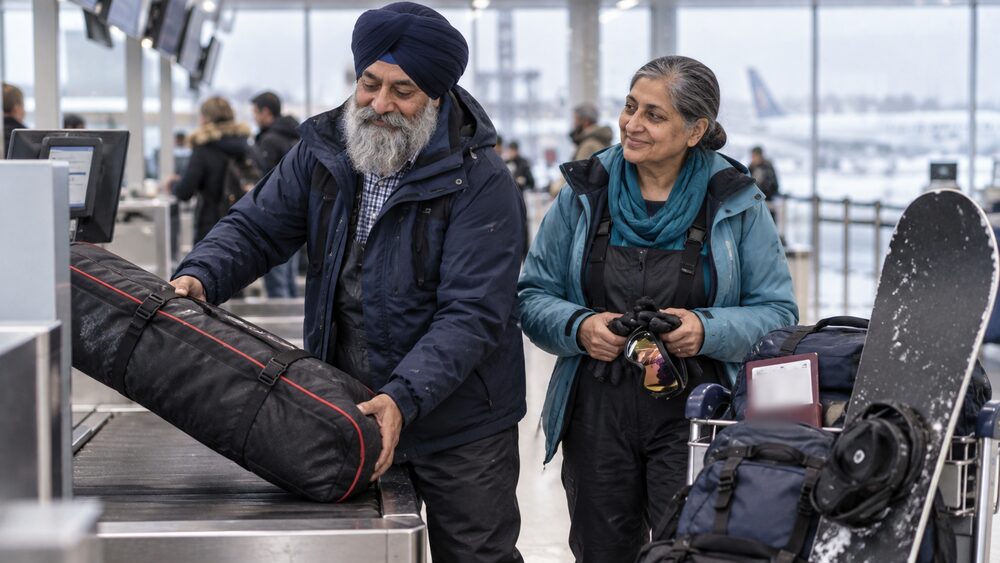
A skiing or snowboarding holiday needs more than an ordinary travel policy. Standard travel insurance does not usually cover winter sports, because the risk of injury is higher and the costs of dealing with an accident on a mountain, from rescue to an air ambulance, can be far greater than on a beach holiday. ABTA is clear that anyone planning a ski or snowboard trip needs "Winter Sports Cover", which most insurers sell but do not include in their standard policies1.
That cover is bought either as an add-on to a normal travel policy or as a specialist winter sports policy in its own right. The British Insurance Brokers' Association (BIBA) warns that it will probably cost about twice as much as normal holiday cover2. What it adds varies by insurer, but typically includes ski equipment, unused lift passes, piste closure compensation and, most importantly, the medical and rescue costs that a standard policy would refuse.
Standard travel insurance does not cover skiing
The starting point is that an ordinary travel insurance policy is built around the risks of an ordinary holiday: illness, cancellation, delays and lost baggage. Winter sports sit outside that, both because injuries are more likely and because the costs of dealing with them are on a different scale. ABTA's guidance is that if you are planning a ski or snowboard trip, "you will need 'Winter Sports Cover'. This is readily available from most insurance providers, but is not included in standard policies"1. The Post Office likewise describes specialist cover as mandatory for winter sports like skiing and snowboarding, because of the greater risk of emergency costs5.
Which? makes the same point from the other direction: there are usually limits on pursuits in a standard policy, so while many policies cover a range of sports and leisure activities, they may not allow you to claim for winter sports such as skiing6. The practical consequence is not just that a broken leg goes unpaid. It is that the biggest costs of a skiing accident, mountain rescue, an air ambulance or treatment in a private facility, fall entirely on the holidaymaker. ABTA notes that the GHIC is not a replacement for travel insurance precisely because it will not cover those bills, including ski or mountain rescue or being flown back to the UK1.
What winter sports cover adds on top of the usual medical, cancellation and baggage protection varies by insurer, but the pattern is consistent across providers:
| What is covered | Examples from providers' own terms |
|---|---|
| Ski equipment (owned) | Tesco: £500 at Economy level, £1,000 at Standard, £1,500 at Premier, with a single article limit of £5007 |
| Ski pack (equipment-related extras) | Chase Protect: Ski Pack cover of £2008 |
| Ski equipment loss, theft, damage or delay | Chase Protect pays if ski equipment is delayed in reaching you by at least 12 hours8 |
| Lost or stolen ski pass | Virgin Money: £250 at its Silver cover level, as an optional extra9 |
| Unused ski pass | AIB (NI): £75 for each full 24 hours, up to a maximum of £300 per person10 |
| Medical expenses | AIB (NI): unlimited medical expenses under its winter sports cover10 |
| Piste closure | Tesco: compensation if a lack of snow or an avalanche results in the skiing facilities at your resort being closed, conditions apply7 |
The figures in the table are illustrations from individual providers' own terms, not market-wide standards. What matters when comparing policies is that the same heading, "ski equipment" or "ski pack", can mean quite different amounts, and that the level of cover you buy, as with Tesco's three tiers, changes the limits7.
Cost: often around twice the price of normal holiday cover
BIBA's travel insurance checklist is blunt on price: winter sports cover "will probably cost twice as much as normal holiday cover"2. The reason is the risk profile. A policy that might have to pay for a helicopter rescue from a mountainside, private medical treatment abroad and an early flight home is pricing a very different event from a week in a hotel by the sea.
Price is also driven by the usual travel insurance factors, which stack on top of the winter sports loading. Travel insurance can become more expensive as you get older, especially if you have a medical condition or disability11. The excess you choose matters too: usually, the higher the excess you agree to pay, the cheaper the travel insurance12. BIBA's skiing guidance adds a warning worth heeding before you opt for a high excess to cut the premium: check that your policy provides the cover you need and that you can afford the excess3.
How the excess works is worth understanding, because it is not a single deduction. The Financial Ombudsman Service explains that travel insurance policies usually charge separate excesses for each individual claiming under the policy and each section of the policy being claimed under4. On a family skiing holiday, that could mean an excess per person and per section, so a claim involving medical expenses and lost equipment could see several deductions applied. Which? has found that with a third of policies the number of times an excess is applied is capped to twice, which limits the damage, but that cap is not universal13.
Some winter sports extras are structured as daily benefits rather than lump sums. AIB (NI)'s unused ski pass cover pays £75 for each full 24 hours that a pass goes unused, up to a maximum of £300 per person10. That kind of cover is designed to reimburse the value of a pass you cannot use because of injury or illness, not to compensate for a spoiled holiday more broadly.
For more on how premiums are built up, see how insurance premiums are worked out, and for the deduction that applies when you claim, see insurance excess explained.
Add-on or included as standard: how you can get it
There are three main routes to winter sports cover, and the differences between them matter for what you end up with.
The first is an add-on to a travel policy you buy for the trip. AIB (NI), for example, sells Winter Sports Cover as an extension that can be added to any of its single or annual holiday travel insurance policies, alongside other optional extensions such as European car hire excess, business cover and excess waiver14. The Post Office similarly treats winter sports as a mandatory upgrade for skiing and snowboarding trips rather than something included in its base policy15. If you buy a single trip policy, the winter sports element covers that trip; on an annual multi-trip policy, it typically applies to winter sports trips within the year, subject to any day limits.
The second is a specialist winter sports policy, bought standalone, which some travellers prefer where an insurer's add-on does not fit, for example for a long season or unusual activities.
The third route, which many people already have without realising, is a packaged bank account. Packaged bank accounts can include travel insurance, car breakdown cover and mobile cover for a monthly or annual cost16. Some of these include a winter sports element. Royal Bank of Scotland's packaged account travel insurance, for instance, includes family travel insurance for trips in the UK and worldwide up to 90 days, including 31 days for winter sports on its Premier Reward Black account, with winter sports trips restricted to 22 days on its Silver level and 31 days on Platinum and Black17.
There are rules around how these accounts are sold and administered. Where a customer has reached, or will reach before the next annual statement, an age limit on claiming benefits under a travel insurance policy included in a packaged bank account, the firm must state this clearly and prominently in the statement and annually thereafter19. The Financial Ombudsman Service has also upheld complaints about packaged bank accounts being mis-sold, in cases where the included insurance, such as travel insurance and breakdown cover, was of no use to the customer because of their circumstances20. If you think the insurance in your packaged account was sold to you when you could not use it, see insurance in packaged bank accounts and complaining about an insurer.
Going off-piste: check your policy allows it
Off-piste skiing is where winter sports cover gets conditional. BIBA's checklist advises: "If you plan to go 'off-piste' check that your policy allows you to"2. Not all policies do, and those that do often attach conditions. BIBA's skiing guidance lists two to check before travel: whether your policy requires a local guide and/or a helmet to be worn3. A policy that pays for a guided off-piste day may refuse a claim for an accident on an unguided one, and a helmet requirement means an injured skier who was not wearing one could see a claim reduced or refused.
The firmest line in the guidance concerns closed areas: "Never ski or board in closed areas, it is extremely dangerous and insurance cover may be invalidated"3. This is not a technicality. Closed pistes are closed for reasons such as avalanche risk, and an insurer faced with a claim for a rescue from a closed area may treat the policy as void for that claim.
*A resort's piste map shows which runs are open. Insurance cover generally follows the resort's own markings, and closed areas are out of bounds for both safety and cover.
Piste closure cover, one of the distinctive parts of a winter sports policy, works differently from most travel insurance. Rather than paying out for an event like illness, it compensates you when the skiing itself is unavailable. Tesco's winter sports cover, for example, pays compensation if a lack of snow or an avalanche results in the skiing facilities at your resort being closed, subject to conditions7. Chase Protect's terms show how a trigger works in practice: the section pays a daily benefit when your pre-booked ski resort is shut for at least 24 hours, preventing you from taking part8. A closure of a few hours, or a resort that is partially open, may not meet the trigger.
Related extras can extend to the money spent on the mountain. Hiscox's gap year travel insurance offers an optional extension covering unused portions of lift and resort passes, ski school and equipment hire if you have an accident, are ill, or if your pass is lost or stolen22. For more adventurous plans, Hiscox notes that activities listed as Levels 3 and 4, such as heli-skiing, flying or bobsleigh, can be added for an additional premium22. The lesson generalises: the further your plans sit from piste skiing, the more likely it is that a standard winter sports extension is not enough on its own.
Equipment claims have their own conditions. BIBA advises reading what your policy says about items left unattended, whether left in a vehicle, in public or even at a table, as there may be exclusions3. Skis left outside a mountain restaurant, or a jacket over a chair, are exactly the kind of scenario these clauses are written for.
Where winter sports cover may not apply
Even with winter sports cover in place, there are boundaries, and knowing where they sit is the difference between an expected claim and a rejected one.
Professional and competitive use. Tesco's winter sports cover states it is not for professional sports or entertainment and racing events7. Cover designed for a holiday does not extend to competing, and a policyholder who enters a race may find they had no cover for the whole trip's winter sports element.
Closed areas and unattended items. As above, skiing or boarding in closed areas may invalidate cover3, and items left unattended may be excluded from equipment claims3.
Changing your mind. Deciding that you no longer want to travel, called disinclination to travel, is not covered under travel insurance23. Equally, the Financial Ombudsman Service notes that cover is usually provided only if a cancellation or missed flight is caused by a specific event: if you change your mind about travelling or miss your flight, your insurance may not cover you24.
Costs you can get back elsewhere. Travel insurance only provides cover for non-refundable costs, as Aviva's claims guidance for TSB customers puts it25. If the tour operator refunds the hotel, the insurer does not pay for it again.
Operator and airline failure. Insurers confirmed to the Financial Ombudsman Service that, in most cases, their policies did not provide cover for when travel operators go out of business26. Which?'s analysis of policies found only 12% cover holiday company bankruptcy and just 10% cover airline failure13. A skiing holiday booked with a small specialist operator is, statistically, less likely to have that protection than most.
Activity-specific exclusions. Policies carve out activities individually. Which? has reported on providers excluding personal liability cover for certain activities, meaning the policy will not pay if you accidentally injure someone else, with exclusions ranging from banana boat rides and jet skiing to kitesurfing and kayaking at one provider, and downhill cycling and personal liability excluded altogether at another27. Winter sports policies can carry the same kind of activity lists, so the winter sports section of the policy wording deserves the same scrutiny as the main sections.
Medical circumstances. AIB (NI)'s travel insurance, for example, does not provide cover for medical conditions where the insured person has been diagnosed with a terminal condition, or who are travelling to obtain medical treatment or travelling against medical advice14. Every insurer applies its own health rules, which is why disclosure before buying matters so much.
Natural disasters and disruption. Most travel policies, 80% in Which?'s analysis, cover cancellations due to natural disasters like volcanic eruptions or earthquakes, either as standard or as an optional add-on13. Where the Foreign Office changes its advice to recommend against all or all but essential travel to a country after booking, policies should cover costs as a result of cutting your trip short, including additional accommodation and travel expenses to get home safely28. But the trigger is the official advice changing, not a general sense that conditions on the mountain look risky.
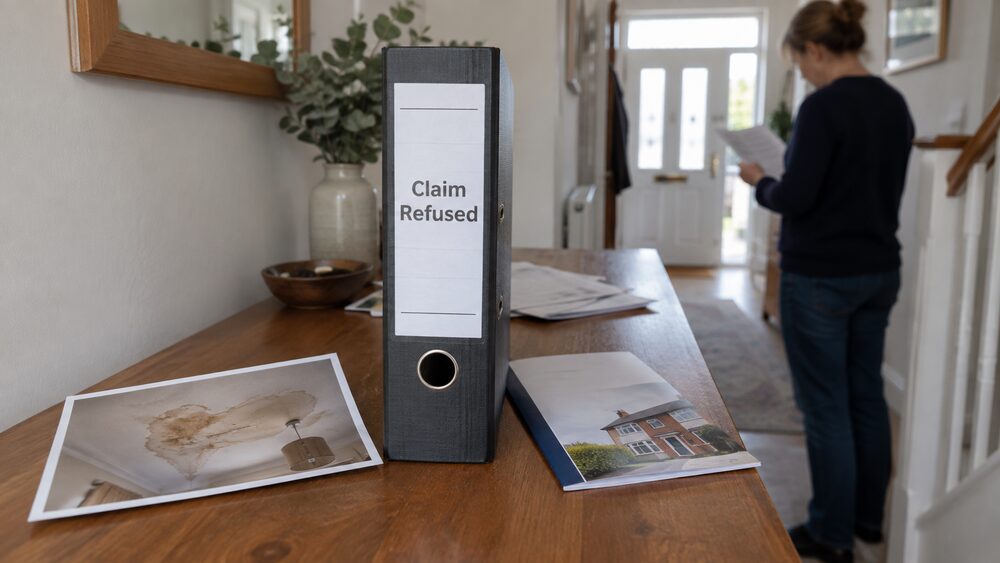
If a claim is rejected, the reasons usually trace back to one of these boundaries, or to information the insurer was not told. See why insurance claims are rejected for what to do next.
Buying ski insurance: what to check before you travel
The single most repeated piece of advice across every independent source is about timing. Scope advises: "Buy travel insurance as soon as you book your trip so that you are covered if anything happens before you go"29. ABTA makes the same point from the cancellation angle: it is down to you to buy appropriate insurance at the time of booking, so your money is protected if you have to cancel30, and it reminds travellers not to forget to purchase travel insurance when making the booking, in case a claim becomes necessary31. A skiing holiday booked months ahead has a long window in which illness, injury or family circumstances could end it.
Disclosure is the second pillar. You must tell an insurance company of any conditions you have before buying a policy, and once you have bought it, you must tell the insurer if there are any changes in your health or condition29. Which? warns that the duty continues after purchase: your insurer must be told of changes including new medical conditions, changes to medication, amended travel dates, different accommodation or adding extra travellers, and if the insurer is not informed, a claim could be rejected even if the issue seems unrelated18. The Financial Ombudsman Service has also looked at cases where a significant change in health led a customer to buy new cover elsewhere; in such circumstances it might think it fair for the current insurer to pay the difference in premium charged by the new insurer, up to the value of what a cancellation claim would have been32.
A checklist before buying, drawn from the independent guidance:
- Winter sports included: confirm the policy actually covers skiing or snowboarding, at the level and for the dates you need1
- Off-piste terms: check the policy allows off-piste, and whether it requires a local guide and/or a helmet3
- Equipment limits: check the cover for your own skis or board, hired equipment and the single article limit7
- Excess: check you can afford the excess, remembering it may apply per person and per section3
- Piste closure trigger: check how long the resort must be closed before the policy pays8
- Health disclosure: declare all medical conditions, and tell the insurer of any changes afterwards29
- Activities: check any activity lists and exclusions, especially for anything beyond piste skiing27
The information the seller gives you about the insurance should be clear, fair and not misleading, a standard the Financial Ombudsman Service applies when looking at complaints where the customer did not get advice33. Which? analysed over 150 policies and identified six things to check before buying cover, underlining how much policies differ on paper even when their headlines look similar34.
For travel to the EU, government guidance is that travel insurance is needed before you go away, and that the terms and conditions of the policy and its cover for healthcare and travel disruption are what to be satisfied with before relying on it35. The GHIC and EHIC are not a replacement for travel insurance, and Marie Curie's guidance for people with serious illnesses lists what a policy needs to cover: medical treatment while you are away, medical equipment you are taking with you, getting home if you need to come home early, cancelling your trip if you become unwell, and repatriation36. On a winter sports trip, mountain rescue and air ambulance costs belong at the top of that list1.
If anything goes wrong with the policy itself, whether a rejected claim or a sense that the cover was sold on terms that did not fit, the Financial Ombudsman Service can look at complaints about travel insurance free of charge. The dedicated guides to how travel insurance works, travel insurance with pre-existing medical conditions and when to buy travel cover cover each of those subjects in more depth.
Sources36 cited
- Travel insurance advice, ABTA ABTA, 2026
- Travel insurance checklist, BIBA British Insurance Brokers' Association, 2022-11-10
- Skiing and winter sports travel insurance guide, BIBA British Insurance Brokers' Association, 2023-02-13
- Travel insurance policy excesses and limits, Financial Ombudsman Service Financial Ombudsman Service, 2026-09-26
- Travel insurance, Post Office Post Office, 2026
- 7 common travel insurance mistakes to avoid when holidaying abroad, Which? Which?, 2024-04-27
- Winter sports insurance, Tesco Bank Tesco Bank, 2026-09-26
- Chase Protect travel insurance terms and conditions, Chase UK Chase UK, 2026
- Virgin Money travel insurance policy wording, Virgin Money Virgin Money, 2026
- Winter sports cover, AIB (NI) AIB (NI), 2026
- Shopping around for insurance, Independent Age Independent Age, 2026-09-26
- What insurance might I need with a mental health condition, Mental Health and Money Advice Mental Health and Money Advice, 2023-09-05
- 7 questions to ask yourself when buying travel insurance, Which? Which?, 2024-06-18
- Travel insurance, AIB (NI) AIB (NI), 2026
- Single trip travel insurance, Post Office Post Office, 2026
- Packaged bank account complaints, Which? Which?, 2025-06-04
- Travel insurance, Royal Bank of Scotland Royal Bank of Scotland, 2026-09-25
- 7 costly travel insurance mistakes and how to avoid them, Which? Which?, 2025-12-07
- ICOBS 5.1.3C, FCA Handbook Financial Conduct Authority, 2012-12-13
- Consumer complains packaged bank account was mis-sold, Financial Ombudsman Service Financial Ombudsman Service, 2026-09-26
- Travel insurance claims FAQs NFU Mutual, 2026-09-26
- Gap year travel insurance details of cover, Hiscox Hiscox, 2026
- Travel insurance for people with mental health conditions, BIBA British Insurance Brokers' Association, 2026-09-26
- Problems with travel insurance, Financial Ombudsman Service Financial Ombudsman Service, 2025-03-14
- Aviva travel insurance claims, TSB TSB, 2026
- Full review 2018, Financial Ombudsman Service Financial Ombudsman Service, 2017
- 6 surprising travel insurance exclusions to watch out for, Which? Which?, 2026-08-04
- Will travel insurance cover a holiday to Cyprus or Dubai, Which? Which?, 2025-07-04
- Insurance advice, Scope Scope, 2025-10-14
- Cancelling travel arrangements without insurance, ABTA ABTA, 2026
- Cancellation fees charged by travel companies, ABTA ABTA, 2026
- Change in health and travel insurance, Financial Ombudsman Service Financial Ombudsman Service, 2026-09-26
- Mis-sold travel insurance, Financial Ombudsman Service Financial Ombudsman Service, 2026-09-26
- 6 questions to ask yourself before buying travel insurance, Which? Which?, 2025-05-30
- Passenger consumer rights when travelling to the EU, GOV.UK GOV.UK, 2020-12-31
- Travel insurance, Marie Curie Marie Curie, 2022-07-12

 MoneyHelperFree, impartial money and pensions guidance, set up by government
 Financial Ombudsman ServiceFree, independent help when a complaint about a firm is not put right
 FSCSProtects your money if a bank, insurer or investment firm fails
 Citizens AdviceFree advice on money, consumer and legal problems in England and Wales
 GOV.UKOfficial information on tax, benefits and government services