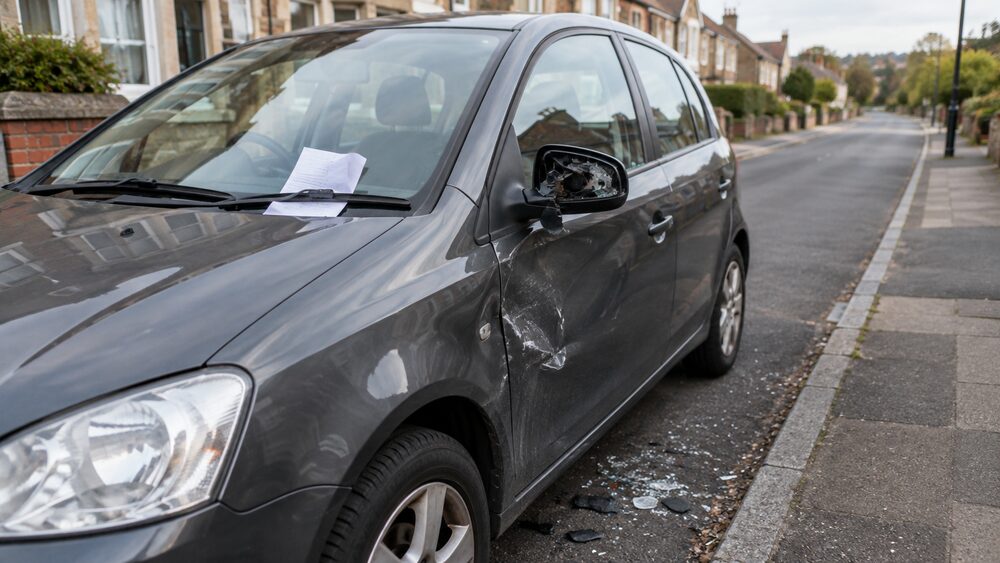
Being hit by a driver who has no insurance, or by one who drives off without stopping, feels like the worst kind of bad luck: someone else caused the damage, and there appears to be nobody to claim against. UK law recognises this problem and has a specific answer. The Motor Insurers' Bureau (MIB) makes sure that compensation is available to the innocent victims of uninsured drivers and of hit and run, or untraced, drivers1. Government guidance confirms that you may be able to claim compensation from the MIB if you have been injured or your property has been damaged by an uninsured driver2.
The MIB is not a benefit office and it is not a charity. It stands in place of the insurance the other driver should have had, paying compensation to people who, through no fault of their own, would otherwise be left with the cost of a smashed car, a hospital stay or lost earnings. Driving without insurance is against the law, and the penalties for it are covered in penalties for driving without insurance, but a prosecution does not by itself repair your car or pay for your injuries. That is what the MIB route is for.
The MIB pays compensation when the other driver has no insurance
Motor insurance is compulsory in the UK. Third party insurance is the minimum legal requirement, and it means you are covered if you have an accident causing damage or injury to any other person, vehicle, animal or property5. Every driver on the road is supposed to carry at least that. When a driver breaks that rule, the injured person still has a route to compensation: the MIB makes sure compensation is available to the innocent victims of uninsured drivers or hit and run (untraced) drivers1.
The practical effect is that an uninsured driver does not leave you with nowhere to turn. Government guidance sets out that you may be able to claim compensation from the MIB if you have been injured or your property has been damaged by an uninsured driver, and directs you to contact the MIB directly or read more information on the MIB website2. The claim is made against the MIB itself rather than against the driver personally, which matters because an uninsured driver is often precisely the kind of person with no assets to pursue.
It is worth understanding how the MIB fits alongside your own insurance, because the two routes are not mutually exclusive. If you have a comprehensive policy, your own insurer may deal with the damage to your car in the normal way, and some insurers go further: AXA, for example, promises its comprehensive customers that they will get back their no claims discount and excess if an uninsured driver damages the car and they are not at fault6. Aviva includes uninsured driver cover on its comprehensive car cover, refunding any excess paid if an uninsured motorist causes an accident, but does not include it on third party fire and theft cover7. The MIB route remains the safety net when there is no insurer, of the other driver or of your own, to pick up the loss. How car insurance works generally is covered elsewhere on the site.
Who can claim: drivers, passengers, pedestrians and property owners
The MIB's purpose is framed around the victim rather than the road user. It makes sure compensation is available to the innocent victims of uninsured drivers or hit and run drivers1, and government guidance confirms a claim may be possible if you have been injured or your property has been damaged by an uninsured driver2. That wording is deliberately broad. It is not limited to the driver of another car.
In practice the people who can claim fall into several groups:
- Drivers hit by an uninsured motorist, for damage to their vehicle and for injuries
- Passengers in any vehicle, including a passenger in the uninsured driver's own car, who are injured through no fault of their own
- Pedestrians, cyclists and motorcyclists struck by a vehicle with no insurance
- Property owners whose wall, fence, gate or other property is damaged by an uninsured driver2
The common thread is innocence. The scheme exists for victims, so a person who caused the accident themselves, or who was a willing passenger who knew the driver was uninsured, may find their position is different. Where a claim succeeds, the money paid is treated like other personal injury money: a payment received in respect of a personal injury includes compensation from the Motor Insurers' Bureau for injuries caused by an uninsured motorist, alongside court awards and payments from other compensation schemes8. That matters for benefits, because a first payment for a personal injury is ignored for 52 weeks from when you receive it8, so an MIB settlement does not immediately wipe out means-tested help.
If you have your own insurance, tell your insurer about the accident even if you do not intend to claim on your policy3. Your insurer should only treat a non-fault accident as a claim if it receives a claim from the other driver, or third party9, and the incident will normally also be recorded on the shared industry central database9, so concealing it helps nobody.
Hit and run drivers: report to the police straight away
A hit and run driver is, in the language of the MIB, an untraced driver: someone who caused damage or injury and cannot afterwards be found. The MIB pays compensation to victims of exactly this situation1, but your claim depends heavily on the paper trail you create in the first hours and days. The single most important step is reporting the accident to the police.
The law is strict about this. A driver who does not give their details at the scene must report the accident to the police as soon as possible within 24 hours1. Which? gives the same rule from the driver's side: where details are not exchanged at the scene, the accident must be reported at a police station or to a police officer as soon as possible, and in any case within 24 hours3. BIBA's accident checklist adds that where the police do not attend the scene, or where someone else's property has been damaged, the accident must be reported to the police10. Where another person is injured, the driver must produce their certificate of insurance to anyone at the scene with reasonable grounds to see it, and if it is not held at the scene, it must be taken to a nominated police station within seven days of the accident3.
For the victim of a hit and run, the police report does three things. It creates an official record that the accident happened, it starts the process of trying to trace the driver, and it gives the MIB something to work from when it assesses your claim. Failure to stop and failure to report are criminal offences for the driver who leaves the scene3, and a failure to report can also give an insurance company the right to refuse to cover you in future3, so the duty cuts both ways. Keep the police reference number: you will need it.
What to do at the scene of an accident
What you do in the minutes after any accident shapes both an MIB claim and any ordinary insurance claim. BIBA's checklist is blunt about the first rule: do not admit liability10. Admitting fault at the roadside, even to be polite, can complicate everything that follows, because liability is a legal question, not a matter of apology.
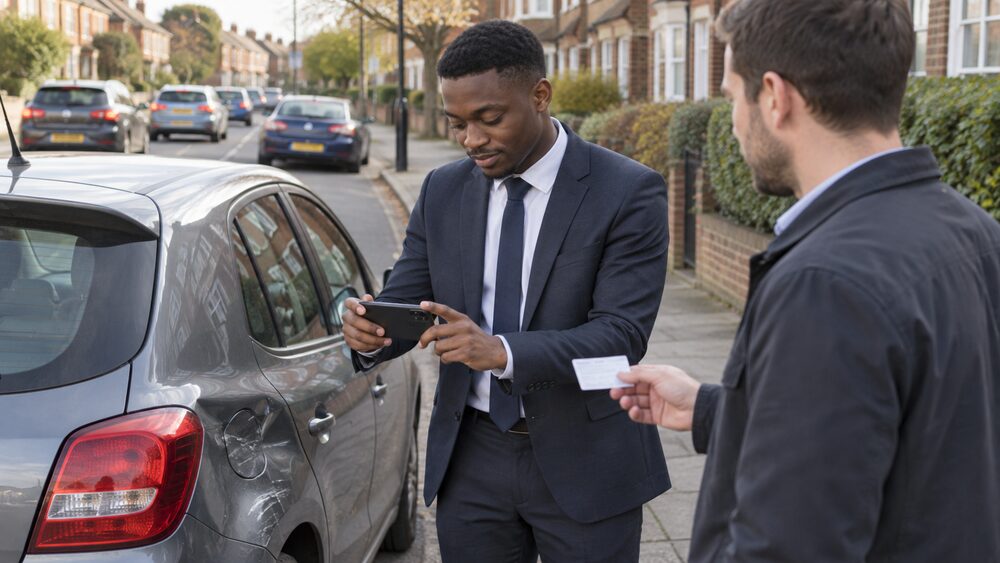
The details to gather at the scene are:
- The other driver's name, address and insurance details10
- The vehicle registration number3
- The name and address of the vehicle owner, if different from the driver3
- Witness names and contact details10
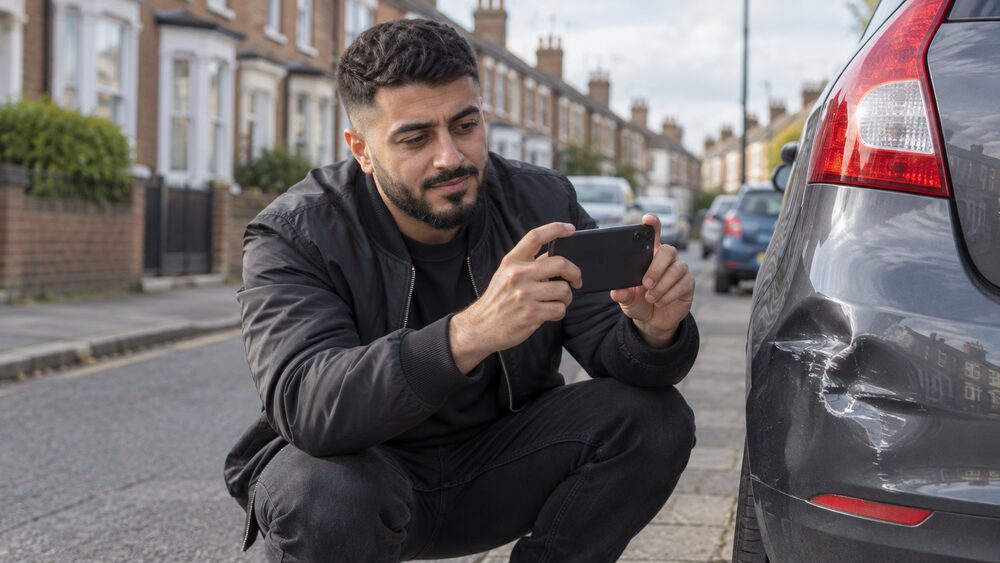
- Photographs of the damage, the road layout and any injuries
Call the police if anyone is injured10. If another person is injured, drivers at the scene must produce their certificate of insurance to anyone with reasonable grounds to see it3. If the other driver is uninsured or drives off, note everything you can: the registration even in part, the make and colour of the car, the direction of travel, and the time. Then report to the police within the 24 hour window if details were not exchanged1.
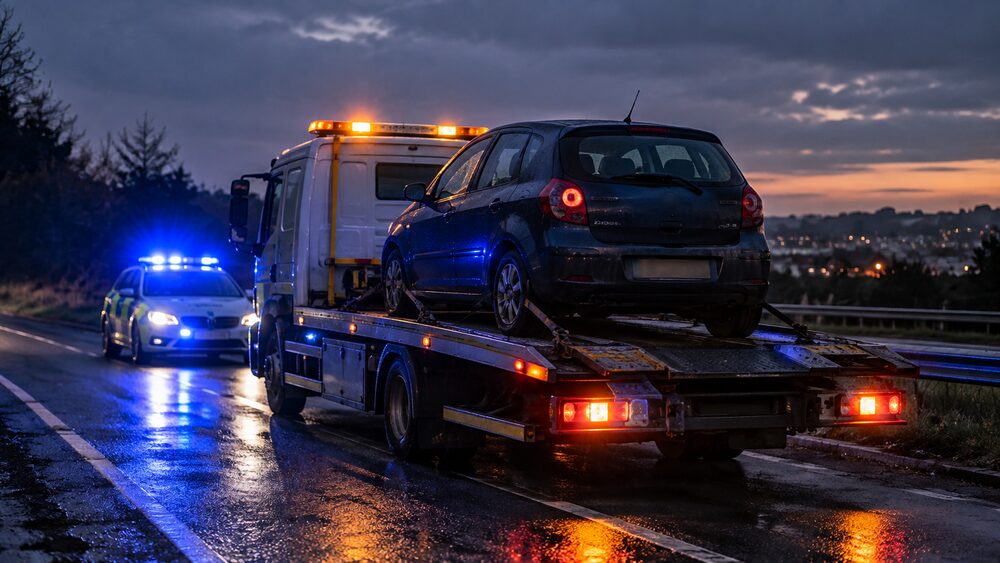
Two further points are worth knowing. Breakdown cover does not include picking up vehicles after road traffic accidents; that is the responsibility of motor insurers or repairers11, so do not assume a breakdown membership will recover a car after a crash. And if your vehicle is stolen in connection with what has happened, you must inform the police immediately10. After the scene, tell your own insurer about the accident even if you do not claim3, and read making a car insurance claim after an accident for the standard process.
How to make a claim to the MIB
The route into an MIB claim is direct. Government guidance says to contact the MIB directly or read more information on the MIB website2. You do not need to go through your own insurer to start one, although telling your insurer about the accident remains a separate duty under your policy3.
A claim will stand or fall on evidence, so gather what you can before you make contact:
- Report to the police if you have not already, within 24 hours where details were not exchanged1, and keep the reference number.
- Tell your own insurer about the accident, even if you are not claiming on your policy3.
- Contact the MIB directly or through its website2, giving the date, location, police reference and what happened.
- Supply evidence: photographs, witness details, repair estimates or valuations, and medical records or receipts for any injury or loss.
- Cooperate with enquiries and keep copies of everything you send.
Where the other driver is insured but their insurer is unhelpful, the rules are on your side. Under the FCA's claims handling rules for motor vehicle liability, each claims representative appointed by an insurer must be responsible for handling and settling a claim by an injured party, be resident or established in the United Kingdom, collect all information necessary to settle the claim, possess sufficient powers to meet the claim in full, and be capable of examining cases in the official language or languages of the UK4. A claim is treated as fully quantified when the injured party provides written evidence which substantiates or supports the amounts claimed4. Intermediaries without authority to deal with a claim must forward any claim notification to the insurer promptly, or tell the policyholder immediately that they cannot deal with it4.
Time limits for claiming
Time limits bite at two levels in an uninsured driver case, and it is worth keeping them apart.
The first is the police reporting deadline, which is short and strict: report within 24 hours if details were not exchanged at the scene1, and produce your certificate of insurance within seven days if it was not shown at the scene of an injury accident3. The second is your own policy. It will be a condition of your insurance policy that you report the accident to your insurance company within a reasonable time, and what counts as reasonable differs between policies3. Missing that condition can give your insurer grounds to question a later claim, so report promptly even when you are the victim.
For the MIB claim itself, the published deadlines that concern the insurer's side rather than yours work as follows. Once an injured party presents a claim for compensation, the firm must, within three months, make a reasoned offer of compensation where liability is not contested and damages have been quantified, or provide a reasoned reply where liability is denied or not clearly determined or damages are not fully quantified4. Where liability is admitted later, a reasoned offer of settlement must follow within three months of that admission if the claim has been fully quantified4. The MIB also applies its own time limits to claims made to it, which vary with the type of claim, so the deadline that applies to a particular case is confirmed when contact is first made through the MIB website2. For injury claims generally, see how long do I have to claim after a road accident?.
How long an MIB claim takes and how you are paid
How long a claim takes depends mainly on two things: whether the driver can be traced, and how quickly your losses can be proved. The rules give a benchmark for the insured-driver side of the market. A firm must make a reasoned offer of compensation within three months of the injured party presenting the claim, where liability is not contested and damages have been quantified, or give a reasoned reply within that period where they are not4. Notification of claims representative appointment details must be made within ten business days of an appointment or of a material change4.
There is also a financial consequence for delay. A firm that does not make an offer as required must pay simple interest on the amount of compensation offered by it or awarded by the court to the injured party, unless interest is awarded by a tribunal4. In other words, the rules are designed to push insurers, and bodies standing in their place, to settle quantified claims promptly rather than sit on them.
When it comes to payment, an MIB settlement is treated like any other personal injury money. Compensation from the Motor Insurers' Bureau for injuries caused by an uninsured motorist counts as a payment received in respect of a personal injury8, and a first payment for a personal injury is ignored for 52 weeks from when you receive it8. That 52 week disregard matters if you receive means-tested benefits, because the settlement will not affect them immediately. Property damage payments, such as the cost of repairs, are separate from injury payments and are not subject to that disregard. If money is slow to arrive from a council benefit linked to the accident, you can ask the council for an interim payment or payment on account if you do not get any money after two weeks8, though that route relates to benefits rather than the MIB itself.
Accidents with a foreign vehicle, and accidents abroad
Two situations confuse people, and they are different.
A foreign vehicle in the UK. If you are hit in the UK by a vehicle that is registered abroad, the FCA's claims handling rules apply to claims arising from any accident caused by a vehicle normally based in the United Kingdom4, so a foreign-based vehicle is a different case, and the MIB and the UK-based claims representative system handle cross-border accidents through their own arrangements. The starting point is the same as for any uninsured or untraced case: report to the police, gather details, and contact the MIB2.
Driving abroad yourself. Here your own policy is the key. BIBA warns that if you do not tell your insurer about your plans and have an accident abroad, you may find yourself paying the extra costs that would not have been insured had the accident happened in this country13. UK motor policies' overseas cover does not automatically include theft or damage to your car1. Check whether your policy covers the countries you will visit, and tell your insurer before you go. A GHIC is not a replacement for travel insurance, because it will not cover all the medical bills you could incur if you fall ill or are injured abroad, for example if you need an air ambulance, treatment in a private facility, ski or mountain rescue, or being flown back to the UK14. See does my car insurance cover me abroad? and do I need a Green Card to drive in Europe?.
Where an MIB claim may not apply
The MIB exists for innocent victims, and its scope has edges. The clearest one is fault: the scheme compensates the innocent victims of uninsured drivers1, so a person who caused the accident, or who contributed to it, cannot expect the same outcome. A willing passenger who knew the driver was uninsured may also face difficulties.
Other routes do not substitute for it. The Industrial Injuries Scheme, for example, provides benefits for disablement because of an accident at work or one of a list of prescribed diseases5, which is a workplace scheme and has nothing to do with road accidents. Its rules illustrate how schemes draw boundaries: people who were self-employed when exposed to asbestos cannot usually claim Industrial Injuries Disablement Benefit5. The MIB draws its own boundaries in the same way.
On your own policy, exclusions can bite in ways people do not expect. Most motor insurance policies have an exclusion saying people should take reasonable care to protect their vehicle from loss or damage, but the ombudsman has said that if there is no evidence the customer recognised the risk, they have not been reckless and it is unfair to apply the exclusion15. Insurers can also cancel policies and refuse claims for misrepresentation: in one ombudsman case study, Benjamin's insurer cancelled his policy and turned down his claim after discovering he had not mentioned a driving conviction16. If an insurer cancels your policy, you could find yourself on the uninsured side of the line, which is why giving wrong information to an insurer matters so much. And if an insurer fails altogether, the Policyholders Protection Scheme has historically paid 100% of a claim where insurance is compulsory, such as third party motor insurance17; see what happens if your insurer goes bust.
Appeals and complaints
If you are unhappy with how an insurer has handled an accident claim, there is a fixed sequence. Complain to the insurer first. In one ombudsman case study, Farhan raised his concern with his insurer and made a complaint, and only after being unhappy with the outcome did he contact the ombudsman service18. If the insurer's final response does not satisfy you, the Financial Ombudsman Service can look at complaints about motor insurance claims if you think you have been treated unfairly by your insurer12.
When the ombudsman examines a motor claim complaint, it expects to see the policy schedule, policy certificate, full policy terms, contact records, claim forms and notes, a timeline of what has happened, engineer or expert reports, and vehicle valuations showing the registration number, mileage and which guide was used9. Keeping your own file from day one puts you in that position automatically.
Complaint volumes show how common these disputes are. In the first quarter of 2026/27 the ombudsman recorded 4,096 new complaints about car or motorcycle insurance, alongside 283 about commercial vehicle insurance, 224 about roadside assistance insurance and 48 about caravan insurance19. If your complaint is about the MIB itself rather than an insurer, raise it with the MIB first through its own complaints process, which you can find through the MIB website2, and take independent advice if it remains unresolved. Free help is available from the ombudsman12, and complaining about an insurer explains the process step by step.
Sources19 cited
- Motor insurance explained nidirect, 2026-05-27
- Compensation for victims of uninsured drivers GOV.UK, 2026-09-26
- I've been in a car accident, do I have to claim on my insurance? Which?, 2026-03-31
- ICOBS 8: motor vehicle liability insurers, claims handling Financial Conduct Authority, 2021
- Vehicle insurance GOV.UK, 2026-09-26
- Uninsured driver promise AXA, 2026-09-26
- Over 50s car insurance Aviva, 2026-09-26
- Personal injury awards Entitledto, 2026-09-26
- Fault claims and no claims bonuses Financial Ombudsman Service, 2026-07-10
- Accident checklist British Insurance Brokers' Association, 2026-09-26
- Vehicle breakdown cover Financial Ombudsman Service, 2022-05-25
- Credit hire and credit repair services following a no-fault accident Financial Ombudsman Service, 2026-09-16
- Driving abroad British Insurance Brokers' Association, 2023-02-13
- Travel insurance ABTA, 2026
- Vehicle theft Financial Ombudsman Service, 2026-09-16
- Insurer cancelled policy and turned down claim after misrepresentation Financial Ombudsman Service, 2026-09-26
- Policyholders Protection Board consultation 24/1 Financial Services Compensation Scheme, 1999-06
- Consumer feels wasn't given enough information buying telematics policy Financial Ombudsman Service, 2026-09-26
- Quarterly complaints data Q1 2026/27 Financial Ombudsman Service, 2026
 MoneyHelperFree, impartial money and pensions guidance, set up by government
 Financial Ombudsman ServiceFree, independent help when a complaint about a firm is not put right
 FSCSProtects your money if a bank, insurer or investment firm fails
 Citizens AdviceFree advice on money, consumer and legal problems in England and Wales
 GOV.UKOfficial information on tax, benefits and government services