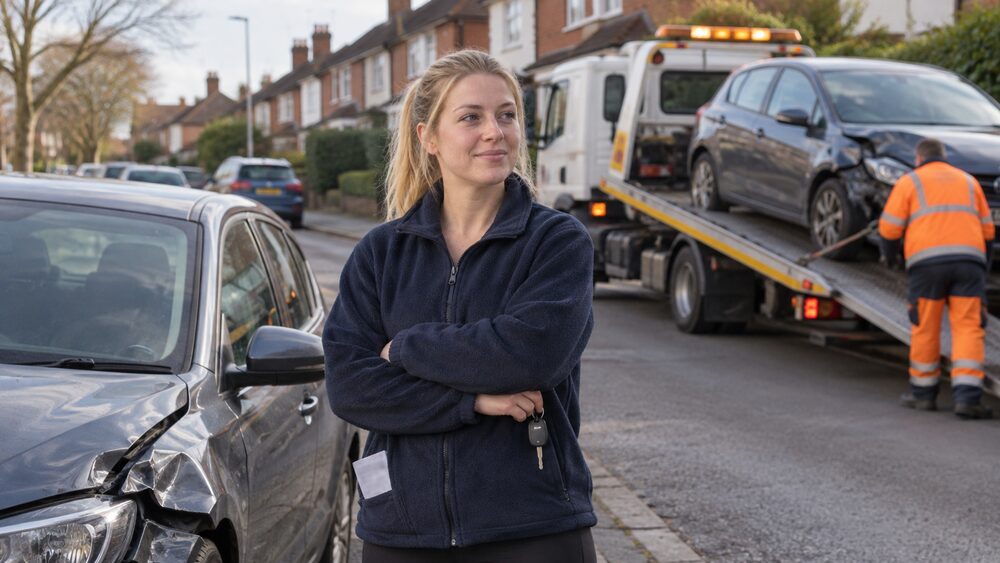
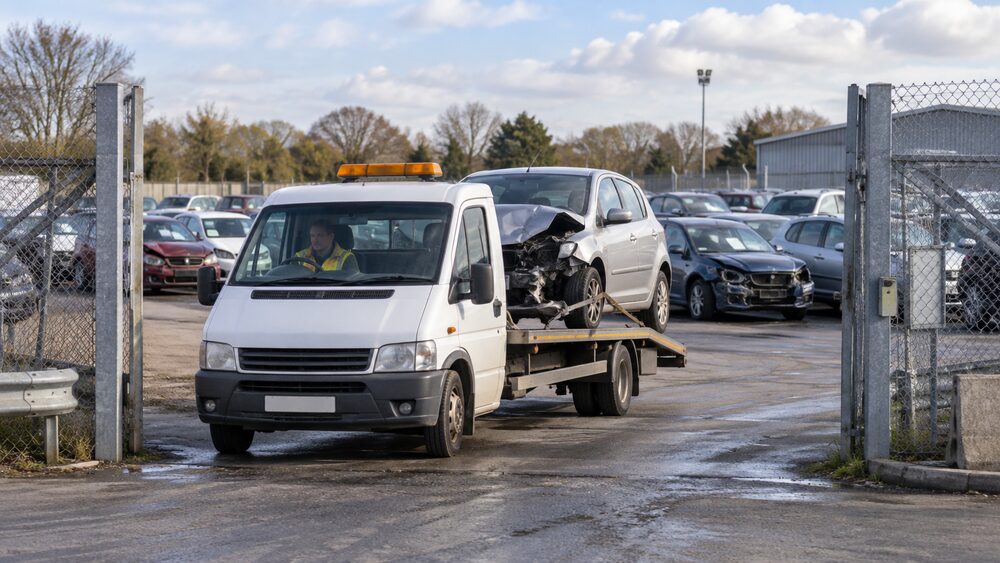
When an insurer decides your car is not worth repairing, it declares it a "write-off", which it may also call a "total loss". Instead of paying for repairs, the insurer offers you a lump sum based on what the car was worth, and the damaged vehicle then belongs to the insurer1. A car can be written off for two main reasons: the damage is too expensive to fix relative to the car's value, or the car has been stolen and never found1.
The decision is the insurer's, not yours, but it is not arbitrary. Industry practice is that an insurer will consider writing off a vehicle if repair costs come to around 60 to 70 per cent of its pre-accident value, and the Financial Ombudsman Service would usually agree a write-off is reasonable at that level, though repairing at a higher cost is not necessarily unfair3. Once you accept payment of the full market value, the insurer usually owns the salvage1.
What a write-off means and who decides
A write-off, or total loss, is the insurer's conclusion that paying you what the car is worth makes more sense than paying to fix it. The Financial Ombudsman Service, which settles disputes between consumers and insurers, explains that a vehicle might be written off because it is not worth the cost of repairing it, or because it has been stolen and never found1. In practice, a car with serious damage, or one needing repairs that almost outweigh its value, will not be repaired5.
The insurer decides, using an engineer's assessment of the damage and estimates of repair costs against the car's value. The rough industry yardstick is that repairs costing around 60 to 70 per cent of the pre-accident value tip a car into write-off territory, though there is no rule forcing an insurer to repair a car below that figure or to write one off above it3. If you disagree with the decision itself, or with the valuation behind it, you can challenge it, and ultimately complain to the Financial Ombudsman Service, which can look at write-off decisions as well as repair disputes3.
Once the insurer offers a lump sum and you accept the full market value, the damaged vehicle, known as salvage, usually becomes the insurer's property1. That is the trade at the heart of a total loss settlement: money to you, the car to them, unless you arrange to buy it back.
Write-off categories: A, B, S and N
Every written-off vehicle is placed in one of four categories, which determine what can legally happen to it afterwards4. The categories also split into two kinds of loss: an "actual loss", where the vehicle must be destroyed in whole or in part (categories A and B), and a "constructive loss", where the vehicle could be repaired but the cost would exceed its replacement value (categories S and N)7.
| Category | What it means | What happens to the car |
|---|---|---|
| A | Cannot be repaired | Entire vehicle has to be crushed4 |
| B | Body shell cannot be saved | Body shell has to be crushed, but other parts can be salvaged4 |
| S | Structural damage | Can be repaired and returned to the road4 |
| N | Non-structural damage | Can be used again once repaired to a roadworthy condition4 |
The category matters most if you are buying, selling or keeping a repaired car. A category S or N vehicle can be repaired, resold and returned to the road, and category S vehicles are often slightly cheaper to buy than similar cars of the same age and mileage7. The category is recorded officially: the DVLA will record a category S vehicle's category in its log book4.
How the insurer values your car
When your vehicle is written off, the insurance company pays you the current value of the vehicle, instead of the cost of repairing it4. The Financial Ombudsman Service describes this as the market value: the amount your vehicle would have been worth just before it was stolen or damaged1. It is not what you paid for it, what you owe on it, or what a replacement would cost today, and that gap is the source of most write-off disputes.
There are exceptions. Some policies are written on an "agreed value" basis, where you and the insurer fix a sum in advance, and if the car is declared a total loss the insurer is expected to pay out the amount that was agreed in the policy1. Agreed valuations are a feature of classic car insurance, where the insurer pays a pre-agreed sum if the car is declared a total loss8, and of modified car insurance, where an agreed value policy pays out the agreed figure regardless of market value, and usually costs more9. If your car is new, many motor policies for new vehicles provide a replacement new car if yours is written off within a certain time, or if the repair cost is more than 60 to 70 per cent of the current list price1.
For everyone else, the market value is the yardstick, and the ombudsman will check that the insurer's figure reflects what the car would realistically have sold for. Vehicle history and valuation services use standard industry information, updated every month, to estimate current market values, which gives a sense of where these figures come from10.
Deductions from the payout
The offer you receive is the market value minus certain deductions. The main ones are:
- Your excess. The compulsory and voluntary excess you agreed when you bought the policy is deducted from a payout, just as it would be from a repair claim. The guide to insurance excess explains how the two kinds work.
- Salvage value, if you keep the car. The ombudsman would normally think it fair for the insurer to take off the amount it would have made from selling the scrapped vehicle, but it will ask the insurer for evidence to prove how much it would have got for the salvage1.
- Remaining monthly premiums. If you pay for your insurance monthly, a total loss claim does not cancel the outstanding balance. The money owed for the remaining months is usually deducted from the claim rather than repaid directly5.
That last one catches many people out. The credit agreement that funds monthly insurance is separate from the cover itself: once the claim is settled the policy usually ends, but the debt for the remaining instalments does not, and it is typically settled out of your payout5. The guides to paying monthly for insurance and cancelling insurance cover how these arrangements work.
Challenging a low valuation offer
You do not have to accept the first figure an insurer offers. The Financial Ombudsman Service handles complaints about vehicle valuations and write-offs, and its approach gives you a framework: the insurer must pay the market value, or the agreed value if the policy is on that basis, and it must be able to evidence any deductions such as salvage1. If you think the figure is too low, gather evidence of what cars like yours, of the same age, mileage and condition, were actually selling for at the time of the incident, and put it to the insurer in writing.
If the insurer will not move, complain through its formal complaints process, and if you are still unhappy after its final response, take the complaint to the Financial Ombudsman Service. It can look at write-off decisions, delays, valuations and deductions3. Motor insurance is one of the most complained-about products: firms logged 4,096 new complaints about car or motorcycle insurance in the first quarter of 2026/27, so you are far from alone in disputing a settlement11. The guide to complaining about an insurer sets out the steps and timescales, and why claims are rejected covers the related ground of a claim being refused altogether.
Car finance and a write-off: settling what you still owe
If the car is on finance, the payout rarely lands cleanly in your pocket. The insurance settles what the car is worth; the finance agreement settles what you owe, and the two figures often do not match. How the money is applied depends on the type of agreement, and the finance company is usually paid directly or expects settlement from the proceeds.
The type of finance matters. With a personal loan, the loan is not secured on the car: the loan provider cannot take the car back if you miss payments, and equally the insurer's payout is yours, with the loan continuing to be repaid as normal12. With hire purchase or PCP, the car belongs to the finance company until the final payment, so settlement money goes to clearing that agreement first. With a logbook loan, the lender takes ownership of the vehicle from the start of the loan until it is paid back, and can take and sell the vehicle if you do not repay, though you can keep using it meanwhile13.
The ombudsman's case work shows how lenders are expected to treat customers in difficulty. In one case, a borrower who had missed two repayments on a car finance agreement was facing repossession; the ombudsman told the finance company to take back the car, cancel the remaining finance amount, correct adverse entries on his credit file and refund his £500 deposit with interest, with the customer paying something towards his use of the car14. In another, a customer who wanted to exit a hire purchase agreement early because of financial difficulties was found not to have had her options explained; one option was to hand back the car, sell it, and deduct the proceeds from the total amount she owed15.
Keeping or buying back a written-off car
If you want to keep a vehicle in category N or S, the insurance company will give you an insurance payout and sell the vehicle back to you4. The rules differ slightly by category:
- Category N: you can keep the log book if you want to keep the vehicle4.
- Category S: you must send the complete log book to your insurance company and apply for a free duplicate log book using form V624.
The payout is reduced by what the insurer would have got for the salvage, and it must be able to evidence that figure1. Before deciding, weigh the practicalities: a repaired write-off must be brought back to a roadworthy condition, and if you are buying a written-off vehicle the cost of insuring it can be more expensive, with not all insurers automatically providing cover7.
Anyone buying the car later will likely see its history. Vehicle history checks can provide information on vehicles declared total losses by insurers, and on stolen vehicles recorded on the Police National Computer10. If finance is recorded on the vehicle, a check can show which company it is with, when it was taken out, how long for and what type of finance it is10. This transparency is why category S cars often sell slightly cheaper than comparable vehicles7.
Gap insurance and new-for-old cover
Because a market value payout reflects a car that has depreciated, it can fall short of what you need to replace the vehicle, especially a nearly new one bought on finance. Gap insurance (guaranteed asset protection) is designed to cover the difference between a car insurer's payout and the price paid for the vehicle16. The guide to GAP cover explains the variants and when they tend to suit.
New-for-old protection can come from the motor policy itself. Most motor insurance policies for new vehicles will provide the owner with a new car if theirs is written off within a certain time, or if the repair cost is more than 60 to 70 per cent of the current list price1. Separately, some add-on policies help with transport in the meantime: 15 per cent of policies in one review would provide a temporary replacement vehicle as standard if the car was stolen or written off17. Legal expenses insurance and motor legal protection can also fund pursuing an uninsured loss, such as the shortfall on finance, from a driver at fault.
Replacing your car and what happens to your no-claims discount
A write-off claim counts as a claim, and what it does to your no-claims bonus depends on fault. If it has been found that you were not at fault for the accident by your renewal date, your no-claims bonus will not be affected, regardless of whether the claim is closed or not18. A fault claim will usually step your bonus back, and the guide to no claims discount explains the bands and the difference protection makes.
Two points are worth knowing. First, you do not have to submit a claim to your insurer if you pay for repairs yourself or recover them from the other driver, if you wish to preserve your no-claims discount, though failing to report an accident at all can give your insurer the right to refuse to cover you in future19. Second, if an insurer wrongly records a non-fault claim as your fault, the ombudsman can tell it to change the way the claim was recorded so your premium can be recalculated, refund extra money paid, and sometimes pay compensation for distress or inconvenience20. Even a small claim can raise questions: a windscreen chip claim will not affect a no-claims discount, but premiums can still move for other reasons21.
When insuring a replacement car, expect the claim to be part of your record. The guide to how premiums are calculated covers what insurers weigh, and car insurance explains how cover works overall.
Stolen cars: the police, the wait and exclusions
A stolen car is treated as a total loss if it is not recovered. The process differs from a damage write-off in three ways. First, you must inform the police immediately6. Second, you may have to wait: with some insurers you can wait up to six weeks before they will settle a theft claim, in case the car is found6. Third, if the vehicle is found, tell your insurance company and give them precise details of its whereabouts6.
Theft claims can also raise exclusion issues. If an insurer refuses a theft claim because of an exclusion, for example about keys left in the car, the ombudsman checks whether the exclusion was clearly highlighted when the policy was bought, in a key facts or summary document or a recorded sales call, and may find it unfair for the insurer not to pay if it was not sufficiently highlighted, or if the customer had a good reason for what they did22. The guide to making a car insurance claim after an accident covers the wider claims process.
Paperwork: the DVLA, the log book and vehicle tax
Telling the DVLA is a legal duty, not an optional tidy-up. You must tell the DVLA that your vehicle has been written off by your insurance company, just as you must if it is sold, taken off the road, scrapped or stolen23. The mechanics are straightforward: send the vehicle log book, the V5C, to your insurance company, but keep the yellow "sell, transfer or part-exchange your vehicle to the motor trade" section from it4.
Vehicle tax stops automatically once the DVLA knows the car is written off, and there is no other way to cancel your vehicle tax23. If the car was stolen, you have to apply for a tax refund separately23. If you keep the car off the road rather than scrapping it, you register it as off the road with a SORN and do not need to tax it24.
Personal belongings left in the car
Comprehensive motor policies cover the car, not everything in it. Cover usually includes damage to upholstery and the vehicle's entertainment system, but the insurer may not pay out for personal possessions left in the vehicle21. If you have contents insurance, you might be protected by "contents outside the home" cover for personal possessions left in a vehicle21. The guide to personal possessions cover explains how that part of a home policy works and its limits.
Complaining if you disagree with your insurer
The route is fixed and free. First complain to the insurer, which must respond within set timescales; the guide to how long an insurer has to respond gives the deadlines. If its final response does not satisfy you, or eight weeks pass, you can take the complaint to the Financial Ombudsman Service, which can consider complaints about vehicle repairs under motor insurance policies, including delays, quality of repair, refusal to repair all damage, replacement vehicles and write-off decisions3. Its decisions are binding on the insurer up to its award limit, and free for you.
The volume of disputes shows how common these disagreements are. Beyond the 4,096 car or motorcycle insurance complaints opened in the first quarter of 2026/27, firms also logged 708 complaints about motor conditional sale agreements in the same period, many involving cars on finance11. If your complaint is about car finance rather than insurance, the lender's own complaints process comes first, and the ombudsman can then look at that too14.
Sources24 cited
- Vehicle valuations and write-offs Financial Ombudsman Service, 2024-12-04
- Motor insurance accident checklist British Insurance Brokers' Association, 2026-09-26
- Vehicle repairs: what we can help with Financial Ombudsman Service, 2026-09-16
- Insurance write-offs GOV.UK, 2026-09-28
- My car's been written off, so why am I still paying for the insurance? Which?, 2026-07-13
- Vehicle theft: what to do British Insurance Brokers' Association, 2026-09-26
- Buying repaired written-off vehicles: a consumer guide GOV.UK, 2015-10-26
- Classic car insurance explained Which?, 2026-01-22
- Modified car insurance Which?, 2026-01-22
- Checking the history of a motor vehicle Finance and Leasing Association, 2026-09-25
- Quarterly complaints data Q1 2026/27 Financial Ombudsman Service, 2026
- Car finance debt StepChange Debt Charity, 2026-09-25
- Logbook loans Financial Ombudsman Service, 2026-09-26
- Case study: consumer told us he was struggling to repay a car finance agreement Financial Ombudsman Service, 2026-09-26
- Case study: options not explained when a customer wanted to exit a hire purchase agreement early Financial Ombudsman Service, 2026-09-26
- Gap insurance explained Which?, 2026-01-22
- Legal expenses insurance reviews Which?, 2026-01-22
- Fault claims and no claims bonuses Financial Ombudsman Service, 2026-07-10
- I've been in a car accident, do I have to claim on my insurance? Which?, 2026-03-31
- Fault claims and no claims bonuses: business guidance Financial Ombudsman Service, 2026-09-16
- Will claiming for a chipped windscreen make my car insurance cost more? Which?, 2026-03-02
- Vehicle theft claims Financial Ombudsman Service, 2026-09-16
- Vehicle tax refund GOV.UK, 2026-09-25
- Vehicle tax GOV.UK, 2026-09-25

 MoneyHelperFree, impartial money and pensions guidance, set up by government
 Financial Ombudsman ServiceFree, independent help when a complaint about a firm is not put right
 FSCSProtects your money if a bank, insurer or investment firm fails
 Citizens AdviceFree advice on money, consumer and legal problems in England and Wales
 GOV.UKOfficial information on tax, benefits and government services