Moving money is something most people do every week without thinking: paying rent, sending a birthday gift to a relative overseas, settling a bill. But the moment a payment crosses a border, or goes to someone you have never paid before, the questions multiply. What is the cheapest way? How long will it take? Is the company you are using real? And if the money disappears, who is responsible for getting it back?
An international money transfer allows people to send funds from a UK account to another account in a different country1. Within the UK, payments between bank accounts mostly move almost instantly over the Faster Payments system. Both routes work well most of the time, but they carry very different costs, speeds and protections, and the rules that decide who pays when something goes wrong have changed several times in recent years.
Ways to send money: banks, specialist firms and payment services
There are three broad routes for sending money, and the choice shapes everything that follows: the cost, the speed, and what you can do if it goes wrong.
The first is your own bank. Every UK current account can send payments to other UK accounts, and most can send money abroad, usually as a Swift payment. Swift payments let you send and receive payments to other countries through a global messaging network that banks use to pass payment instructions between each other8. Banks are familiar and heavily regulated, but international payments through them often carry both a visible fee and an exchange rate that is worse than the rate you might see quoted elsewhere.
The second is a specialist provider. When you send money abroad, the business you deal with might be a high street bank, a specialist money transfer and remittance business, an online payment service, or a foreign exchange specialist1. These firms exist specifically to move money across borders, and their pricing is often built around a tighter exchange rate margin than a bank's, though the exact cost varies by firm, amount and destination.
The third is e-money and app-based services: digital wallets and payment apps that hold money for you and send it on. These are convenient and fast, but the money in them is treated differently from money in a bank account, which matters if the firm itself runs into trouble.
The ombudsman's banking and payment services remit covers current accounts, savings accounts, direct debits, money transfers, electronic payment platforms, cheques and banker's drafts9. In other words, whichever route you choose, if the firm involved is authorised in the UK there is a common complaints path at the end of it. The pages on how international payments work, ways to send abroad and banks vs specialist providers go deeper on each route.
Exchange rates and fees: the two places a transfer costs you
An international transfer costs you in two separate places, and only one of them is usually printed on your receipt.
The first is the fee: a fixed charge or a percentage of the amount, sometimes both. Fees are visible, comparable between providers, and easy to check before you send. The second is the exchange rate margin. When a provider converts your pounds into another currency, it applies a rate of its own choosing, and the difference between that rate and the mid-market rate is a hidden cost that can easily exceed the fee. A provider can advertise "no fees" and still be the more expensive option because of the rate alone. The page on exchange rates on international payments explains how the mid-market rate, margins and quotes work.
One charge that is easy to mistake for a transfer fee is not a fee at all. Under UK tax rules, an overseas transfer charge can arise in certain circumstances, and where it does arise in the case of a transfer, the charge is 25% of the transferred value10. This is a tax provision that applies in specific situations involving the tax treatment of funds brought into the UK, not a charge levied by a bank or transfer company on ordinary payments. If someone tells you a payment you are making abroad attracts a 25% government charge, that is a signal to check independently, because it does not apply to routine personal transfers.
In practice, the cost of a transfer depends on the amount, the currency, the speed you need and the route you choose. For larger sums, providers may offer better rates, and tools such as forward contracts let you fix a rate in advance. For regular payments, such as a mortgage or bills overseas, regular payments abroad are usually cheaper arranged as a recurring transfer than as separate one-off payments.
Faster Payments: how money moves within the UK
Within the UK, most transfers between bank and other accounts are covered by the Faster Payments Scheme and CHAPS reimbursement rules2. Faster Payments is the UK's real-time payments system, allowing for near-instant transfers between accounts at different banks, around the clock. It is the system behind the bank transfer you make from your banking app to pay a friend, a tradesperson or a deposit on a flat.
The speed is the system's great strength and its main risk. A payment that arrives within seconds cannot be recalled in the way a cheque can be stopped, and once the money lands in the receiving account it can be moved on again immediately. That speed is precisely why fraudsters favour it, as the next section explains.
CHAPS is the other main route for large same-day transfers between UK accounts, used mainly for high-value payments such as house purchases. The reimbursement rules that cover scam victims apply to payments made through both Faster Payments and CHAPS2, so the protection does not depend on which of the two systems carried the money, only on where the accounts are and when the payment was made.
For payments that cross borders, the mechanics are different: the money typically travels through correspondent banks or a specialist network, which is why international payments take longer and cost more. The pages on Swift payments, how long an international payment takes and payment limits cover those routes in detail.
A bank transfer has less protection than a card payment
When you buy something, how you pay changes what protection you have if the seller vanishes or the goods never arrive.
Official consumer guidance is blunt about this: pay by credit card (if it is more than £100), debit card or PayPal, rather than bank transfer, because you have more protection11. The reason is that it is harder to get your money back after a bank transfer, and you have much less protection if something goes wrong12. A card payment can be reversed through the card company's chargeback process, and a credit card payment over £100 for a single item brings the legal protection of Section 75, which makes the card company jointly responsible. A bank transfer has neither of these behind it.
This is why the way a seller asks to be paid is itself a warning sign. If someone is asking you to pay by bank transfer, it could be a sign that it is a scam12. Genuine businesses accept cards; many fraudsters insist on transfers precisely because the money is hard to claw back.
That does not mean bank transfers should never be used. For paying people you know and trust, rent, bills and transfers between your own accounts, a bank transfer is the normal and sensible choice. The protection gap matters when you are paying a stranger or a business for the first time, especially for something you have not yet received. The scams and fraud guide covers the wider warning signs, and your rights under the Payment Services Regulations sets out the legal position.
Cheques and banker's drafts sent from abroad
Cheques have largely been replaced by electronic payments, but they have not disappeared, and payments involving them carry their own costs and delays.
If you receive a cheque issued by a bank outside the UK, or a cheque in a foreign currency, your UK bank will usually have to send it abroad to be collected before the money reaches your account. That service carries a fee: first direct, for example, charges £28 for cheques issued by banks outside the UK and/or in a foreign currency that it collects for you13. Collection also takes much longer than an electronic transfer, because the cheque physically has to be processed through the banking system of the country it was drawn on.
A banker's draft, sometimes assumed to be as good as cash, is still a cheque and still has to clear. Treat any offer of a banker's draft from a stranger, especially for an amount larger than the price of what you are selling, with suspicion: overpayment scams commonly use fake drafts.
There is also a related rule worth knowing if you send money to the wrong account by mistake. If a mistaken payment from within the UK, other than by CHAPS, arrives in a first direct account and is reported within two months, access to the money is limited for 15 working days before it is returned to the paying bank13. This kind of hold is how banks try to keep mistaken funds recoverable, but it only works if the recipient has not already spent the money. The pages on foreign cheques and tracing, cancelling or recalling a payment cover the practical steps.
Scams: why most push payment fraud goes by Faster Payment
An authorised push payment (APP) scam is one where the victim is tricked into making the payment themselves: the fraudster impersonates a bank, a seller, a love interest or an official body, and the victim instructs their own bank to send the money. It is the second biggest type of payment fraud14, and the system it travels on is overwhelmingly Faster Payments: 98% of this fraud takes place over the Faster Payments System, the UK's real-time payments system that allows for near-instant transfers3. The Payment Systems Regulator notes that currently the majority of APP fraud is enacted with a Faster Payment15.
The reason is simple. Speed removes the window in which a payment could otherwise be stopped, and once the money lands in the fraudster's account it can be withdrawn or moved on within minutes.
Because of this, the rules now run the other way. Everyone making a payment via Faster Payments or CHAPS from one UK bank account to another is covered by the reimbursement requirement16. The policy only provides protection for payments sent across the Faster Payments System where both the sending and receiving accounts are held in the UK17. The conditions for claiming are:
- you made a transfer as part of a scam on or after 7 October 2024
- you made the transfer to another UK account
- you told your bank or payment service provider no more than 13 months after the last payment2
If you believe you have been scammed, act immediately: contact your bank or payment services provider, contact the police on 101, report the scam to Report Fraud, and keep records of all contact and correspondence between you and the scammer18. The page on scams involving payments abroad covers the cross-border cases, where the reimbursement rules may not reach.
Unauthorised payments: when you did not make the payment
An unauthorised payment is the opposite of an APP scam: money leaves your account and you did not instruct it, or the instruction was not properly given. This might be because someone has your card details, has hacked your account, or has taken over your identity.
Here the law is firmly on the customer's side. Under the Payment Services Regulations, where a payment transaction was not authorised, the payment service provider must refund the amount of the unauthorised payment transaction to the payer and, where applicable, restore the debited payment account to the state it would have been in had the unauthorised payment transaction not taken place19. In plain terms: the money comes back, and any fees or interest the unauthorised payment caused come back with it.
The main exception is gross negligence on the customer's part, such as handing over your PIN and card to someone who then drains the account. Even then, the burden is on the firm to show the customer acted negligently, not on the customer to prove they did not.
The practical steps are the same as for scams: contact your bank or payment services provider immediately, contact the police on 101, report the scam to Report Fraud, and keep records of all contact and correspondence18. Report fraud online or by telephone on 0300 123 204020. The ombudsman handles complaints about scams involving unauthorised payments and identity theft, and may also tell the firm to pay compensation for any distress or inconvenience you have suffered18.
Checking a transfer firm is genuine
Before you hand money to any transfer company, especially one you found online, check that it is real and authorised. This matters twice over: an authorised firm is one that has met the regulator's standards, and only with an authorised firm do you keep access to the Financial Ombudsman Service. If you deal with a firm that is not authorised, or does not have permission for the activities you need, you will not have access to the Financial Ombudsman if you want to complain21.
The check itself takes minutes. Use the Financial Conduct Authority's Firm Checker to confirm the firm is authorised and help avoid scams9. Search for the firm's exact name, confirm it holds the permissions for payment services, and be wary of clone firms that copy the name and details of a genuine authorised company.
The Financial Services Compensation Scheme, which pays compensation when financial firms fail, publishes a list of warning signs it has seen in scam messages pretending to come from it. The seven signs are: being asked for money or payment details; a message from an unusual channel such as WhatsApp; a phone number not on the official website; an email not ending in the organisation's own domain; an unregulated firm such as a cryptoasset provider; compensation offered in a foreign currency or by a firm in another country; and American spellings or spelling errors22. The same signs apply to messages pretending to come from any financial firm.
If you have already responded to something suspicious, report it: suspicious phone calls, emails and text messages can be reported to Report Fraud online or by telephone on 0300 123 204020. The directory of money transfer providers lists firms by name as a starting point, and the FCA Firm Checker is the authoritative check.
Complaining to your bank or transfer firm: 15 days or eight weeks
If a payment goes wrong, was delayed, or was a scam, the first complaint goes to the firm itself, not to any outside body. The firm's response deadline depends on what the complaint is about.
If the complaint is related to payments, the firm has 15 days to investigate and give a final response4. For complaints about anything else, it has eight weeks4. Consumer guidance on bank disputes sets the customer's expectations the other way round: the bank or building society must be given at least eight weeks to sort the problem out, unless it sends a letter of deadlock earlier, after which it should send a final decision letter telling the customer how to contact the Financial Ombudsman Service23.
Make the complaint in writing if you can, and keep a copy. Set out what happened, when, how much was involved and what you want the firm to do. The firm's final response letter matters more than any phone call, because it starts the clock for the next step and should tell you your referral rights.
Two related rules are worth knowing. If your bank closes your basic bank account for breaking the terms, such as opening another UK bank account, not using the account in over two years, moving abroad, fraudulent use, or abuse towards staff, it must give you at least two months' notice4. And if you sent a payment to the wrong account, the receiving bank may limit the recipient's access to the money for 15 working days while it investigates, which is often the window in which a recovery is possible13.
Financial Ombudsman Service: free, with awards up to £455,000
If the firm's final response is unsatisfactory, or never arrives, the next step is the Financial Ombudsman Service. The service is free and easy to use1, and you do not need to pay anyone to represent you, for example a lawyer or claims management company7.
The ombudsman can usually help individual or joint consumers of a financial business that provides services or products in the UK, regardless of nationality or where they live25. So a UK resident who used a UK-authorised transfer firm, and a British expatriate living abroad who did the same, are both within scope. The ombudsman can consider your complaint no matter where you are in the UK26.
The amount the ombudsman can tell a firm to pay depends on when the complaint was referred:
| Complaint referred | Award limit |
|---|---|
| On or after 1 April 2026 | £455,000 |
| On or after 1 April 2025 | £445,000 |
| On or after 1 April 2024 | £430,000 |
| Between 1 April 2023 and 31 March 2024 | £415,000 |
| Between 1 April 2022 and 31 March 2023 | £375,000 |
| Between 1 April 2020 and 31 March 2022 | £355,000 |
These limits apply to complaints about acts or omissions that occurred on or after 1 April 20195. The limit has risen each year, and for complaints referred on or after 1 April 2026 it stands at £455,0005. For most payment complaints the sums involved are far smaller, but the ceiling exists so that the ombudsman can handle the full range of financial disputes.
The deadline for referring a complaint is six months from the date on the firm's final response7. If the firm does not send a final response letter within eight weeks, or you are unhappy with their response, you can bring the complaint to the ombudsman without waiting1. The ombudsman received 8,900 new complaints about current accounts between April and June 2026 alone9, which gives a sense of how common these disputes are.
What the ombudsman can tell a firm to do
The ombudsman's powers are set in law. The scheme was set up under the Financial Services and Markets Act 2000, Part XVI, which also allows the regulator to make rules requiring authorised firms to pay for the scheme's running27. That funding structure is why the service is free to consumers: the industry pays, not the complainant.
When the ombudsman decides a complaint, it considers the facts and evidence from both the business and the customer, then sets out its findings explaining the decision and what needs to be done to put things right9. Its decisions rest on the relevant law and regulations, the regulator's rules, guidance and standards, industry codes of practice and, where appropriate, good industry practice9.
If the ombudsman thinks the business treated you unfairly, it will tell the business to put you back where you would have been if it had not made a mistake, and possibly to make an award for distress and inconvenience9. If it thinks you have lost money, it will tell the financial business to put things right1, and it may also tell them to pay compensation for any distress or inconvenience you have suffered18.
The award limit is a limit on what the ombudsman can require, not on what it can suggest. It can recommend the business pay more if it thinks it is fair, but the business does not have to accept that recommendation5. Historically the binding limit was much lower: the ombudsman could tell a business to pay a specific amount of money up to £150,00028, and earlier still the maximum money award was £150,000, or £100,000 for complaints received before 1 January 2012. The steady rise reflects the growth in the sums consumers can lose, particularly through fraud.
There are practical points around the edges of the process. Interest can be awarded on top of the limit where the ombudsman says a business deprived you of money by delaying payment5. A business usually has 28 calendar days from the date the ombudsman informs it that you have accepted the final decision to pay, and the interest rate for late payment is usually 8% simple a year5. If you accept an award made in a final decision, it is unlikely you will be able to take the business to court for more compensation later, and court time limits continue to run while the ombudsman handles your case5. People who hold a power of attorney authorised outside the UK can still bring complaints, and if you still have mental capacity and agree to the ombudsman's declaration, you can bring the complaint yourself or give someone permission to act on your behalf26.
Tax on compensation and on money arriving from abroad
Compensation from a financial firm is not always tax-free, and the tax treatment depends on what the money is compensating you for.
Where the ombudsman tells a business to pay you interest on an award, the business should deduct income tax from it at the basic rate before paying it to you, pay the tax directly to HMRC and give you a tax deduction certificate5. In some cases the law requires the business to deduct income tax at the basic rate from any compensation it pays you, whether or not you are a taxpayer5. If you are being compensated for investment or pension loss, the business will not deduct capital gains tax for you5, so any capital gains tax position is yours to settle with HMRC.
The ombudsman does not police the arithmetic: although it tells businesses how to calculate compensation, it will not usually check the calculations the business makes5. If a payment looks wrong, query it with the firm, and if unresolved, complain.
For money arriving from abroad, the tax question is usually about the source rather than the transfer itself. Compensation bodies pay in pound sterling, not in any other currency22, so a genuine compensation payment will not arrive in a foreign currency: an offer of compensation in another currency is one of the recognised scam warning signs22. Money you receive from abroad, whether earnings, a gift or an inheritance, has its own tax rules depending on your residence position, and the personal tax guide and the page on sending an inheritance overseas cover those. The transfer itself is not taxed as a payment; the underlying money may be.
FSCS protection: up to £120,000 per person
The Financial Services Compensation Scheme (FSCS) protects money held with UK-authorised banks, building societies and credit unions if the firm fails. The protection limit is £120,000 per person, per firm6. FSCS now protects eligible deposits from the first pound up to £120,000 per person, per authorised firm29, a limit that was raised from its previous level in December 2025.
The limit counts across all accounts you hold with the same authorised firm, not per account. FSCS can pay back any money you hold with a failed bank or building society, up to its compensation limit of £120,000 per person30. Joint accounts are eligible for FSCS protection up to the same limit of £120,000 per eligible person31, so a couple with a joint account is in effect protected for up to £240,000 at that firm. FSCS protects each account holder, any number of account holders, up to £120,000 in total across all accounts held in that person's name with the firm30. The same protection applies to credit union deposits: FSCS can pay back any money you hold with a failed credit union, up to its compensation limit of £120,000 per person32.
Two points matter for anyone moving money around. First, the limit is per authorised firm, not per brand: several brands can share one banking licence, so money spread across them counts together. Second, the protection covers the failure of the firm holding your money, not the failure of a payment to arrive. If a transfer goes missing or is stolen, that is a complaint and possibly a fraud matter, not an FSCS claim.
Money held with National Savings & Investments is protected differently: NS&I states that its products protect your money, normally up to the value of £120,000 per person34. The FSCS protection limit of £120,000, or £240,000 for joint accounts, per authorised firm applies to cash in UK banks or building societies authorised by the Prudential Regulation Authority35. For payment firms and e-money institutions, the protection model is different again: your money is safeguarded rather than insured, which the page on safeguarding and the FSCS and when a payment firm fails explain in full.
Who provides money transfers in the UK
The market splits into the same groups described at the top of this page: high street banks, specialist money transfer and remittance businesses, online payment services, and foreign exchange specialists1.
The high street banks all offer international payments, typically as Swift payments, which let you send and receive payments to other countries8. They suit people who want everything in one place, accept the app or branch they already use, and are often the natural choice for large one-off payments such as property purchases, where the bank's fraud and identity checks are well established.
Specialist transfer and remittance firms exist to move money across borders, usually online or through an app. They compete mainly on exchange rate margins and speed, and many focus on particular corridors, such as UK to a specific country, or on particular needs such as sending support to family abroad or cash pickup. Online payment services and e-money firms sit in the same space, holding balances and sending payments from an app.
Foreign exchange specialists and brokers serve people and businesses moving larger sums, where a fraction of a percentage point on the rate matters more than any fixed fee, and where tools such as forward contracts and sending large sums come into play. The Post Office also offers international transfers, covered on the Post Office international money transfer page.
Whichever type of firm you use, the same two checks apply before you send: confirm the firm is authorised using the FCA Firm Checker9, and know that if something goes wrong, the complaints route and the ombudsman described above are the same for all of them1. The directory of money transfer providers lists firms operating in the UK market.
Sources35 cited
- Sending money abroad Financial Ombudsman Service, 2026-09-26
- Scams where you have been tricked into making a payment Financial Ombudsman Service, 2026-09-27
- Payment Services Regulations 2024 explanatory memorandum legislation.gov.uk, 2024
- Basic bank accounts MoneyHelper, 2026-09-25
- Compensation Financial Ombudsman Service, 2026-09-25
- Check your money is protected Financial Services Compensation Scheme, 2026-09-25
- How to complain Financial Ombudsman Service, 2026-09-25
- Swift payments Handelsbanken, 2026
- Banking and payment complaints Financial Ombudsman Service, 2026-09-25
- Overseas transfer charge legislation.gov.uk, 2024-04-06
- Types of scam MoneyHelper, 2026-09-25
- Shop safely online MoneyHelper, 2026-09-25
- first direct account terms and conditions first direct, 2026-06-23
- Outcome of consultation on a contingent reimbursement model Payment Systems Regulator, 2026-09-26
- PS23/3: fighting authorised push payment fraud Payment Systems Regulator, 2026-09-26
- APP scams reimbursement Payment Systems Regulator, 2026-09-26
- PS25/5 APP scams reimbursement consolidated policy statement Payment Systems Regulator, 2025-05
- Scams involving unauthorised payments and identity theft Financial Ombudsman Service, 2026-09-26
- Payment Services Regulations 2017, Part 7 legislation.gov.uk, 2017
- Guidance on suspicious phone calls, emails and text messages GOV.UK, 2026-09-17
- How to check a firm or individual is authorised Financial Conduct Authority, 2023-03-20
- FSCS podcast episode 46 transcript Financial Services Compensation Scheme, 2025
- Overdrafts and other bank debts nidirect, 2025-11-07
- Unregulated collective investment schemes Financial Ombudsman Service, 2026-09-26
- Who we can help Financial Ombudsman Service, 2026-09-27
- Complaints and power of attorney Financial Ombudsman Service, 2026-09-26
- Financial Services and Markets Act 2000, Part XVI legislation.gov.uk, 2000
- Financial Ombudsman Service annual report 2016 Financial Ombudsman Service, 2016-05
- Millions receiving large sums now have greater protection Financial Services Compensation Scheme, 2026-03
- Deposit protection for banks Financial Services Compensation Scheme, 2026-09-25
- Banks, building societies and credit unions Financial Services Compensation Scheme, 2026-09-25
- Deposit protection for credit unions Financial Services Compensation Scheme, 2026-09-25
- FSCS Protected badge Financial Services Compensation Scheme, 2026-09-25
- Protect your money NS&I, 2025-12-01
- Cash savings bonds MoneyHelper, 2025-12-01

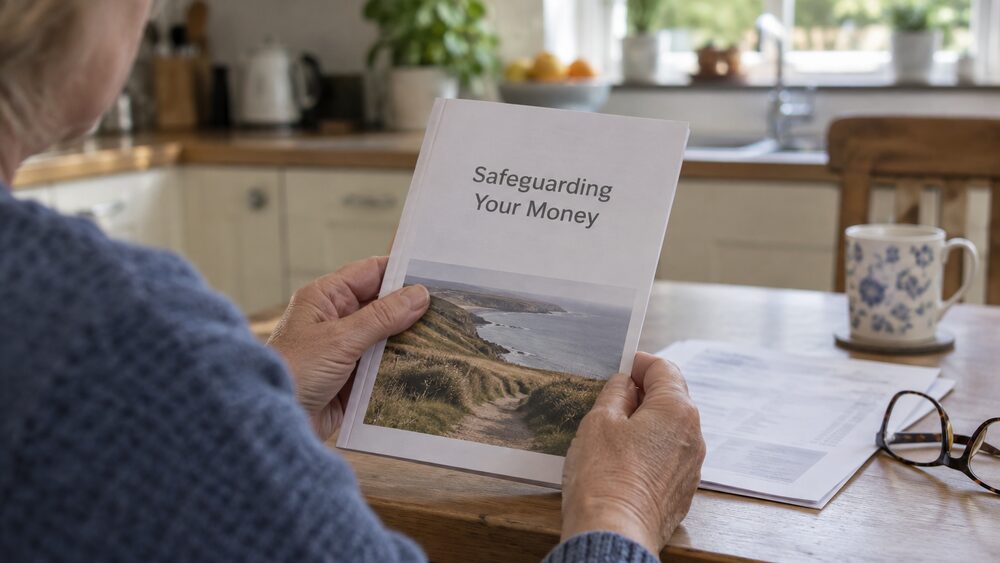

 MoneyHelperFree, impartial money and pensions guidance, set up by government
 Financial Ombudsman ServiceFree, independent help when a complaint about a firm is not put right
 FCA Warning ListCheck whether a firm is authorised before you deal with it
 Citizens AdviceFree advice on money, consumer and legal problems in England and Wales