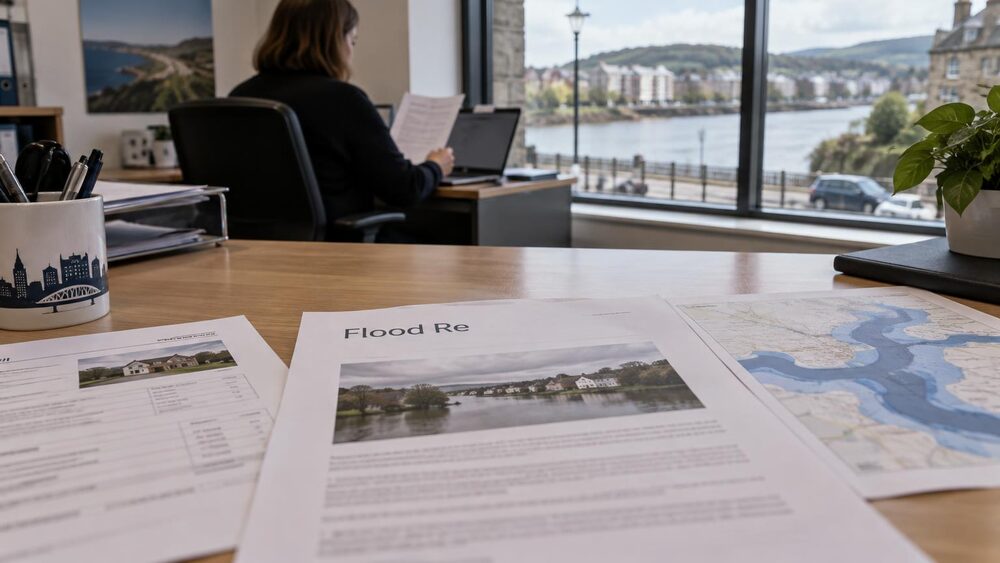
Flood Re is a scheme that makes it possible for most homes in high flood risk areas to get flood insurance at a reasonable price. It was set up by the insurance industry and the Government, established through the Water Act 2014, and came into use in April 20161. Before it existed, just over half of homes that had claimed for flood damage would have paid thousands of pounds for cover, while the remainder would have been unable to obtain insurance altogether3.
The scheme works by letting insurers pool the costs of higher risk properties. Almost 250,000 households have benefited so far, and four out of five properties that had previously submitted claims for flood damage have seen prices fall by 50%1. The share of households at risk of flooding able to access multiple insurance quotes has risen from 1% in early 2016 to 93%4.
Importantly, you never deal with Flood Re yourself. You buy home insurance in the normal way, and your insurer decides whether to pass your home's flood risk to the scheme1. This page explains who qualifies, what it costs, how claims work, and what happens when the scheme ends in 2039.
What Flood Re is and how it keeps flood cover affordable
Flood Re is a reinsurance scheme, hence the "Re", in which insurers can pool the costs associated with higher risk properties by paying a levy into a non-profit-making fund2. It is a joint initiative between the Government and the insurance industry, established in 2016, and it represents a commitment by the industry to offer insurance in high risk areas at affordable prices5. Its aim is to enable householders in areas of high risk of flooding to get adequate cover at a "reasonable" price4.
The scheme exists because flood risk would otherwise make insurance unaffordable or unavailable for many homes. The average cost to repair a flooded home is now in excess of £70,0003, and quoted prices in high flood risk areas are 50 to 55% higher than in lower risk areas3. Before Flood Re, households that had claimed for flood damage faced either very high premiums or no offer of cover at all3.
The scheme's design also has a forward-looking purpose. Flood Re's strategy is that premiums and payments should encourage householders to make their properties more flood resilient2, and from 2021 claim payments have been permitted to include an element of resistant and resilient repair, above the cost of like-for-like reinstatement, through the Build Back Better initiative4. The scheme is not permanent: it is a time limited arrangement, due to end in 20391.
It is worth being clear about what Flood Re is not. It is not an insurer and it does not sell policies. It is not-for-profit, developed by the insurance industry and the Government10, and it does not cover businesses: the industry has stated that it is not possible or appropriate to extend Flood Re to cover businesses11. Having adequate insurance cover against flooding remains the responsibility of the home or business owner4.
How Flood Re works: your insurer decides, not you
Householders do not deal with Flood Re directly. Decisions about whether eligible properties are included in the scheme are made by insurers1. You buy your home insurance from an insurer or broker as normal, and if the insurer considers your home to be particularly high risk, it can pass, or "cede", the flood part of your policy to Flood Re12. This makes no difference to the way you buy home insurance, and any claims will continue to be handled by your insurer as before10.
Not all insurers participate automatically, so it is important to ask8. If you live in a high flood risk area, the practical step is to ask each insurer or broker directly whether they use Flood Re before you buy. The levies and flood premiums collected by Flood Re are then used to pay for flood claims on the policies sent to them by insurers13.
The scheme is backed by a government guarantee. The government would be primarily responsible for losses due to "a catastrophic event" that Flood Re could not meet9. The Flood Re Regulations put in place the secondary legal framework, including its funding and administration9.
Which homes Flood Re covers, and which it leaves out
Flood Re's eligibility rules decide which homes can be ceded to the scheme, and the exclusions matter as much as the coverage.
Who is covered:
- Homes in Council Tax bands A to H, built before 2009, across England, Scotland, Wales and Northern Ireland14
- Tenants and leaseholders: Flood Re will also cover a tenant's or individual's contents in rented or leasehold properties even where the buildings risk would not be eligible, such as in large blocks of flats, provided the policy and property fulfil the scheme's criteria16
- Homes that were flooded before the scheme was introduced can still benefit from it17
Who is left out:
- Homes built after 2009 are not eligible6. The exclusion of development from 2009 onwards was intended to support the principle of discouraging further development in flood risk areas3
- Commercial properties are excluded, and properties used for business purposes, that is where you pay business rates, are not covered by Flood Re and hence by many insurers1
- Flood Re does not cover buildings insurance for a block of more than three leasehold flats4
The exclusion of newer homes is the most contested rule. Consultation responses have noted that ineligibility for Flood Re coverage for properties built after 2009 raises an equity issue that negatively impacts a growing proportion of households over time11, with concerns raised particularly for those in homes built after 2009, small businesses, and multiple dwellings in one building11. Leasehold flat owners can check whether their freeholder's insurance covers repair costs, as buildings insurance should cover flood risks18.
One edge case is worth knowing: a property built in 2008 but given a Council Tax band in 2009 can still be helped by Flood Re, because eligibility follows when the home was built, not when it was banded15.
What it costs: premiums set by Council Tax band
For policies ceded to Flood Re, the premium for the flood cover is based on the property's Council Tax band, and the flood excess is capped7. The scheme's reinsurance rates are based on Council Tax bands "as a proxy to reflect the householder's ability to pay rather than reflecting the risk faced by the property"4. In other words, a band H home pays more than a band A home because the householder is assumed to be able to pay more, not because the house faces more risk.
Flood Re publishes the premiums it charges insurers by Council Tax band. For the 2027/28 scheme year, applying to properties ceded with a rating date on or after 1 April 2027, the annual inward reinsurance premiums for buildings and combined policies are14:
| Council Tax band | Buildings policy | Combined policy |
|---|---|---|
| A | £152 | £177 |
| B | £181 | £261 |
| C | £218 | £313 |
| D | £272 | £412 |
| E | £357 | £558 |
| F | £462 | £744 |
| G | £1,113 | £1,667 |
These are the amounts Flood Re charges insurers, not necessarily what you pay. Your insurer sets your overall premium, and the flood element is what it can pass to the scheme. The scheme states that the premiums charged to insurers vary by the Council Tax band of the property19. For context on the wider market, the average cost of a combined home insurance policy is £383 a year according to Association of British Insurers figures20.
The design of these premiums is deliberate. Because the price of the flood element does not rise with the property's actual flood risk, a home that has flooded repeatedly can still be insured at a price linked to its Council Tax band rather than to its claims history. This is the mechanism that keeps cover affordable for the highest risk homes.
The levy: about £10.50 a year on every home insurance policy
Flood Re is funded in two ways: a levy paid by all insurers, and the flood premiums on ceded policies. All domestic policyholders help to subsidise the scheme at a cost of about £10.50 each annually1. A levy is paid by all insurers, with the costs passed on via increased premiums to all household insurance policies4. All insurers pay a levy into a central fund held by Flood Re10.
This means every household with insurance pays a little towards flood cover for the highest risk homes, whether or not they face any flood risk themselves. The £10.50 is not a separate charge on your bill; it is built into the price of home insurance across the market.
The levies and the flood premiums collected by Flood Re are then used to pay for flood claims on policies sent to them by insurers13. If a flood were so severe that the scheme could not meet its losses, the government guarantee would apply9.
Making a claim and building back better after a flood
If your home floods, the claims process is the same whether or not your policy is ceded to Flood Re: you claim from your insurer, and it handles everything10. Contact your insurance company to tell them your home was flooded and that you want to make a claim22. nidirect advises not returning to your home until it is safe22.
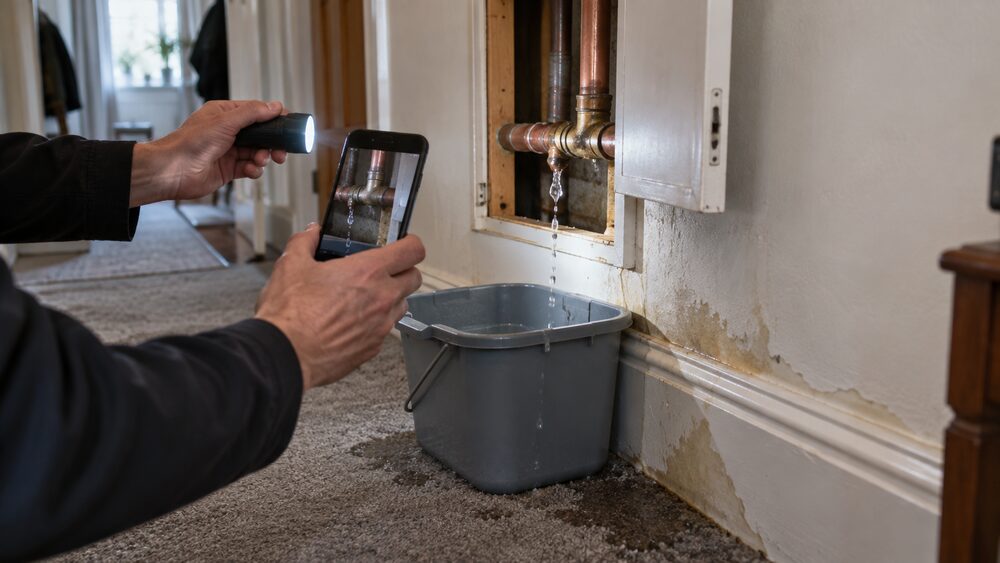
Before the loss adjuster visits, there are practical steps that will support your claim22:
- Use a permanent ink pen to mark the highest level that the flood water reached on the walls of each room
- Take photographs or a video of the flood damage
- List details of all flood damage in your home
- List food you had to throw away because it was contaminated or has gone off
Keep a record of the dates and times you contact your insurer22. The National Flood Forum has teamed up with the Association of British Insurers to provide a clear, step-by-step guide explaining what to expect when recovering your home after a flood, outlining each stage of the insurance and reinstatement process20.
From 2021, insurance claim payments have been permitted to include an element of "resistant and resilient repair, above" the cost of like-for-like reinstatement4. This is the Build Back Better initiative: rather than simply restoring a home as it was, the claim can pay for repairs that make it more resistant to future flooding. Build Back Better is not a universal provision, however, and depends on individual insurers signing up to the initiative with Flood Re21. Flood Re has said it will be looking into properties that have declined a Build Back Better offer to better understand why, and will share the learnings once that research has completed3.
Flood Re ends in 2039: what happens then
Flood Re is a time limited scheme3. It is due to end in 2039, at which point the intention is to return to a market-based system that reflects risk1. Flood Re has a statutory responsibility to restore an effective insurance free market over a temporary 25-year life span, with a managed transition by 20394.
What happens after 2039 is genuinely uncertain. The National Flood Forum has said that as most mortgages now outlast the lifetime of Flood Re, it is not seeing evidence that the market will pick up the mantle after the scheme ends3. A Senedd committee has recommended that the Welsh Government report back on how existing insurance schemes such as Flood Re can be better promoted to residents of high-risk flood areas in Wales3.
For a homeowner, the practical implication is that flood insurance after 2039 is expected to be priced according to the risk each property faces. Homes that have been made more flood resilient, including through Build Back Better repairs, may be better placed when prices come to reflect risk directly. The scheme's own strategy is that premiums and payments should encourage householders to make their properties more flood resilient2.
Where to get help finding flood insurance
If you are struggling to find flood insurance, free and independent help is available. The National Flood Forum offers independent advice on finding insurance and flood prevention measures in England and Wales, and can be contacted on 01299 4030558. It is there to support people and communities affected by flooding, helping you understand your options and work with the relevant authorities and organisations20, and it can offer independent support and guidance to help you understand your options and next steps8.
Other sources of help include:
- Floodline, which you can call on 0345 988 118812
- Shelter, which offers housing help if your home is flooded, including advice for leasehold flat owners on freeholder insurance18
- Shelter Cymru, which offers housing advice on flooding in Wales23
If you cannot get cover through Flood Re, for example because your home was built after 2009, the options are narrower. You can ask insurers and brokers whether they will quote on the open market, and the National Flood Forum can help you understand what is available. Be aware that the data Flood Re has provided on insurance availability is at a UK level and limited to only 100 properties in the sample for those at high risk with former claims, so the picture of availability for ineligible homes is not well measured3.
If you have a complaint about how an insurer has handled a claim or a policy, you can take it to the Financial Ombudsman Service after giving the insurer a chance to respond. The complaints process is explained in full elsewhere on the site, along with why claims are rejected and how insurance excess works.
Sources23 cited
- Affordable insurance for flood risk properties: Flood Re House of Commons Library, 2026-09-26
- Insurance for flood risk properties: Flood Re briefing House of Commons Library, 2026-09-14
- Flood insurance: a Wales perspective, consultation report on proposals Welsh Government, 2025-11
- Insurance and Flood Re: a Wales perspective Welsh Government, 2025-03-17
- Be Flood Smart Flood Re, 2025-01-25
- 6 questions to ask before you choose a home insurance policy Which?, 2025-10-15
- Flood Re: home insurance Ecclesiastical, 2026-09-26
- Home insurance National Flood Forum, 2026-09-26
- Insurance for flood risk properties: SN06613 House of Commons Library, 2026-07-08
- Flood Re: home insurance Baptist Insurance, 2019-09-23
- Insurance and Flood Re: a Wales perspective, consultation report Welsh Government, 2025-05
- Home insurance: flooding Which?, 2026-09-17
- Flood Re: home insurance Baptist Insurance, 2019-09-23
- Flood Re FAQs Flood Re, 2027
- My property was built in 2008 but given a Council Tax band in 2009: can Flood Re help me? Flood Re, 2027
- Flood Re FAQs: cover Flood Re, 2026
- Can people who were flooded before Flood Re was introduced benefit from it? Flood Re, 2023-10-12
- Housing help if your home is flooded Shelter, 2025-10-27
- Santander home insurance review Which?, 2026
- After a flood National Flood Forum, 2026-09-26
- Flood Re FAQs: Build Back Better Flood Re, 2026
- After a flood: making an insurance claim nidirect, 2024-08-29
- Flooding Shelter Cymru, 2026-08-17



 MoneyHelperFree, impartial money and pensions guidance, set up by government
 Financial Ombudsman ServiceFree, independent help when a complaint about a firm is not put right
 FSCSProtects your money if a bank, insurer or investment firm fails
 Citizens AdviceFree advice on money, consumer and legal problems in England and Wales
 GOV.UKOfficial information on tax, benefits and government services