Life's big changes, the ones that involve a new baby, a wedding, a separation, a hospital stay, retirement, care or a death, are the moments when money matters most and when the rules are least familiar. Each turning point brings its own payments, deadlines and protections, and several of them are changing: the age at which you can take a pension rises from 55 to 57 on 6 April 2028, and from 6 April 2027 most unused pension funds will count towards Inheritance Tax when you die.
This guide walks through each turning point in turn: what changes, what the rules are, where the position differs in England, Scotland, Wales and Northern Ireland, and where to get free help. Each section links to a detailed page on that subject, so you can go deeper where it matters to you.
A few numbers set the scale of it. Guests at weddings and civil partnerships spend over £2,000 a year on average, rising to nearly £4,500 for those aged 25 to 341. Half of early years parents have delayed having a baby because of the costs, according to research published in June 20262. And from April 2027, pensions, long outside the Inheritance Tax net, will be brought into it3.
Having a baby: planning for the new costs
A baby changes a household's finances before it arrives, not just after. Research by the Money and Pensions Service published in June 2026 found that half of UK early years parents have delayed having a baby because of the costs involved2. The practical first step is to work out what those costs will be: MoneyHelper launched a free baby costs calculator in June 2026 that lets you enter your baby's due date and add the costs of essential items such as a car seat, nappies and baby bottles, along with additional items like a baby monitor, breast pump and baby bath. It then works out how much you would be able to save each week or month until your baby is due, and prompts you when to claim free NHS prescriptions and dental care and when you can start claiming allowances and grants2.
Grants exist, and they differ by nation. In Scotland, the Pregnancy and Baby Payment is a one-off payment from Social Security Scotland. Official statistics published in May 2025 put it at £754.65 for a first child and £377.35 for any subsequent children, with an additional multi-birth supplement of £377.35 to help with the costs of having more than one baby, such as twins7. A later Scottish Government evaluation, published in September 2025, gives the figures as £767.50 on the birth of the first child and £383.75 on the birth of any subsequent children5. The two documents disagree, and the later, higher figures are the current ones. The scale of the scheme is substantial: £7.2 million was paid in Pregnancy and Baby Payments in the 2024/25 financial year, alongside £5.9 million in Early Learning Payments and £6.8 million in other family payments7.
For many families a baby is also the trigger for a housing move, and buying a home brings costs of its own. Buying is described in official Northern Ireland guidance as a major financial commitment involving immediate costs such as legal fees and Stamp Duty Land Tax, followed by ongoing costs such as paying the mortgage, rates, repairs and service charges8. Budgeting for a baby and a home move together means planning for both layers of cost.
The detailed pages cover what follows: having a baby, shared parental leave and pay, neonatal care leave and pay, adoption leave and pay and unpaid parental leave.
Weddings and civil partnerships: guests spend over £2,000 a year
The money side of weddings is usually written about from the couple's point of view, but the guests spend heavily too. Research by the Money and Pensions Service, published in May 2025 and based on a survey of 2,000 people who attended one or more weddings or civil partnership ceremonies as a guest in the previous 12 months, found that UK adults are spending over £2,000 per year to attend weddings and civil partnerships, with the average amount spent on being a guest close to £700 (£692) per event1.
The burden falls hardest on younger guests. Those aged 18 to 24 spent on average £872 per wedding or civil partnership, while those aged 25 to 34 spent more than £740 per celebration, setting them back nearly £4,500 per year1. Travel and accommodation alone averaged £147 per event, and gifts averaged £87 per event among guests aged 35 to 441.
| Guest group | Average spend |
|---|---|
| All guests, per year | over £2,0001 |
| All guests, per event | £6921 |
| Guests aged 18 to 24, per event | £8721 |
| Guests aged 25 to 34, per event | more than £7401 |
| Guests aged 25 to 34, per year | nearly £4,5001 |
| Travel and accommodation, per event | £1471 |
For the couple, marriage itself changes the money rules in ways that are easy to miss. Assets left to a spouse or civil partner are exempt from Inheritance Tax, an exemption the Treasury's tax relief statistics forecast will cost £5,220 million in the year covered by its January 2026 publication9. Marriage can also affect a will, benefits entitlements and joint finances. The detailed page on marriage and civil partnership covers what changes, and does marriage or divorce cancel a will? answers one of the most common questions.
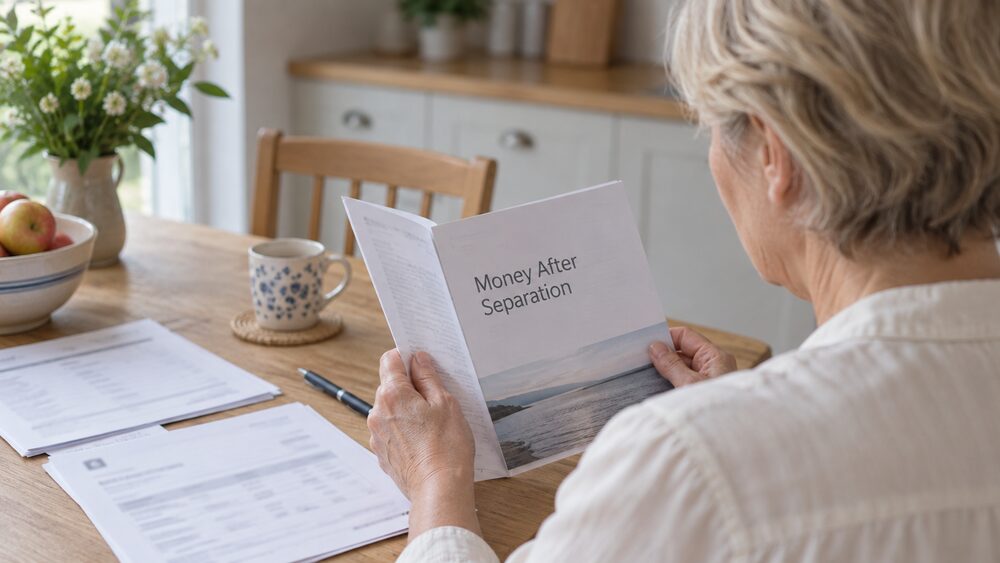
Separating from a partner: dividing money and belongings
Separation is one of the hardest money moments because everything is joint at exactly the point the relationship ends. There is no rule that everything must be split equally: what happens depends on your circumstances, whether you were married or in a civil partnership, and which nation of the UK you live in.
The family home is usually the biggest asset. MoneyHelper sets out the four main options for dividing it on divorce or dissolution: sell the home and both of you move out; one partner buys the other out; keep the home without changing ownership; or transfer part of the property's value from one partner to the other10. Each has different consequences for the mortgage, for future housing and for any children, and the pages on divorce settlements in England and Wales and dividing money and property on divorce in Scotland cover how the law differs between the two systems.
Joint debts and joint accounts need untangling early. In Scotland, legislation has extended the circumstances in which a payment break is available under joint debt payment programmes to cover cohabitees separating11. Joint bank accounts carry their own risks: interest earned in a joint account is usually split equally between each person for tax purposes, with tax only due if a share exceeds the annual allowance, and if one holder dies, unless you were married or in a civil partnership, you might have to pay tax on some or all of the money in the account12.
The practical steps are covered in the checklist on separating or divorcing, with untangling joint accounts, mortgages and debts for the banking side, child maintenance arrangements where children are involved, and money rights for unmarried couples, who have far fewer rights than married couples often assume. Where agreement is hard, the comparison of mediation or court and of a consent order or separation agreement sets out the options.
Going into hospital: what happens to your benefits
A long hospital stay quietly changes what benefits you are entitled to, and the rules are strict about counting the days. When you or someone in your family goes into or comes out of hospital, the benefits you get may change, so the stay needs to be reported to whoever pays the benefit.
The effects differ by benefit. The basic State Pension is not affected by a stay in hospital, but if you receive Pension Credit, the amount you get may decrease if you are in hospital for more than four weeks13. Statutory Maternity Pay sits at the other end of the scale: it is not affected if you go into hospital or a care home14. If you go into a care home you do not pay for yourself, most benefits usually stop within 28 days of admission, though this does not apply where your stay is funded by NHS continuing healthcare, NHS funding for nursing care, or your local council15.
The practical point is to report the stay promptly and to report coming out of hospital too, since benefits that stopped can be restarted. Where someone's illness affects their ability to manage money, a needs assessment can identify what help is required, and in Northern Ireland the official guidance notes this is free19. The pages on money for unpaid carers and on losing mental capacity without a power of attorney cover the arrangements that may follow.
Pension freedoms: your options with a defined contribution pension
Since 2015, people with defined contribution pensions have had real flexibility over how they take their money. A defined contribution scheme is a pension pot based on what you or your employer paid in, with the money put into investments such as shares by the pension provider; what you get depends on how much you paid in, how well the investments have done, provider charges and how you take the money20. All personal pensions are defined contribution schemes23.
The main options for taking the pot are to take it all in one go, take it in stages, use it to buy an annuity (a regular income payable for life, bought from a life insurance company), or leave it invested and take a drawdown income24. Each is taxed differently, and the choices are permanent in their effects, so the free guidance that exists for exactly this decision matters: Pension Wise offers free appointments to anyone with a UK-based defined contribution pension26.
Transferring between schemes is also possible. The Financial Conduct Authority notes that transferring a defined contribution pension to a different scheme might save money if the other scheme has lower fees, give access to different investment options, and give more options for taking money from your pension24. But transfers carry risks and are not right for everyone, and money left in a defined contribution pension can be left to anyone you nominate, which is one reason the option matters for inheritance planning24.
Two protections sit behind these products. If you have a complaint about a workplace pension that the provider cannot resolve, The Pensions Regulator sets out who to contact27. And where a pension provider fails, the Financial Services Compensation Scheme protects eligible investments, and its support and guidance are free28.
You cannot usually take money from your pension scheme until you are at least 55, unless you are seriously ill29. The detailed pages on pensions and on preparing to retire cover the decision in full.
The minimum pension age rises from 55 to 57
One rule change affects almost everyone still building a pension. The normal minimum pension age, currently 55, is set to rise to 57 from 6 April 20284. If you were born after 1973, you will likely still be under 57 at the point you had planned to access your pension, so retirement timelines may need to shift.
The change applies across defined contribution and workplace schemes, and the official guidance is blunt about the current position: you cannot usually take money from your pension scheme until you are at least 55, unless you are seriously ill29. From 6 April 2028 that floor moves to 574.
The practical steps are to check your scheme's own rules, since some schemes set their own minimum age, and to review any plans that assumed access at 55, such as early retirement budgets or paying off a mortgage from a pension pot. The page on preparing to retire covers how to adjust the plan.
Paying for care: how an immediate needs annuity works
When someone needs care straight away and has no insurance in place, one product exists for exactly that moment. Long-term care insurance provides a regular income to pay fees for a nursing home or for home care, for people who can no longer look after themselves because of old age or long-term disability30. Where the need is immediate, the customer could pay a lump sum to buy an annuity, which would then be used to make regular payments for their care30.
This is an immediate needs annuity. Legal & General's Lifetime Care Plan, an immediate needs annuity, provides a guaranteed monthly payment for life to help pay care fees31. The trade-off is the same as with any annuity: a large lump sum is handed over in exchange for a guaranteed income, and an annuity pays a regular guaranteed income for a set period or for life22. If the person dies soon after buying the plan, the lump sum will not come back; if they live longer than expected, the payments continue regardless. Some plans offer capital protection or payment periods, at a cost to the income.
An immediate needs annuity is one option among several for care costs, and it sits alongside the state system of needs assessments and financial assessments, deferred payment agreements and the treatment of the family home. The pages on care needs assessments, paying for care in England, Scotland, Wales and Northern Ireland, and the comparison of a deferred payment agreement or equity release, set out the whole picture. Complaints about long-term care insurance can be taken to the Financial Ombudsman Service30.
Who provides care plans and pension products
The market for immediate needs annuities is small, and Legal & General is the name most associated with it in the UK. Its Lifetime Care Plan provides a guaranteed monthly payment for life to help pay care fees, and the company also runs L&G Care Concierge, a guidance service available to over 9 million of its customers plus their immediate family members31.
Pension products are provided by life insurance companies and pension specialists. Stakeholder pensions, one of the standard personal pension types, allow you to use the fund you have built up to buy an annuity from a life insurance company when the pension can be paid25. The site's directories of pension and investment providers and insurers list the firms operating in these markets.
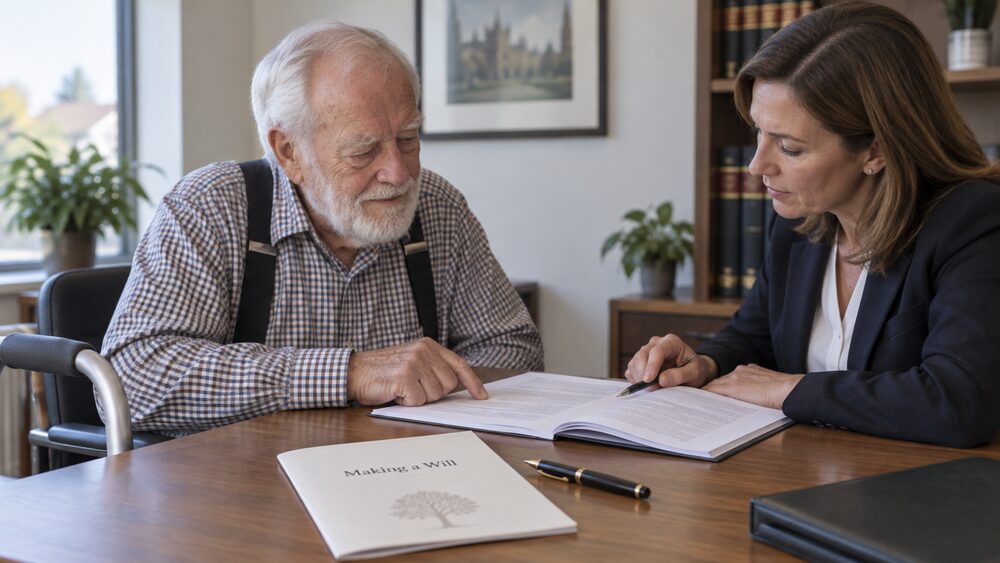
Dying without a will: who inherits
If you die without making a will, the law of intestacy sets out who should inherit your estate19. That may not match what you would have wanted: unmarried partners get nothing under the intestacy rules, however long the relationship, and the rules divide estates between surviving spouses and children in fixed proportions that take no account of your wishes.
Dying without a will also changes who administers the estate. Where there is no will, an administrator takes over, usually a relative or friend and/or a solicitor32. The administrator's job is similar to an executor's, gathering assets, paying debts and distributing what remains, but they act under the intestacy rules rather than your instructions.
The rules differ between the nations. England and Wales, Scotland and Northern Ireland each have their own intestacy rules, and Scotland's system of prior rights and legal rights gives children and a surviving spouse fixed claims on an estate in a way the English rules do not. The pages on dying without a will in England and Wales, wills in Scotland, applying for letters of administration and prior rights and legal rights in Scotland cover each system, and making a will covers how to avoid the problem, including the choice between writing your own will or using a solicitor.
Will writing and guidance: where complaints can go
Will writing services are not regulated by the Financial Conduct Authority, which matters when something goes wrong. The FCA does not regulate will writing itself, but it does regulate financial advice about certain products, such as unregulated collective investment schemes33. So a complaint about a badly drafted will has no ombudsman route, while a complaint about regulated financial advice connected to estate planning may.
The Financial Ombudsman Service can look at complaints about regulated firms from the person affected or their representative. For complaints involving a power of attorney, for example, the Ombudsman states you can bring a complaint as the donor or granter, if you have capacity, or as the attorney on behalf of the donor or granter34. Where the Ombudsman finds against a firm, it can tell the firm to put things right and pay compensation for distress or inconvenience.
For wills themselves, the route is the will writer's own complaints process and, if that fails, the courts. This is one reason the choice of will writer matters, and why the comparison of writing your own will or using a solicitor sets out what each option gives you by way of recourse if a mistake is made.
Pensions will count towards Inheritance Tax from April 2027
The biggest change to inheritance rules in a generation is already legislated. As announced at Autumn Budget 2024, the government will bring most unused pension funds and death benefits into scope of Inheritance Tax from 6 April 20273. The measure brings unused pension funds and death benefits into the estate for Inheritance Tax purposes from that date35, and the government's consultation outcome confirms most unused pension funds and death benefits would be included in the value of a person's estate for Inheritance Tax from 6 April 202736.
Who deals with the bill also changes. From 6 April 2027, personal representatives will be liable to report and pay any Inheritance Tax due on unused pension funds or death benefits3. There is one significant exclusion: all death in service benefits payable from a registered pension scheme will be excluded from the value of an individual's estate for Inheritance Tax purposes from 6 April 20273.
Income Tax still applies on top, depending on age at death. If the individual dies before age 75, death benefits, including lump sums and inherited drawdown pensions, are typically taken free of Income Tax; if they die on or after age 75, these benefits are usually taxed as income at the recipient's marginal rate36. Two reliefs prevent double taxation: Income Tax will not be due on the amount of relevant death benefits equal to any Inheritance Tax due on the pension, and if the pension beneficiary directs the pension scheme administrator to pay their Inheritance Tax liability, these payments will be authorised payments and not subject to Income Tax36.
The practical effect is that pensions stop being the tax-free pass-on they have been since 2015. Anyone planning what to leave, and to whom, needs to look at pensions and other assets together. The narrow page on when and how to pay Inheritance Tax on an estate covers the mechanics.
Spending or leaving an inheritance: planning what to pass on
Inheritance Tax is a tax on the estate of someone who has died, where the estate means the property, money and possessions they leave behind38. No Inheritance Tax is due where the estate is left to a spouse or civil partner, a charity or a community amateur sports club38. Inherited property, money and shares may also attract other taxes, including Income Tax and Capital Gains Tax38.
Valuing an estate follows fixed rules. The law says that for Inheritance Tax, you have to value all assets as if each item had been sold on the date the deceased died, at open market value, rounding the value of assets down to the nearest pound and liabilities up to the nearest pound39. The page on valuing an estate after a death covers this in detail.
Several specific rules catch people out. If the person who died had assets, once these become available they may need to be used to repay any Funeral Support Payments before any inheritance is paid40. Under the Older Persons Shared Ownership scheme, the person inheriting your home must continue to pay service charges and rent until the property is sold41. And if your partner deferred their State Pension by a year or more, you can usually choose to inherit it as a lump sum or as weekly payments, and you will get a letter with the options you can choose from42.
Planning what to pass on is a matter of working through the options: making a will, using allowances and exemptions, considering trusts, and deciding how far to spend rather than save. The pages on receiving an inheritance, changing an inheritance with a deed of variation, and the comparisons of a will trust or lifetime trust and a disabled person's trust or discretionary trust set out the choices.
Other turning points
Not every money moment fits the sections above. Starting work brings tax codes, workplace pensions and the question of what your pay actually is: research published in May 2026 found three in four UK adults do not know their take-home pay when accepting a job, which is why MoneyHelper provides a free, impartial and quick salary calculator43. The page on starting your first job covers pay, tax and pensions for new workers.
Other transitions have their own pages: student finance and student funding in Scotland, becoming self-employed, losing your job, including statutory redundancy pay and what to do when your employer goes bust, and money when someone is terminally ill. Bereavement has a full sequence of pages, from what to do when someone dies and registering a death in England, Wales and Northern Ireland or Scotland, through Tell Us Once, funeral costs, probate or confirmation in Scotland, to being an executor, debts after death and tax after a death.
Where to get free, impartial help
Every turning point in this guide has free help attached to it, and using it costs nothing. MoneyHelper offers free, impartial money and pension guidance, backed by government6, and NS&I's guidance notes the same: MoneyHelper.org.uk offers free, impartial guidance that's backed by government44. For parents, Talk Learn Do is free guidance to help you teach your children about money by getting them involved in everyday activities45.
For pensions specifically, Pension Wise offers free appointments to anyone with a UK-based defined contribution pension26, and The Pensions Regulator sets out who to contact if you have a concern about your workplace pension that cannot be resolved27. For complaints about regulated financial firms, the Financial Ombudsman Service is free to use and can order firms to put things right and pay compensation30. Where a firm fails, the Financial Services Compensation Scheme protects eligible customers and its support is free28.
Sources45 cited
- UK adults spend over £2,000 a year attending weddings and civil partnerships, Money and Pensions Service, 2025-05-27 maps.org.uk
- Half of UK early years parents delay having a baby due to costs, Money and Pensions Service, 2026-06-25 maps.org.uk
- Reforming Inheritance Tax: unused pension funds and death benefits, HM Government, 2025-07-21 gov.uk
- Private pension age is rising to 57: will your retirement be affected?, Which?, 2028 which.co.uk
- Evaluation of the Five Family Payments, Scottish Government, 2025-09-04 gov.scot
- What is financial wellbeing?, Money and Pensions Service, 2026-09-26 moneyandpensionsservice.org.uk
- Best Start Grant and Best Start Foods statistics to 31 March 2025, Social Security Scotland, 2025-05 socialsecurity.gov.scot
- Low cost home ownership schemes, nidirect, 2026-02-18 nidirect.gov.uk
- Tax relief statistics January 2026, HM Government, 2026-01-22 gov.uk
- Dividing the family home and mortgage during divorce or dissolution, MoneyHelper, 2026-09-25 moneyhelper.org.uk
- Scottish Statutory Instrument 2019/315 explanatory note, legislation.gov.uk, 2019 legislation.gov.uk
- Joint accounts, MoneyHelper, 2026-09-25 moneyhelper.org.uk
- State Pension: report a change in your circumstances, nidirect, 2026-09-01 nidirect.gov.uk
- SMP: circumstances that may affect your payments, nidirect, 2026-02-19 nidirect.gov.uk
- Going into a care home: benefits, GOV.UK, 2026-09-27 gov.uk
- I was claiming benefits when I went into hospital Mental Health and Money Advice, 2025-09-08
- Benefits, hospital and care homes Independent Age, 2026-09-26
- Benefits to help pay your rent, council tax or mortgage in hospital Turn2us, 2025-11-06
- Dementia and managing money, nidirect, 2026-09-03 nidirect.gov.uk
- How your personal pension is paid, nidirect, 2026-09-25 nidirect.gov.uk
- Types of workplace pension schemes, nidirect, 2025-07-31 nidirect.gov.uk
- Private pensions, Independent Age, 2026-09-26 independentage.org
- Personal pensions, MoneyHelper, 2026-09-25 moneyhelper.org.uk
- Pension transfer: defined contribution, Financial Conduct Authority, 2026-09-25 fca.org.uk
- Stakeholder pensions, nidirect, 2025-09-11 nidirect.gov.uk
- Take your whole pot, Pension Wise, 2026-09-28 pensionwise.gov.uk
- Report concerns about your workplace pension, The Pensions Regulator, 2026-09-26 thepensionsregulator.gov.uk
- Investment protection, Financial Services Compensation Scheme, 2026-09-25 fscs.org.uk
- Workplace pensions: changes in personal circumstances, nidirect, 2025-09-11 nidirect.gov.uk
- Long-term care insurance, Financial Ombudsman Service, 2026-09-26 financial-ombudsman.org.uk
- Care, Legal & General, 2026-09-26 legalandgeneral.com
- Debt when someone dies, nidirect, 2026-06-26 nidirect.gov.uk
- Unregulated collective investment schemes, Financial Ombudsman Service, 2026-09-26 financial-ombudsman.org.uk
- Complaints about power of attorney, Financial Ombudsman Service, 2026-09-26 financial-ombudsman.org.uk
- Budget 2025: overview of tax legislation and rates (OOTLAR), HM Government, 2025-12-05 gov.uk
- Inheritance Tax on pensions: liability reporting and payment, summary of responses, HM Government, 2025-07-21 gov.uk
- Inheritance Tax on pensions: liability reporting and payment consultation, HM Government, 2025-07-21 gov.uk
- Inheritance Tax support, mygov.scot, 2026-08-18 mygov.scot
- IHT400 notes, HM Revenue and Customs, 2026 assets.publishing.service.gov.uk
- Funeral Support Payment: telephone application, Social Security Scotland, 2026-09-26 socialsecurity.gov.scot
- Older Persons Shared Ownership (OPSO), GOV.UK, 2025-12-03 gov.uk
- Claiming or inheriting a deferred State Pension, nidirect, 2026-06-26 nidirect.gov.uk
- Three in four UK adults don't know their take-home pay when accepting a job, Money and Pensions Service, 2026-05-19 maps.org.uk
- Emergency fund guide, NS&I, 2026-09-18 nsandi.com
- Talk Learn Do, MoneyHelper, 2026-09-27 moneyhelper.org.uk


 MoneyHelperFree, impartial money and pensions guidance, set up by government
 Citizens AdviceFree advice on money, consumer and legal problems in England and Wales
 Turn2usFree benefits calculator and grants search from a charity
 GOV.UKOfficial information on tax, benefits and government services