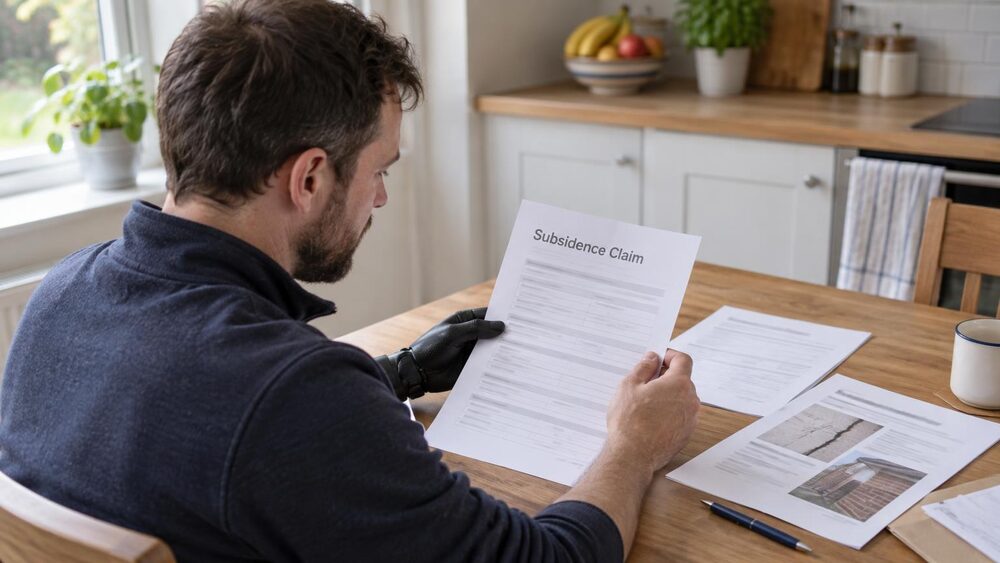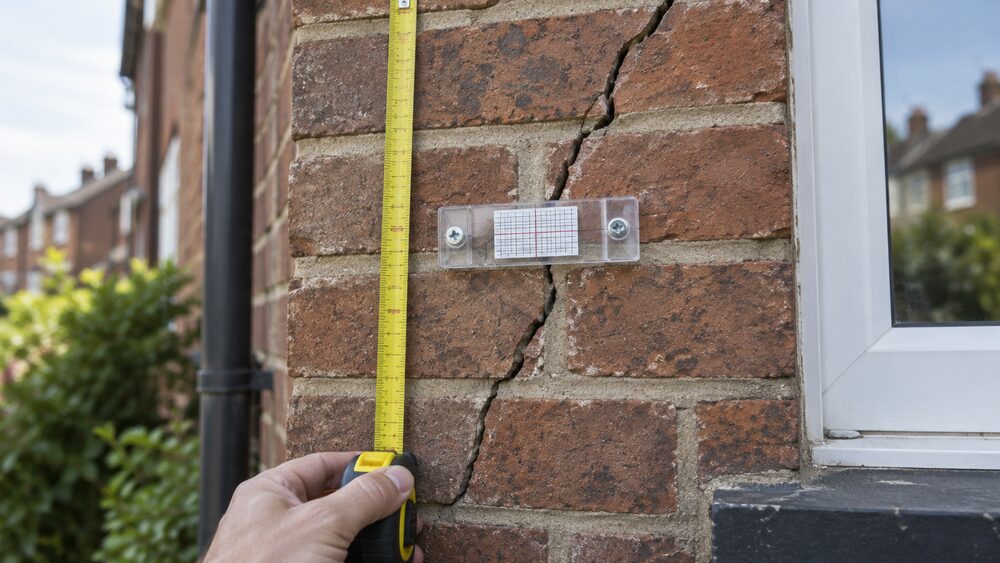
Subsidence is when the ground under a home moves, usually downwards, and the building sinks with it. The signs are often cracks that appear suddenly, doors that stop closing properly, or ripples in wallpaper. The opposite problem, heave, happens when the ground swells upwards, and a related risk, landslip, is when ground moves sideways. Most home insurance policies cover all three1.
The cover is not free at the point of claim in the way other parts of a policy are. Subsidence claims carry a higher excess than the rest of the policy, typically around £1,0002, and the average subsidence claim reached a record £20,000 in the second quarter of 2026, more than £2,000 higher than the same period a year earlier3. Insurers paid out £72 million for domestic subsidence claims in that quarter3.
How buildings insurance covers subsidence
Buildings insurance covers the cost of repairing damage to the structure of your property, and of rebuilding your home if it is damaged or destroyed6. Alongside risks such as fire, explosion, storms, floods, theft, frozen and burst pipes and vehicle collisions, subsidence is one of the risks buildings insurance usually covers6. The Financial Ombudsman Service, which settles disputes between consumers and insurers, confirms that most home insurance policies cover subsidence, heave and landslip1.
Subsidence cover sits inside the buildings element of a policy rather than the contents element. Buildings policies also usually include outbuildings such as garages and sheds, though the Ombudsman advises checking this with your insurer7. Most buildings insurance policies also cover damage to underground pipes, drains, cables and tanks, often called underground services, though only those you are responsible for8.
When independent reviewers assess home policies, subsidence is treated as a core part of the cover rather than an optional extra. Which? looks for flood, storm, subsidence and accidental damage cover, alongside cover for burst or blocked pipes, trace and access cover of £5,000, and alternative accommodation of £50,000 with no time limit, when it reviews a buildings policy9. Most home insurance policies cover subsidence, heave and landslip, so a policy that excludes subsidence altogether is unusual, but the detail of what counts as subsidence, and what is excluded, varies between insurers, so the policy wording matters more than the headline.
Subsidence claims: an average of £20,000 per claim
Subsidence is one of the most expensive risks a home policy covers. The Association of British Insurers reported that the average subsidence claim reached a record £20,000 in the second quarter of 2026, with £72 million paid to homeowners across the market in that quarter, and the average payout more than £2,000 higher than in the same period last year3. Hot, dry weather is a common trigger, because it dries out clay soils, which then shrink and pull the foundations down.
The size of the average claim reflects what subsidence repairs involve. Establishing the cause can mean monitoring the property over months, and putting it right can mean underpinning the foundations, repairing walls and redecorating. Because the work is structural, costs mount quickly compared with other home insurance claims.
The excess is also on a different scale from the rest of the policy. Subsidence cover is included in most buildings insurance policies but often comes with a higher excess, typically around £1,0002. That figure is borne out by named policies: Tesco's standard home insurance policy carries a subsidence excess of £1,0009, and Nationwide's Enhanced home insurance policy also sets its subsidence excess at £1,00010.
Excess and other limits on a subsidence claim
The excess is the amount you pay towards a claim before the insurer pays anything. On subsidence it is set separately from the standard excess, and typically sits around £1,0002. The dedicated guide to insurance excess explains how compulsory and voluntary excesses interact and how they affect the premium.
Two further limits can reduce what a subsidence claim pays. The first is underinsurance. If the sum insured is too low, the insurer can apply the average clause and reduce the claim in proportion. The Financial Ombudsman Service gives the example of a sum insured of £300,000 that should have been £500,000: the insurer will pay 60% of the claim value11. The same principle applies to the premium: if a consumer paid £400 when they should have paid £500, the Ombudsman is likely to find it fair for them to receive 80% of the claim value11.
The second limit is the financial strength of the insurer itself. If an insurer fails, the Financial Services Compensation Scheme pays either 90% or 100% of the claim value on valid claims under a policy with a failed insurer12. The guide to what happens if your insurer goes bust covers this in full.
What buildings insurance does not cover
The exclusions matter as much as the cover on subsidence, because ground movement produces damage that looks similar to other causes. The main exclusions to check are:
- Betterment. Policies pay to put the home back to the state it was in, not to improve it. In one Ombudsman case, Will's policy covered repairing damage from subsidence but did not cover betterment, meaning work that would have given him a better garage than he had before13.
- Floor slabs without foundation movement. Most policies exclude subsidence of floor slabs if there is no movement of the foundations as well, because fill under floor slabs is not part of the site1.
- Patios, garden walls and driveways. Some insurers will not cover damage to these unless the main building is affected2.
- Fences, gates and hedges. Only 1% of buildings policies will pay out for storm damage to fences, gates and hedges, according to Which? analysis of policy wording14.
- Gradual groundwater flooding. 74% of buildings policies will not cover groundwater flooding if it happens gradually rather than rapidly14.
- Pipes you are not responsible for. Policies generally only cover pipes you are responsible for, so they will not cover problems with pipes owned by water companies or neighbours8.
Eligibility can also be withdrawn in some circumstances. Allianz, for example, does not currently insure properties that have suffered a flood or are under a current flood warning15. A home with a history of subsidence is not automatically refused cover, but insurers may add conditions, raise the excess or raise the premium, and some may decline. The guide to getting home insurance after a flood explains how this market works for homes with a claims history.
Rebuild cost, not market value, sets your cover
Buildings insurance is based on the rebuild cost of the home, not its market value4. You need to insure yourself for the amount it would cost to completely rebuild your home, which is usually less than the sale price16. Policies may be based on a specific buildings sum insured, a high standard limit, bedroom-rated cover, or unlimited cover4.
If the figure on your policy is too low, you could be underinsured, meaning your insurer may reduce any payout if you need to claim4. The Ombudsman's worked example shows how sharply this bites: if the rebuild cost of a home is £400,000 but it was valued at £200,000 in the policy, the homeowner is 50% underinsured, and some insurers would only pay 50% of a claim, with the consumer paying the rest17. The guide to rebuild cost explains how to work the figure out, and the page on underinsurance and the average clause covers the rule in detail.
Who arranges the cover: owners, landlords and leaseholders
Who buys the buildings policy depends on who owns the building. If you own your home, you will need buildings insurance, and it is usually a condition of your mortgage16. Most mortgage lenders require you to hold it, generally from the date of exchange2.
If you rent, your landlord is responsible for buildings insurance, but you will need your own cover for personal belongings2. The Royal Institution of Chartered Surveyors is blunt about the second part: insure your own belongings at the property, because the landlord's insurance will not provide cover for them18. Renters therefore need contents insurance, not buildings cover, and the page on buildings cover for renters sets out the split.
Leasehold flats sit in between. If you own a leasehold flat, the freeholder normally arranges the block buildings policy, which should cover flood risks, and the guidance is to check whether that insurance covers repair costs19. The cost of the policy is passed to leaseholders through service charges, and the guide to buildings insurance for leasehold flats and the page on leaseholder charges explain the rules around what can be charged and how to challenge it.
Switching insurer: which insurer handles the claim
Subsidence damage often appears slowly, and homes are frequently moved between insurers over the years it takes to show. To prevent each insurer pointing at the last one, the industry operates the ABI Domestic Subsidence Agreement, which the Financial Ombudsman Service summarises: if you claim one year or more from the start of your current policy, the current insurer deals with the claim1.
The practical effect is that a homeowner who has switched insurer does not have to trace the policy that was in force when the movement started. The insurer holding the cover at the time of the claim takes responsibility for investigating and paying it. This is one reason switching after subsidence has been spotted is treated cautiously: an insurer asked to take on a home with an existing subsidence history may impose conditions or decline, and a claim made within the first year of a new policy can fall outside the agreement's main rule. The guides to insurance renewals and telling your insurer about changes cover the duty to disclose material facts when buying or renewing cover.
Making a claim and what the insurer pays for
A subsidence claim starts the same way as any home claim: contact your insurance company, tell them what has happened, and say you want to make a claim1. From there the process is distinctive, because the insurer has to establish what is moving and why before it decides what to pay for.
What the insurer pays for depends on what the investigation finds. In one Ombudsman case, Christopher's insurer initially turned down his claim for stabilisation work, but agreed to pay superstructure repairs and any necessary redecoration, as and when further movement occurred. On review, the Ombudsman asked the insurer to meet the cost of stabilisation of the foundations20. The case shows the distinction insurers draw between making the ground stable and repairing the damage above it, and that the Ombudsman can overturn that line.
Where a claim is reduced because of underinsurance, the outcome can also be revisited. In another case, the Ombudsman decided the insurer should meet Bryan's claim as though he was not underinsured, and paid him the money originally deducted from the settlement21.
Beyond the structure itself, insurers will generally pay for cleaning up and repairing your property, as well as temporary accommodation if your home has been made uninhabitable22. Policies generally include cover for temporary accommodation on that basis23. The test is habitability: if the home can still be lived in during repairs, alternative accommodation is unlikely to be paid for. The page on poor repairs or unsuitable alternative accommodation covers what to do if the arrangements fall short, and the guide to making a claim sets out the steps for any home insurance claim.
When the property is empty or changing hands
Empty homes are treated differently by insurers. Most insurers have a limit on how long a property can be left empty, typically 30 days, though some allow up to 60 days2. Beyond that limit, cover can be reduced or withdrawn, which matters for a subsidence claim if the damage is discovered after a period away. The page on how long a home can be empty explains the rules.
For landlords the position is slightly different: landlord insurance may cover an empty property for up to three months between tenants, but this varies2, and Santander's guidance similarly notes landlord insurance might cover a property for up to three months24. The guide to landlord insurance covers unoccupied periods in more detail.
When a property changes hands, the buyer normally needs buildings insurance from the date of exchange2. A seller whose home has a subsidence history should expect the buyer's insurer to ask about it, and a buyer should ask directly about past claims, because a claim that was never closed can affect the new owner's ability to get cover. The guide to buildings insurance covers the buying process.
Complaints about buildings insurance claims
Buildings insurance generates a steady flow of complaints to the Financial Ombudsman Service. In the first quarter of 2026/27, 1,766 complaints about buildings insurance were opened, of which 33% were upheld in the consumer's favour5. A year earlier, in Q1 2025/26, the figure was 1,668 complaints25. Contents insurance drew 472 complaints in Q1 2026/275.
The first step is always to complain to the insurer. It has eight weeks to reply11. If it does not reply within the time limits, or you disagree with its response, you can bring the complaint to the Ombudsman11, which handles complaints about insurance companies and claims26. The service is free.
If the Ombudsman thinks an insurer unfairly turned down a claim, it can ask the insurer to deal with the claim it rejected, add interest to any claim that should have been paid, pay for more work to be done where the complaint concerns repairs, and pay compensation for distress or inconvenience26. Insurers are also required to tell customers in the policy summary that complaints may subsequently be referred to the Financial Ombudsman Service27.
The guides to complaining about an insurer, rejected claims and how long an insurer has to respond cover the process step by step.
Sources27 cited
- Subsidence and types of ground movement Financial Ombudsman Service, 2026
- 6 questions to ask before you choose a home insurance policy Which?, 2025
- Average claim for subsidence reaches record £20,000 amidst hot weather Association of British Insurers, 2026
- Could you be underinsured? Why your rebuild cost matters Which?, 2026
- Quarterly complaints data Q1 2026/27 Financial Ombudsman Service, 2026
- Buildings insurance Citizens Advice, 2020
- Home insurance Financial Ombudsman Service, 2026
- Storm damage and home insurance Financial Ombudsman Service, 2026
- Tesco Home Insurance review Which?, 2026
- Nationwide Home Insurance review Which?, 2026
- Underinsurance home insurance complaints Financial Ombudsman Service, 2026
- What we cover: insurance Financial Services Compensation Scheme, 2026
- Insurer rejects claim for betterment, expert opinion needed Financial Ombudsman Service, 2026
- Why your home insurance could leave you out in the cold this winter Which?, 2025
- Home insurance: is it worth paying extra for flood and storm cover? Which?, 2024
- Shopping around for insurance Independent Age, 2026
- Underinsurance and home insurance Financial Ombudsman Service, 2026
- Renting a property Royal Institution of Chartered Surveyors
- Housing help if your home is flooded Shelter England, 2025
- Insurer says it is not liable for preventative work, investigation found otherwise Financial Ombudsman Service, 2026
- Consumer questions loss adjuster's valuation after fire Financial Ombudsman Service, 2026
- Does your insurance cover damage caused by bad weather? Which?, 2025
- Home insurance and flooding Which?, 2026
- Santander Home Insurance review Which?, 2026
- Quarterly complaints data Q1 2025/26 Financial Ombudsman Service, 2025
- Insurance complaints Financial Ombudsman Service, 2026
- ICOBS 6: Information at the point of sale Financial Conduct Authority, 2026



 MoneyHelperFree, impartial money and pensions guidance, set up by government
 Financial Ombudsman ServiceFree, independent help when a complaint about a firm is not put right
 FSCSProtects your money if a bank, insurer or investment firm fails
 Citizens AdviceFree advice on money, consumer and legal problems in England and Wales
 GOV.UKOfficial information on tax, benefits and government services