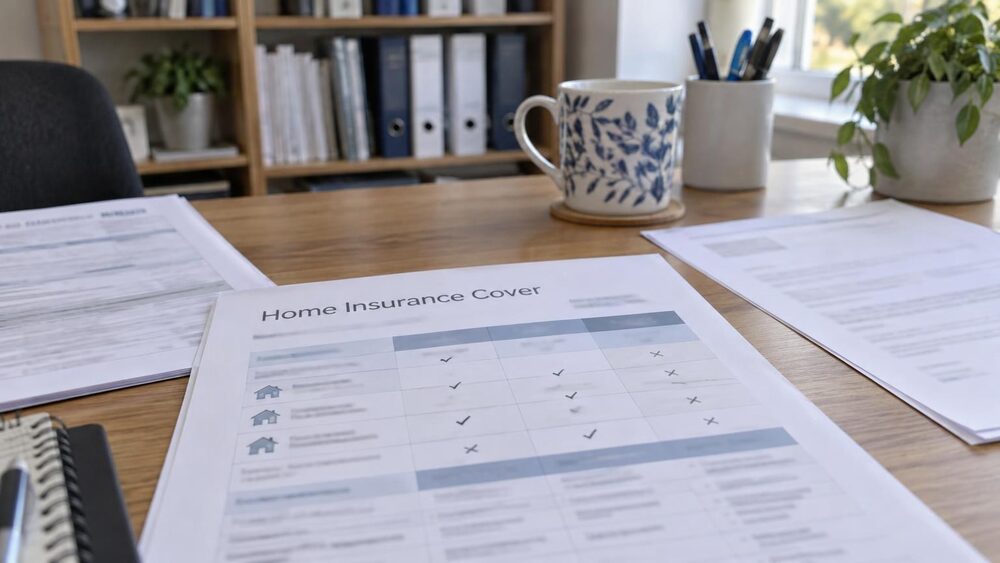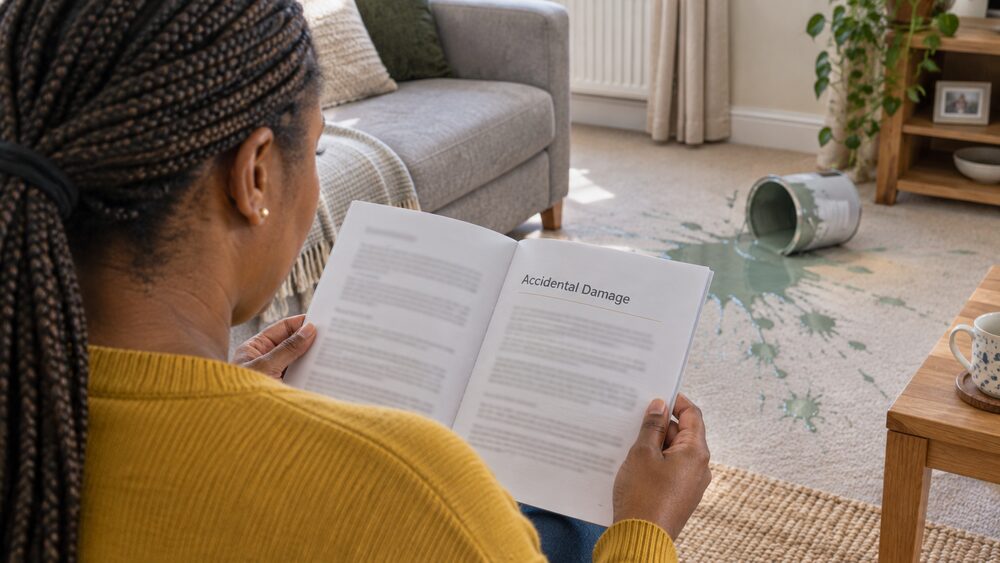
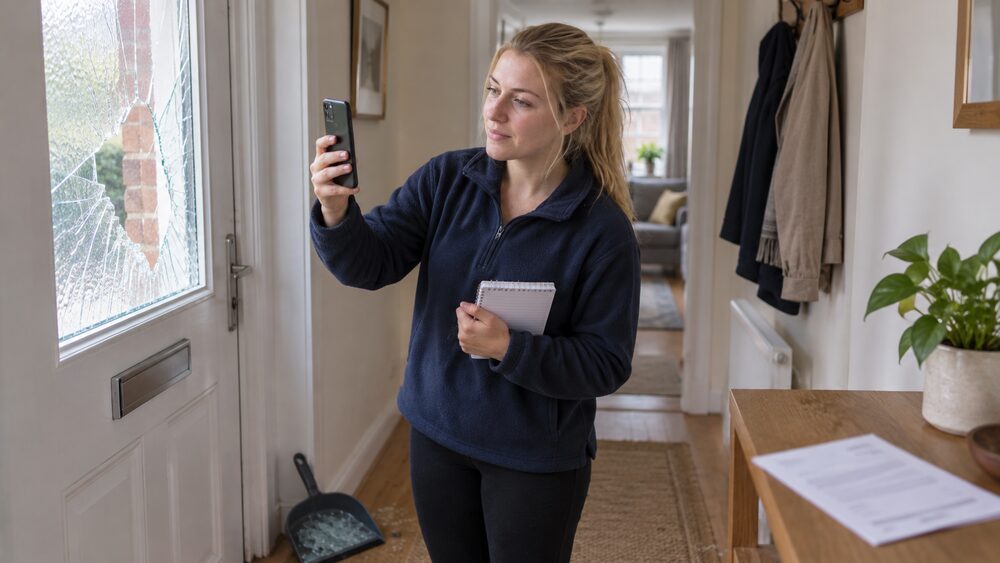
Accidental damage cover pays for damage to your home or belongings that happens suddenly, unexpectedly and not on purpose, such as a smashed window, a spilled drink on a carpet or a dropped television. It is not usually part of a standard home insurance policy: it tends to be an optional extra you pay more for, and what it includes varies considerably between insurers1.
The cover matters because standard home insurance only pays for named causes of loss, such as fire, storm, flood and theft. Everyday mishaps, the kind that make up a large share of claims, fall outside that list unless you have the add-on. Which? reported in October 2024 that accidental damage was the most commonly used policy feature, accounting for one in five claims4.
This page explains what accidental damage means, how the buildings and contents versions differ, what is excluded, how insurers treat the cover differently, and how to check your policy and claim.
Sudden, unexpected and not deliberate: what accidental damage means
Accidental damage is physical damage that happens out of the blue and is not done on purpose3. The Post Office describes it as damage to your building or contents that is unexpected and unintentional, caused by something sudden and that is not deliberate1. Lloyds Bank puts it the same way: you are covered for damage which is sudden, unexpected and not done on purpose2. MBNA adds that the damage must be caused by a specific, one-off event7.
Each part of that definition does work. "Sudden" rules out damage that develops over time, so a roof that lets water in because it has been poorly maintained for years is not an accident, however unexpected the damp patch was8. "Not done on purpose" rules out deliberate acts, including by people you have let live in the property, which is why landlord policies sell accidental and malicious damage as a combined extra9. "One-off" rules out the slow deterioration of something with age.
The Financial Ombudsman Service, which settles disputes between consumers and insurers, summarises what is generally excluded: wear and tear, the gradual deterioration of something, wilful or deliberate acts, and defective workmanship11. So the test is not whether the damage was a shock to you, but whether it was a single sudden event that a reasonable person would not have intended.
How it sits alongside the standard home insurance perils
Standard home insurance works by listing the causes of loss it pays for, known as perils. Citizens Advice lists what buildings insurance usually covers: fire, explosion, storms, floods and earthquakes; theft, attempted theft and vandalism; frozen and burst pipes; fallen trees, lampposts, aerials or satellite dishes; subsidence; and vehicle or aircraft collisions12. If your loss was caused by something on that list, the policy responds. If it was not, it does not.
Accidental damage cover is separate to those standard perils1. It exists precisely because most mishaps, a football through a window, a dropped ornament, a wine glass knocked over, are not on the list. Without the add-on, a policy that pays out for a storm can refuse a claim for a lamp pulled off a table by a vacuum cleaner cable.
Home emergency cover is a third thing again, and is often confused with accidental damage. The Financial Ombudsman Service explains that most home emergency policies are only meant to cover stopping the emergency, such as making a burst pipe safe, and do not usually cover the consequential damage it caused13. So an emergency policy may send someone to stop the water, while accidental damage cover is what pays for the ruined floor.
Buildings or contents: what each version covers
Accidental damage cover can be bought for the building, for the contents, or for both, and the choice is yours at the point of purchase14. The two versions protect different things, and many people buy one without the other.
Buildings accidental damage covers the structure and what is fixed to it. Halifax describes its version as covering accidental damage to your home and its fixtures and fittings15. In practice this means things like putting a foot through a ceiling from the loft, drilling into a hidden pipe, or breaking a fixed basin or bath.
Contents accidental damage covers your belongings. NFU Mutual describes its add-on as covering accidental damage to your contents while they are in your home16, and AXA says the same about its version17. Halifax notes that its contents version covers the things in your home, and things away from home only if you also have away-from-home cover15.
Even without the full add-on, many policies include a limited form of accidental damage as standard. Which? explains that with buildings insurance this typically covers accidental breakage of window glass or damage to pipes or cables, sometimes in a limited way, and with contents cover it can mean damaged audio-visual equipment or furniture5. NFU Mutual's policy, for example, includes some accidental damage as standard for glass and sanitary ware under buildings cover, and for home entertainment equipment, mirrors and glass in furniture under contents cover18.
Limited or full cover: why the difference matters
The difference between limited and full accidental damage cover is one of the most important things to check on a policy schedule. A limited version lists the specific items or types of damage covered. The Financial Ombudsman Service has published a case in which a policyholder's add-on covered only "accidental damage to TV, video, hifi, computer or telecommunications equipment; and accidental breakage of glass and furniture and fixed kitchen appliances", and the dispute turned on exactly what fell inside that wording19.
The Post Office gives a similar picture of a basic contents version: home entertainment equipment such as TVs, DVD players, games consoles, desktop computers and audio equipment; fitted glass in furniture or mirrors, but not in pictures or clocks; glass shelves, furniture tops and oven doors; and ceramic hobs and tops of free-standing cookers1. A full version, by contrast, covers accidental damage generally, subject only to the policy's exclusions.
NFU Mutual's Bespoke policy includes full contents accidental damage cover as standard18, while Nationwide's Enhanced policy sells contents accidental damage as an optional extra20. The lesson is that two policies can both say "accidental damage" and mean quite different things, so the schedule, not the marketing, is what counts.
Everyday accidents it typically pays for
The accidents this cover pays for are the ordinary mishaps of domestic life. Lloyds Bank lists the examples its cover is designed for: a football smashing a window, DIY accidents, spilling wine on a carpet, and knocking over and damaging a TV21. esure gives the simpler example of dropping and smashing an ornament22.
Halifax notes that accidental damage cover does not usually come as standard, so it is worth checking whether you need it and including it if so23. The scale of claims suggests many people do: Which? found accidental damage was the most used policy feature, at one in five claims4.
A few categories come up again and again:
- Spills and stains: wine, paint or coffee on carpets, sofas and rugs, provided the cover extends to soft furnishings and not just listed items.
- Breakages in the home: dropped ornaments, smashed vases, broken mirrors and cracked television screens.
- DIY mishaps: drilling through a pipe or cable, or a ladder going through a ceiling, though ongoing renovation work is treated differently (see below).
- Damage to fixtures: broken basins, cracked hobs and damaged worktops under the buildings version.
For students and young people away from home, BIBA's guidance includes a simple check: whether items are covered for accidental damage, for example if you dropped a laptop24. That question applies to everyone, and the answer depends entirely on whether the add-on is on the schedule.
What accidental damage cover does not include
The exclusions are where most disputes arise, and they are broadly consistent across the market.
Wear and tear and gradual damage. Lloyds states its cover does not include damage due to a lack of upkeep or that happens slowly over time3. Which? gives the practical example: you might not be covered if damage results from general wear and tear, such as water entering through a poorly maintained roof8. The Financial Ombudsman Service has separate guidance on gradual damage, because insurers so often refuse claims on this basis25.
Pets and vermin. Lloyds excludes damage caused by pets, as do NatWest26 and HSBC, which lists damage caused by domestic animals among its exclusions27. Which? analysis found damage caused by pets was included in only 33% of policies6, and its review of NFU Mutual noted a lack of contents cover for pet damage, which around a tenth of policies cover18. AXA's contents version also excludes damage caused by pets and vermin17.
An empty home. Claims are not paid when your home is left empty for more than either 60 or 30 days, and your policy schedule shows which applies3. Which? warns that a standard policy may not pay out if the loss or damage was caused while the home was unoccupied28.
Renovation and building work. DIY damage is often covered by the add-on, but ongoing renovation work usually is not1. Virgin Money's landlord policy excludes loss or damage caused by building alterations, renovations or repairs29, and the same exclusion appears in landlord policies from Leeds Building Society10 and The Marsden30.
Cosmetic and other damage. The Post Office lists further exclusions: deliberate destruction or vandalism, cosmetic damage like scratches and dents, poor design or workmanship, damage from construction, alteration or repair, and mechanical or electric faults or breakdowns1. NFU Mutual's contents version adds damage to money, damage to clocks from over-winding, and damage to items normally kept in the garden16.
Items outside the home. Contents accidental damage cover applies to your contents while they are in your home16. For belongings you take out, you need personal possessions cover, which is a separate add-on; Which? notes that contents outside the home cover may protect possessions left in a vehicle8, and Halifax extends its contents accidental damage to things away from home only if you also have away-from-home cover15.
Included as standard or an optional extra: how insurers differ
Whether you get accidental damage cover without paying extra varies enormously. Which? analysis published in July 2025 found only 31% of buildings policies and 30% of contents policies included it as standard32. An earlier Which? study found just a third of policies provided general accidental damage cover as standard6, and a summer 2026 analysis put the figure at 25%28. The numbers differ because they sample different policies in different years, but the direction is the same: most policies do not include it.
The Financial Ombudsman Service states the general position plainly: cover for accidental damage is not usually a standard part of a policy, and it tends to be available for customers to add to their standard policy for an additional premium25.
Individual insurers sit at different points:
| Insurer | How accidental damage is treated |
|---|---|
| Tesco Insurance | Limited accidental damage cover as standard, with the option to pay for more33 |
| Halifax Home Insurance Select | Included as standard with Silver and Gold cover only3 |
| Halifax Silver and Gold buildings | Accidental damage included, up to full rebuild cost34 |
| NFU Mutual Bespoke | Full contents accidental damage included18 |
| Nationwide Enhanced | Contents accidental damage as an optional extra20 |
| Privilege Platinum | Includes accidental damage cover as standard4 |
Which? also notes that where cover is included, what is included varies between policies5, so a policy that includes it as standard may still cover far less than a paid add-on elsewhere. Allianz's buildings and contents insurance, for example, includes accidental damage and personal belongings away from the home only under its gold tier, or as paid add-ons to bronze or silver35.
When it can be added: at purchase or renewal
Because the cover is usually an optional extra, timing matters. The Post Office advises buying it at the same time as the policy, or when it is due for renewal, because the additional cover cannot usually be added mid-term1. Some insurers do allow the cover to be removed at any point in the policy's life, even though it cannot be added part-way through1.
This asymmetry is worth planning around. If you take out a policy without accidental damage cover and then smash a television three months later, it is normally too late to add the cover and claim. The practical points to act on are:
- Decide whether you want the cover before the policy starts, weighing the extra premium against the value of your belongings or fixtures.
- Check at each renewal, since insurers change what is included between years.
- If your circumstances change mid-term, for example you buy expensive equipment or start a family, note that you may have to wait until renewal to add the cover.
If your home is going to be empty for a while, that is a separate conversation with your insurer, and one to have in advance rather than after a loss. Most insurers limit how long a property can be left empty, typically 30 days, though some allow up to 6036. Beyond that, you may need a specialist unoccupied home insurance policy36. Landlord policies can be more generous: Which? notes landlord insurance may cover an empty property for up to three months between tenants, though this varies36.
How the add-on affects your premium and excess
Accidental damage cover is an add-on that will increase your premium in order to provide the additional protection1. The size of the increase depends on the insurer, the level of cover and what you are insuring, and there is no single market figure for it, so the only way to know is to compare quotes with and without the add-on.
The cost is not only the premium. BIBA's jargon buster defines an additional premium as a further premium payable as a result of a policy amendment that may have increased the risk37, which is what happens if you add cover at renewal. There is also the excess to weigh: adding items to a contents policy could mean a higher excess if you claim, and making a claim could increase your premiums when you come to renew38. That trade-off applies to accidental damage claims just as it does to gadget and phone cover.
The other side of the ledger is what a claim would cost without the cover. A ruined carpet, a broken television or a smashed basin can each run into hundreds of pounds, and the claim also affects your no claims discount if you have one protected. For more on how premiums are built up, see how insurance premiums are worked out, and for the rules that limit how much loyal customers can be charged, see insurance pricing rules.
Making a claim and checking your policy wording
Before starting any claim, check what you are and are not covered for in your policy documents39. That single step prevents most surprises, because the schedule shows whether you have buildings, contents or both versions, whether the cover is limited to listed items or general, and which exclusions apply.
A claim proceeds in the usual way for home insurance, described in full on how to make a home or travel insurance claim. Describe what happened, when, and how the damage occurred, and keep photographs and receipts. Be precise about the cause: saying a pipe "burst" when it in fact leaked slowly over months can lead to a refusal on gradual damage grounds25, and saying damage was accidental when it was not can be treated as misrepresentation.
Two further points are worth knowing. First, if the damage was caused by a faulty product, you may have a choice of routes: Citizens Advice notes that if you have insurance covering the problem you could claim on your policy, which could be quicker and easier, but could mean the amount you pay for insurance goes up, while claiming compensation from the trader responsible avoids that40. Second, weigh the excess and future premium against the cost of simply replacing the item yourself; a small claim can cost more over the following renewals than it pays out38.
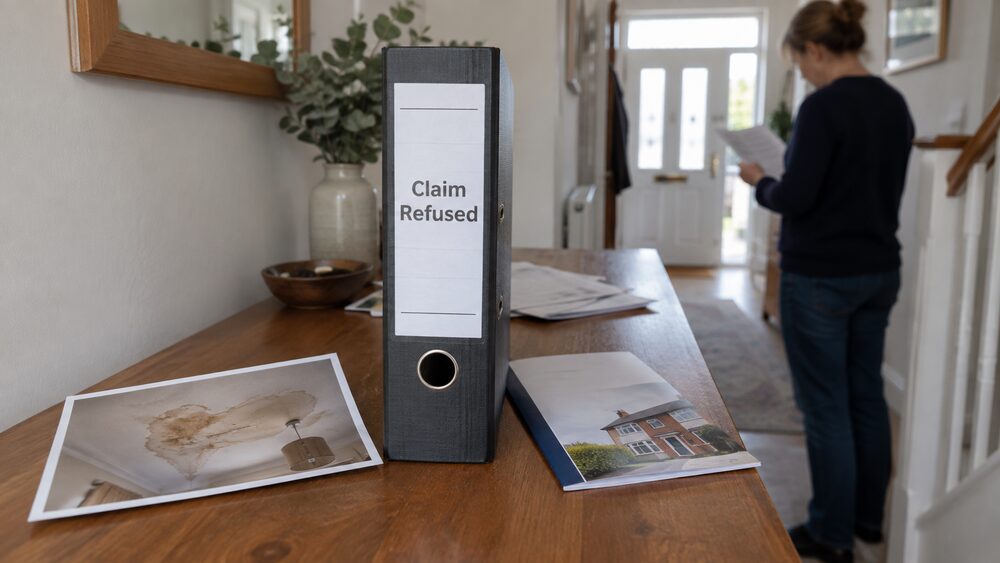
If a claim is refused, ask the insurer which policy term it relied on, and ask for the refusal in writing. Refusals often turn on the wording of the add-on rather than the accident itself, as the ombudsman's published case shows19. The guide to rejected claims covers the options, and complaining about an insurer covers taking it further.
Where the protection stops, and where to get help
Accidental damage cover stops at the boundaries described above: wear and tear, pets, empty homes, renovations, cosmetic marks and items away from home are the common edges. It also does not cover things outside the home insurance world altogether, such as a power supply cut off by your energy company, or documents like passports and driving licences, money, food and drink, or clothes and sports equipment while being used1.
If an insurer refuses a claim and you are not satisfied with its final response, the Financial Ombudsman Service can look at the complaint for free. Its published guidance on accidental damage and on gradual damage sets out the approach it takes when wording is disputed11. Citizens Advice offers free, independent consumer help, and MoneyHelper, the government-backed money guidance service, is another free starting point for insurance questions.
For the wider picture of what home insurance does and does not pay for, see buildings insurance explained, contents insurance explained and how insurance works.
Sources40 cited
- Accidental damage cover guide Post Office, 2026-09-15
- Top questions on home insurance answered Lloyds Bank, 2026-09-27
- What is accidental damage insurance Lloyds Bank, 2026-09-27
- Top exclusions to watch out for when buying cheaper home insurance Which?, 2024-10-05
- Do you need home insurance add-ons Which?, 2026-09-17
- Revealed: the disasters your home insurance policy might not cover Which?, 2022-03-11
- Home insurance FAQs MBNA, 2026-09-26
- Does your insurance cover damage caused by bad weather Which?, 2025-12-08
- Uinsure landlord insurance Leek Building Society, 2026-09-26
- Landlord insurance Leeds Building Society, 2026-09-26
- Accidental damage: complaints we deal with Financial Ombudsman Service, 2026-09-27
- Buildings insurance Citizens Advice, 2020-02-20
- Home emergency insurance Financial Ombudsman Service, 2026-09-26
- Insurance extras Cumberland Building Society, 2026
- Accidental damage cover Halifax, 2026-09-27
- Contents accidental damage insurance NFU Mutual, 2026-09-26
- Accidental damage cover AXA, 2026-09-26
- NFU Mutual home insurance review Which?, 2026-09-17
- Ombudsman decision, case 73/7 Financial Ombudsman Service, 2008-10
- Nationwide home insurance review Which?, September 2026
- Your cover explained Lloyds Bank, 2026-09-27
- Accidental damage esure, 2026
- Common home insurance claims Halifax, 2026-09-27
- Student insurance guides British Insurance Brokers' Association, 2022-12-14
- Gradual damage: complaints we deal with Financial Ombudsman Service, 2026-09-27
- Buildings and contents insurance NatWest, 2026-09-25
- Buildings and contents insurance HSBC, 2026
- 5 winter risks your home insurance might not cover Which?, 2026-09-26
- Landlord insurance Virgin Money, 2026
- Landlord insurance Marsden Building Society, 2026-09-26
- Does your insurance policy cover heatwaves Which?, 2023-06-08
- Will your insurance cover home improvements Which?, 2025-07-26
- Santander home insurance review Which?, 2026-09-17
- Buildings insurance Halifax, 2026-09-27
- Home insurance: is it worth paying extra for flood and storm cover Which?, 2024-06-12
- 6 questions to ask before you choose a home insurance policy Which?, 2025-10-15
- Jargon buster British Insurance Brokers' Association, 2025-02-11
- Gadget insurance: how to get the best cover Which?, 2025-08-05
- Coping with extreme weather AXA, 2026-09-26
- Claim compensation if an item or product causes damage Citizens Advice, 2026-09-25

 MoneyHelperFree, impartial money and pensions guidance, set up by government
 Financial Ombudsman ServiceFree, independent help when a complaint about a firm is not put right
 FSCSProtects your money if a bank, insurer or investment firm fails
 Citizens AdviceFree advice on money, consumer and legal problems in England and Wales
 GOV.UKOfficial information on tax, benefits and government services