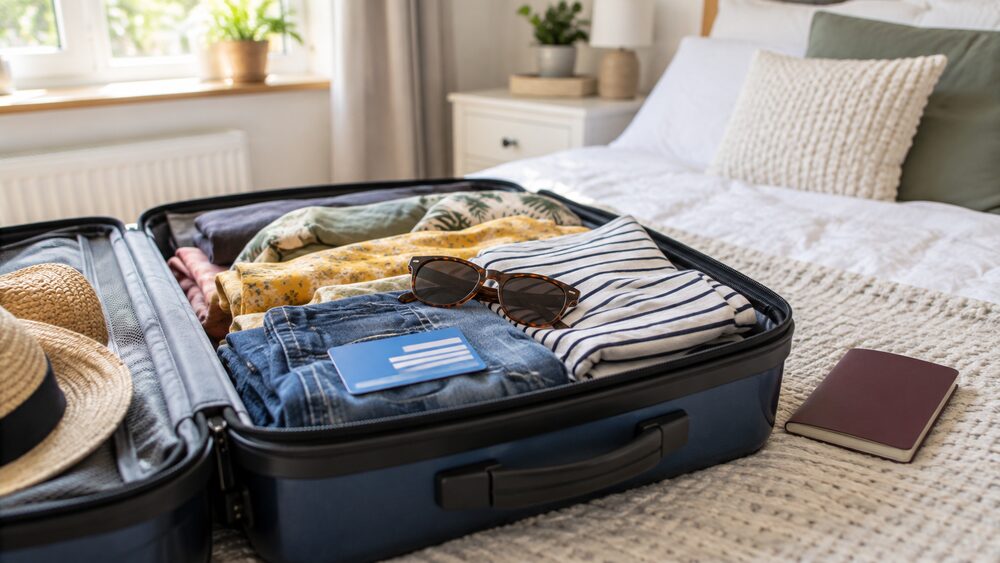
A UK Global Health Insurance Card (GHIC) gives you state healthcare in Europe at the same price a local resident pays, sometimes free. It is not a replacement for travel insurance. The card will not pay for a private hospital, an air ambulance, ski or mountain rescue, or being flown home, and it covers nothing outside medical treatment: no cancelled trip, no lost luggage, no delay1.
Travel insurance is not usually compulsory, although some countries require it as a condition of entry3. It is also not the same as your home insurance, which may cover possessions away from home but will not pay for medical care or cancellations2. The two work together: the GHIC reduces what the state charges you, and the insurance policy covers the bills the card leaves behind.
A GHIC is not a replacement for travel insurance
The card and the policy do different jobs, and the gap between them is where the large bills sit. A GHIC lets you get state healthcare in Europe at a reduced cost or sometimes for free1. It does not cover all of the medical bills you could run up if you fall ill or are injured abroad, for example an air ambulance, treatment in a private facility, ski or mountain rescue, or being flown back to the UK2.
That last item is the one people most often assume is included. Repatriation, meaning getting you home for medical reasons, is not a GHIC benefit. Neither is bringing your body home if you die abroad. Both are standard parts of a travel policy, and both are expensive without one.
There are other gaps. Many travel policies do not cover valuables in checked-in hold baggage and require you to keep them in your custody and control, so a policy is not a blanket promise either9. Some credit cards include a very basic level of cover similar to travel insurance, but it carries many exclusions and is not something to rely on2. Foreign travel insurance is also not intended to cover you if you live abroad permanently10.
The practical position for a UK resident going to the EU is that the card is worth carrying and the policy is worth buying.
What a GHIC covers: state healthcare on the same terms as locals
A GHIC allows UK residents to access medically necessary state healthcare when travelling, either at a reduced cost or for free2. Necessary healthcare means treatment that cannot wait until you get home: emergency treatment, routine medical care for pre-existing conditions that need monitoring, routine maternity care unless you are travelling specifically to give birth, and oxygen or kidney dialysis11.
The card works by putting you on the same footing as a resident of the country you are visiting. You get the same emergency or necessary state healthcare as its local citizens, and you pay what they pay12. In some countries that is nothing. In others it is a co-payment, and few EU countries pay for the full cost of treatment13.
Two limits follow from that. First, the card applies to state-run medical treatment only, so a private clinic is outside it11. Second, even where the state care is free, you may have to pay upfront and claim the money back once you are home, as happens in France for certain services11.
Is my old EHIC still valid instead of a GHIC?
Yes. The GHIC replaced the EHIC, but if you already have an EHIC it remains valid until it expires14. A UK EHIC is valid until the expiry date on the card, and you can keep using it for free or discounted healthcare until then1.
When it runs out, or if it is lost or stolen, you apply for a GHIC rather than renewing the old card15. The GHIC came in after Brexit, so UK residents are still covered for state healthcare when travelling to the EU16. An EHIC also entitles the cardholder to state healthcare in other EEA countries and Switzerland at a reduced cost or for free17.
One point that catches people out: travelling with an EHIC can reduce travel insurance premiums for EU trips, but only because the card cuts what the insurer expects to pay. It is a discount on the risk, not a substitute for the policy2.
Medical bills a GHIC will not pay
The card stops at state medical care. It does not cover private hospitals, medical repatriation back to the UK, or non-medical problems such as cancellations, lost baggage or stolen belongings18. It also does not cover you if you are going abroad specifically to have treatment11.
That leaves several costs on your side of the line:
- Private treatment. Many injury clinics in ski resorts are private, and a GHIC applies to state-provided care only19.
- Getting home. Repatriation by air ambulance or scheduled flight with a medical escort is not a GHIC benefit18.
- Cancelling before you go. If you cannot travel, the card is irrelevant; a cancellation claim depends on your policy20.
- Extra costs around an illness. Additional accommodation or travel expenses, or going home early because of the illness or death of a close relative, are matters for insurance13.
There is a separate, domestic version of this problem. Help with travel costs to NHS appointments exists for people on Guarantee Pension Credit or holding an NHS Low Income Scheme certificate who have been referred by a GP or dentist, and a companion's travel costs may be refunded where there is a medical need21. That is a UK scheme and does nothing for a bill in Spain or Greece.
What travel insurance adds beyond a GHIC
A travel policy typically covers medical costs, cancellation, baggage and personal belongings, personal liability and delays8. It also makes sure you can still get medical treatment while you are away, and can pay out if luggage is lost or stolen or a trip is cancelled or delayed16.
The medical side is the part that matters most alongside a GHIC. Policies commonly cover medical treatment abroad, cancelling because you are unwell, journey cancellation such as a travel company going bust, and flight delay23. They may also cover extra accommodation or travel expenses caused by illness, or an early return after the death of a close relative13. Some policies pay for a transfer to a hospital closer to home, and for friends or family to travel to accompany you24.
Beyond medical costs, the policy picks up what the card cannot touch: cancellation, delay, baggage and personal liability. Travel disruption cover is included automatically by some providers and charged as an extra by others, so it is worth checking which you have25.
Two conditions shape what you can buy. Cover can become more expensive as you get older, especially with a medical condition or disability8. And once you have bought a policy, you must tell the insurer about any changes in your health or condition1. Skiing and snowboarding need winter sports cover, which is widely available but not included in standard policies2.
Does a GHIC cover pre-existing medical conditions?
Partly, and differently from insurance. A GHIC covers treatment of a chronic or pre-existing condition if symptoms flare up during your holiday, and routine medical care for people with pre-existing conditions that need monitoring11. Both cards also cover emergency medical treatment and visits to hospital A&E departments14.
Travel insurance works the other way round. Insurers usually will not cover pre-existing medical conditions unless they have been declared and added to the policy27. In most policies, conditions you had before insuring the trip are not covered unless declared28. You must declare any pre-existing medical conditions or you may not be covered8.
The consequence of getting this wrong is severe. Where a claim arises from an undisclosed medical condition, it is very likely to be rejected, leaving you to pay the cost of your treatment yourself29. This is not a niche risk: 91% of travel insurance policies require you to report changes in your health after buying cover30.
Cover is available. There is no reason travel insurance should not be available to people with mental health conditions such as depression or anxiety, with many providers offering comprehensive cover29. Specialist providers exist for people with pre-existing mental health conditions31. Some insurers, such as Post Office Travel Insurance, state that they cover most pre-existing medical conditions24. Others exclude specific situations: AIB (NI) Travel Insurance does not cover medical conditions where a traveller has been diagnosed with a terminal condition, is travelling to obtain medical treatment, or is travelling against medical advice18.
Using a GHIC and travel insurance together
The order of events matters more than the paperwork. Buy travel insurance as soon as you book your trip, so that you are covered if anything happens before you go1. Cancellation cover is the reason: a policy bought the day before departure cannot help with an illness three weeks earlier.
Before you travel, check that the policy covers medical treatment while you are away, any medical equipment you are taking with you, getting home early if you need to, cancelling if you become unwell, and bringing your body home if you die abroad16. Check too that the insurer offers 24-hour assistance you can reach during the trip, which matters most on long-haul or remote destinations1.
Some travel companies make insurance a compulsory term of the contract, which means they are within their rights to ask who you are insured with and whether it is an adequate alternative to their own cover19. If you are booking a package, that is worth knowing before you decline the add-on.
When FCDO travel advice affects your cover
Foreign Office advice can switch a policy off entirely. If you travel to a country despite advice against all but essential international travel, your travel insurance is unlikely to be valid32. With the vast majority of policies, going to a destination the FCDO advises is unsafe invalidates the cover, because you are travelling against government advice7.
The reverse case is better protected. That protection is not universal: Club M Account travel insurance will only pay a cancellation claim if the change in FCDO advice is not due to an epidemic or pandemic such as COVID-1921. Coverage for FCDO warnings due to pandemics is rare, at about 20% of policies, and many exclude Covid6.
Some insurers go further than the standard position. Aviva has said its policies may cover trips to areas the FCDO warns against, provided the trip is essential, typically family emergencies or other urgent matters, with no cover for holidays or leisure travel33. Admiral has said customers who buy its travel insurance would also be covered for injuries suffered as a result of hostilities, assuming the FCDO had not advised against travel before they left the UK33. Post Office Travel Insurance says that on a trip to a destination under essential-travel-only advice, it will only cover a claim if the cause is not linked to the reason for the FCDO advice24.
Common exclusions sit alongside these rules: incidents after drinking too much or taking drugs, theft of unattended possessions, sports and some leisure activities, undeclared medical conditions, medical costs if you stay abroad after being fit to return, strikes known when you booked, rescheduled flights, and travel to destinations the FCDO advises against all but essential travel2.
Delays, missed departures and where to complain
Missing a flight through a transport delay is a claimable event on most policies: about 93% allow a claim if unexpected transport delays cause you to miss your flight6. You may also receive a lump sum if your departure is delayed or you miss your flight for a valid reason13. Cruise policies often add a condition, typically requiring a minimum six-hour gap between arrival at a foreign airport and embarkation at a foreign port26.
The limit is causation. Cover is usually provided only if a cancellation or missed flight is caused by a specific event, and changing your mind or simply missing your flight may not be covered27. The Financial Ombudsman Service has published a case study of a couple whose policy covered cancelling or cutting short their trip, interruptions to flights due to strike or industrial action, and arriving at the airport too late because of public transport delays or a motorway accident34.
If a claim is turned down, the route runs through the insurer first and then the ombudsman. The Financial Ombudsman Service is free and can look at complaints about insurance for your home, car or when you travel to another country35. When it investigates a travel insurance complaint it checks what the policy says and what type of cover was offered, to decide whether you have been treated unfairly36. If it finds the insurer unfairly turned down a claim, it may recommend that the insurer reconsider the claim in line with the policy terms, or pay the claim and add interest from the date of the claim until settlement37. It can also ask an insurer to pay compensation for distress or inconvenience8.
Travel insurance complaints are rising. The service opened 1,300 travel insurance cases in the first quarter of 2026/27, up 30% (300) year on year, from 1,200 in the previous quarter38. If you are not satisfied with an insurer's response, you can take the complaint to the Financial Ombudsman Service39. For problems with the holiday itself rather than the insurance, package holidays booked as flight and accommodation together through the same travel company carry rights to claim for loss of value, out-of-pocket expenses, loss of enjoyment, inconvenience or disappointment when the trip is cancelled, delayed or substantially changed40.
Sources40 cited
- Insurance advice Scope, 2025-10-14
- Travel insurance ABTA, 2026
- Is self-insurance ever a good idea? Which?, 2026-02-25
- Moving, living or retiring abroad GOV.UK, 2025-08-20
- Travelling with valuables BIBA, 2026-09-26
- Travel insurance Marie Curie, 2022-07-12
- Travelling to Europe after Brexit BIBA, 2022-12-05
- Shopping around for insurance Independent Age, 2026-09-26
- What is an EHIC and GHIC? HSBC UK, 2026
- The EHIC explained Which?, 2026-05-21
- 7 costly travel insurance mistakes Which?, 2025-12-07
- Jargon buster BIBA, 2025-02-11
- Skiing and winter sports BIBA, 2023-02-13
- Travel insurance for people with mental health conditions BIBA, 2026-09-26
- Help with health costs Independent Age, 2026-09-26
- EHIC guide Post Office, 2026-04-28
- Help with transport and parking Macmillan Cancer Support, 2025-06-01
- Travel insurance AIB (NI), 2026
- Travel insurance checklist BIBA, 2022-11-10
- Travel insurance guides BIBA, 2026-01-19
- Will travel insurance cover a summer holiday to Cyprus or Dubai? Which?, 2025-07-04
- Club M Account travel insurance: coronavirus update Virgin Money, 2026
- Will your travel insurance actually cover you this summer? Which?, 2026-05-22
- Travel insurance for medical conditions Post Office, 2026
- Travel insurance for cruises BIBA, 2022-10-28
- How to claim on your travel insurance Which?, 2026-05-21
- Most travel insurers say you need to declare weight loss jabs Which?, 2026-07-16
- Specialist insurance providers for pre-existing mental health conditions Mental Health and Money Advice, 2025-09-08
- Are you declaring your medical conditions correctly? Which?, 2026-06-04
- Travel company insists I buy their insurance ABTA, 2026
- I'm going into hospital, will I be charged to cancel my holiday? ABTA, 2026
- 7 questions to ask yourself when buying travel insurance Which?, 2024-06-18
- Passenger consumer rights when travelling to the EU GOV.UK, 2020-12-31
- Becky and Johnny's travel insurance claim declined Financial Ombudsman Service, 2026-09-26
- Problems with travel insurance Financial Ombudsman Service, 2025-03-14
- Medical expenses and repatriation complaints Financial Ombudsman Service, 2023-07-03
- What most of us get wrong about travel insurance Which?, 2025-07-15
- Quarterly complaints data Q1 2026/27 Financial Ombudsman Service, 2026
- Complaints we can help with: insurance Financial Ombudsman Service, 2026-09-26
- How to complain about your holiday booking Which?, 2026-05-19

 MoneyHelperFree, impartial money and pensions guidance, set up by government
 Financial Ombudsman ServiceFree, independent help when a complaint about a firm is not put right
 FSCSProtects your money if a bank, insurer or investment firm fails
 Citizens AdviceFree advice on money, consumer and legal problems in England and Wales
 GOV.UKOfficial information on tax, benefits and government services