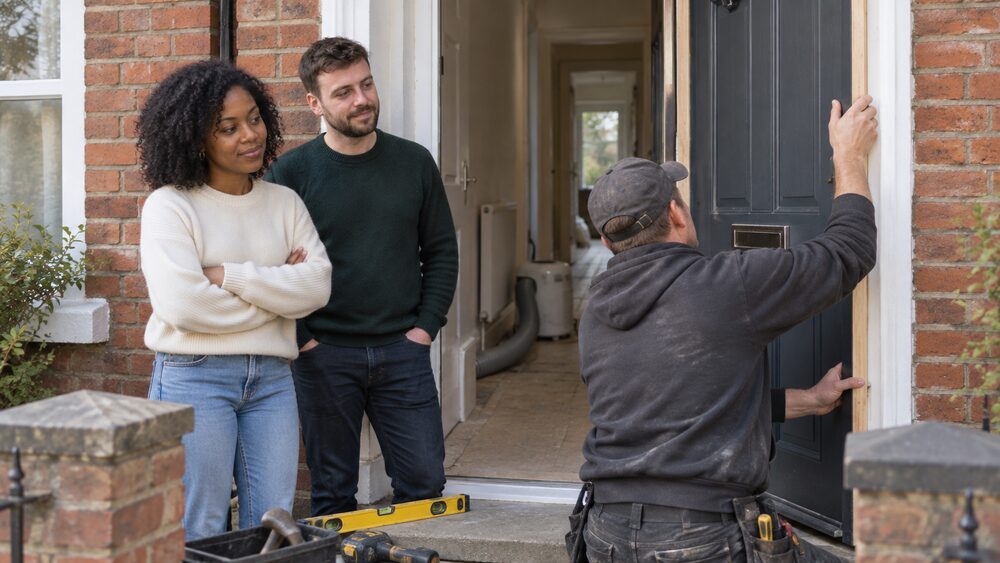
When a home floods, the insurance claim normally pays to put the property back the way it was. Build Back Better goes one step further: it lets the insurer also pay for work that makes the home more resistant or resilient to the next flood. Flood Re, the industry and government scheme behind it, defines it plainly:
"'Build Back Better' (BBB) is the process of putting in place measures that will make a home more resistant or resilient to flooding in the future."
The money is real and substantial. Since 2021, insurance claim payments have been permitted to include an element of resistant and resilient repair, and householders can access funds up to the value of £10,000 to install property-level protection measures as part of the repairs after a flood1. The insurer pays for the work and is then reimbursed by Flood Re, so the householder deals only with their own insurer throughout1.
The catch is that Build Back Better is not automatic and not universal. Insurers are not currently under any obligation to provide it, each insurer sets its own limit and criteria, and not all policies include it2. Only about 30% of properties offered the measures take them up2. This page explains what Build Back Better covers, who can use it, how to ask for it during a claim, and why it matters given that Flood Re itself is due to end in 2039.
What Build Back Better pays for after a flood claim
A standard flood claim restores the home: drying it out, replacing damaged floors and plaster, repairing wiring and paying for alternative accommodation while the work is done. Build Back Better sits alongside that repair work. From 2021, claim payments have been allowed to include an element of resistant and resilient repair, above the ordinary reinstatement, with up to £10,000 available for property-level protection measures installed as part of the repairs1.
The distinction matters because ordinary repairs put back exactly what was there before, in a home that may flood again. The average cost to repair a flooded home is now in excess of £70,0002, and research commissioned by Flood Re from Fathom suggests flood defences can save households alone £1.15 billion a year by mitigating damage4. Resilient repair aims to break that cycle: instead of absorbent plaster and wooden floors that will be ruined a second time, the home is rebuilt with materials and fittings that survive water better or keep it out altogether.
The Financial Ombudsman Service, which handles complaints about insurance, sets the baseline that any claim must meet. It does not expect an insurer to put you into a better position than before, or to include preventative protection you never held, but it does expect repairs to be effective and lasting. Where a property is at significant risk of flooding again, the ombudsman may ask an insurer to add preventative measures5. Build Back Better gives insurers a funded route to do exactly that, rather than leaving the cost with the policyholder.
Build Back Better cover: up to £10,000, set by each insurer
The headline figure is £10,000, and it is worth being precise about what it means. It is the maximum Flood Re reimburses to the insurer for property-level protection measures installed as part of repairs after a flood1. It is not a guaranteed payment to the household, and Flood Re is explicit on the point:
"Not necessarily, each Insurer sets their own limit."
That answer, given by Flood Re to the question of whether a householder receives the full £10,000, is the single most important thing to understand about the scheme6. One insurer may offer the full amount, another a lower figure, and a third may not participate at all. The limit, the criteria and even the range of measures on offer can differ from policy to policy within the same market.
The £10,000 also has to stretch across everything the resilience work involves, which may include a survey of the property before any measures are chosen, the measures themselves, and their installation. A home with a straightforward layout may need less survey and fitting work than a complex one, so the amount of actual protection the money buys varies from property to property.
Because the reimbursement goes to the insurer rather than the householder, there is no separate claim to make and no form to send to Flood Re. The practical question is simply what your own insurer offers under its Build Back Better terms, and that is a question to ask at the moment of the claim, when the repairs are being scoped, rather than after the work is agreed.
Resilience measures it can fund: surveys, flood doors and more
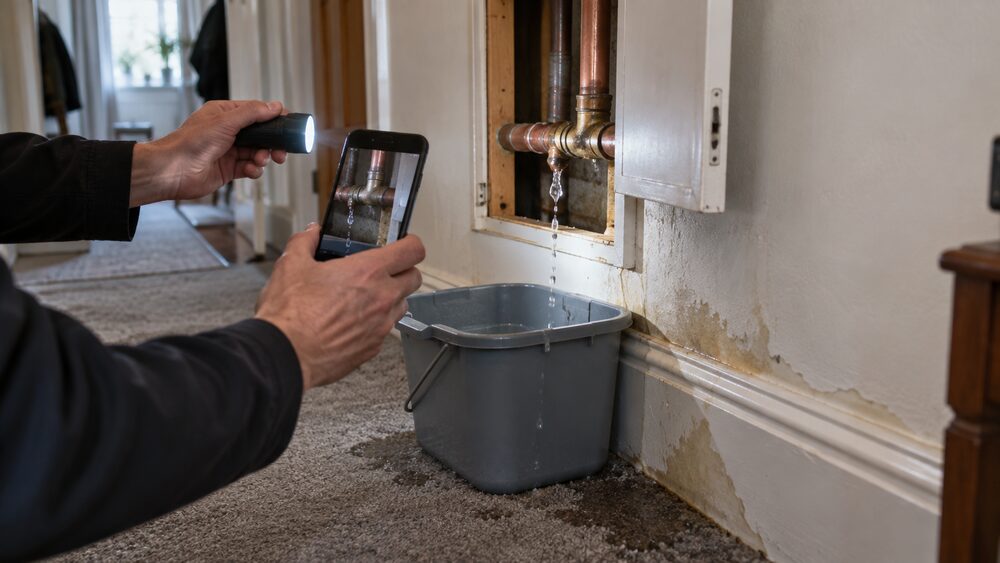
Build Back Better funds property-level protection: measures attached to the home itself rather than large community defences. The scheme's own description is measures that make a home more resistant or resilient to flooding in the future6, and the two words describe two different strategies.
Resistance means keeping water out. Resilience means accepting that water may get in, but making the home cheap and quick to dry out afterwards. A well-designed package usually combines both. The kinds of products and work the scheme can fund include:
- Flood surveys: a professional assessment of how water enters the property and which measures would work, often the first thing paid for from the allowance.
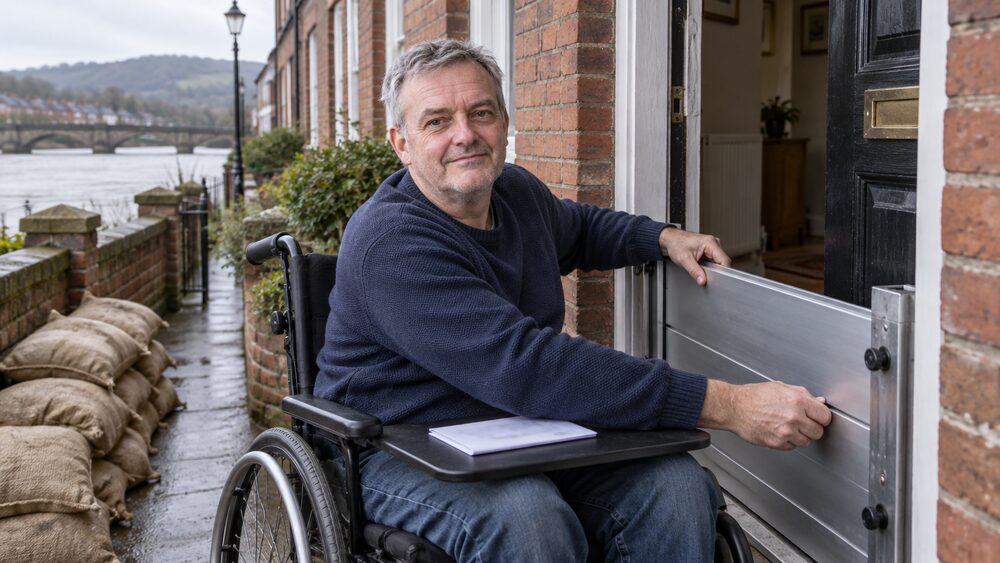
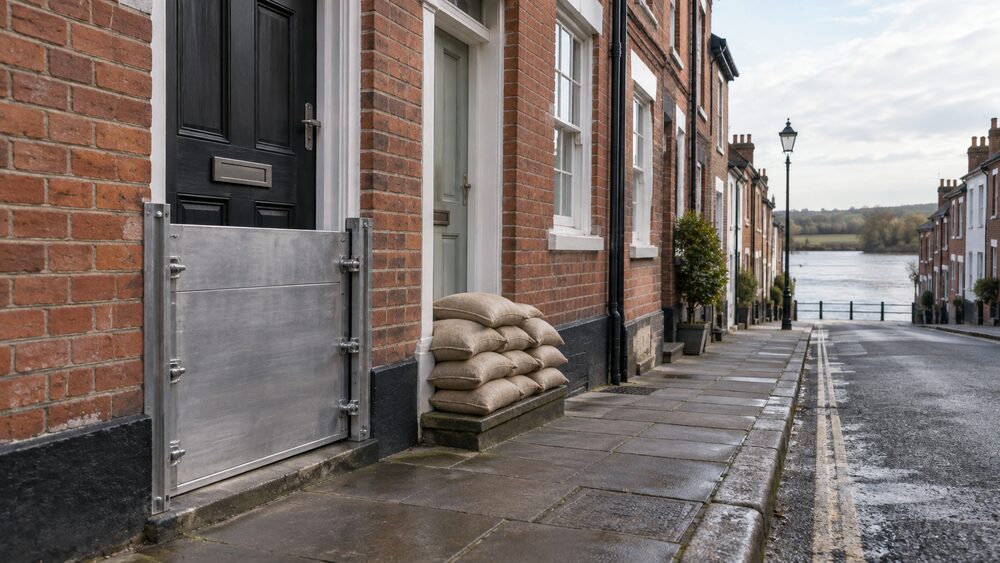
- Flood doors and windows, and demountable flood barriers: products made to the BS 851188 standard, the British Standard for flood protection products, which enhance resistance to flooding7.
- Resilient insulation: insulation materials that survive water or dry out without losing performance7.
- Resilient wall and floor finishes: water-resistant plaster, tiles and flooring in place of absorbent materials, so a future flood causes less damage and a faster recovery7.
- Enhanced resistance to heatwaves: some qualifying improvement lists also recognise measures such as external shutters and external insulation, reflecting that resilience products can serve more than one purpose7.
The logic behind funding these measures through insurance is set out in Flood Re's own strategy: premiums and payments should encourage householders to make their properties more flood resilient8. Insurers and brokers make the same point from the customer side, noting that making your home flood resilient reduces the likelihood and severity of a claim9. With flooding described as on the increase by lenders such as Lloyds Bank10, the measures are not a one-off: they are intended to change how the home fares at the next flood, and how insurable it remains.
Not every insurer or policy offers Build Back Better
Build Back Better is voluntary. Both CIWEM's Resilience and Climate Change Group and the National Flood Forum have noted that insurers are not currently under any obligation to provide it2. Participation has grown, but the National Flood Forum's guidance is blunt: not all insurers participate automatically, so it is important to ask11.
The variation is visible in the market. Which?'s review of Tesco Home Insurance, for example, notes that Tesco is not currently a member of Flood Re's Build Back Better scheme12. Other insurers do take part and promote it. The practical consequence is that two neighbours, both flooded, both insured, may have very different entitlements: one may be offered a funded flood survey and flood doors, the other standard repairs only.
There is a second layer of variation: the policy rather than the insurer. Even within an insurer that participates, not all policies are included, because each insurer sets its own criteria1. A basic buildings policy and a combined buildings and contents policy from the same firm may treat Build Back Better differently.
A related point on flood cover generally: flood cover is a standard part of buildings insurance and is widely available for most properties, even in areas deemed to be of high flood risk13. But policies differ at the edges. Many insurers will not cover damage caused by groundwater flooding, where water rises gradually through the ground, and some exclude damage to outbuildings or fences13. When checking whether a policy includes Build Back Better, it is worth checking these flood-related exclusions at the same time, and the guide to storm and flood claims covers what a standard claim pays for.
How to ask for Build Back Better when you claim
The first step in any flood is the same whether or not Build Back Better is in play: contact your insurance company, tell them your home was flooded and that you want to make a claim14. The claim is handled by your insurer throughout, even where the flood element sits with Flood Re; as Ecclesiastical, an insurer that works with the scheme, puts it, this makes no difference to the way you buy your home insurance, and any claims will continue to be handled by the insurer as before15.
Build Back Better comes up once the claim is under way, at the point where the repairs are being assessed. The steps in practice:
- Check the policy early. Ask your insurer or broker, before or during the claim, whether Build Back Better is included and what the insurer's own limit is11.
- Report the flood and make the claim. Tell the insurer what happened and that you want to claim14.
- Let the repairs be assessed. The normal repair work to put right the flood damage is scoped first.
- Discuss resilience work. A flood survey may be commissioned, and measures such as flood doors or resilient finishes proposed, within the insurer's limit.
- Reimbursement happens behind the scenes. Flood Re reimburses the insurer up to £10,000; you deal only with your insurer1.
If the claim goes wrong, there is a route for redress. The Financial Ombudsman Service can ask an insurer to deal with a rejected claim, take over from a builder who is insolvent, add interest, pay for more work, or pay compensation for loss or inconvenience19. The ombudsman's approach to flood repairs is that they should be effective and lasting, and where a property is at significant risk of flooding again it may ask the insurer to add preventative measures5. The guide to complaining about an insurer sets out the process and timescales.
Why take-up of Build Back Better is low
For a scheme offering up to £10,000 of funded protection, Build Back Better is underused. Currently only about 30% of properties offered BBB are taking up the measures2. In Wales the picture is starker still: only 19 properties had taken up Build Back Better as of January 2025, out of close to 200 eligible claims, and the uptake rate in Wales appears lower than the average2.
Flood Re has acknowledged the gap and said it will be looking into properties that have declined the offer to better understand why, sharing learnings once that research has completed2. The reasons are not yet established, but the numbers suggest awareness is part of the problem: as of January 2025, only 19 properties in Wales had taken up Build Back Better out of close to 200 eligible claims, and Flood Re notes that the uptake rate in Wales appears lower than the average2. Households may simply never hear that the offer exists.
There may also be friction at the moment of the claim itself. A household in the aftermath of a flood is dealing with drying, temporary accommodation and loss adjusters, and a discussion about future resilience may feel secondary. Some may be wary of the disruption of extra work, or unsure what the measures involve. The Senedd's Climate Change Committee in Wales has recommended that the Welsh Government report on how schemes such as Flood Re can be better promoted to residents of high-risk flood areas2, which points to awareness rather than appetite as the main barrier.
The scale of the exposure makes the low take-up worth noting. About one in ten homes in the UK is located in a floodplain8, and one in thirteen, 8%, of new homes built in England in the last ten years is in a flood zone, the equivalent of almost 110,000 homes1. A further 203,000 properties are at increased risk due to poor maintenance and deteriorating flood defences1.
Flood Re and how it keeps flood cover affordable
Build Back Better only exists because of Flood Re, so it is worth understanding what that scheme is. Flood Re is a re-insurance scheme, hence the "Re", in which insurers pool the costs associated with higher-risk properties by paying a levy into a non-profit-making fund3. It was established through the Water Act 2014, went live in April 201620, and is a joint industry and government-sponsored scheme to enable flood cover to be affordable for households at the highest risk of flooding21.
The mechanism works like this. All insurers pay a levy into a central fund held by Flood Re15, and those costs are passed on via increased premiums across all household insurance policies1. If an insurer considers a customer to be particularly high risk, it can cede that customer's flood cover to Flood Re, which then carries the flood risk behind the scenes22. The householder still buys ordinary home insurance from an ordinary insurer; householders do not deal with Flood Re directly, and decisions about whether eligible properties are included are made by insurers3.
The results have been significant. Almost 250,000 households have benefited, and four out of five properties that previously submitted claims for flood damage have seen prices fall by 50%3. Before the scheme, just over half of flood-claim homes would have paid thousands of pounds, while the remainder would have been unable to obtain insurance altogether2. Access to quotes has also transformed: 93% of households at risk of flooding can now access multiple insurance quotes, up from 1% in early 20161. The guide to Flood Re covers the scheme in more detail.
Flood Re premiums and the £250 excess
When a home is ceded to Flood Re, two things change in what the policyholder sees. The premium for the flood cover is based on the property's Council Tax band, rather than on the risk the property faces, and the flood excess is capped at £25015. Council Tax bands are used, in the scheme's own words, as a proxy to reflect the householder's ability to pay rather than reflecting the risk faced by the property1.
The insurer tells the householder this is happening. Ecclesiastical, for example, tells customers whose home is included in the Flood Re scheme that they will be contacted ahead of the renewal date with details of the amended premium, including the excess of £250 for flood15. Halifax's guidance to customers makes the same point: Flood Re exists to make sure people who live in eligible homes can get affordable buildings and contents insurance23.
The £250 flood excess compares favourably with the open market, where flood excesses can be far higher. Which? has reported an excess of £500 for flood damage on one leading buildings and contents policy24, and excesses on high-risk homes are often much larger. The guide to insurance excess explains how excesses work generally.
Flood Re publishes the inward reinsurance premiums it charges insurers by Council Tax band, and these are updated over time: new premiums apply to properties ceded with a rating date on or after 1 April 20276. These are amounts between insurers and Flood Re, not what the householder pays, but they shape the flood element of premiums. For 2026/27, the published buildings premiums run from £147 in the lowest band to £1,077 in the highest, with combined buildings and contents policies from £205 to £1,6136.
Premiums after a flood claim
A flood claim can move your premium, and it is better to know this in advance. After a flood and making a claim, householders may see a jump in their prices from low hundreds of pounds to high hundreds or a thousand or more2. Quoted prices in high-flood-risk areas are already 50 to 55% higher than in lower-risk areas2.
Insurers often treat storm or flood damage as an at-fault claim, because there is no third party to recover the costs from25. Lloyds Bank tells its home insurance customers plainly that making a claim can increase the premium at renewal26. The guide to how premiums are calculated explains the factors behind this.
Resilience measures are the counterweight. Flood Re's strategy is that premiums and payments should encourage householders to make their properties more flood resilient8, and brokers advise that making your home flood resilient will reduce the likelihood and severity of a claim9. In other words, the work Build Back Better funds is not only about the next flood: it is about remaining insurable, and affordably so, in the years ahead. The guide to getting home insurance after a flood covers the position of households with a claim on their record.
Which homes Flood Re does not cover
Flood Re has clear boundaries, and households outside them face the open market. The main exclusions:
- Homes built after 2009. Properties built from 2009 onwards are excluded from the scheme, a deliberate rule to discourage further development in flood-risk areas2. The Association of British Insurers has restated that the exclusion still applies, though others, including the British Retail Consortium, have argued that the exclusion raises an equity issue that negatively impacts a growing proportion of households over time4.
- Businesses. Flood Re, and hence many insurers, does not cover properties used for business purposes, in other words where business rates are paid22. The ABI's position is that it is not possible or appropriate to extend Flood Re to cover businesses4.
- Large leasehold blocks. Flood Re does not cover buildings insurance for a block of more than three leasehold flats1. Leasehold flats and mixed-use properties generally have complex arrangements3, and the guide to buildings insurance for leasehold flats covers how that cover works.
- Tenants. Tenants sit outside the Flood Re criteria alongside businesses and post-2009 homes2, though contents insurance remains available separately.
The scale of the gap was set out before the scheme began: 800,000 properties in Britain were at risk of flooding yet ineligible for the scheme, 70,000 of them at high risk1. For households outside Flood Re, flood cover is still widely available as a standard part of buildings insurance, even in high-risk areas13, but without the subsidy or the £250 excess cap.
Flood Re ends in 2039: why resilience matters after that
Flood Re was never meant to be permanent. It is a time-limited scheme2, due to end in 2039, at which point the intention is to return to a market-based system that reflects risk3. Flood Re has a statutory responsibility to restore an effective insurance free market over its temporary 25-year life span, with a managed transition by 20391.
After 2039, insurance market prices will reflect flood risk. For a home that floods repeatedly and is repaired the same way each time, that is a difficult position: the National Flood Forum has noted that most mortgages now outlast the lifetime of Flood Re, and it is not seeing evidence that the market will pick up the mantle after the scheme ends2. A home made resilient through Build Back Better, by contrast, goes into that market with lower expected losses, fewer claims on its record and physical protection already in place.
This is the strategic case for taking up the measures when they are offered. The £10,000 is available now, funded through the scheme, at the one moment when repair work is already being paid for and tradespeople are already on site. After 2039, the same work will be paid for by the householder alone, and priced into premiums that reflect risk directly. The guide to buildings insurance covers how insurers assess risk generally.
Where to get help with a flood claim
Several sources of free, independent help exist for households dealing with flooding and insurance.
- The National Flood Forum offers independent advice on finding insurance and flood prevention measures in England and Wales, and can be contacted on 01299 40305527. It describes its role as supporting people and communities affected by flooding, helping you understand your options and work with the relevant authorities28.
- A joint guide from the National Flood Forum and the ABI is a step-by-step explanation of what to expect when recovering your home after a flood, outlining each stage of the insurance and reinstatement process28.
- Floodline can be called on 0345 988 1188 for flood information22.
- The Financial Ombudsman Service is the escalation route if a claim or complaint is not resolved: speak to your insurer first, and if the complaints process is exhausted, take the matter to the ombudsman22.
- Shelter offers housing help if your home is flooded in England, including for tenants, who could get help from a local assistance fund for flood-damaged belongings29.
For the immediate aftermath, the guide to what to do in the days after a flood covers the first steps, and making a claim explains the claims process from notification to settlement.
Sources29 cited
- Insurance and Flood Re: a Wales perspective Welsh Government, 2025-03-17
- Flood insurance in Wales: consultation report and proposals Welsh Government, 2025-11
- Affordable insurance for flood risk properties: Flood Re House of Commons Library, 2026-09-26
- Insurance and Flood Re: a Wales perspective consultation report Welsh Government, 2025-05
- Flood damage complaints Financial Ombudsman Service, 2026-09-26
- Flood Re FAQs: general Flood Re, 2026
- Green Mortgage products Hodge Bank, 2025-01-24
- Research briefing CBP-12074: Flood Re House of Commons Library, 2026-09-14
- Cost of home insurance British Insurance Brokers' Association, 2022-11-18
- Weather Hub Lloyds Bank, 2026-09-27
- Home insurance National Flood Forum, 2026-09-26
- Tesco Home Insurance review Which?, 2026-09
- Does your insurance cover damage caused by bad weather? Which?, 2025-12-08
- After a flood: making an insurance claim nidirect, 2024-08-29
- Flood Re Ecclesiastical Insurance, 2026-09-26
- Flood Re FAQs: Build Back Better Flood Re, 2026
- Flood Re FAQs: qualifying Flood Re, 2026-09-26
- Flood Re FAQs: cover Flood Re, 2026
- Building warranties complaints Financial Ombudsman Service, 2026-09-26
- Research briefing SN06613: Flood Re House of Commons Library, 2026-07-08
- Home insurance Baptist Insurance, 2025-02-01
- Home insurance flooding Which?, 2026-09-17
- Flooding guidance Halifax, 2026-09-27
- Home insurance: is it worth paying extra for flood and storm cover? Which?, 2024-06-12
- Is your car covered for flood damage? Which?, 2025-11-08
- Make a home insurance claim Lloyds Bank, 2026-09-27
- How do insurers deal with flooding and flood risk? House of Commons Library, 2026-09-11
- After a flood National Flood Forum, 2026-09-26
- Housing help if your home is flooded Shelter England, 2025-10-27

 MoneyHelperFree, impartial money and pensions guidance, set up by government
 Financial Ombudsman ServiceFree, independent help when a complaint about a firm is not put right
 FSCSProtects your money if a bank, insurer or investment firm fails
 Citizens AdviceFree advice on money, consumer and legal problems in England and Wales
 GOV.UKOfficial information on tax, benefits and government services