
If you own a leasehold flat, you normally do not insure the building yourself. The freeholder, or a managing agent acting for them, arranges one buildings insurance policy covering the whole block, and each leaseholder pays a share of the premium through the service charge1. The exception is a lease that specifically requires you to arrange buildings insurance with a named insurer, which is uncommon but does exist2.
This arrangement surprises many flat owners, especially when a mortgage lender asks for proof of buildings insurance. The proof you need is usually the freeholder's block policy, not a policy of your own. This page explains who arranges the cover, what your lease says about it, what you pay, how to claim on a policy held in someone else's name, and what the law changed in 2024 when it banned insurance commissions being recovered from leaseholders3.
The freeholder usually insures the building, not you
When you buy a leasehold flat you are buying the right to live in the property for a set number of years, not the building it sits in. The building belongs to the freeholder, and responsibility for insuring it normally goes with that ownership. Independent guidance is consistent on this point: if it is a leasehold flat, the building may be insured by the freehold landlord, and if you are renting, you probably do not need buildings cover at all1.
Citizens Advice sets out the two arrangements a lease can create. The lease may require buildings insurance with a named insurer, or it may leave the freeholder to take out insurance and charge leaseholders for it2. The second is the norm in purpose-built blocks. The freeholder may arrange the policy directly or hand the job to a managing agent, and the cost lands in the service charge either way.
What the block policy covers is the structure: the roof, the external walls, the communal stairs and lifts, and usually the shell of each flat up to the plaster. What it does not cover is your furniture, electronics, clothes and anything else you would take with you if you moved out. That needs separate contents insurance, which you arrange yourself5.
A common and expensive mistake is buying a buildings policy for a flat that is already covered by the block policy. If your lease requires the freeholder to insure, a second buildings policy is usually unnecessary. Check the lease first, and ask the freeholder or agent for the block policy details, before spending money on cover the building already has.
Why one policy covers the whole block
A block of flats is one building with one roof, one set of external walls and one set of communal parts. Insuring each flat separately would leave gaps: nobody would clearly own the risk to the roof, the communal hallway or the pipe that runs through three flats on its way to the drain. One policy removes those gaps and puts a single insurer behind the whole structure.
Buildings insurance of this kind is written on a rebuild basis. Lloyds Bank, for example, describes its buildings cover as insuring the full rebuild cost6. For a block, that means the sum insured should reflect what it would cost to rebuild the entire building, not the market value of the flats inside it. If the sum insured is too low, the policy may not pay out in full, a problem explained in underinsurance and the average clause.
The cost is then shared. The Homeowners Alliance describes a service charge as the charge for the upkeep of a leasehold property, more common in blocks of flats or apartments, with the charge normally apportioned to the number of units within the building7. So if there are twenty flats in the block, the insurance premium is typically divided twenty ways, though the lease can set a different split, for example weighting ground floor flats differently from top floor ones.
What your lease says about buildings insurance
The lease is the contract that settles who does what, and it is worth reading the insurance clause before anything else. Most leases put the duty to insure on the freeholder and give them the right to recover the cost from leaseholders. Some older or unusual leases instead require each leaseholder to insure their own flat with a named insurer2.
The lease also usually sets out how the cost is divided, what evidence the freeholder must give you, and whether the freeholder can insure with a company connected to themselves. Where a lease is silent or unclear, the default position is that the freeholder arranges the block policy, but the exact wording matters when a dispute reaches a tribunal.
The law around these charges has changed substantially. The Leasehold and Freehold Reform Act 2024 prohibits commissions from the placer or manager of insurance from being recovered from leaseholders through their service charge3. Before that change, the common practice was for landlords, freeholders and managing agents to be paid for arranging and managing buildings insurance through an insurance broker sharing a proportion of their commission8. The government's guide to the reform also sets out that leaseholders must receive transparency over service charge costs in a standardised, comparable format, and that freeholders who manage their own property must belong to a redress scheme so leaseholders can challenge them9.
New leasehold flats are also being phased out: under the proposed legislation leasehold houses and new leasehold flats will be banned, though existing leasehold properties are not fully outlawed10.
Share of freehold and shared ownership: who arranges cover
Not every flat owner deals with an outside freeholder. In a share of freehold arrangement, you own your flat leasehold plus a share of the freehold for the building, typically through a company the flat owners control11. In that case the owners collectively arrange the buildings insurance, and the premium is divided between them as the company's documents or the leases set out. The practical effect is the same: one block policy, paid by the owners, but the people making the insurance decisions are the people paying the bill.
Shared ownership works differently again. Under a shared ownership lease, the leaseholder buys a share of the property and pays rent on the remaining share, which stays in the ownership of the landlord12. The building is normally insured by the landlord or freeholder, and the shared owner pays their share through the service charge, just as a full leaseholder does. For external repairs to a block of flats, the official guidance is that the cost will be divided between you and the other flat owners in the building if the reserve fund does not cover it13.
Shared ownership leases carry one quirk worth knowing. They are treated as long leases where the leaseholder pays a rent above £250 a year, or £1,000 a year in Greater London, which brings them within leasehold law generally14. That is why the insurance and service charge rules that apply to ordinary leaseholders apply to shared owners too.
Paying for it through the service charge
The service charge is the mechanism that pays for the block, and buildings insurance is one of its standard items. Shelter lists what service charges commonly cover: cleaning, lighting and maintenance of internal communal areas, gardening, entry systems, lifts and rubbish chutes, caretakers and emergency alarm systems, and buildings insurance and management fees15. Service charges are more common in flats than houses15, and when you own a leasehold flat you will usually pay one to your landlord or management company to maintain the common areas11.
How much you pay depends on the premium and on the split the lease sets. Two protections shape what can happen to the total. First, the Leasehold and Freehold Reform Act 2024 stops insurance commissions being recovered through the service charge3, and the government has consulted on a permitted insurance fee to replace them, described as fair, transparent and reflective of the work contributed8. Second, leaseholders have the right to transparency over service charge costs in a standardised comparable format and can challenge them9.
If you bought your home under the Right to Buy, there is an additional protection in the early years. The Section 125 notice you receive before buying gives estimates of the service charges or improvement costs you will have to pay during the first 5 years after you buy, and you are protected from unexpected costs for that period, with increases limited to inflation; after 5 years the service charge can rise to reflect actual costs17.
For help with the wider costs of running a home, benefits can sometimes assist: Housing Benefit can help with rent and some service charges15, though support for most working-age claimants now runs through Universal Credit.
Why cover for some blocks costs more
The premium for a block is driven by the building, not by your flat, and several factors push some blocks' costs far above others.
The starkest example is cladding. The Leasehold and Freehold Reform Act's explanatory notes record that premiums for residential multi-occupuity buildings had increased by 187% for buildings which had flammable cladding between 2016 and 20213. Even where a building is safe, insurers price the risk of the whole structure, so a block with a history of claims, a flat roof or a high flood risk will cost more to insure, and every leaseholder shares that cost.
Flood risk is the second factor, and here leasehold flats face a structural disadvantage. Flood Re, the scheme that keeps insurance affordable for homes at high flood risk, does not cover buildings insurance for a block of more than three leasehold flats4. The Welsh Government's consultation report makes the same point: leaseholders in a block of more than three flats, including basements, are excluded from the scheme, and reports leaseholders struggling to access insurance as a result18. Flood cover itself remains a standard part of buildings insurance and is widely available for most properties, even in areas deemed to be of high flood risk19, but without Flood Re's backing the price is set by the open market.
Other cost drivers are familiar from ordinary home insurance. Subsidence cover is included in most buildings policies but often carries a higher excess, typically around £1,00020. Optional extras such as accidental damage, alternative accommodation, legal expenses cover and cover for outbuildings raise the premium2, and legal expenses policies have their own limits: some insurers cap the hourly rate they pay panel solicitors, likely far below the industry's agreed rate, which could limit the quality of solicitor you get21.
What comprehensive cover looks like is fairly consistent across the market. Which?'s minimum requirements for a recommended buildings policy include flood, storm, subsidence and accidental damage cover, cover for burst or blocked pipes, trace and access cover of £5,000, alternative accommodation of £50,000 with no time limit, property owner liability of £1m, replacement of locks or keys for external doors up to £500, and home emergency cover up to £500 including the central heating system22. A block policy will not necessarily match all of these, which is one reason to ask for the policy details rather than assume.
Making a claim when the landlord holds the policy
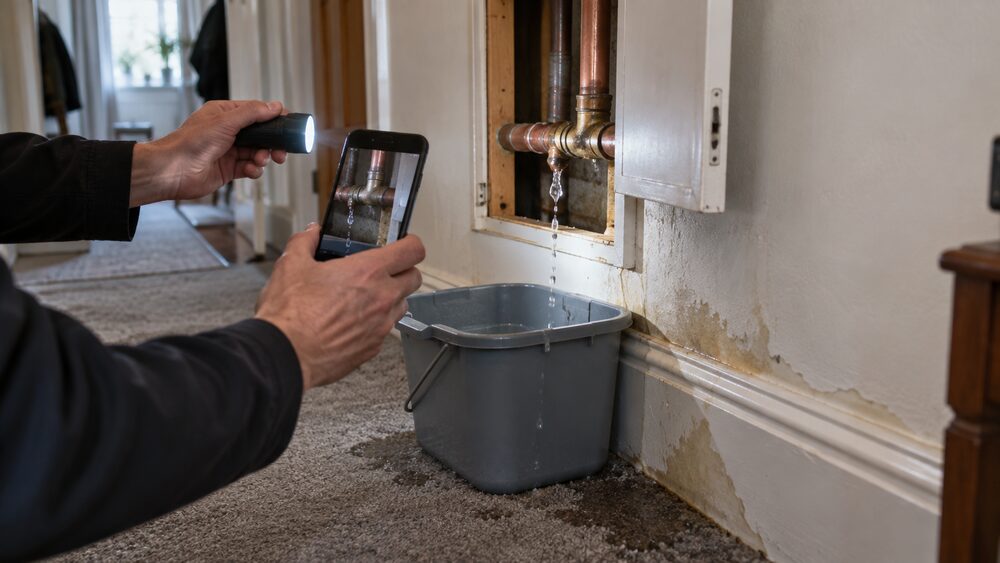
Damage to the building, a leak from a communal pipe, a fire that affects several flats: these are claims on the block policy, and the policyholder is the freeholder or managing agent, not you. The insurer will usually deal with the person who bought the policy, so your first step is to report the damage to the freeholder or agent and ask them to contact the company that insures the building23.
What the block policy pays for is the building. Insurers will generally pay for cleaning up and repairing your property, as well as temporary accommodation if your home has been made uninhabitable19. If your home is flooded, Shelter advises checking whether the insurance covers repair costs, replacing belongings, another place to stay, and legal cover and legal advice24. For a leasehold flat specifically, Shelter's advice is to check whether your freeholder's insurance covers repair costs, and that buildings insurance should cover flood risks24.
Your belongings are a separate claim on a separate policy. The landlord's insurance will not provide cover for a tenant's possessions, and the same logic applies to a leaseholder's contents: insure your own belongings at the property5. If you have contents insurance, contact your insurance company, tell them about the flooding or damage, and say you want to make a claim for contents23.
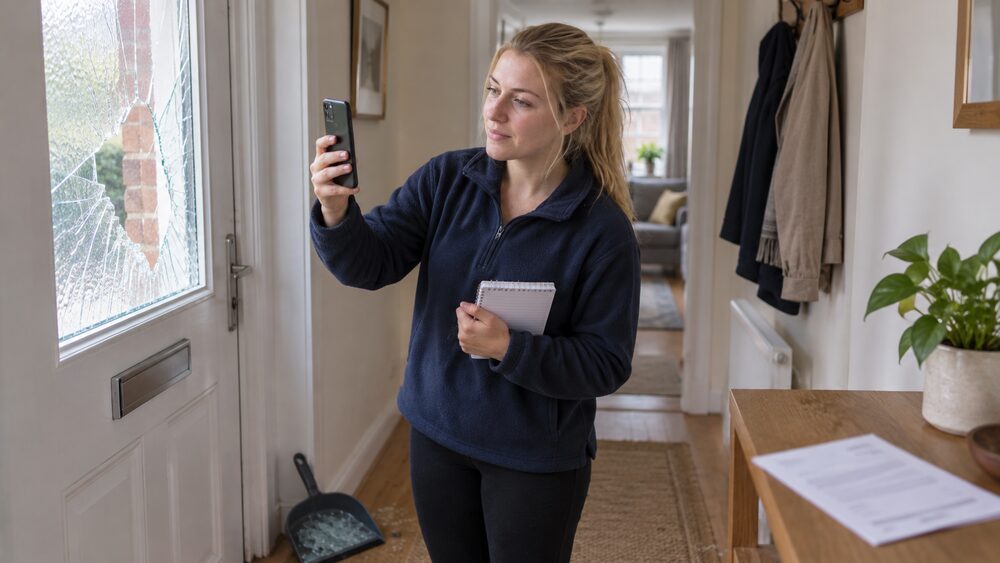
Practical points make claims go more smoothly. Take photographs before anything is moved or dried out, note the dates of everything, and keep copies of your messages to the freeholder or agent, because delays in reporting are a common cause of disputes. If the freeholder is slow to notify the insurer, your written record is what a tribunal or ombudsman will look at. For how the claims process works in detail, see how to make a home insurance claim and storm, flood and escape of water claims.
Your right to see details of the building's policy
You pay for the policy, so you are entitled to know what it says. The government's reform programme requires transparency over leaseholders' service charges, so that all leaseholders receive better transparency over the costs in a standardised, comparable format and can challenge them9. In practice, that means asking the freeholder or managing agent for the policy schedule, the sum insured, the premium and the breakdown of how your share was calculated.
What to check when you get it:
- The sum insured: it should reflect the full rebuild cost of the block6. Make sure you have sufficient insurance cover for your sums insured on your buildings25.
- Flood cover: flood cover is a standard part of buildings insurance26, but confirm the block policy has not excluded it.
- The excess: what the policyholder must pay towards each claim, and whether the lease allows that cost to be passed to leaseholders.
- The premium and any fees: since the 2024 Act, commissions from the placer or manager of insurance cannot be recovered from leaseholders through the service charge3, so a charge described as a commission is challengeable.
- The insurer: check the firm exists and is authorised, and see what happens if your insurer fails for how the FSCS applies.
If the freeholder refuses to provide the details, that refusal is itself something you can complain about, first to the freeholder or agent, then to the redress scheme they must belong to if they manage their own property9.
When the landlord fails to insure or overcharges: where to turn
A freeholder who fails to insure the building, or who loads the service charge with an unreasonable insurance cost, is not someone you simply have to pay. The routes for challenge depend on what has gone wrong.
If the building is not insured. A freeholder who breaches the lease by failing to insure is in breach of contract, and the lease usually gives leaseholders remedies, including in serious cases the right to take over the insurance themselves or to apply to a tribunal. Mortgage lenders also take a dim view of uninsured security, so telling your lender can add pressure. The government's reforms require freeholders who manage their own property to belong to a redress scheme so leaseholders can challenge them9.
If the charge is unreasonable. Leaseholders can challenge service charges at a tribunal, and the reform programme is built around transparency over costs in a standardised comparable format9. Since the 2024 Act, insurance commissions cannot be recovered through the service charge at all3, and the consultation on permitted insurance fees was launched specifically to prevent freeholders, property managing agents and landlords from imposing opaque and excessive charges related to building insurance on leaseholders8.
If the charge relates to building safety work. Separate rules cap what leaseholders can be asked to contribute. The Building Safety Act 2022 changed the law so that leaseholders are only required to contribute towards remediation costs within set limits27, and the protections apply to leaseholders in buildings of at least 11 metres or five storeys in height with historical safety defects3. The National Housing Federation describes these protections as significantly limiting the extent to which leaseholders can be charged for works to ensure their homes' safety, while noting the Act still permits some costs to be passed on28.
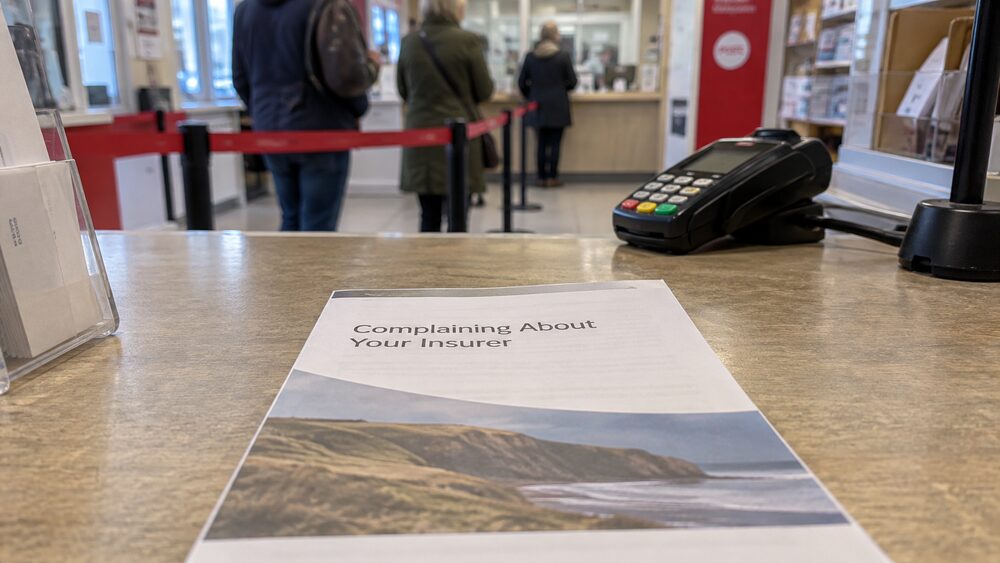
If the insurer has treated you badly. Where your complaint is about the insurance itself rather than the freeholder, for example a rejected claim on your own contents policy, the Financial Ombudsman Service can look at home insurance complaints17. The site's guide to complaining about an insurer covers the process, and leaseholder charges and complaints about block policies covers the freeholder side in detail.
Mortgages, contents and letting: what you arrange yourself
Three things remain yours to arrange even when the block is fully insured.
Your mortgage. Buildings insurance is not a legal requirement, but your mortgage lender might make it a condition of the loan30, and most mortgage lenders will require you to hold buildings insurance31. On a leasehold flat, that condition is normally satisfied by the freeholder's policy, and lenders generally require it from the date of exchange20. You do not have to buy insurance from your mortgage lender1. If your lender wants proof, the block policy schedule is usually what they need.
Your contents. The block policy covers the building, not what is inside your flat. The exception to needing your own buildings cover is exactly this situation: if you live in a block of flats where the building as a whole has a policy paid for through your service charge, you still need contents cover for your own things32. People who rent need only contents insurance because the landlord arranges the buildings cover17, and the same split applies to leaseholders.
Letting your flat. Renting out a room or the whole flat changes your own insurance position. You might need to tell your insurer if you rent out a room, and your premiums could increase33; many insurers will increase premiums for a let room, and you must tell them or your insurance may be invalid34. Renting out your home can also affect your buildings insurance where you hold it yourself, with some insurers increasing premiums34. The block policy is unaffected, but your lease may require the freeholder's consent to let, and a shared ownership lease can be terminated by court order for non-payment of rent or breach of obligations12.
Where to get free help
Several organisations give free advice on leasehold insurance disputes. The Financial Ombudsman Service handles complaints about home insurance, including how a claim on your own policy was handled17. Shelter and Shelter Cymru advise on housing problems including flooded homes and repairs24, and nidirect offers official guidance for Northern Ireland on making an insurance claim after a flood23. The National Housing Federation publishes information for leaseholders on building safety charges28. For the underlying rules on how premiums are set, see how insurance premiums are worked out, and for the wider picture of home cover, start with buildings insurance explained.
Sources34 cited
- Shopping around for insurance Independent Age, 2026-09-26
- Buildings insurance Citizens Advice, 2020-02-20
- Leasehold and Freehold Reform Act 2024 explanatory notes legislation.gov.uk, 2024-05-24
- Insurance and Flood Re: a Wales perspective Welsh Government, 2025-03-17
- Renting a property RICS, 2026-09-26
- Lloyds Bank home insurance Lloyds Bank, 2026-09-27
- Home buying and selling jargon Homeowners Alliance, 2026-07-31
- Consultation on introducing permitted insurance fees for landlords, freeholders and property managing agents GOV.UK, 2024-12-02
- Guide to the Leasehold and Freehold Reform Bill GOV.UK, 2023-11-27
- Leasehold rent to be capped at £250: what home owners need to know Which?, 2026-01-28
- Leasehold vs freehold Which?, 2026-06-08
- Key information for shared owners of flats in England GOV.UK, 2015-12-15
- Shared ownership scheme: repairs and home improvements GOV.UK, 2026-09-28
- Why is shared ownership considered ownership? National Housing Federation, 2026-09-26
- Rent in a council or housing association home Shelter England, 2026-06-28
- FCA ruling on multi-occupancy buildings: a full guide AXA
- Financial Ombudsman Service: home insurance complaints Financial Ombudsman Service, 2026-09-26
- Flood insurance: a Wales perspective consultation report Welsh Government, 2025-11
- Does your insurance cover damage caused by bad weather? Which?, 2025-12-08
- 6 questions to ask before you choose a home insurance policy Which?, 2025-10-15
- Do you need home insurance add-ons? Which?, 2026-09-17
- Tesco home insurance review Which?, 2026-09
- After a flood: making an insurance claim nidirect, 2024-08-29
- Housing help if your home is flooded Shelter England, 2025-10-27
- Property damage from bad weather Biba, 2022-09-06
- Does your insurance policy cover heatwaves? Which?, 2023-06-08
- Leaseholder contribution caps GOV.UK, 2024-07-24
- Information for leaseholders on safety tests and remedial work National Housing Federation, 2026-09-26
- Leaseholder protections: frequently asked questions National Housing Federation, 2026-09-26
- Is self-insurance ever a good idea? Which?, 2026-02-25
- Santander home insurance review Which?, 2026-09-17
- Which insurance policies are worth keeping? Which?, 2023-08-07
- Taking in a lodger if you have mortgage arrears Shelter England, 2026-09-14
- Cynyddu eich incwm Shelter Cymru, 2026-09-14


 MoneyHelperFree, impartial money and pensions guidance, set up by government
 Financial Ombudsman ServiceFree, independent help when a complaint about a firm is not put right
 FSCSProtects your money if a bank, insurer or investment firm fails
 Citizens AdviceFree advice on money, consumer and legal problems in England and Wales
 GOV.UKOfficial information on tax, benefits and government services