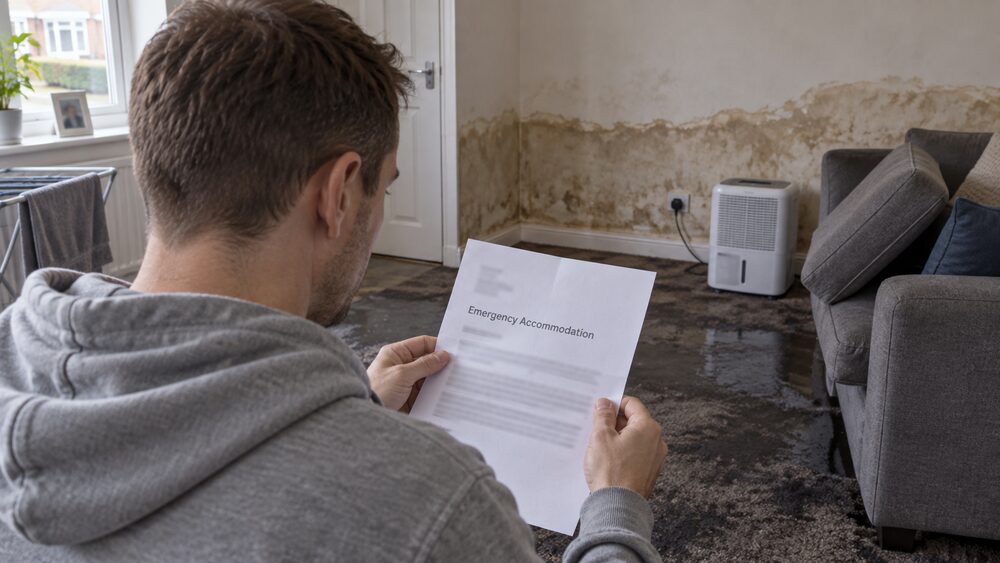
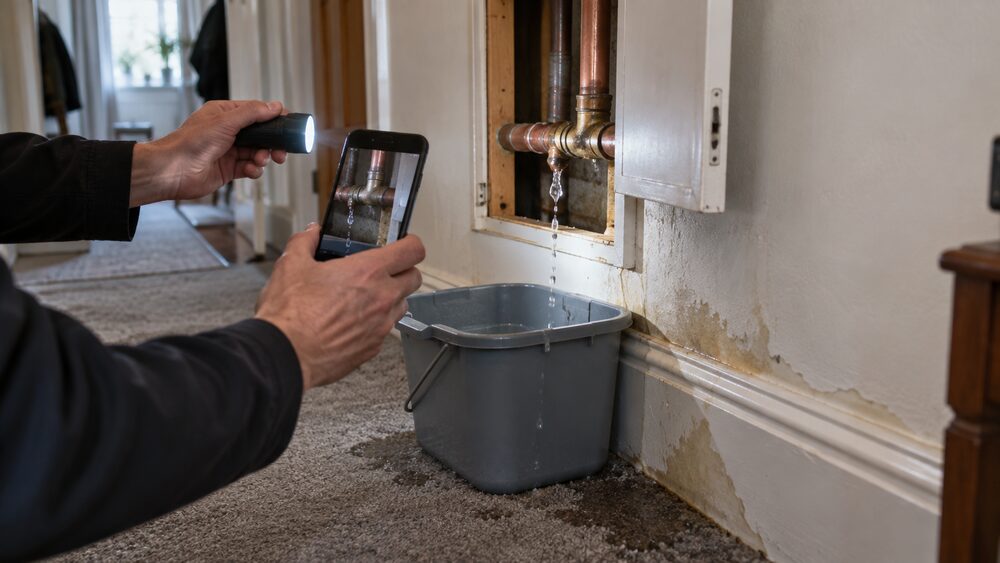
If your rented home floods, the short answer is that you usually keep paying rent, even if you cannot live there. You can ask your landlord to suspend rent payments, and you can ask for a rent reduction or refund until the property is fixed1. In Wales, from 1 December 2022 onwards, you may not have to pay rent for any time the property is unfit for human habitation2.
If your rented home floods, the short answer is that you usually keep paying rent, even if you cannot live there. You can ask your landlord to suspend rent payments, and you can ask for a rent reduction or refund until the property is fixed1. In Wales, from 1 December 2022 onwards, you may not have to pay rent for any time the property is unfit for human habitation2.
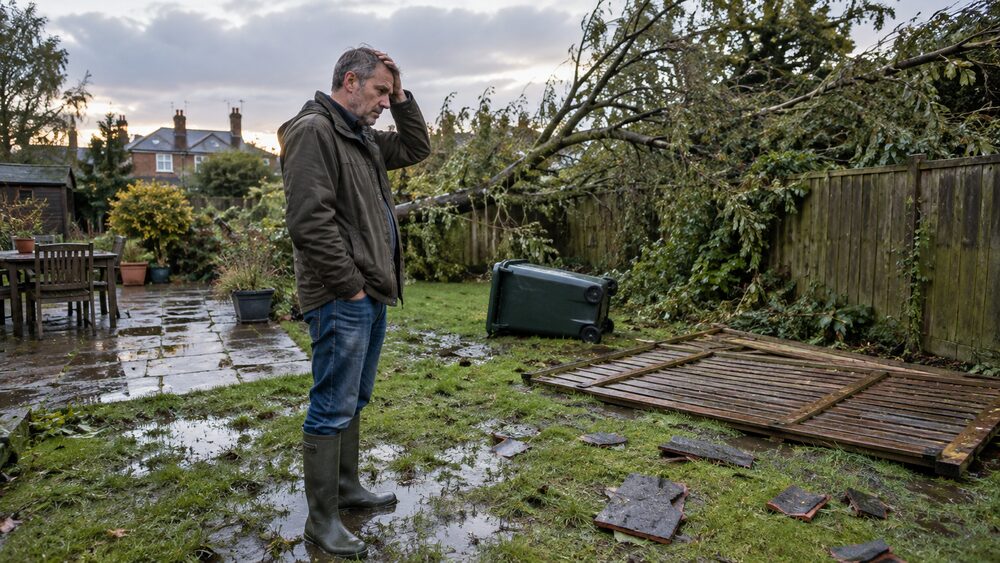
Your landlord is responsible for most repairs to the property after a flood, and their buildings insurance could cover the flood damage3. Your own belongings are a different matter: your landlord is not responsible for replacing or repairing any of your personal belongings that are flood damaged, and the landlord's insurance will not cover them1.
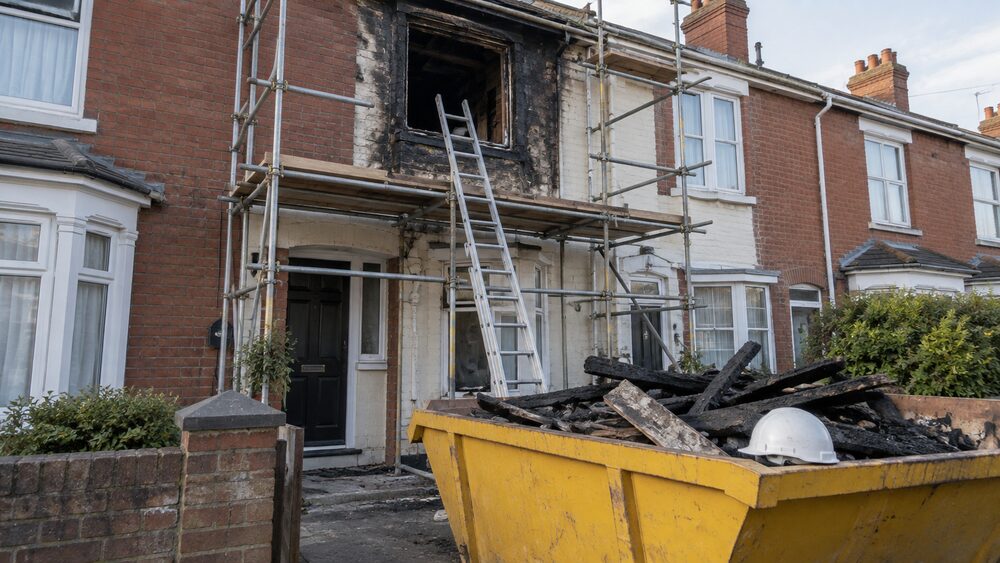
If you have to move out, who rehouses you depends on who your landlord is. A community landlord in Wales should provide temporary accommodation if you have to move out because of a flood3. A private landlord is not usually responsible for finding you somewhere else to live, though they may have insurance that pays for alternative accommodation3. In England, your council must give you emergency accommodation if you are homeless after flooding1.
Rent while your home is unfit to live in
The starting position is that rent continues. You must keep paying the rent even if your home is being repaired and you can use only one or two rooms3. If you cannot live in your home, you can ask your landlord to suspend rent payments1. You can also ask your landlord for a rent reduction or refund until the property is fixed1.
The rules differ across the UK. In Wales, from 1 December 2022 onwards, you may not have to pay rent for any time that the property is unfit for human habitation2. That is a stronger position than the general rule that rent continues, and it turns on whether the property is fit to live in rather than on whether repairs are under way.
If you move out for repairs, get a written agreement from your landlord confirming that you had to move out because of flooding and that you will be able to move back in after the repair work is finished3. That record matters if there is later a dispute about what you owe or about your right to return.
Rent arrears have consequences. If you do not pay, your landlord might evict you from your home, after following the correct process and obtaining the correct legal documents5. Water charges can add to this: where water rates are included in your rent, water arrears can count as rent arrears and could lead to court action to repossess your home, so treat water rates arrears as a priority payment6.
Your landlord's repair duties after a flood
If you rent your home, your landlord will be responsible for most repairs to the property after a flood, and their buildings insurance could cover flood damage3. That is the core of the division of responsibility: the building and its structure are the landlord's problem, your possessions are yours.
For shared owners, the split is set out in the lease. During the initial repair period, the landlord is responsible for the cost of essential repairs to the outside of the building and essential structural repairs to walls, floors, ceiling and stairs inside your home9. If you break the terms of your lease, for example by causing damage on purpose or not arranging routine servicing and maintenance, your landlord will not need to pay for repairs they are normally responsible for9.
If you own your home rather than rent it, you are usually responsible for repairs due to flood damage1. If you own a leasehold flat, check whether your freeholder's insurance covers repair costs, because buildings insurance should cover flood risks1.
Temporary accommodation: who pays and who rehouses you
Who finds you somewhere to stay depends on your landlord. If you rent from a community landlord, they should provide temporary accommodation if you have to move out because of a flood3. Council and housing association landlords might have to give you somewhere to stay if flooding in your home is an emergency hazard1.
A private landlord is not usually responsible for finding you somewhere else to live if you have to move out due to a flood, but they may have insurance that pays for alternative accommodation3. If you rent from a private landlord, the practical route is often your own insurance or the council.
You will usually have to pay rent for temporary accommodation, but you may qualify for financial support11. Emergency housing works the same way: you will have to pay rent, but you may qualify for Housing Benefit5.
Your own home insurance may help. Policies generally include cover for temporary accommodation if your home has been made uninhabitable12. Home emergency insurance is different: if your home is unsafe or uninhabitable, your policy might also provide alternative accommodation while the problem is being fixed10.
Housing Benefit and Universal Credit if you have to move out
You could get the Universal Credit housing element if you have to move out because of essential repairs1. You can get a housing element if you have to pay rent and some service charges, or other occupation charges where you live13. Whether you are working or not, you might be entitled to Housing Benefit or Universal Credit housing costs to help pay the rent, based on your circumstances including your income and who is living in the house14.
Housing Benefit has its own conditions. You must be responsible for paying the rent on the home where you normally live, have a low enough income, and not be getting Universal Credit15. If your Local Housing Allowance is less than your rent, your Housing Benefit or Universal Credit will not cover your full rent, and you will have to make up the shortfall or seek cheaper accommodation16.
There are limits. You will not get a housing element if you do not rent your home17. Permanent care home residents cannot get support for housing costs, because care home charges are not payment of rent18. Universal Credit housing costs are not available if you live in supported or sheltered housing giving care, support or supervision, a refuge for survivors of domestic abuse, or temporary accommodation arranged by NIHE because you are homeless19. People in certain accommodation such as supported housing may need to claim Housing Benefit for rent while still getting Universal Credit for other costs20.
You may get help with rent for two homes at the same time in limited situations, including if your local authority has put your family in two homes because your family is big, if you had to leave your home because of fear of violence or abuse and are paying rent somewhere else with a plan to go back, or if you have moved into a new rented home with a disabled family member that has not yet been adapted to their needs13.
If your rent increases, you must tell the council's Housing Benefit team or Universal Credit21. If your housing element is paid to you and you stop paying your rent, your landlord can ask to have your future housing element paid directly to them19.
Your belongings: contents insurance and what the landlord does not cover
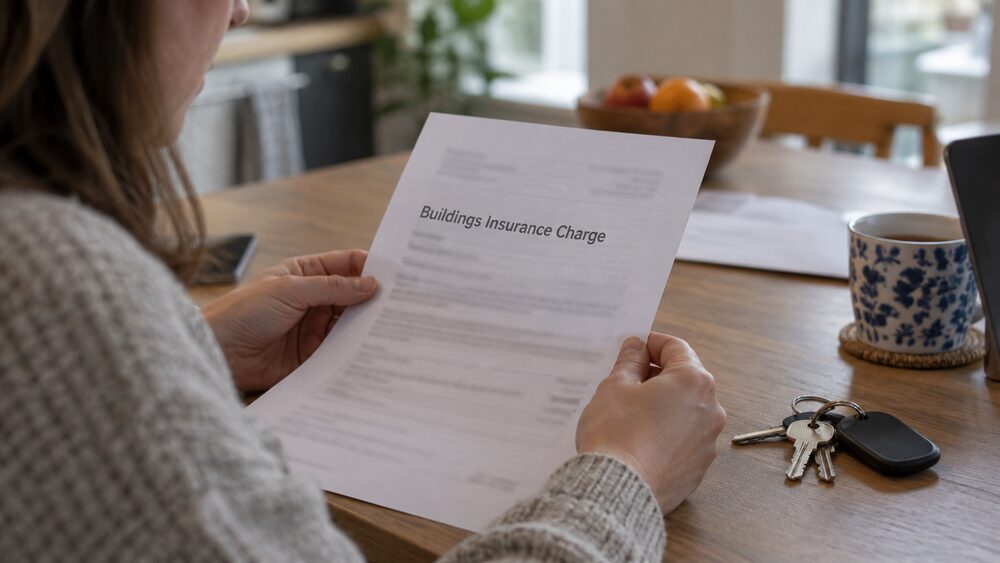
Your landlord is not responsible for replacing or repairing any of your personal belongings that are flood damaged1. The landlord's insurance will not provide cover for them, so tenants must insure their own possessions4. While your landlord is responsible for arranging buildings insurance, you will need to have a home contents insurance policy12.
Renters only need to buy contents insurance, because the landlord will be responsible for arranging buildings insurance22. If you are renting you probably do not need buildings cover, and if it is a leasehold flat the building may be insured by the freeholder23.
If your home is flooded, check whether your insurance covers repair costs, replacing your belongings, another place to stay, and legal cover and legal advice1. If you own a leasehold flat, check whether your freeholder's insurance covers repair costs, because buildings insurance should cover flood risks1.
Where to get help if your landlord will not act
If your landlord will not carry out repairs, you may be able to get support from your council, or take your landlord to court26. Your local council can investigate prohibited payments and can help you get the money back, and can also make your landlord pay a fine27.
If you are a shared owner who cannot pay rent, contact your housing association directly, and they will support and advise you28. If you have a guarantor and you do not pay what you owe as a guarantor, the landlord can take legal action against you to recover the costs29.
There are also rules on what a landlord can deduct from your deposit. Where the deposit was paid directly to the landlord and a new agent took over management later, you can claim compensation if the landlord did not protect the deposit or send you the written information within 30 days when you first paid it, and did not pass the deposit to the agent30.
If you are buying your home under Right to Buy, your landlord is not bound to complete the sale if you have not paid all the rent or any other payment within 4 weeks from the date you were asked to pay it31.
Sources32 cited
- Housing help if your home is flooded Shelter England, 2025-10-27
- Rent arrears: secure occupation contracts Business Debtline, 2026-09-26
- Flooding Shelter Cymru, 2026-08-17
- Renting a property RICS, 2026-09-26
- Help from your council if you're homeless Independent Age, 2026-09-26
- Water arrears National Debtline, 2026-09-25
- Breathing space from your debts Shelter Cymru, 2026-08-30
- Minimal asset process bankruptcy StepChange, 2026-09-25
- Repairs and home improvements GOV.UK, 2026-09-28
- Home emergency insurance Financial Ombudsman Service, 2026-09-26
- Short-term accommodation if you're homeless Independent Age, 2026
- Home insurance and flooding Which?, 2026-09-17
- Universal Credit housing costs element Turn2us, 2026-04-06
- Things to think about after a relationship breakdown Shelter Cymru, 2026-08-13
- Can I get Housing Benefit Turn2us, 2026-03-25
- Local Housing Allowance Entitledto, 2026-09-26
- Surplus earnings rule Turn2us, 2026-09-26
- Residential care and nursing homes and benefits nidirect, 2026-08-05
- Universal Credit payments and housing nidirect, 2026-09-01
- Universal Credit Age UK, 2026-08-26
- Tenant rent increase mygov.scot, 2026-05-01
- Home insurance Financial Ombudsman Service, 2026-09-26
- Shopping around for insurance Independent Age, 2026-09-26
- Affordable insurance for flood risk properties House of Commons Library, 2026-09-26
- Insurance and flood: a Wales perspective Welsh Government, 2025-03-17
- Pan mae'r pwer yn mynd i ffodd Shelter Cymru, 2026-09-10
- Tenant Fees Act 2019 guidance for tenants GOV.UK, 2026-04-07
- Can shared owners lose all of their investment in their home if they don't pay their rent? National Housing Federation, 2026-09-26
- Guarantor mygov.scot, 2025-04-01
- Unpaid rent and bills Shelter England, 2026-05-01
- Your right to buy your home: a guide GOV.UK, 2026-04-08
- Council tax arrears StepChange, 2026-09-25





 MoneyHelperFree, impartial money and pensions guidance, set up by government
 Financial Ombudsman ServiceFree, independent help when a complaint about a firm is not put right
 FSCSProtects your money if a bank, insurer or investment firm fails
 Citizens AdviceFree advice on money, consumer and legal problems in England and Wales
 GOV.UKOfficial information on tax, benefits and government services