
Most of the admin that comes with money is not complicated, but it is easy to put off because nobody sets out the steps in one place. This page gathers the tasks people most often need to do with banks, lenders and credit files: moving a current account, seeing what credit reference agencies hold about you, complaining when a firm gets it wrong, letting someone act on your behalf, and checking a firm is genuine before you hand over money.
The good news is that the biggest jobs are backed by guarantees and free services. A full bank switch takes seven working days under a scheme most banks have signed up to, and the switching service is free. Your credit file is held by three main agencies, Equifax, Experian and TransUnion1. Complaints go first to the firm, which has eight weeks to respond, and then to the free Financial Ombudsman Service2. The ombudsman can order a business to refund money, pay interest and compensate you, up to £455,000 for complaints referred from 1 April 20263.
Switching your current account in seven working days
Switching a current account no longer means telling every payer and biller yourself. Most banks have agreed to use the Current Account Switch Service, which means it should take just seven working days to switch your account. The service is free to use, and the switch date is chosen and agreed with the new bank. MoneyHelper describes the same process: you open the new account, ask the new provider to switch, and choose a date for it to complete, which takes seven working days2.
The practical steps are simple. You open the new account first, then ask the new provider to transfer your balance and all your incoming and outgoing payments over7. You will need to provide your account and debit card numbers and pick a completion date2. If you already have an existing bank account, you can ask your new provider to move everything across as part of the switch7.
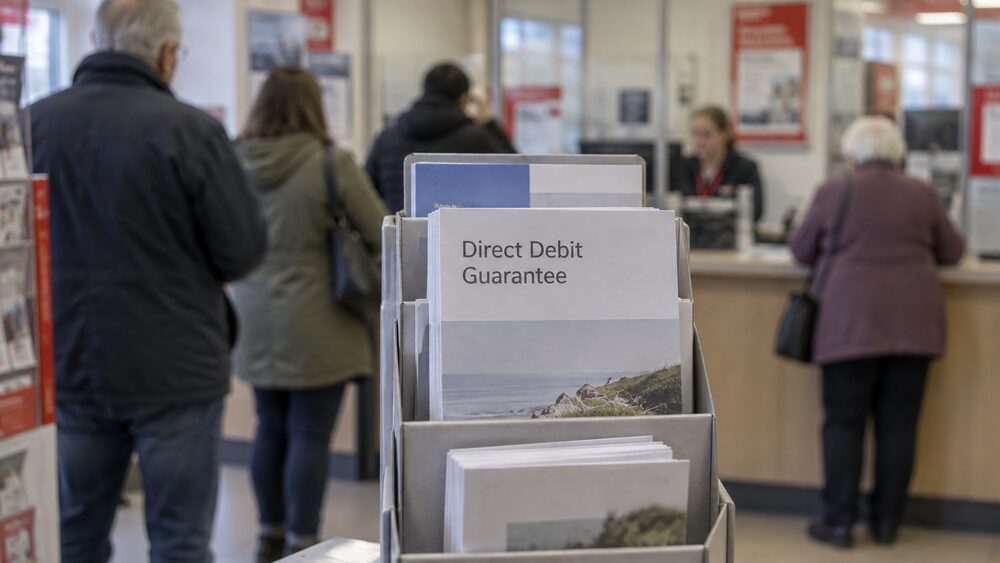
The switch comes with a guarantee that does the heavy lifting. Banks guarantee that payments in and out of your new account are switched over in time so that you do not miss regular bills8. And if anything goes wrong, you will be refunded any interest and charges on your old and new accounts2. That guarantee is what separates a full switch from simply opening a new account and moving your own money across, which leaves you to track down every Direct Debit yourself.
The step-by-step checklist for switching your bank account covers the process in detail, including what to do in the days before and after the switch date.
How the Current Account Switch Service moves your payments
Once you have asked your new provider to switch, the Current Account Switch Service (CASS) takes care of the rest. It transfers your Direct Debits and standing orders, moves your balance, redirects incoming payments such as benefits or salaries, and closes your old account2. You do not have to contact each company that pays you or that you pay: the service does the redirecting, and payments sent to the old account are routed to the new one.
The guarantee matters most for regular bills. Because payments in and out are switched over in time, a properly run switch should not leave a Direct Debit bouncing or a salary going astray8. If a payment does go wrong, the refund of interest and charges on both accounts puts you back where you started2. If you are unhappy with how the switch was handled, that is a complaint like any other: it goes to the bank first, and then to the Financial Ombudsman Service if the situation is still not resolved.
Joint accounts and other switching limits
The switch service works for joint accounts, provided you are switching to another joint account and all account holders agree; you can also switch a sole account to a joint account elsewhere9. Everyone named on the account has to be part of the decision, which is worth knowing if one holder is hard to reach or the relationship has broken down.
Being overdrawn does not block a switch. You can switch using the Current Account Switch Service even if you are overdrawn10, though the new bank will still run its own checks and may decline, and the overdraft itself moves only if the new provider agrees to take it on.
Joint accounts carry two consequences beyond switching that people often miss. Opening a joint account adds a financial link to the other person, so companies look at both credit histories and a poor history might lower your chances of being accepted for credit9. Closing a joint account will not remove that link from your credit file; if there is no other financial connection, you can ask the credit reference agencies for a "notice of disassociation"9. And if the holders fall out, you can ask the bank to register a dispute and "cancel the mandate", freezing the account until everyone agrees how to split the money9.
Your credit file: what Equifax, Experian and TransUnion hold
Three main credit reference agencies (CRAs) hold consumer credit information in the UK: Equifax, Experian and TransUnion4. Each keeps a file on you that lenders consult when you apply for credit, and you have the legal right to check your report for free with all three1. Experian's report and score are free through the Experian app1, and the other agencies offer free access routes too.
Why check all three? Because they do not necessarily match. There is no requirement under data protection law for lenders to report data to all the CRAs; it is up to the lender to decide which CRA it wishes to use, if any4. A lender that reports to Experian only will be invisible on your TransUnion file, and vice versa. After a data breach, Which? recommends checking your credit report with all three main agencies to ensure credit is not being taken out in your name11.
The agencies also generate some information themselves. The information generated by the CRAs, and for which they are responsible, includes financial links, linked addresses and alias information4. So your file is a mix of what lenders report, what public records show, and what the agencies themselves have linked together.
The guide to requesting your full credit file from each agency explains how to get your statutory report from Equifax, Experian and TransUnion, and the wider credit scores section explains how lenders use what they find.
Where credit file data comes from and who can see it
Your credit file is built from several sources. As well as lenders' account information, it includes details of your previous addresses and information from public sources such as the electoral roll, public records including county court judgments, and bankruptcy and insolvency data4. Registering to vote with your local council matters here, as some banks use the electoral roll as part of their checks when you apply for an account7.
Who can see it is narrower than many people fear, but broader than just lenders. The information held by the CRAs is also used to verify the identity, age and residency of individuals, to identify and track fraud, to combat money laundering and to help recover payment of debts4. So your file is consulted not only when you apply for a credit card, but also when a firm needs to confirm who you are.
Two rules from the Information Commissioner's Office are worth knowing. First, data protection law does not require the CRAs, or any other organisation, to have your consent before they are allowed to process your personal data4. Second, the CRAs have a special agreement in place which enables them to share information with each other about victims of fraud4, so a fraud marker recorded with one agency can reach the others.
Your credit file can also help you with your own admin. The FCA's car finance complaints list suggests checking old bank statements, contacting the dealer, or checking your credit file, which you can access for free, to identify a past lender12.
Fixing a mistake on your credit report
If something on your credit file is wrong, the first question is who put it there. The Information Commissioner's Office says CRAs cannot amend data on credit files provided by other companies without that company's permission13. Each of the CRAs provides lenders with the facilities to make their own changes to the information you see on your credit file14. So a wrongly reported missed payment is fixed by the lender that reported it, not by the agency, and your route is to dispute the entry with both.
The ICO is also clear that CRAs will not remove adverse information if it is correct, however unhelpful it is to you13. What you can do is ask to submit a "notice of correction": a short statement explaining your circumstances that will be seen by anyone who looks at the entry on your credit reference file and should be taken into consideration if you apply for credit14. This is the recognised way to give context, for example where a missed payment followed an illness or a dispute.
A firm that handled your data badly and refuses to put things right is not the end of the road. The ICO's guidance on your right to get your data corrected says that if you are unhappy with how the organisation handled your request, the first step is to complain to it15. From there, an unresolved data complaint can be escalated, and the same complain-then-ombudsman pattern described later on this page applies.
Before applying for any account, it is worth checking your credit score and correcting any errors7, because a mistake you have never seen can cost you the account.
Complaining to your bank or lender first
Every complaint route in UK financial services starts in the same place: the firm itself. The Financial Ombudsman Service is explicit that a complaint goes to the company involved before it is brought to the ombudsman6. The FCA's rules say consumers may complain to the firm and seek redress from it, and refer the complaint to the Financial Ombudsman Service if the firm does not satisfy the complaint16. The FSCS makes the same point for targeted support claims: a complaint must have been made to the provider first17.
How you complain depends on the firm. For car finance, the FCA publishes a list of lenders with a complaint form for each, and its template complaint letter or email can be downloaded and filled in with your details before sending12. For scam victims, the guidance is to contact your bank immediately to report it18. The ombudsman's own guidance for complaining about a bank starts with customer services, followed by a formal complaint5.
Some complaints get passed along a chain. Under the FCA's consumer credit redress scheme rules, where a credit broker receives a complaint in relation to the subject matter of the scheme, it must forward the complaint to the lender and inform the consumer that it has been forwarded19. In Northern Ireland, Consumerline can refer your complaint to the Trading Standards Service for investigation or to the Financial Conduct Authority, which authorises lenders12.
The page on writing an effective complaint letter or email shows how to set out what went wrong and what you want done, and complaining on behalf of a relative or friend covers doing it for someone else.
The eight-week deadline and the final response letter
Once you have made a formal complaint, the firm has eight weeks to investigate and give a final response9. MoneyHelper states the same rule for current accounts and credit unions: make a formal complaint, and they have eight weeks to investigate and give a final response2. For complaints about anything other than payments, banks have eight weeks21, and nidirect in Northern Ireland gives the same guidance: give the bank at least eight weeks to try to resolve your complaint23.
At the end of that period a final response letter is issued. The bank then sends a final decision letter telling you how to contact the Financial Ombudsman Service23. If no final letter arrives within eight weeks, the ombudsman can be contacted for a complaints form without giving the bank more time23. The same rule appears in the legislation behind payment accounts: consumers must be told of their right to make a complaint to the Financial Ombudsman Service24.
The eight weeks is a maximum, not a target. Many firms respond sooner, and a final response may arrive in days for straightforward cases. What the deadline gives you is certainty: after eight weeks, the firm has run out of road and the ombudsman's door is open whether or not it has answered. If a company simply goes quiet, what to do if a company hasn't replied to your complaint sets out the next steps.
Taking a complaint to the Financial Ombudsman Service
The Financial Ombudsman Service is free and easy to use25. It can usually help individual or joint consumers of a financial business that provides services or products in the UK, regardless of nationality or where they live26. For trusts, your net asset value must have been less than £1 million for complaints about acts or omissions before 1 April 201926. You can bring a complaint if the firm has not sent you a final response letter within eight weeks, or you are unhappy with its response25.
The process starts with the ombudsman's complaint form. Its guidance says to fill in the complaint form, and if you are considering using AI to help you complete it, to read the ombudsman's guidelines first6. Those guidelines say to avoid entering personal information you would not want shared, such as health or banking information, to use AI only to help organise information or put it clearly, and to check the resulting text carefully6. An online complaint checker on the ombudsman's website answers a few questions and tells you whether it thinks it can help and what to do next27. If it cannot help, it can provide details of other ombudsman schemes covering complaints like energy and housing27.
Paid representation is not needed: the ombudsman states there is no need to pay anyone, for example a lawyer or claims management company6. Claims management companies have their own complaints route: the CMC is given a chance to sort things out before a complaint about it goes to the Claims Management Ombudsman28.
The scope is wide. The ombudsman can help with complaints about bank accounts and bank cards, insurance for your home, car or travel, and problems with loans29. It covers banking and payment services including current accounts, savings accounts, direct debits, money transfers, electronic payment platforms, cheques and banker's drafts30, and issues such as account closures, disputed transactions, IT failures, and problems with switching services30. On the credit side it covers payday loans, affordability of lending, quality of goods bought or hired with credit, and other types of lending including mortgages31. It can also look at complaints about financial difficulties affecting your ability to repay your mortgage, including mortgage arrears and charges, and repossession before possession takes place or after it has happened32.
What the ombudsman can order: refunds, interest and compensation
The ombudsman decides cases on the relevant law and regulations, the regulator's rules, guidance and standards, industry codes of practice and, where appropriate, good industry practice25. It considers the facts and evidence from both the business and the customer, then sets out its findings explaining the decision and what needs to be done to put things right31.
The redress depends on what went wrong. If the ombudsman thinks the business treated you unfairly, it will tell the business to put you back where you would have been if it had not made a mistake, and possibly to make an award for distress and inconvenience30. For banking and IT complaints, remedies include asking the bank to correct a credit file, refund extra costs, and pay compensation for distress or inconvenience33. Where a lender says the borrower owes the wrong amount, the ombudsman might ask it to waive or refund interest, allow extra time to make missed payments, restructure the loan, or compensate for distress and inconvenience34. For logbook loans, it might ask the lender to change the amount owed, refund money, or make arrangements so you can pay things back35.
Interest can be part of the award. For complaints referred before 1 January 2026, the ombudsman typically asks businesses to use a rate of interest of 8% simple a year; from 1 January 2026, it typically asks them to calculate it using a time-weighted average of the Bank of England base rate plus one percentage point3. If a business does not pay a final decision by the deadline, usually 28 calendar days from the date the ombudsman informs it that you have accepted, the interest rate for late payment is usually 8% simple a year3.
The ombudsman also tells firms what evidence to gather, which shapes how complaints are judged. For debt collection complaints, it expects to see copies of relevant correspondence or call recordings, the underlying credit agreement, a statement of account, and evidence of raising the dispute with the original creditor where fraud or wrong-person is alleged36.
Award limits: up to £455,000
The ombudsman's power to award compensation is capped, and the cap depends on when the complaint was referred and when the act or omission occurred. For complaints referred on or after 1 April 2026 about acts or omissions that occurred on or after 1 April 2019, the limit is £455,0003. The limit has risen each year: £445,000 for complaints referred on or after 1 April 2025, £430,000 from 1 April 2024, £415,000 for complaints referred between 1 April 2023 and 31 March 2024, £375,000 between 1 April 2022 and 31 March 2023, and £355,000 between 1 April 2020 and 31 March 2022, in each case about acts or omissions on or after 1 April 20193.
The limit is not always the end of the story. The ombudsman can recommend a business pay more if it thinks it fair, but the business does not have to accept that recommendation3. So for very large losses, the binding award is capped and anything above it depends on the firm's goodwill. In those circumstances some people instead use the courts, which have no such cap, and the ombudsman's alternative dispute resolution information confirms consumers can still go to court if they do not want to accept its decision37.
Accepting a decision: when it becomes binding
An ombudsman decision only becomes binding when you accept it. Until then, you are free to walk away and pursue the dispute elsewhere: the ombudsman's own material confirms that consumers can still go to court if they do not want to accept the decision37. Once you tell the ombudsman you accept a final decision, both you and the business are bound by it, and the business has a deadline to pay, usually 28 calendar days from the date the ombudsman informs it of your acceptance3.
This is the point to read the decision carefully. The ombudsman sets out its findings explaining the decision and what needs to be done to put things right31, and what it orders is what you get: if the award is lower than the sum you believe you lost, accepting it closes off the court route for the same dispute. If the business fails to pay within the deadline, late payment interest of usually 8% simple a year applies3, and non-payment can itself be pursued.
Letting someone act for you
There are several ways to let another person deal with your money, and they differ in how formal they are and what happens if you lose the ability to manage your affairs yourself. You can formally appoint a friend, relative or professional to hold a power of attorney that allows them to act on your behalf38. But an ordinary power of attorney has a built-in limit: while a power of attorney ceases if you become mentally incapable of managing your affairs, an enduring power of attorney will continue38.
That difference drives the choice for most families. A power of attorney suits temporary help, such as a long stay abroad; an enduring power of attorney, or a lasting power of attorney in England and Wales, is the route when the help may need to outlast your capacity. The pages on powers of attorney explained, making and registering a lasting power of attorney, enduring powers of attorney, powers of attorney in Scotland and power of attorney in Northern Ireland cover each regime, and third-party mandate or power of attorney compares the lighter options.
For everyday help without a formal attorney arrangement, a bank can add a third-party mandate or accept a letter of authority, and firms offer extra support and accessibility arrangements for customers who need someone with them. The pages on third-party mandates and letters of authority, extra support and letting someone act for you and registering a power of attorney with a bank set out what each allows.
Checking a firm before you deal with it
Before handing over money or personal details, check who you are dealing with. The ombudsman's guidance on banking and payment problems says to use the Financial Conduct Authority's Firm Checker to confirm the firm is authorised and to help avoid scams30. The FCA also publishes lists you can search, such as its car finance complaints list of lenders12, and the site's directories of banks and building societies, lenders and card issuers and insurers show which brands exist and what they offer.
Speed matters with scams: the guidance for scam victims is to contact your bank immediately to report it, as soon as you realise you have fallen victim18. If you are unhappy with the way your bank deals with your complaint about fraud, you can refer it to the Financial Ombudsman Service11. The wider scams and fraud section covers the warning signs, and stopping unwanted calls and marketing covers cutting off cold callers.
Where to get free help
None of the tasks on this page requires a paid adviser. MoneyHelper, the free government-backed money guidance service, publishes the guidance behind much of what is described here, including how to open, switch or close a bank account2, joint accounts9, overdrafts10, basic bank accounts22, credit union current accounts20 and shopping safely online21. National Debtline publishes free guides on safe bank accounts8. The Financial Ombudsman Service is free to use25, and you do not need to pay anyone to represent you6.
In Northern Ireland, nidirect publishes equivalent guidance on overdrafts and bank debts23 and on help to collect your benefits or pension38, and the Consumer Council offers complaint help there. If a dispute stalls, free consumer advice lists where to turn, and the debt section signposts free debt advice charities. For anything involving a firm's failure rather than its conduct, the consumer protection section explains how the Financial Services Compensation Scheme works alongside the ombudsman.
Sources38 cited
- How to check your credit score for free Which?, 2025-10-24
- How to open, switch or close your bank account MoneyHelper, 2026-09-25
- Compensation: what we can order Financial Ombudsman Service, 2026-09-25
- Credit Information Commissioner's Office, 2026-09-25
- Current accounts MoneyHelper, 2026-09-25
- How to complain Financial Ombudsman Service, 2026-09-25
- Choosing a bank account for your Universal Credit payment MoneyHelper, 2026-09-25
- Safe bank accounts National Debtline, 2026-09-25
- Joint accounts MoneyHelper, 2026-09-25
- Overdrafts explained MoneyHelper, 2026-09-25
- My personal data has been lost after a breach: what are my rights? Which?, 2026-08-14
- Car finance complaints: list of lenders Financial Conduct Authority, 2026-09
- Credit reference agencies and credit ratings House of Commons Library, 2026-09-26
- Credit (Welsh language guidance) Information Commissioner's Office, 2026-09-25
- Your right to get your data corrected Information Commissioner's Office, 2026-09-26
- UNFCOG 1.6: unresolved complaints FCA Handbook, 2019-02-22
- Targeted support Financial Services Compensation Scheme, 2026-09-25
- If you've fallen victim to a scam Payment Systems Regulator, 2026-09-25
- CONRED 5: consumer credit redress scheme rules Financial Conduct Authority Handbook, 2026-03-31
- Credit union current accounts MoneyHelper, 2026-09-25
- Basic bank accounts MoneyHelper, 2026-09-25
- Shop safely online MoneyHelper, 2026-09-25
- Overdrafts and other bank debts nidirect, 2025-11-07
- The Payment Accounts Regulations 2015 legislation.gov.uk, 2015-12-15
- Wedding insurance: how we can help Financial Ombudsman Service, 2026-09-27
- Who we can help Financial Ombudsman Service, 2026-09-27
- How to complain: video transcript Financial Ombudsman Service, 2026-09-26
- How to complain to the Claims Management Ombudsman Claims Management Ombudsman, 2024-08-20
- How we can help: easy-read leaflet Financial Ombudsman Service, 2026-09-26
- Banking and payments: how we can help Financial Ombudsman Service, 2026-09-25
- Consumer credit complaints Financial Ombudsman Service, 2026-09-25
- Financial difficulties with mortgages Financial Ombudsman Service, 2026-09-26
- IT problems at banks Financial Ombudsman Service, 2026-09-25
- Home credit Financial Ombudsman Service, 2026-09-26
- Logbook loans Financial Ombudsman Service, 2026-09-26
- Debt collection complaints Financial Ombudsman Service, 2026-09-27
- Alternative dispute resolution Financial Ombudsman Service, 2026-09-27
- Help to collect your benefits or pension nidirect, 2026-06-26




 Citizens AdviceFree advice on money, consumer and legal problems in England and Wales
 MoneyHelperFree, impartial money and pensions guidance, set up by government
 Financial Ombudsman ServiceFree, independent help when a complaint about a firm is not put right
 GOV.UKOfficial information on tax, benefits and government services
 StepChangeFree debt advice and solutions from a charity