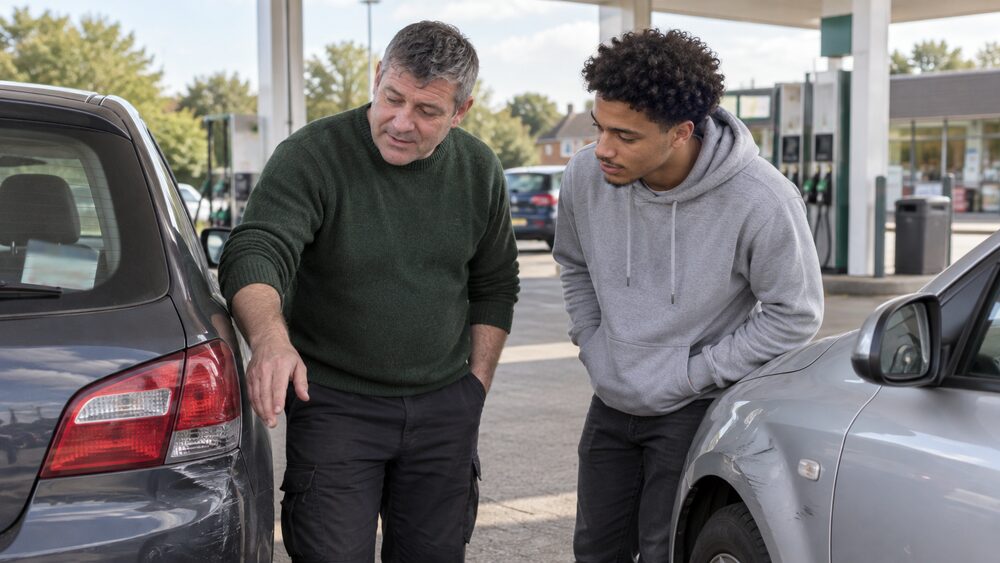
Yes. If you have been in an accident, you must tell your insurer even if you have no intention of claiming. The rule is a condition of your motor policy, and it applies however minor the incident was. The government's Northern Ireland guidance is blunt about it: "You must also report the accident to your insurer, even if you're not intending to make a claim"1. The British Insurance Brokers' Association says the same, adding that you will always need to tell them2.
Yes. If you have been in an accident, you must tell your insurer even if you have no intention of claiming. The rule is a condition of your motor policy, and it applies however minor the incident was. The government's Northern Ireland guidance is blunt about it: "You must also report the accident to your insurer, even if you're not intending to make a claim"1. The British Insurance Brokers' Association says the same, adding that you will always need to tell them2.
This is a different question from whether you must report the accident to the police. The police deadline applies where details were not exchanged at the scene, or where someone else's property was damaged, and it is measured in hours and days2. The duty to your insurer is separate, and it is triggered by the accident itself.
What follows is what reporting without claiming does to your no-claims discount and your premium, what happens if you stay quiet, and where to take a dispute.
You must tell your insurer about an accident, even if you don't claim
The duty to notify is written into the policy as a condition. Which? states it plainly: "Yes - if you've been in an accident, you do have to tell your insurer"3. The Association of British Insurers' checklist for drivers says you must tell your insurance company about the accident even if you do not intend making a claim2.
The timing is set by the policy rather than by statute. It will be a condition of your insurance policy that you report the accident to your insurance company within a reasonable time, and what is reasonable differs between policies3. That is why the practical answer to "how soon" is: check your own policy wording, and do not sit on it.
There is a separate set of deadlines for the police, and they are much tighter. Where details are not given at the scene, the accident must be reported to the police as soon as possible and within 24 hours1. Where the police do not attend the scene, or someone else's property has been damaged, the accident must be reported to the police within 24 hours2. Where a certificate is requested at a nominated police station, it must be produced within seven days of the accident3.
One point that catches people out: the general rule that you must tell your insurer about changes mid-policy does not apply to everything. The Financial Ombudsman Service says that if something changes after the policy has started, the customer won't usually have to tell the insurer about it until the policy is renewed6. An accident is not that kind of change. It is an incident the insurer needs to know about when it happens.
Choosing not to claim: protecting your no-claims discount
You can keep the claim off your policy in one specific sense: you do not have to submit a claim if you pay for the repairs yourself, or if you recover the cost from the other driver, and you wish to preserve your no-claims discount3. That is the route people take after a small prang where the repair bill is smaller than the long-term cost of losing a discount.
Reporting the incident and claiming on it are two different acts. If you report an incident but make no claim, your no-claims bonus is unaffected, because your insurer didn't have to pay out anything4. Where you reported the accident but paid the other person yourself instead of claiming, the ombudsman expects the claim to be recorded as "notification only", and there shouldn't be any reduction of your no-claims bonus5.
The size of the discount is not fixed. The amount of discount for a no-claims bonus isn't set; it varies between insurers4. That is why the same incident can cost two drivers very different amounts at renewal.
Fault matters too. If it's been found that you weren't at fault for the accident by the renewal date, your no-claims bonus won't be affected, regardless of whether the claim is closed or not4. A "fault" claim is recorded when an accident is either the driver's fault, or not the driver's fault but the cost can't be claimed from another party4. So a non-fault accident where the other side never pays up can still be recorded as a fault claim.
If a claim is settled with the policyholder at fault, the insurer should release proof of no-claims bonus, taking off a loss of discount for the claim, and should not withhold a no-claims bonus which has been earned, though the ombudsman might not interfere if the customer owes the insurer money5.
Will reporting an accident without claiming put my premium up?
It can, and this is the part people find hardest to accept. The Financial Ombudsman Service explains the insurer's reasoning: the fact an incident has happened, however minor it may be, signals to an insurer that you're statistically more likely to make additional claims in future4. That is a pricing judgement about risk, not a punishment.
The ombudsman does not simply accept a rise without explanation. If your customer's premiums have increased after they've reported an incident, we'll ask you to explain why5. So an insurer that loads a premium after a notification-only incident should be able to say what drove it.
There is a limit to how far the effect should spread. Where a customer has a second vehicle insured with a different insurer, the ombudsman would only expect the premium on the first vehicle to increase if the customer transfers no-claims bonus to the second vehicle5.
The report also leaves a record. The insurer will normally keep it on file, and will also record it on the shared industry central database4. That database is why a new insurer can see an incident that never became a claim, and why leaving it off an application is a bad idea.
Small claims behave differently from incidents. A small chip in a car windscreen fixed through a claim won't affect the no-claims discount7. That is a claim, not a notification, and it sits outside the fault-claim machinery.
The wider point is that premiums move for many reasons unconnected to any accident. Premiums may be reduced by parking in a garage or driveway, Thatcham-approved security devices, low annual mileage, a cheap-to-repair popular model, advanced driving training such as Pass Plus, paying annually, and a no claims discount8. Premiums usually start to increase once you're 70, and go up significantly after the age of 808. For how the price is built, see how premiums are calculated.
What can happen if you don't report an accident
The immediate risk is to your cover. A failure to report can give your insurance company the right to refuse to cover you in the future3. Non-disclosure can mean your insurer will refuse to pay out for any claims made and, worse still, terminate your cover entirely9. The same principle runs through insurance generally: if you fail to mention a medical condition, for example, we may not pay out in the event of a claim10.
The ombudsman's approach to non-disclosure is proportionate rather than automatic. Where a customer did not tell the insurer about a significant change in health, and the insurer would have covered the condition for an additional premium, the ombudsman will generally consider it fair for them to pay the claim, minus any additional premium which would have been charged11. Where the insurer would have withdrawn cover entirely, they would usually be asked to pay what the value of the holiday cancellation claim would have been if you'd told them about your condition at the relevant time11. The same logic applies to motor incidents: the question is what the insurer would have done had it known.
The consequences of not reporting a change are well established elsewhere in financial services, which shows how seriously the system treats silence. On benefits, your claim might be stopped or reduced if you do not report a change straight away or you give incorrect information12, and if you deliberately do not report changes, you're committing benefit fraud12. If you do not inform the relevant benefits office you could be paid too much benefit and have to pay it back, and this could count as fraud which is a criminal offence13. Insurance works on the same disclosure principle, though the outcomes differ.
What should I do if the other driver makes a claim against me later?
This is the scenario that makes reporting worthwhile even when you are sure nothing will come of it. Your insurer should only treat this as a claim if they receive a claim from the other driver, or third party4. Until that happens, the incident sits as a notification.
If the other driver does claim later, your insurer handles it, which is the whole point of having cover. If you had already paid the other person yourself, the claim should be recorded as "notification only", and there shouldn't be any reduction of your no-claims bonus4.
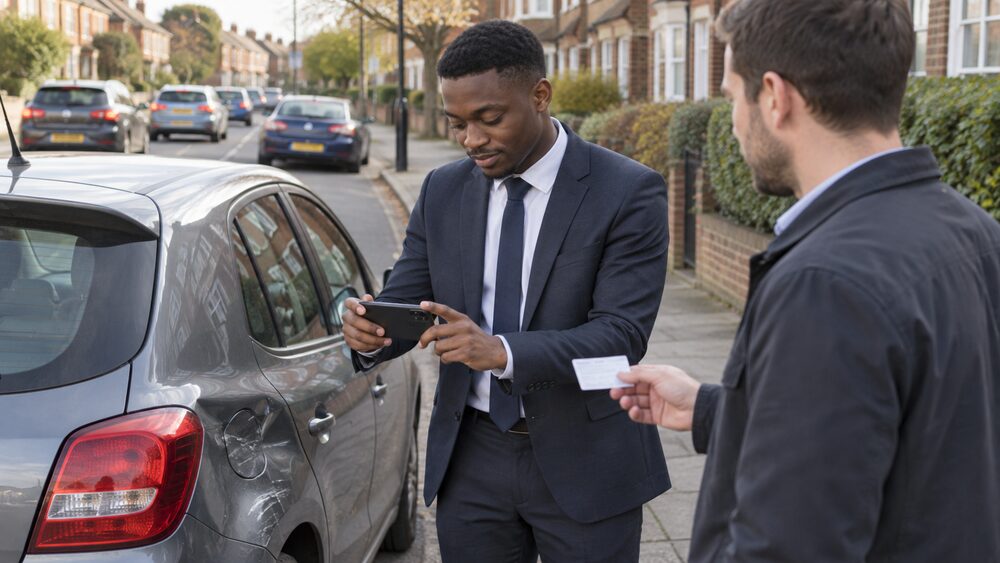
What you do at the scene shapes what happens next. If you're involved in an accident, do not admit liability. Take the name and address of the other driver, and details of their insurance and any witnesses, and call the police if anyone is injured2. Admitting fault at the roadside can complicate the insurer's handling of a claim that arrives months later.
Abroad, the rules tighten further. Contact the police, but do not admit any liability or sign any documents other than the European Accident Statement, or Constat Amiable, and contact your insurer as soon as you can3.
If the other driver's insurer approaches you directly rather than through your own insurer, that is a known practice with its own risks. See third party capture for what it means and what to watch for.
Disputes and complaints: where to get help
If an insurer handles an incident badly, the Financial Ombudsman Service can put it right. Where an insurer unfairly accepted liability for an accident, the ombudsman will tell it to change the way the claim was recorded, so the customer's current premium can be recalculated, refund extra money paid, and may award compensation for distress or inconvenience for poor customer service5.
The ombudsman also polices how insurers treat customers who disclosed imperfectly. Where an insurer's questions or guidance were unclear, reducing the claim payment, known as applying average, voiding the policy, or adjusting the claim in other ways may not be considered fair6. Where a customer would have bought a different policy that would have covered their claim, the ombudsman would ask the insurer to pay the claim17.
Complaints about motor cover are a small part of a large caseload. In the first quarter of 2026/27, the ombudsman opened 224 complaints about roadside assistance insurance18. If the ombudsman can't investigate your complaint, it will tell you about an organisation that might be able to help you19.
A broker can help at the point of a claim, not just at the point of sale. Support at the time of a claim is one of the services brokers provide20. For how the two routes compare, see using a broker or buying direct.
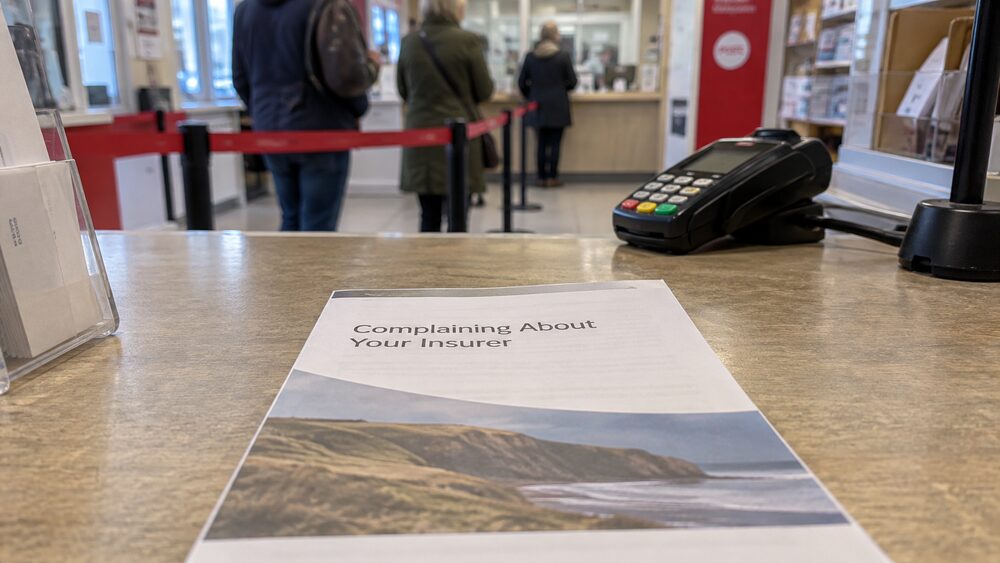
For the full process, including time limits and how to escalate, see complaining about an insurer and the Financial Ombudsman Service.
Is it illegal to drive without insurance after an accident?
Driving without cover is an offence in its own right, and it is separate from the reporting duty. It is against the law to drive if you do not have valid insurance15, and it's illegal to drive without insurance16. The minimum level of cover you need is third party insurance, which covers injuring someone or damaging another car but not repairs to your own car8.
If you are stopped or involved in an accident, you must be able to produce your insurance details. A failure to provide your insurance details without a reasonable excuse is also an offence3. For the penalties, see penalties for driving without insurance.
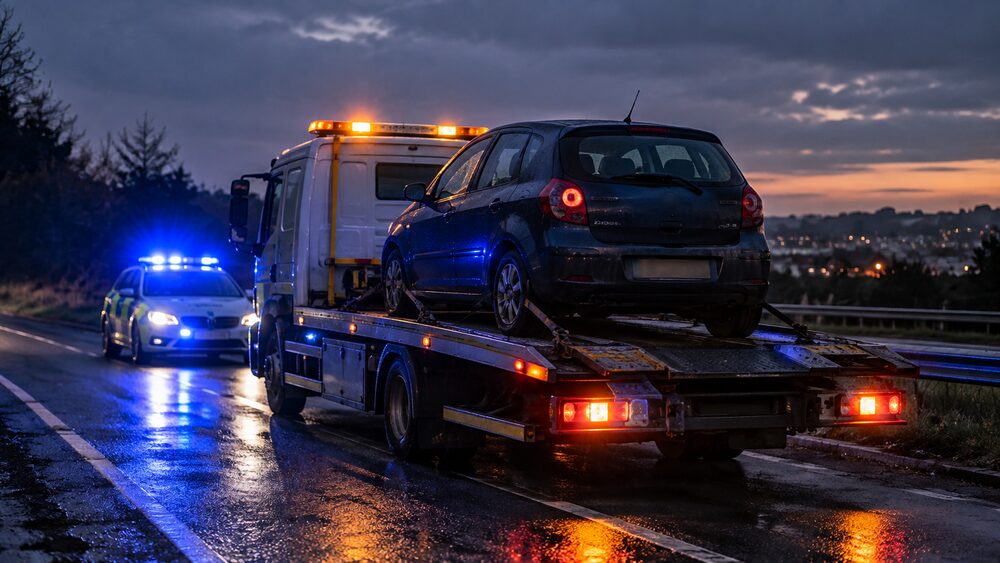
One practical trap: some cover you might assume is included is not. Recovery and replacement car in the event of a non-fault accident is not insured under at least one motor breakdown product21. If you rely on a breakdown policy after a crash, check what it actually covers.
Sources21 cited
- Motor insurance explained nidirect, 2026-05-27
- Accident checklist British Insurance Brokers' Association, 2026-09-26
- I've been in a car accident, do I have to claim on my insurance? Which?, 2026-03-31
- Fault claims and no-claims bonuses Financial Ombudsman Service, 2026-07-10
- Fault claims and no-claims bonuses: guidance for businesses Financial Ombudsman Service, 2026-09-16
- Misrepresentation and non-disclosure Financial Ombudsman Service, 2026-09-26
- Will claiming for a chipped windscreen make my car insurance cost more? Which?, 2026-03-02
- Shopping around for insurance Independent Age, 2026-09-26
- How penalty points impact your car insurance premiums Which?, 2023-11-12
- Critical illness cover: information you need to know Legal & General, 2026-09-26
- Change in health Financial Ombudsman Service, 2026-09-26
- Report a change in your circumstances GOV.UK, 2026-09-26
- Change in circumstances when claiming benefits Turn2us, 2026-05-26
- ABI advice to anyone affected by wildfires Association of British Insurers, 2026-07-31
- Bankruptcy and insurance StepChange, 2026-09-25
- Buying a car RBS, 2026-09-26
- Mis-sold travel insurance Financial Ombudsman Service, 2026-09-26
- Quarterly complaints data Q1 2026/27 Financial Ombudsman Service, 2026
- Personal pensions Financial Ombudsman Service, 2026-09-26
- Why use a broker? British Insurance Brokers' Association, 2025-04-02
- Motor breakdown cover insurance product information document Chase, 2026

 MoneyHelperFree, impartial money and pensions guidance, set up by government
 Financial Ombudsman ServiceFree, independent help when a complaint about a firm is not put right
 FSCSProtects your money if a bank, insurer or investment firm fails
 Citizens AdviceFree advice on money, consumer and legal problems in England and Wales
 GOV.UKOfficial information on tax, benefits and government services