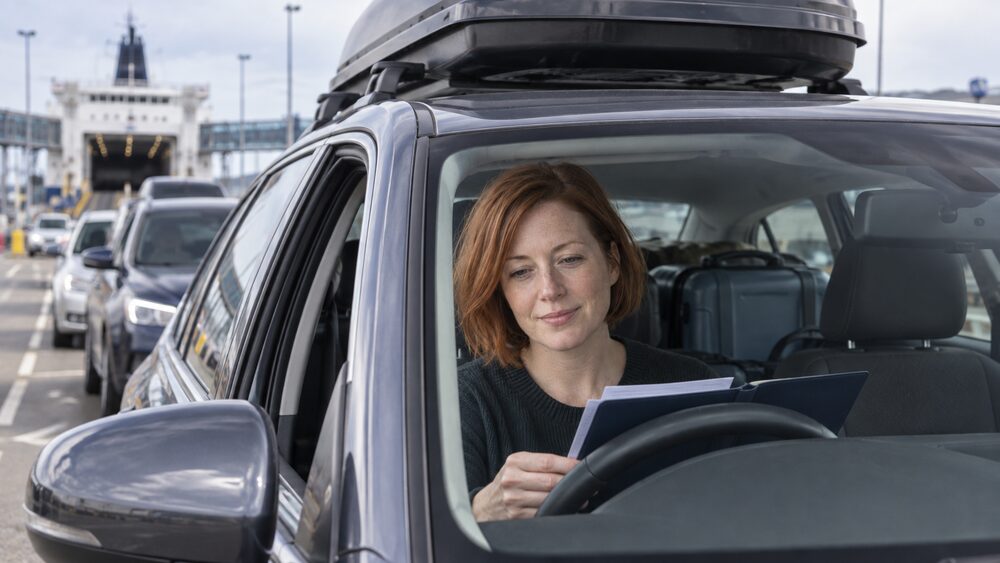
Taking your car across the Channel is where many people discover a gap in their insurance they did not know existed. The good news is that you will not be driving uninsured in Europe: all UK motor policies automatically provide at least the minimum cover required by law in other EU countries, or the UK minimum if that is greater1. The catch is what that minimum actually is: third party cover only, which pays for injury or damage you cause to other people and pays nothing towards your own car1.
So if your car is stolen in France, or you reverse into a bollard in Spain, the automatic cover abroad may not pay out at all. Whether your full, comprehensive protection travels with you depends on your specific policy: some extend it free, some charge extra, and some limit it to a set number of days per trip2. This page explains what you get automatically, how to check your own policy, how to arrange fuller cover before you go, and what to do if things go wrong on the road abroad.
Most UK policies include the legal minimum cover in the EU
The starting point is a rule that applies to every UK motor policy, whatever it costs and whoever sells it. All UK policies provide the minimum cover required by law in other European Union countries, or the minimum required by UK law if that is greater1. UK motor insurance provides the minimum cover required by the EU and certain other countries3. In practice this means you can drive into France, Germany, Spain or most of the rest of the EU without arranging anything in advance and still be legally insured.
What that rule does not do is carry the rest of your policy with you. The automatic cover does not include theft or damage to your car1. If you pay for comprehensive cover at home, that fuller protection is a separate question, dealt with below. The minimum is exactly what it says: enough to satisfy the law of the country you are driving in, and no more.
The countries covered by this automatic minimum are set by international agreement rather than by your insurer. If you live in the UK, you can arrange for your car or motorcycle insurance policy to cover you while driving in the EEA and certain other European countries2. Beyond that list, the position changes: some countries fall outside the system entirely, and there the question becomes whether you need a Green Card, which is covered in the next section.
Green Cards: where one is still needed
A Green Card is an international motor insurance certificate: proof that your policy meets the legal requirements for third party liability in the country you are visiting2. For travel inside the EU, you do not need one. Under European law, it is no longer compulsory to have a Green Card when driving in Europe3. There was a period after the Brexit transition when UK motorists could have been required to carry Green Cards for travel in Europe from 1 January 20216, but that requirement did not come into force.
Outside the EU, the position is different. A Green Card provides proof that your domestic motor insurance policy covers the minimum legal requirements in the country being visited1. So if you are driving somewhere that is not part of the EU arrangements, a Green Card may be what you need to show at a border or to the police.
Two practical points are worth knowing. First, a Green Card is not something you can produce on the spot: you will need to give your broker or insurer plenty of notice if you need one2. Second, some insurers issue a Green Card as part of extending your policy to full cover abroad, so the card and the extension can be arranged together. The dedicated guide to Green Cards and driving in Europe covers the detail.
Minimum legal cover or full cover: what each one pays for
To see what the automatic minimum abroad is worth, it helps to be clear about the three levels of car insurance sold in the UK. Third party is the minimum level of cover required by law: it covers you if you injure someone else or damage their property, but not repairs to your own car7. Third party, fire and theft provides the same cover as third party only and also insures you if your vehicle is damaged by fire or stolen1. Comprehensive insurance covers damage to your vehicle from a wide range of causes, including accidents, fire and theft6.
| Level of cover | Pays for other people and their property | Pays if your car is stolen or damaged |
|---|---|---|
| Third party | Yes | No |
| Third party, fire and theft | Yes | Fire and theft only |
| Comprehensive | Yes | Yes, from a wide range of causes |
The automatic cover you get abroad sits at the bottom of this table. Often the basic cover abroad will only be enough to meet the minimum legal requirements of the country you are in, and it will not cover you for theft of or damage to your car2. So a driver with comprehensive cover at home could find that, abroad, they effectively have third party only: protected against claims from other people, but paying for their own losses themselves.
That gap is what catches people out. A single accident abroad with no extended cover could mean paying for your own recovery, repairs or a replacement car entirely yourself, while your insurer deals only with the other side. The next section covers how to close that gap before you travel.
Comprehensive cover abroad: what some policies extend
Many insurers will extend your full policy to Europe, but how they do it varies. Some may include comprehensive cover abroad at no cost; some will ask you to pay an additional premium for comprehensive cover so that you have the same amount of protection as in the UK2. Some companies limit comprehensive cover to a fixed number of days abroad in one trip, or only provide the legal minimum2.
A look at how one insurer's policy works shows the shape of it. The AA's car insurance policy automatically provides the same level of cover as within its territorial limits, for the number of days stated in its table of benefits, in listed European countries5. At its Gold and Platinum levels, that like-for-like cover abroad runs for up to 90 days5. That is one insurer's terms, not a market standard: your own policy may give you more days, fewer, or none.
Comprehensive cover itself can include extras beyond the car: providing a courtesy car while your car is being repaired, legal expenses, and insurance to recover your uninsured losses such as your excess1. Whether those extras follow you abroad is again down to the wording. Breakdown cover is a common point of confusion: it is often included as an extra benefit with vehicle insurance policies, packaged bank accounts and when purchasing a car9, but as an insurance add-on it is usually optional5, and the basic roadside assistance offered by some car insurance only covers breakdowns more than a quarter of a mile away from your home10. The guide to breakdown cover explains the separate policies available.
Where your car is kept and registered decides whether you are covered
Extended cover abroad almost always comes with conditions about who you are and why the car is there. In the AA's policy, cover in the listed countries is conditional on your main permanent residence being in the United Kingdom and the visit being only a temporary one5. That is a common structure: the insurer prices the policy on the basis that the car lives in the UK and only goes abroad for trips.
How long is "temporary"? Policies commonly allow up to 90 days on the continent, with options to buy cover for longer stays4. Some policies cap the total days abroad in a year rather than per trip, so a series of long trips can add up. The limit that matters is the one in your own policy wording, and it is worth checking before a long stay rather than after.
The same principle applies in reverse at home, and it shows how seriously insurers take where a car is kept. Most classic car insurance policies include a garaging clause, meaning the car must be stored in a garage between specific times when it is at your home address4. Student insurance guidance asks the same question from the other end: if the car belongs to your parents, does the insurer know that you are now the user and that the vehicle is being kept at a separate university address11? In each case the rule is the same: the insurer must know where the car actually lives. If you are telling your insurer about changes mid-policy, where the car is kept is one of the most important.
Countries and territories your policy may not reach
"Europe" on an insurance policy is a defined list, not a geography lesson, and popular destinations can fall outside it. ABTA warns that popular holiday destinations like Turkey, Dubai, Egypt, Morocco and Tunisia, where thousands of Brits travel each year, will not be covered by a European policy12. Driving your own car to Morocco or Turkey is therefore a different exercise from driving to France: the automatic EU minimum does not apply, and you would need cover arranged specifically for those countries.
The list of countries in your policy wording is the authority here. The AA's extended cover, for example, applies only to countries it names5. Some policies extend to the EEA and certain other European countries2; others go further for an extra premium. If a country is not on the list, assume you are uninsured there until told otherwise, and ask your insurer or broker before you commit to the trip.
Two related points are easy to miss. First, travel insurance is a separate product from car insurance, and foreign travel insurance is not intended to cover you if you live abroad permanently13: it is for trips, not relocation. Second, if you are moving abroad rather than visiting, the whole basis of your UK policies changes, and official guidance on moving or retiring abroad is the place to start13. The rules on money abroad cover the wider picture.
How to check your own policy wording before you travel
The only reliable way to know what your policy does abroad is to read what it says. Each policy can be different14, so a friend's experience with their insurer tells you nothing about yours. Your policy booklet will have a section on territorial limits or use abroad: it will say which countries are covered, for how many days, and at what level of cover.
What to look for, in order:
- The territorial limits: the list of countries where the policy operates at all.
- The level of cover abroad: whether you get the legal minimum only, or your full UK cover.
- The day limit: how many days per trip, or per year, the extended cover lasts.
- Conditions: residency requirements, and whether the visit must be temporary5.
- Exclusions for add-ons: whether breakdown cover, courtesy car or other extras stop at the border.
If the wording is unclear, ask. Some insurers explicitly state the position in their policy documents, but if you cannot find it you could call up your insurer and ask15. A broker can do the same job: ask your broker if you have the option for cover while driving in the EU/EEA, and whether it is necessary to tell insurers about journeys to Europe of less than 30 days2. Get the answer in writing if you can, and keep it with your travel documents.
Telling your insurer and arranging extra cover for a trip
Even where your policy gives some cover automatically, telling your insurer before you travel is the safe course, and failing to do so has consequences spelled out by the industry's own guidance. If you do not tell your insurer about your plans and have an accident abroad, you may find yourself paying the extra costs that would not have been insured had the accident happened in this country2. The automatic legal minimum still applies, but everything above it, from recovery costs to your own losses, could fall on you.
Arranging extra cover is usually straightforward. Some insurers will ask you to pay an additional premium for comprehensive cover so that you have the same amount of protection as in the UK2. Your broker can arrange an extension to your cover for activities and destinations outside the standard terms3. Give notice: a Green Card, if you need one, cannot be produced at the ferry port2.
A few points of hygiene before you go. Declare all your claims when shopping around for new cover or renewing your policy15, because an undeclared claim can undermine a later one, and the guide to misrepresentation explains why. If you are also buying travel insurance for the trip, official guidance is that travel insurance is needed before you go away, and that its terms should be understood and its cover for healthcare and travel disruption checked16. Travel insurance covers you and your belongings; car insurance covers the car. A trip abroad is likely to need both.
What can go wrong: accidents, breakdowns and claims abroad
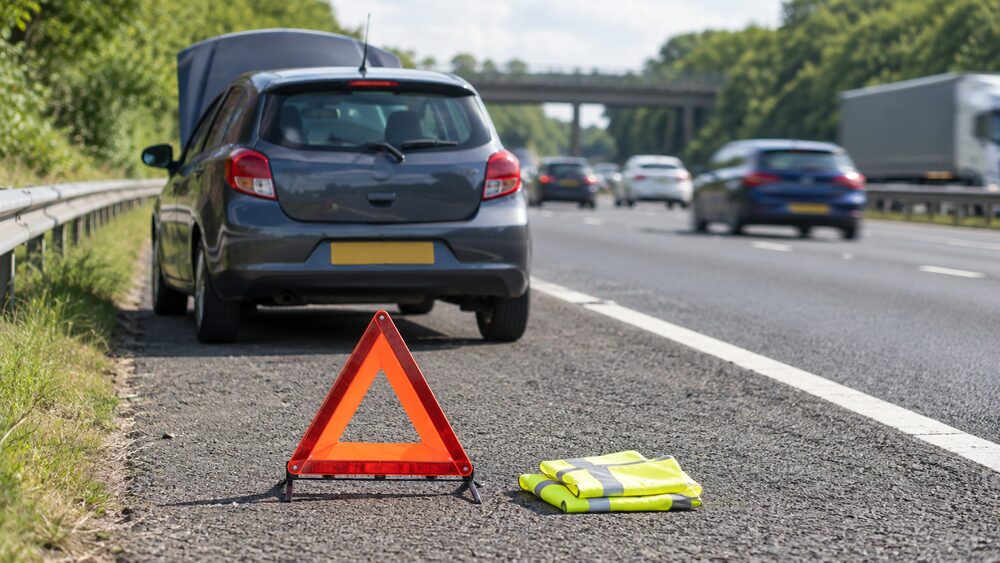
If you have an accident abroad, the immediate steps mirror what you would do at home, with one or two additions. Contact the police, but do not admit any liability or sign any documents other than the European Accident Statement, and contact your insurer as soon as you can17. A failure to report an accident can give your insurance company the right to refuse to cover you in the future17, so the notification matters even for a minor incident. The guide to making a car insurance claim after an accident covers the UK process.
Breakdowns are the more common mishap, and here the cover you arranged, or did not arrange, decides everything. Breakdown cover levels range from call-outs and roadside repairs, to vehicle recovery to a garage, a hire car to continue your journey, and overnight hotel accommodation9. European cover is usually, but not always, for an extra cost, and European cover includes bringing the vehicle back to the UK in some circumstances9. Check whether your add-on works abroad before you rely on it: some breakdown products bought with car insurance operate only in the UK.
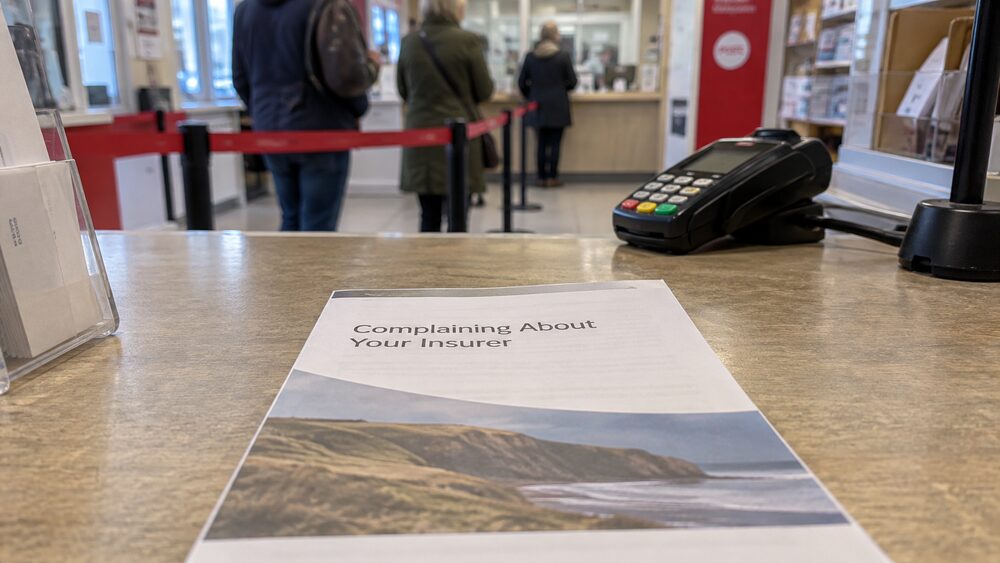
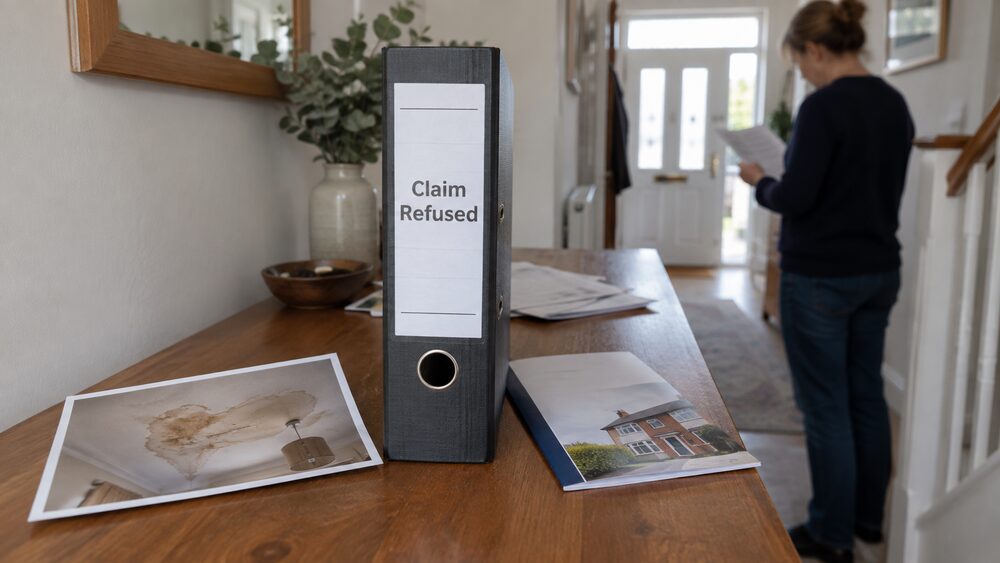
If your insurer refuses a claim, you have a route beyond complaining to it. The Financial Ombudsman Service can help with complaints about insurance for your home, car or travel to another country18. Its workload shows how common these disputes are: in the first quarter of 2026/27 it opened 4,096 complaints about car or motorcycle insurance and 224 about roadside assistance insurance19. There are also rules that help after a cross-border accident: firms operating from an establishment in the EEA carrying on motor vehicle liability insurance business covering UK risks must have a claims representative in the United Kingdom to deal with claims arising out of events occurring in the UK5, which eases the practical difficulty of claiming against a foreign insurer.
Complain to the insurer first, in writing. If you are still unhappy with its response, the Ombudsman will look at the complaint free of charge, and it handles complaints from people outside the UK too18. The guides to complaining about an insurer and rejected claims set out the process step by step.
Sources19 cited
- Motor insurance explained nidirect, 2026-05-27
- Driving abroad British Insurance Brokers' Association, 2023-02-13
- Travel insurance checklist British Insurance Brokers' Association, 2022-11-10
- Classic car insurance explained Which?, 2026-01-22
- ICOBS 8: motor vehicle liability insurers, claims handling FCA Handbook, 2021-01-01
- Motor insurance guides British Insurance Brokers' Association, 2021-01-01
- Vehicle insurance GOV.UK, 2026-09-26
- Shopping around for insurance Independent Age, 2026-09-26
- I've been in a car accident, do I have to claim on my insurance? Which?, 2026-03-31
- AA car insurance policy booklet The AA, 2023-12
- Planning and booking a holiday: travel insurance ABTA, 2026
- Moving, living or retiring abroad GOV.UK, 2025-08-20
- Should you buy breakdown cover with your car insurance? Which?, 2025-01-30
- Will claiming for a chipped windscreen make my car insurance cost more? Which?, 2026-03-02
- Student insurance guides British Insurance Brokers' Association, 2022-12-14
- Travelling with valuables British Insurance Brokers' Association, 2026-09-26
- Passenger consumer rights when travelling to the EU GOV.UK, 2020-12-31
- Quarterly complaints data Q1 2026/27 Financial Ombudsman Service, 2026
- Vehicle breakdown cover Financial Ombudsman Service, 2022-05-25


 MoneyHelperFree, impartial money and pensions guidance, set up by government
 Financial Ombudsman ServiceFree, independent help when a complaint about a firm is not put right
 FSCSProtects your money if a bank, insurer or investment firm fails
 Citizens AdviceFree advice on money, consumer and legal problems in England and Wales
 GOV.UKOfficial information on tax, benefits and government services