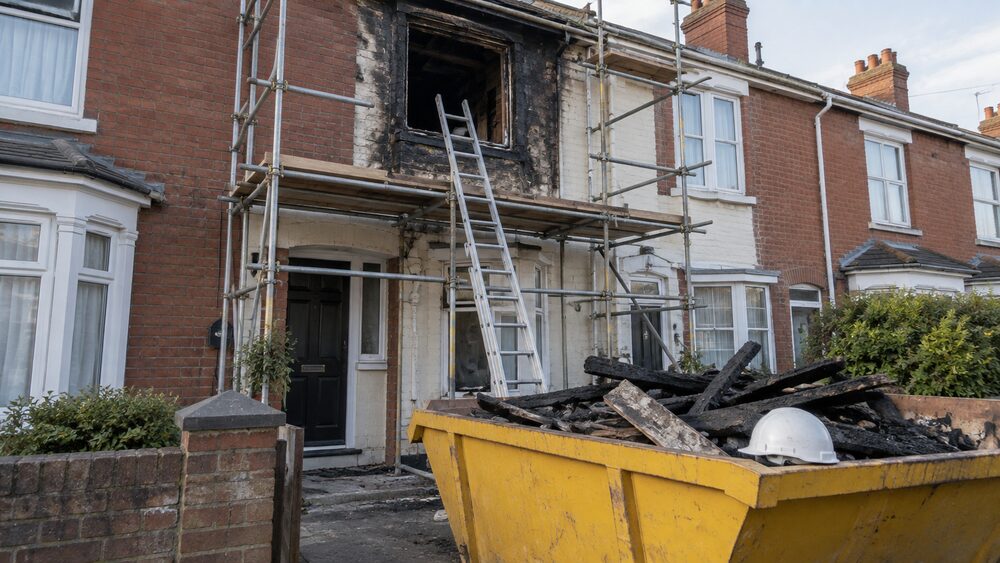
If the figure on your home insurance policy is too low, you could be underinsured, meaning your insurer may reduce any payout if you need to claim1. Underinsurance occurs when the value of a claim is greater than the total amount of cover you have on a policy2. The mechanism that cuts the payout is called the average clause.
If the figure on your home insurance policy is too low, you could be underinsured, meaning your insurer may reduce any payout if you need to claim1. Underinsurance occurs when the value of a claim is greater than the total amount of cover you have on a policy2. The mechanism that cuts the payout is called the average clause.
The average clause reduces the claim in line with the proportion of underinsurance. If the sum insured is £300,000 but should have been £500,000, the insurer will pay 60% of the claim value3. That applies to partial claims as well as total losses, so a burst pipe or a storm can trigger it just as a fire can.
The Financial Ombudsman Service, which settles disputes between consumers and insurers, has published guidance on when applying average is fair and when it is not. Its position turns on what the insurer asked you and what the policy says, not simply on the arithmetic4.
What underinsurance means for your home insurance
Underinsurance is a gap between what a policy would pay and what a claim actually costs. The Financial Ombudsman Service describes it as the amount insured not being enough to cover the claim5. NFU Mutual puts it more broadly: it occurs when the value of a claim is greater than the total amount of cover you have on a policy2.
The gap usually appears on the buildings side, because rebuild costs move with construction prices and because people rarely revisit the figure. It can also appear on contents, where the sum insured needs to reflect what it would cost to replace everything at today's prices rather than what the items originally cost.
Most home insurance policies cover subsidence, heave and landslip, and sudden, unforeseen events such as bad weather and storms6. Those are exactly the claims where a shortfall bites, because they are large and unpredictable. Many policies do not cover damage to parts of the property other than the main residence, such as patios, paths and terraces, unless the main residence is also affected, so the scope of cover and the size of the sum insured are separate questions7.
Underinsurance is not the same as a claim being refused for a reason unrelated to value. It is a value problem, and it is measured against the figure on your schedule.
The average clause cuts your claim in proportion
The average clause is a condition in many policies. The British Insurance Brokers' Association defines it as a clause restricting the claim paid to the same proportion of the loss as the sum insured bears to the total value of the insured item in the event of under-insurance8. In plain terms, if you insured for two thirds of the true cost, you carry a third of the loss yourself.
The Financial Ombudsman Service explains that you will have to pay a proportion of any loss or damage if you have insured something for less than its replacement value, and that the insurer has a formula for working this out4.
Two limits on the clause matter to consumers. First, the ombudsman is unlikely to find it fair for an insurer to reduce the claim by applying average without a clearly worded term in the policy3. Second, it will usually say it is not fair to apply the average clause if the insurer did not ask for the full replacement or rebuild cost, or if there is no average clause in the policy4.
"A clause in insurance policies whereby, in the event of under-insurance, the claim paid out by the insurer is restricted to the same proportion of the loss as the sum insured bears to the total value of the insured item."
A worked example: £300,000 insured when you needed more
The ombudsman's own illustration uses a £300,000 sum insured against a £500,000 requirement. The insurer pays 60% of the claim value3. On a £50,000 claim, that is £30,000, and the remaining £20,000 falls to the householder.
A second illustration from the ombudsman works the other way round, from the premium. If a consumer paid £400 but should have paid £500, they have paid 80% of the premium, and it is fair for them to receive 80% of the claim value3. The insurer would still have insured them, but at a higher premium.
The ombudsman has also published a case involving a buildings insurance complaint where the claim payout was reduced by 50% because of underinsurance4. In a separate contents case, after a burst pipe caused £50,000 of damage, the award included up to £300 for distress and inconvenience3.
Why underinsurance catches people out
The most common cause is a figure that was right when it was set and has drifted since. Rebuild costs vary according to the size, age and type of property you have, and the insurer Hiscox describes this as a key area for being underinsured9. A sum insured chosen years ago, or copied from a previous policy, may no longer reflect either.
A second cause is confusing two different numbers. People insure for the amount it would cost to completely rebuild the home, which is usually less than the sale price10. Using an estate agent's asking price, or a mortgage valuation figure, can therefore produce a sum insured that is wrong in either direction.
A third is the contents side, where the total is easy to underestimate because it is made up of many small items rather than one headline figure. NFU Mutual's guidance on calculating home contents exists precisely because the total is not obvious2.
There is also a disclosure dimension. If you give an insurer wrong information, it may want to charge more for the policy, retrospectively apply a restriction, settle a claim proportionately, or avoid the policy11. Underinsurance and misrepresentation can therefore produce a similar outcome by different routes, and the ombudsman's guidance on misrepresentation and non-disclosure sets out how it approaches those cases11.
Is the rebuild cost the same as the market value of my home?
No, and the difference runs in both directions. You need to insure yourself for the amount it would cost to completely rebuild your home, which is usually less than the sale price10. Rebuild cost reflects construction, demolition, professional fees and the cost of meeting current building standards, not what a buyer would pay for the location.
A mortgage valuation is not a rebuild cost either, but it can help. The surveyor may provide the mortgage lender with a minimum reinstatement value, which is the amount you would need to rebuild the property from the ground up, and this is useful when getting buildings insurance cover13.
| Figure | What it measures | Use for buildings cover |
|---|---|---|
| Market value or sale price | What a buyer would pay, including the land and location | No10 |
| Mortgage valuation | The lender's view of whether the property is adequate security | Not directly13 |
| Minimum reinstatement value | The cost of rebuilding from the ground up | Yes, as a starting point13 |
| Rebuild cost calculation | Size, age and type of property, at current prices | Yes9 |
How to check your sum insured is right
Start with the rebuild cost rather than the price you paid. A rebuild cost calculation takes account of the size, age and type of property, which is why two similar-looking houses can need different sums insured9. Where a surveyor has provided a minimum reinstatement value to your lender, that figure is a useful cross-check13.
For contents, work through the house room by room and price what it would cost to replace each item today, rather than what you paid for it. NFU Mutual's contents guidance is built around that exercise2. The sum insured should be the total, not a round number chosen to keep the premium down.
If you are unsure, an insurance broker can help you set the figure and reduce the chances of your claim being rejected14. MoneyHelper publishes guidance on when to use an insurance broker14.
Once the figure is set, revisit it. Tell your insurer about changes that affect the rebuild or replacement cost rather than waiting for renewal. Where a condition was declared but not covered, the insurer may let you pay an additional premium to have it included15. If you find a cheaper policy with a different provider and your current provider cannot match it, switching is an option, but the new policy needs the same or better cover, not just a lower premium16.
Where to get help if a claim is reduced
If your insurer applies the average clause and you think the reduction is unfair, the first step is the insurer's own complaints process. If it does not reply within the time limits, or you disagree with its response, you can bring the complaint to the Financial Ombudsman Service3. The service is free to consumers.
The ombudsman looks at relevant law and regulations, the regulator's rules, guidance and standards, industry codes of practice, and good industry practice at the time of the event3. It will consider how the terms were made clear to you, including whether underinsurance would put you in a worse position than the redress allowed under the Insurance Act 20153.
Its powers are practical. It can ask an insurer to deal with a claim it rejected, add interest to a claim that should have been paid, pay for more work to be done where a complaint concerns repairs, and pay compensation for distress or inconvenience17. Where the insurer asked a reasonable question and the customer gave a reasonable answer, the ombudsman will usually ask the insurer to pay the claim in full, and may also consider interest or compensation for distress and inconvenience3.
Where the insurer would not have insured you at all, it is likely to be fair for the insurer to reduce or decline the claim, and it may also void the policy3. Where the insurer would still have insured you at the same premium, the ombudsman is unlikely to find a reduction or refusal fair3.
Sources17 cited
- Could you be underinsured? Why your rebuild cost matters Which?, 2026-05-22
- Calculating home contents NFU Mutual, 2026-09-26
- Underinsurance: home insurance complaints Financial Ombudsman Service, 2026-09-26
- Underinsurance Financial Ombudsman Service, 2026-09-26
- Settling home insurance claims Financial Ombudsman Service, 2026-09-26
- Does your insurance cover damage caused by bad weather? Which?, 2025-12-08
- Subsidence, types of ground movement Financial Ombudsman Service, 2026-09-26
- Insurance jargon buster British Insurance Brokers' Association, 2025-02-11
- Underinsurance Hiscox, 2026
- Shopping around for insurance Independent Age, 2026-09-26
- Misrepresentation and non-disclosure Financial Ombudsman Service, 2026-09-26
- Surplus earnings Entitledto, 2026-09-26
- Mortgage valuations explained Which?, 2025-12-18
- When to use an insurance broker MoneyHelper, 2026-09-25
- Pre-existing medical conditions Financial Ombudsman Service, 2026-09-26
- Save money on insurance StepChange, 2026-09-25
- Accidental damage Financial Ombudsman Service, 2026-09-26





 MoneyHelperFree, impartial money and pensions guidance, set up by government
 Financial Ombudsman ServiceFree, independent help when a complaint about a firm is not put right
 FSCSProtects your money if a bank, insurer or investment firm fails
 Citizens AdviceFree advice on money, consumer and legal problems in England and Wales
 GOV.UKOfficial information on tax, benefits and government services