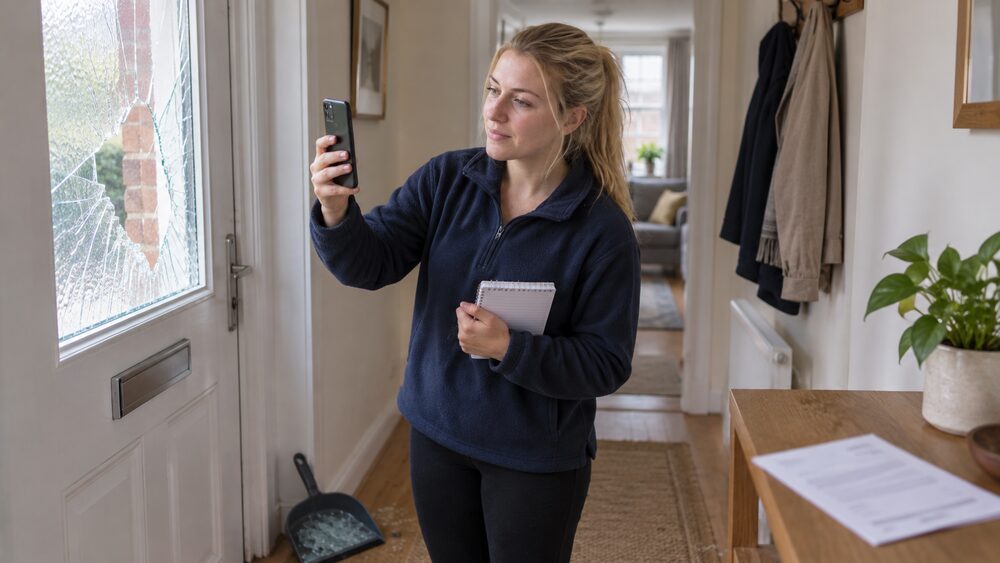
Making a claim is the moment an insurance policy has to prove itself. Home insurance is usually made up of two main parts, cover for the building itself and cover for the contents within it1, and a claim can be made under either or both after damage, loss or theft. Travel insurance typically covers medical costs, cancellation, baggage and personal belongings, personal liability and delays2, and can pay out if luggage is lost or stolen or a trip is cancelled or cut short3.
The process is broadly the same for both: check the policy, tell the insurer or broker as soon as practically possible, keep the evidence, and wait for a decision. Most claims are settled by repairing the damage, replacing what was lost or damaged, or paying cash to cover the cost4. Where things go wrong, it is usually for reasons that could have been avoided: a policy that did not cover the loss, information the insurer was not told, or a claim that was reported too late. This page sets out how to claim on home and travel insurance, what it costs, what evidence to gather, and what to do if the answer is no.
What home and travel insurance claims can cover
A home insurance claim can be made under buildings cover, which protects the structure of the home, or contents cover, which protects the things you own10. After a flood, for example, a policy may pay for flood damaged items to be replaced, professional help to clean up, and temporary alternative accommodation if you need to move out while your home is being repaired10. Most home insurance policies also provide alternative accommodation where a property has been damaged and is no longer safe to live in11.
Travel insurance claims cover a wider spread of events. As well as medical treatment while you are away, a policy can cover medical equipment you are taking with you, getting home if you need to come back early, cancelling the trip if you become unwell, and repatriation, bringing a body home after a death abroad3. Policies can also pay for extra accommodation or travel expenses you incur as a result of illness, or if you have to go home early because of the illness or death of a close relative or business partner12. Cancellation cover usually applies to specific events, such as illness or death in your family or of a business partner, jury service, serious fire, flood or storm damage to your home or business premises, or a request from the police not to go away following a burglary at your home or office12.
Two further areas of travel cover matter when things go wrong. If you injure someone or damage their property, most travel policies cover you if they decide to sue you12. And some policies pay a set amount for the loss of a passport12. Official guidance says travellers to the EU need travel insurance before going away13. The guides to how travel insurance works, buildings insurance and contents insurance explain what each type of policy covers in more detail.
Check your policy before you claim
Before contacting anyone, check that your insurance is still current and paid up to date14. A policy that has lapsed, or where a monthly payment has been missed, may not respond to a claim at all. Then check the cover itself: make sure you have sufficient insurance cover for your sums insured on your buildings7, and check that you have the correct sums insured for your building and contents, otherwise your claim payout could be reduced14.
If you bought through a broker, notify the broker as soon as practically possible if you believe you need to make a claim; if you deal directly with the insurer, you contact the insurer instead6. One rule matters more than any other in the first hours after damage: speak to your insurer before carrying out significant clean-up or repair work, unless immediate action is needed to protect people or prevent further damage11. Throwing things away or starting repairs before the insurer has seen the damage can make a claim much harder to prove.
It also pays to check the policy for what is excluded and what conditions apply. Travel insurance cover is usually provided only if a cancellation or missed flight is caused by a specific event: if you change your mind about travelling or miss your flight, your insurance may not cover you15. Insurers must be told of changes after buying a policy, including new medical conditions, changes to medication, amended travel dates, different accommodation or adding extra travellers, or a claim could be rejected even if the issue seems unrelated16. The page on changes you must tell your insurer about mid-policy covers this in more detail.
Excess and other costs of making a claim
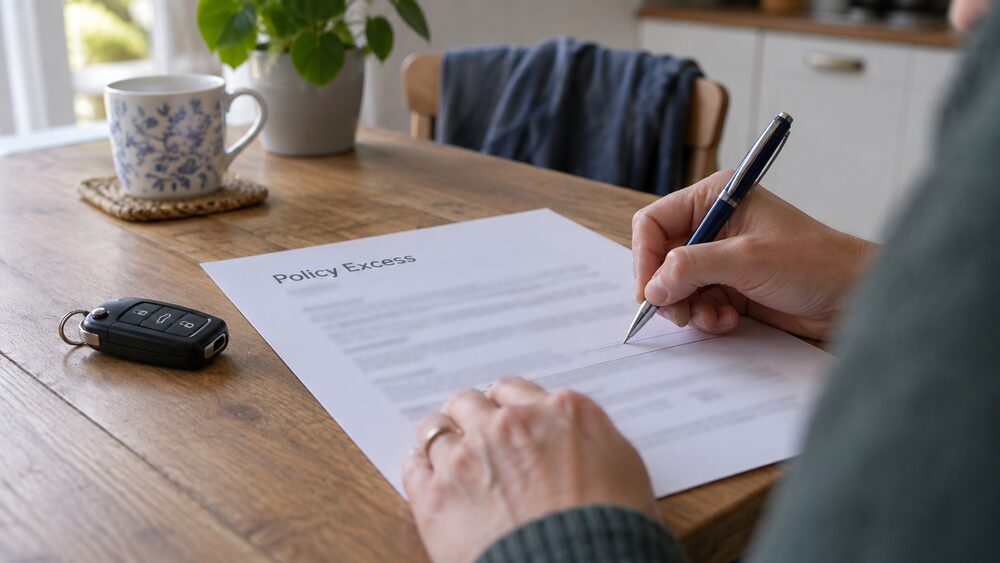
An excess is an amount of money you have to pay towards the cost of making an insurance claim17. Your home insurance policy will include an excess amount, which is the amount you must pay before the company pays a claim for damage10. In travel insurance, a policy excess is an amount you have to pay towards making a claim, agreed when you take out the policy and set out clearly in the policy documents5. Travel policies usually charge separate excesses for each individual claiming under the policy and each section of the policy being claimed under5, so a family claim touching two sections of cover can mean several excesses.
When choosing a policy, check that you have a competitive excess and that you can afford to pay it in the event of a claim14. There is a trade-off: if you agree to pay a higher excess in the event of a claim, your premium will be lower18. The page on insurance excess explains the difference between compulsory and voluntary excess.
Beyond the excess, an insurance claim might be subject to limits, and the policy will only cover the named policyholders19. A claim can also have costs that are harder to see at the time: making a claim on your insurance could be quicker and easier than other routes, but could mean the amount you pay for your insurance will go up20. Adding a phone to your contents insurance could result in a higher excess if you claim, and making a claim could increase your home insurance premiums when you come to renew21.
Steps to make a home insurance claim
The steps below apply to most home insurance claims, whatever the cause of the loss. For flood claims in particular, official guidance sets out the sequence clearly10.
- Check your policy is current and paid up to date14, and read the documentation thoroughly so you know what is covered and what the excess is6.
- Contact your insurance company and tell them your home was flooded or damaged and that you want to make a claim10. If you have a broker, notify the broker as soon as practically possible6.
- Keep a record of the dates and times you contact your insurer10, and keep your broker or insurer contact details handy6.
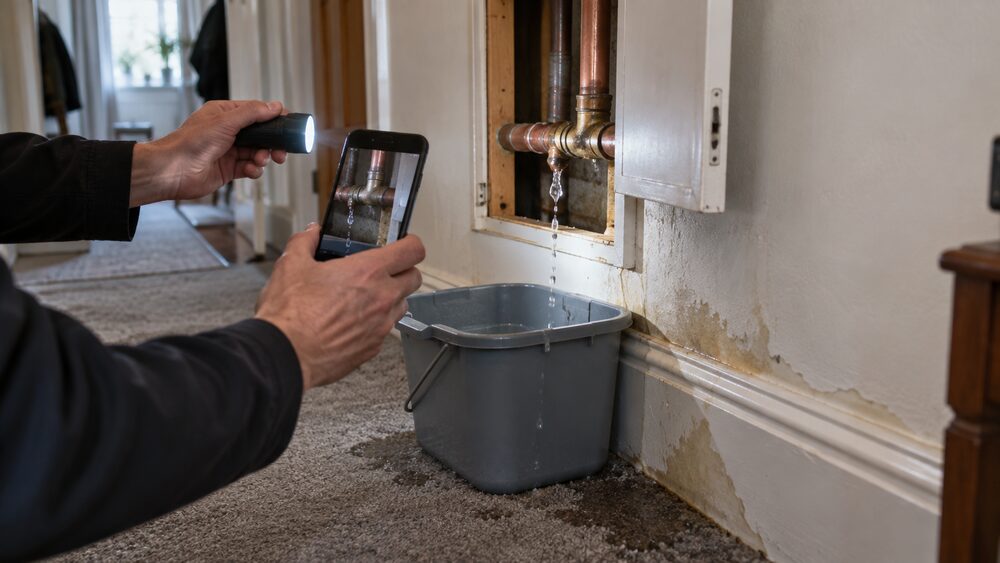
- Do not throw damaged items away, as you will need to show them to the insurance representative so they can organise an equivalent replacement. Taking photos of items that need emergency repair can also help7.
- Speak to your insurer before carrying out significant clean-up or repair work, unless immediate action is needed to protect people or prevent further damage11.
- If you are evacuated, take valuables, insurance documents and pets with you7.
Preparation makes claims easier at every stage. Keep receipts for anything of significant value, as these act as a valuation and as proof of purchase, keep photographs of valuable items, serial and model numbers, a note of item ages, and your insurance documents in a safe place6. If you have policies with two different insurance companies, for example buildings with one insurer and contents with another, both insurers need to be telephoned10.
For specific causes of loss, the site has more detailed guides: storm, flood and escape of water claims, what counts as a storm, subsidence and accidental damage cover.
Steps to make a travel insurance claim
Travel claims follow the same logic, but with extra steps because more parties are involved: airlines, hospitals, tour operators and the insurer's own assistance company.
- Check the policy documents for what is covered, the excesses that apply to each section, and any deadlines for reporting the loss5.
- Tell the insurer as soon as you can. If you bought through a broker, notify the broker as soon as practically possible6.
- Report the loss to whoever is responsible. For lost luggage, report it to the airline before leaving the airport: they will give you a Property Irregularity Report and other evidence, which you will need to back up your claim with your insurer15.
- Gather the paperwork. For medical claims, the Financial Ombudsman Service expects to see the policy schedule, policy certificate, the insurance product information document, the full policy terms, medical reports from the treating hospital in English, copies of fit to fly certificates, and copies of relevant quotes, for example for treatment or an air ambulance22.
- Act to minimise your losses. Policy terms can include a requirement that you act to minimise any losses or recover losses from other sources before making an insurance claim19.
If your passport is lost or stolen abroad, some policies pay a set amount for the loss12. A lost or stolen passport is also one of the recognised signs of identity theft, so report it and take steps to protect yourself23. The guides to travel insurance cancellation cover, when to buy travel cover and travel insurance with pre-existing medical conditions cover the decisions that come before a claim.
Evidence insurers ask for: receipts, photos and reports
Evidence is what turns an incident into a paid claim. The core rule for home claims: do not throw damaged items away, as you will need to show them to the insurance representative so they can organise an equivalent replacement, and take photos of items that need emergency repair7. For anything of significant value, receipts act as both a valuation and proof of purchase6.
For travel claims, the evidence depends on the type of claim:
| Type of claim | Evidence commonly needed |
|---|---|
| Lost luggage | Property Irregularity Report and other evidence from the airline15 |
| Medical expenses | Medical reports from the treating hospital in English, fit to fly certificates, invoices and receipts22 |
| Cancellation | Evidence of the reason, for example medical evidence of illness12 |
| Any complaint about a claim | Policy schedule, policy certificate, insurance product information document, full policy terms, claims handling notes22 |
General habits help across both types of policy. Take photos of any damage caused so you can use them as evidence, and make a note of dates and times when things went wrong; when writing to anyone about the loss, include copies of photos or other proof and keep the originals20. If a claim becomes a complaint, the insurer has to provide evidence to show it has met the conditions it relies on, if asked17.
What happens after you claim: assessors, repairs and settlements
Once a claim is notified, the insurer arranges for its representative to see the damage. The insurer then decides whether the claim is covered, and how to settle it. Home insurance claims are settled in three main ways: repairing the damage, replacing something lost or damaged, or paying cash to cover the cost of repair or replacement4. Most household policies are on a new for old basis, where the insurer either pays the full cost of repairing damaged items or pays to replace them with new items if they are damaged beyond repair or stolen, except for items such as clothes18.
After a flood, a policy may provide flood damaged items replaced, professional help to clean up, and temporary alternative accommodation if you need to move out while your home is being repaired10. Keep a record of the dates and times you contact your insurer throughout10, because if the claim later becomes a dispute, that record shows what was said and when.
The usual path of a home insurance claim, from first report to settlement.
Where a complaint is upheld about a claim, the Financial Ombudsman Service can ask the insurer to make the necessary repairs, replace the item, offer a cash settlement, and compensate for distress or inconvenience24. The pages on loss adjuster or loss assessor, poor repairs or unsuitable alternative accommodation and claims handlers and policy administrators explain who does what after a claim is made.
Why claims are turned down or reduced
Most declined or reduced claims trace back to a handful of causes. Knowing them before you claim is the cheapest protection available.
Underinsurance. If the sums insured for your building and contents are incorrect, the claim payout could be reduced14. Where the insurer would still have insured the consumer but at a higher premium, the Ombudsman is likely to find it fair for the insurer to reduce the claim in line with the proportion of the premium paid: for example, if the customer paid £400 but should have paid £500, having paid 80% of the premium, it is fair for them to receive 80% of the claim value25. Reducing the claim payment, known as applying average, may not be considered fair if the insurer's questions or guidance were unclear25. See underinsurance and the average clause.
Wrong or missing information. Where information given to the insurer was wrong, the insurer may want to charge more for the policy, retrospectively apply a restriction, settle a claim proportionately, or avoid the policy altogether26. Where the insurer would not have insured the consumer at all, the Ombudsman is likely to find it fair for the insurer to reduce or decline the claim, and the insurer may also void the policy25. See misrepresentation.
Not telling the insurer about changes. Travel insurers must be told of changes after buying a policy, including new medical conditions, changes to medication, amended travel dates, different accommodation or adding extra travellers, or a claim could be rejected even if the issue seems unrelated16.
Exclusions and activities. If you are injured while doing an activity your policy does not list, the insurer can refuse the claim16. Cover is usually provided only if a cancellation or missed flight is caused by a specific event15.
Going ahead without the insurer. With home emergency insurance, most policies will not let you arrange your own repair and claim back the cost without contacting the insurer first, and insurers usually reject the claim if you do27.
Poor maintenance. Keep property maintenance up to date: if maintenance has not been kept up and you have been negligent, the insurer may query the claim14.
Reporting too late. Most mobile phone insurance policies require you to report your phone as lost or stolen within 24 hours of discovering the incident, and some insurers allow as little as 12 hours21. Late reporting is a common reason claims are questioned across other types of cover too.
Using a broker can reduce the chances of your claim being rejected, because the broker checks the cover and helps present the claim28. The page on why insurance claims are rejected covers this in more depth.
Complaining about a claim decision
If a claim is declined or reduced, the insurer should explain the reasons clearly and fairly, and explain any further options you might have, such as travel insurance or packaged bank account cover29. The first step is to ask the insurance company to explain its decision30. If the explanation does not resolve matters, make a complaint to the insurance provider, then, if needed, to the Financial Ombudsman Service30.
The Financial Ombudsman Service can help with complaints about insurance for your home, car or when you travel to another country8. Before bringing a complaint to the Ombudsman, a formal complaint must be made to the company involved31. If the insurer does not send you a final response letter within eight weeks, or you are unhappy with their response, you can bring the complaint to the Ombudsman using its complaint form9. You answer a few questions online, and the service will let you know if it thinks it can help and what you need to do next to send the complaint32. A case handler is assigned and may ask for more information31. Someone else, such as a friend, family member or support worker, can talk to the Ombudsman on your behalf33.
Complain to the insurer first; the Ombudsman comes after the final response, or after eight weeks without one.
If a complaint to the Ombudsman succeeds, the outcome depends on what went wrong. Where a travel policy was mis-sold and the customer would have bought a different policy that would have covered their claim, the Ombudsman would ask the insurer to pay the claim35. Where the customer would have bought the policy but paid extra for an optional cover, the insurer should pay the claim with interest, minus the additional premium35. If a claim against the insurance company succeeds through legal action instead, the insurance company may have to pay you compensation30. The page on complaining about an insurer covers the process in full, and how long an insurer has to respond to a complaint covers the deadlines.
Claims and your future premiums
A claim does not end when the money arrives or the repair is finished: it follows you to renewal. Making a claim could increase your home insurance premiums when you come to renew your policy21, and any claim made against household insurance, for example if something is stolen while on holiday, risks losing your no claims bonus12. Travel insurance can also become more expensive as you get older, especially with a medical condition or disability2.
Insurers price according to the risk they think you present. If an insurer thinks you are more likely than most people to claim, they may refuse to insure you, charge a higher premium, apply an excess, apply an exclusion, or agree to review at a later date17. The Ombudsman expects an insurer to be able to explain why there has been a price increase and that it has been applied consistently with its customers36.
This is why many people think twice before claiming for small losses. You do not have to submit a claim to your insurer if you pay for repairs yourself or recover them from another party, if you wish to preserve your no claims discount37. The pages on how insurance premiums are worked out, insurance renewals, no claims discount and protected no claims discount explain how pricing and discounts work.
Sources37 cited
- Home insurance: how the Financial Ombudsman Service can help Financial Ombudsman Service, 2026-09-26
- Shopping around for insurance Independent Age, 2026-09-26
- Travel insurance guidance Marie Curie, 2022-07-12
- Settling home insurance claims Financial Ombudsman Service, 2026-09-26
- Travel insurance policy excesses and limits Financial Ombudsman Service, 2026-09-26
- Making a claim on home insurance British Insurance Brokers' Association, 2026-09-26
- Property damage from bad weather British Insurance Brokers' Association, 2022-09-06
- Consumer leaflet: who we can help Financial Ombudsman Service, 2026-09-26
- Complaints the Financial Ombudsman Service can help with Financial Ombudsman Service, 2026-09-26
- After a flood: making an insurance claim nidirect, 2024-08-29
- ABI advice for anyone affected by wildfires Association of British Insurers, 2026-07-31
- Travel insurance checklist British Insurance Brokers' Association, 2022-11-10
- Passenger consumer rights when travelling to the EU GOV.UK, 2020-12-31
- Storm protection guide British Insurance Brokers' Association, 2022-11-10
- Problems with travel insurance Financial Ombudsman Service, 2025-03-14
- Seven costly travel insurance mistakes Which?, 2025-12-07
- Insurance and cancer Macmillan Cancer Support, 2023-09-01
- The cost of home insurance British Insurance Brokers' Association, 2022-11-18
- Cancellations, refunds and routes to refunds Financial Conduct Authority, 2020-10
- Claim compensation if an item causes damage Citizens Advice, 2026-09-25
- Gadget insurance: how to get the best cover Which?, 2025-08-05
- Medical expenses and repatriation complaints Financial Ombudsman Service, 2023-07-03
- Identity theft Information Commissioner's Office, 2026-09-25
- Mobile phone and gadget insurance complaints Financial Ombudsman Service, 2026-09-27
- Underinsurance in home insurance complaints Financial Ombudsman Service, 2026-09-26
- Misrepresentation and non-disclosure complaints Financial Ombudsman Service, 2026-09-26
- Home emergency insurance Financial Ombudsman Service, 2026-09-26
- When to use an insurance broker MoneyHelper, 2026-09-25
- Chargeback rights and Section 75 UK Finance, 2026
- Insurance decision complaints Mental Health and Money Advice, 2023-09-05
- Debt collecting complaints process Financial Ombudsman Service, 2026-09-26
- Who we can help: consumers video transcript Financial Ombudsman Service, 2026-09-28
- Ombudsman Connect: information for customer advisers Financial Ombudsman Service, 2026-09-27
- Savings and endowments complaints Financial Ombudsman Service, 2026-09-27
- Mis-sold travel insurance complaints Financial Ombudsman Service, 2026-09-26
- Case study: consumer complains that premium increases were unfair Financial Ombudsman Service, 2026-09-26
- Do I have to claim on my insurance after a car accident? Which?, 2026-03-31


 MoneyHelperFree, impartial money and pensions guidance, set up by government
 Financial Ombudsman ServiceFree, independent help when a complaint about a firm is not put right
 FSCSProtects your money if a bank, insurer or investment firm fails
 Citizens AdviceFree advice on money, consumer and legal problems in England and Wales
 GOV.UKOfficial information on tax, benefits and government services