Money abroad raises two quite different sets of questions. If you are going on holiday, the questions are practical: which card to take, how much cash, what the machine will charge you and whether to say pounds or euros when the terminal asks. If you are moving abroad, or already live outside the UK, the questions are bigger: whether your UK bank will keep your account open, what happens to your State Pension and benefits, how to send money between countries, and whether you can still get a mortgage on a UK property.
The costs of getting this wrong are real but avoidable. Using a debit card abroad typically means a foreign exchange fee of around 3% of each transaction plus a charge of between £1 and £3 every time you spend or withdraw cash, except for euro withdrawals in the EU1. A credit card can add up to 2.99% each time you use it2. On a small purchase the effect is dramatic: spending just £5 with a card that charges fees could set you back £1.15, an additional 23%2. Choosing the right way to pay, and knowing the tricks a card terminal plays at the till, removes most of that.
This page is the hub for the whole subject. Each section below explains one part of it and links to a detailed guide, so you can go as deep as you need.
Ways to pay abroad: cards, cash and travel money
There are three main ways to pay for things outside the UK, and most travellers use a mix. A UK debit card works in most countries and converts your pounds automatically, but each transaction can carry a foreign exchange fee and a per-use charge1. A credit card works too, though most credit card companies charge a commission when you use the card abroad, and withdrawing cash on a credit card abroad can add a foreign transaction fee on top of the usual cash advance fee6. Cash, bought before you travel or withdrawn locally, has no per-transaction card fee but its own exchange rate and commission to think about.
The third option is a prepaid travel money card: a card you load up with foreign currency before you travel, which abroad can be used like a debit card7. It separates your holiday spending from your main account, which some people find easier to budget, but as explained below it carries a protection gap that bank accounts do not.
A few habits make any of these safer. Tell your card provider that you are going away: if you do not, they could block your card because they may think it is being used fraudulently7. Government guidance on finances when travelling abroad also recommends planning how you will access money and what you will do in an emergency before you leave8. Take more than one payment method so that a single lost card does not leave you stranded.
Which mix suits you depends on the trip. For a short holiday in a country with widespread card acceptance, a low-cost card plus a small amount of cash for tips and small shops may be enough. Where cash is still king, or card machines are unreliable, more cash and a prepaid card as backup makes sense. The detailed comparisons are in travel money, cash or card abroad and prepaid travel card or debit card.
What spending abroad costs: exchange rates and fees
Every time you spend in a foreign currency, two things happen: your pounds are converted into the local currency at an exchange rate, and fees may be added on top. Both matter, and the fee is the part you can control.
For debit cards, MoneyHelper sets out the typical costs: a foreign exchange fee, often around 3% of the transaction amount, and a spending or cash machine charge, typically between £1 and £3 each time you use your card, except for euros in the EU1. For credit cards, the non-sterling transaction fee is typically up to 2.99% each time you use the card, and you will be charged interest on cash withdrawals straight away, rather than after the usual interest-free period2. That immediate interest is the reason credit card cash withdrawals abroad are usually the most expensive way to get local currency.
| Cost | Typical amount | When it applies |
|---|---|---|
| Debit card foreign exchange fee | often around 3% of the transaction1 | Each purchase or withdrawal in a foreign currency |
| Debit card per-use charge | typically £1 to £31 | Each spend or cash machine use, except euros in the EU |
| Credit card non-sterling fee | typically up to 2.99%2 | Each use of the card abroad |
| Credit card cash interest | charged straight away2 | Cash withdrawals abroad |
| Credit card cash withdrawal | foreign transaction fee on top of the usual cash advance fee6 | Withdrawing cash on a credit card abroad |
The percentages sound small, but they compound on small purchases. Which? calculated that spending just £5 with a card that charges fees could set you back £1.15, an additional 23%2. On larger purchases the percentage is the same but the cash amount is bigger, so a £500 hotel bill on a fee-charging card could cost around £15 in fees before the exchange rate is considered.
Fees are not the only cost hiding in a foreign transaction. The exchange rate itself contains a margin, the difference between the mid-market rate and the rate you are given, and this varies between providers. Some accounts charge no fees on spending abroad at all, including cash withdrawals, Which? notes of Starling2. The full picture, including how to compare rates and commission when buying currency, is in buying foreign currency, using a debit card abroad and withdrawing cash from machines abroad.
One charge sits apart from all of these because it is a tax, not a commercial fee. Where an overseas transfer charge arises on a transfer, the charge is 25% of the transferred value under the legislation covering certain transfers abroad9. This is a narrow rule that applies in specific circumstances rather than to ordinary holiday spending, but it shows that moving money across borders can attract charges beyond bank fees. If a large transfer is involved, it is worth checking which rules apply before sending it.
Pay in pounds or the local currency: the card machine question
Almost every card terminal abroad now asks a question: pay in the local currency, or in pounds? This is called dynamic currency conversion, and the answer is nearly always the local currency. ABTA's guidance is blunt: choose the local currency when you are asked if you want charging in pounds or the local currency, because you will get a better exchange rate7.
The reason is who sets the rate. When you pay in the local currency, the card network, Visa or Mastercard, converts the amount using its own rate, which is usually close to the market rate. When you agree to pay in pounds, the merchant's terminal operator does the conversion and sets its own rate, which includes a margin for itself. You also often pay an extra fee for the convenience of seeing the sterling amount on the terminal.
The one genuine advantage of paying in pounds is certainty: the sterling amount is fixed at the till, so it will not change even if exchange rates move before the transaction settles. Some people accept the extra cost for that certainty on large purchases. But as the diagram shows, it can sometimes work out more expensive, and the rate gap is usually larger than any benefit.
The same principle appears in other corners of UK money rules, which is a sign of how firmly the system prefers sterling. HMRC requires that overseas payments to repay Child Benefit overpayments are made in sterling, warning that your bank may charge you if you use any other currency12. Stamp Duty payments must be made in pound sterling, with the same warning13, and for shares, amounts in overseas currencies must be converted to pounds sterling using the exchange rate, either on the date of the transfer or as agreed between the buyer and seller14. The full explanation is in dynamic currency conversion explained.
Prepaid travel money cards and how they work
A prepaid travel money card is one you can load up with foreign currency before you travel, and abroad it can be used like a debit card7. You convert your pounds into euros, dollars or another currency when you load the card, which locks in the exchange rate at that moment. If the pound then weakens, your holiday money keeps its value in the local currency; if the pound strengthens, you have lost the difference.
The main advantage is control: you decide in advance how much to convert, the rate is fixed, and your spending is ring-fenced from your main bank account. If you lose the card, the money is protected and a replacement can be issued, though you may have to pay for the replacement card7. That protection against loss is a real benefit over carrying the same amount in banknotes.
The main weakness is what happens if the provider fails. Funds on prepaid foreign currency cards are not protected by the Financial Services Compensation Scheme if the card provider goes out of business15, a point Which? has also made about prepaid cards generally3. Unlike money held in a UK bank account, money loaded onto a prepaid travel card has no equivalent backstop if the firm collapses. This is the single most important thing to understand about these cards.
There are smaller traps too. Some cards charge fees if they are not used for a certain period15. Some charge fees for withdrawing cash in the UK, so it may be cheaper to pay for purchases instead15. Which? recommends aiming to use unused funds within 12 months of returning home, or before the card's expiry date, whichever is sooner15. If the card has expired, you can contact your provider to request your money back, which may involve a fee15.
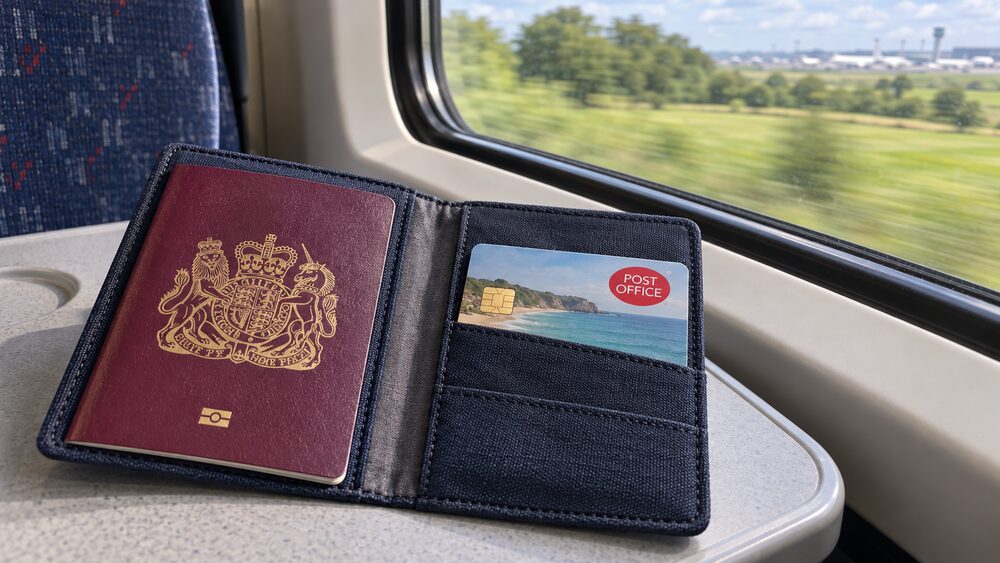
For people who receive benefits paid onto a prepaid card rather than into a bank account, the same loss rules apply: if the card is lost or stolen, you call the Payment Exception helpline so it can be blocked and a new one sent out16. The detailed guides cover prepaid travel money cards generally, and specific products including the Post Office Travel Money Card, the Travelex Money Card and the Barclays Travel Wallet.
Currency wallets inside your UK current account
Some UK current accounts now include a currency wallet: a place inside the same app or account where you can hold a foreign currency alongside your pounds. Instead of the bank converting every transaction automatically, you convert a lump sum when you choose, then spend from the euro or dollar balance directly.
The appeal is control over timing. You can convert when the rate looks good rather than accepting whatever rate applies on the day of each purchase, and spending from the wallet usually avoids the per-transaction foreign exchange fee that a standard debit card applies. The appeal is the same one that prepaid cards offer, but without a separate provider, and often with the FSCS protection of the main bank account behind the whole arrangement.
The limits are set by the account's terms. Not every current account offers a wallet, and where the account does not, conversion happens automatically at the point of spending. Some accounts restrict what you can do with the money: the Chase current account's terms, for example, state that you can only send money within the UK and in pounds sterling17, so a currency balance in that account is for spending, not for paying a foreign bill or a person abroad. If sending the currency to someone is the point, a multi-currency account or a transfer service is the better fit.
Wallets suit people who travel regularly to the same country, or who want to budget a holiday in the local currency in advance. For a one-off trip, the simplicity of a fee-free debit card may matter more. The full guide is multi-currency accounts and currency wallets, and the mechanics of moving the money are in IBAN, SWIFT and SEPA.
Holding a euro account alongside your UK bank
A step beyond a wallet is a separate account denominated in another currency, most commonly euros, held with either your existing UK bank or an app-based provider. A euro account lets you receive euros, hold them and spend them without repeated conversion, which matters if you are paid in euros, rent out a property abroad or travel frequently.
Brexit changed the landscape here. Thousands of UK expats living in the EU received letters from their UK bank saying their accounts and credit cards would be closed as a result of Brexit18, because some banks lost the ability to serve customers living in the EU. That pressure pushed many people towards accounts that are designed to work across borders, and euro accounts offered by UK-based app banks are part of that response. Which? notes that Starling has no fees on spending abroad, including cash withdrawals2, and the Starling euro account is covered in detail on its own page.
There is also a European rule worth knowing about. The Payment Accounts Regulations require that a payment account with basic features allows the holder to withdraw cash within the European Union in sterling or in the currency of the member state where the withdrawal is made, at counters and at automated teller machines19. That is a right attached to basic bank accounts in the EU, not a general right for UK customers, but it shows the direction of travel for cross-border banking in Europe.
A euro account suits someone with recurring euro income or spending. For occasional holidays it adds a second account to manage for little gain. Compare it against the alternatives in multi-currency accounts, and if the reason you hold euros is a property abroad, see buying property abroad and letting your UK home while you live overseas.
Sending money overseas
An international money transfer allows people to send funds from a UK account to another account in a different country21. People send money abroad for many reasons: supporting family, paying for a foreign property, moving savings when they relocate, or paying a bill in another currency. The businesses that provide the service range widely: the Financial Ombudsman Service lists high street banks, specialist money transfer and remittance businesses, online payment services and foreign exchange specialists21.
The cost of a transfer has three parts, and providers can compete on each: the exchange rate margin, any transfer fee, and the receiving bank's charges, which the sender does not control. Because the rate margin is often the largest cost and the least visible, comparing the total amount that will arrive, rather than the headline fee, is the only reliable way to compare providers. For large transfers, such as a property purchase, the rate margin can be worth more than any fee several times over.
The FCA's rulebook distinguishes between sending money within the UK, initiating a payment transaction to a payee in the United Kingdom, and sending money outside the UK, initiating a payment in a currency other than a currency of the United Kingdom to a payee outside the United Kingdom22. The distinction matters because different information and protections apply. Within the UK, a sort code and account number are enough; abroad, an IBAN and often a SWIFT code are needed, and the IBAN, SWIFT and SEPA guide explains those.
If something goes wrong with a transfer, the complaint route is the Financial Ombudsman Service, which can look at complaints about businesses that send money abroad21. If the problem is the opposite, money owed to you by a person or business in another country, government guidance is to get legal advice, because recovering debt across borders is a legal matter rather than a banking one23. There is also a long-standing rule on how foreign currency payments are valued in sterling for certain legal purposes: a payment made in a currency other than sterling is valued as the net sum after conversion by the Bank of England or any authorised deposit-taker, once banking charges or commission are deducted24. The practical lesson is that the amount that arrives is what counts, not the amount sent.
The section guide sending money in the UK and abroad covers the whole subject, and buying property abroad deals with moving large sums and fixing exchange rates in advance.
Banking in the UK while living abroad
Moving abroad does not automatically close your UK financial life. Many people keep a UK account for their State Pension, a UK property, or simply as a foothold. But whether you can depends on your bank: some banks close accounts of customers who move to certain countries, and as noted above, thousands of UK expats in the EU received letters saying their accounts and cards would be closed after Brexit18. Before you move, ask your bank whether it will keep the account open in your new country of residence, and if not, look at banks that serve UK customers living abroad. The detailed guide is keeping or opening a UK bank account while you live abroad, and offshore accounts in Jersey, Guernsey and the Isle of Man covers the accounts based in the Crown Dependencies that are designed for exactly this situation.
The State Pension is the clearest example of money that keeps flowing after you leave. It can be paid into a UK bank or building society account, or into a bank in the country where you live, paid in local currency5. If you choose an overseas account, the amount is converted into your local currency using the exchange rate at the time of the conversion25, so the amount you get may change depending on the exchange rate26. That is a real risk for anyone budgeting a retirement abroad on a sterling pension: the pension itself may be fixed, but the local currency value is not.
Government guidance on moving, living or retiring abroad pulls together the other threads: you may be able to claim UK Child Benefit if you live abroad, you can pay National Insurance while abroad to protect your State Pension and entitlement to other benefits, and you may not be entitled to free NHS treatment in the UK if you move abroad permanently27. Each of those has its own detailed page: National Insurance after you move abroad, losing free NHS treatment when you move abroad, and the tax pages on Form P85, foreign income, double taxation and the Common Reporting Standard.
Expat mortgages: often interest-only
An overseas or international mortgage is a mortgage for a property that is not in the UK28. A related but different product is the expat mortgage: a mortgage on a UK property, such as a home you previously lived in or a buy-to-let flat, taken out by someone who now lives abroad. Family Building Society, for example, offers expat mortgages for properties in England or Wales on an interest-only basis only, and states that repayment mortgages are not available on this basis29.
Interest-only means something specific. The borrower pays the monthly interest on the total mortgage balance over an agreed term, and at the end of the term the full capital has to be repaid30. Nothing is paid off along the way. That contrasts with a repayment mortgage, where each payment clears some of the loan plus interest, so the debt is gone by the end.
Because the capital is not being repaid, the rules are strict. The FCA's mortgage rulebook says a lender may only enter into an interest-only mortgage, or switch a repayment mortgage onto an interest-only basis, if it has evidence that the customer will have a clearly understood and credible repayment strategy with the potential to repay the capital borrowed and any interest reasonably expected to be accrued32. This rule came out of the Mortgage Market Review, which introduced the requirement to only allow a borrower to take out an interest-only mortgage where there is a credible repayment strategy in place33. Some lenders also restrict interest-only lending to high-net-worth individuals with incomes of £100,000 or more34.
A repayment strategy can be selling the property, savings and investments, or an expected inheritance, but the lender has to be satisfied it is credible. There is a variant designed for older borrowers: the retirement interest-only mortgage, defined in the FCA glossary as an interest-only mortgage which requires the interest to be repaid in full over the stated term, is restricted to older customers above a specified age, and under which the lender is not entitled to seek full repayment until one or more specified life events occur, unless the customer breaches their contractual obligations35.
Currency adds a further risk. If you borrow in a foreign currency, exchange rate fluctuations will affect your repayments28. The law recognises this so seriously that a prescribed warning must be given with foreign currency mortgage quotations: "THE STERLING EQUIVALENT OF YOUR LIABILITY UNDER A FOREIGN CURRENCY MORTGAGE MAY BE INCREASED BY EXCHANGE RATE MOVEMENTS."36. A mortgage that looks affordable can become unaffordable purely through currency movement, with no change in the interest rate.
For most people living abroad who want a UK property, the practical questions are which lenders serve expats at all, whether they will lend on a repayment basis, and what evidence of income they accept from foreign employment. The wider context is in mortgages and buying a home, and the tax side of holding UK property from abroad is in letting your UK home while you live abroad.
What can go wrong abroad and where to get help
Holidays go wrong in ways that cost money: cancellations, delays, lost luggage, illness. Your rights depend heavily on how you booked. Citizens Advice warns that it is harder to get compensation if you organised the holiday yourself, because you will likely have different contracts with different companies, and if those companies are based abroad you will not be protected by UK law and your rights could be completely different37. The same applies to linked travel arrangements, where you book components separately but connected: it is harder to get compensation because of the different contracts, and companies based abroad might not give you the same rights as in the UK37. Package holidays booked through a UK operator carry the strongest protections.
Healthcare is the other big exposure. A UK Global Health Insurance Card covers state-provided healthcare in the EU, but it cannot be used for treatment at a private hospital or clinic, repatriation to the UK, rescue, cancelling or cutting short your holiday, or lost or stolen luggage, and it gives nothing in non-EU countries such as the US and Australia38. Travel insurance fills those gaps, and the FSCS protects insurance claims, paying 90% of travel claims where an insurer has failed39. The guides are GHIC and EHIC and expat health insurance.
If you run out of money abroad, consular help is limited. The government's emergency loan for repatriation is a last resort and can only cover basic costs, for example the cheapest one-way ticket to the UK8. It is a loan, not a grant, and it does not extend to hotels, meals or onward travel beyond the basics. The full picture is in emergency financial help abroad and lost or stolen cards and cash abroad.
For people who move abroad rather than holiday there, the benefit rules are where money problems bite. Carer's Allowance can continue for a temporary period abroad, likely a maximum of 26 weeks, if you go with the person you look after, they continue to receive a qualifying disability benefit, and the purpose of the trip is to look after them40. If you have a disability or you are a carer and you leave the UK to live in an EEA state or Switzerland, you may be able to receive your disability benefit abroad42, and for Scotland's Adult Disability Payment, individuals should be able to apply from abroad, known as a first claim from abroad43.
Some payments have their own territorial rules. Funeral Support Payment in Scotland can only cover travel costs within the UK for the journey to the place of rest, though some travel costs outside the UK may be considered for the onward journey44. If housing costs are the problem, a payment may be available from the Crisis and Resilience Fund in England, or a discretionary housing payment in the rest of the UK, if the local authority thinks you need additional help, but there is no right to such a payment45. Entitlement also depends on immigration status: people with refugee leave or humanitarian protection can in most cases claim benefits46, while you may not be able to get some benefits if you have come from another country to live or work in the UK or are seeking asylum47.
Where the problem is a financial service rather than a benefit, the complaint routes are the same as at home. The Financial Ombudsman Service handles complaints about businesses that send money abroad, including banks, transfer specialists and online payment services21. The FSCS protects deposits, insurance and investments when firms fail, and answers questions such as whether it protects financial advice48. Free, impartial help is available from MoneyHelper, and the guides to scams and fraud and consumer protection cover the UK safety net in full.
Who provides it in the UK
The market for money abroad is served by several kinds of firm, and most people use a combination. High street banks provide debit and credit cards that work abroad, international payments from current accounts, and in some cases euro accounts and expat mortgages. App-based banks such as Starling compete on overseas spending, with Which? noting it has no fees on spending abroad, including cash withdrawals2. Specialist money transfer and remittance businesses, online payment services and foreign exchange specialists compete on transfers, as the Financial Ombudsman Service's list of the firms it covers shows21. Travel money is sold by the Post Office, Travelex, banks, supermarkets and bureaux de change, each with their own rates and fees.
On the mortgage side, expat lending is a specialist market. Family Building Society is one of the lenders in it, offering expat mortgages for properties in England or Wales on an interest-only basis only, with repayment mortgages not available on that basis29. It is authorised by the Prudential Regulation Authority and regulated by the Financial Conduct Authority and the Prudential Regulation Authority29. Building societies and specialist lenders rather than the largest banks tend to be the names in this market, and a broker with expat experience can identify which lenders accept a given country of residence and income structure. The lenders directory and banks directory list the firms, and the comparison pages, such as prepaid travel card or debit card, set the options side by side.
FAQ
Is money on a Post Office Travel Money Card covered by the FSCS? No. Balances on prepaid travel cards, including the Post Office Travel Money Card, are not covered by the Financial Services Compensation Scheme if the card provider goes out of business15. If you lose the card itself the money is normally protected and a replacement can be issued, though you may pay for the replacement card7. Provider failure is different: the loaded balance could be lost. Keep balances modest and spend down leftovers soon after returning.
Can I get a repayment mortgage if I live abroad? It depends on the lender. Some lenders that serve customers living abroad offer expat mortgages only on an interest-only basis and do not offer repayment mortgages at all29. Others may lend on a repayment basis. Where interest-only is the only option, the lender must have evidence of a credible repayment strategy for the capital32. Check what each lender offers before applying.
How do I convert pounds in my current account into another currency? Most UK current accounts convert automatically when you spend or withdraw abroad, applying an exchange rate and often a foreign exchange fee of around 3% of the transaction1. Some accounts let you hold other currencies in a wallet inside the account, so you convert in advance and lock in a rate. Others offer a separate euro or dollar account you convert into yourself.
Who can open a Starling euro account? Starling offers a euro account alongside its sterling account and is noted for charging no fees on spending abroad, including cash withdrawals2. Eligibility rules are set by the provider and can change, so check Starling's own terms before applying. These accounts are generally aimed at UK customers who want to hold and spend euros alongside pounds, for travel or for receiving euro payments. See the Starling euro account page for details.
Should I pay in pounds or the local currency when a card machine asks? Choose the local currency. When a terminal offers to charge you in pounds, the merchant or machine operator sets the exchange rate, and this dynamic currency conversion usually works out worse than the rate your card network applies7. Paying in the local currency means Visa or Mastercard sets the rate. Paying in pounds tells you the sterling amount at the till, but it can sometimes work out more expensive.
What happens to my money if a prepaid card provider fails? Unlike money in a UK bank account, balances on prepaid travel money cards are not protected by the FSCS if the provider goes out of business15. You could lose whatever is loaded on the card. Load only what you expect to spend, use up leftover funds within 12 months of returning home or before the card expires, whichever is sooner15, and keep a backup card or cash separately.
Sources48 cited
- How to open, switch or close your bank account MoneyHelper, 2026
- Spending abroad: the 4 dos and 5 don'ts Which?, 2024
- Children's bank accounts: what options are there in 2025 Which?, 2025
- Credit card market study annex FCA, 2015
- State Pension abroad: easy read GOV.UK, 2026
- The costs and charges of credit cards Citizens Advice Scotland, 2026
- Travel money tips and advice ABTA, 2026
- Your finances when travelling abroad GOV.UK, 2022
- Finance Act 2017, Schedule 4, Part 2: overseas transfer charge legislation.gov.uk, 2024
- Managing your money while travelling HSBC, 2026
- Using a debit card abroad vs local currency HSBC, 2026
- Repay Child Benefit overpayments GOV.UK, 2026
- Pay Stamp Duty GOV.UK, 2014
- Stamp Duty on shares GOV.UK, 2014
- I can't get my money out of my prepaid foreign currency card Which?, 2021
- Choosing a bank account for your Universal Credit payment MoneyHelper, 2026
- Chase general account terms and conditions Chase, 2026
- Living abroad after Brexit: is your UK pension secure? Which?, 2020
- Payment Accounts Regulations 2015 legislation.gov.uk, 2015
- Payment Accounts Regulations 2015, Regulation 19 legislation.gov.uk, 2015
- Complaints about sending money abroad Financial Ombudsman Service, 2026
- BCOBS 7.5: payment services information FCA Handbook, 2018
- Options if you're owed money GOV.UK, 2026
- Social Security (Contributions) Regulations 1988, Regulation 10 legislation.gov.uk, 1988
- State Pension if you retire abroad GOV.UK, 2026
- Six things to know about your State Pension if you want to retire abroad Which?, 2022
- Moving, living or retiring abroad GOV.UK, 2025
- Overseas mortgages explained Which?, 2026
- Expat mortgage summary sheet Family Building Society, 2026
- Mortgage jargon buster StepChange, 2026
- Mortgage types explained Which?, 2026-04-02
- MCOB 11: responsible lending FCA Handbook, 2023
- Mortgage Market Review written evidence UK Parliament, 2015
- How to tackle your interest-only mortgage Which?, 2026
- FCA Glossary: retirement interest-only mortgage FCA Handbook, 2026
- Financial Services (Disclosure) Regulations 1989 legislation.gov.uk, 1989
- Claim compensation for a holiday Citizens Advice, 2018
- The EHIC explained Which?, 2026
- FSCS: what we cover, insurance FSCS, 2026
- Carer Support Payment and breaks in care (Scotland) Carers UK Scotland, 2026
- Carer's Allowance and breaks in care Carers UK, 2026
- Claiming benefits in EEA countries nidirect, 2026
- Adult Disability Payment: EU rules on social security coordination Social Security Scotland, 2017
- Funeral Support Payment: travel costs Social Security Scotland, 2026
- Housing Benefit Disability Rights UK, 2026
- Can I get benefits: refugee leave and humanitarian protection Turn2us, 2025
- Claiming benefits Macmillan Cancer Support, 2025
- Guide to investment protection FSCS, 2026





 MoneyHelperFree, impartial money and pensions guidance, set up by government
 FSCSProtects your money if a bank, insurer or investment firm fails
 Financial Ombudsman ServiceFree, independent help when a complaint about a firm is not put right
 FCA Warning ListCheck whether a firm is authorised before you deal with it
 Citizens AdviceFree advice on money, consumer and legal problems in England and Wales