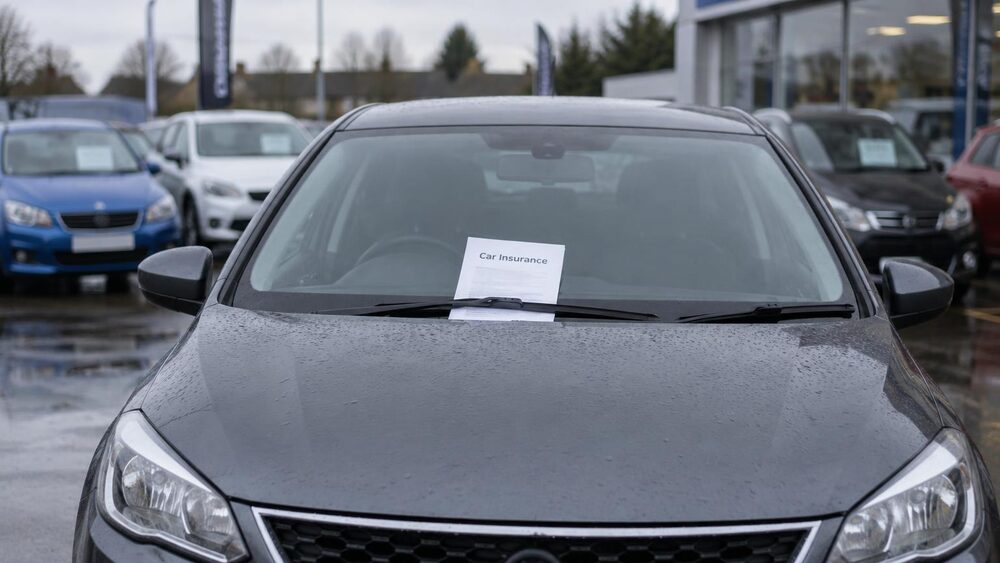
The Motor Insurance Taskforce published its final report on 11 December 2025, and the anti-poverty charity Fair By Design responded the same day, saying the report "leaves people in poverty behind"1. The charity welcomed the report as "welcome recognition that we need action across government, industry and regulators" to address the factors driving up car insurance costs, but criticised its treatment of affordability for low-income households1.
Fair By Design says the report dismisses targeted discounts for low-income households in high-risk areas without substantiating its conclusion. It quotes the report's own words:
"the consequences of direct interventions in pricing are often hard to predict and may damage what is otherwise a competitive and well-functioning market, and the government has no plans to take these proposals forward at this time"
The charity also says the report "quickly concludes, but does not substantiate" that position, and that low-income households will therefore continue to face the highest charges for car insurance1. It adds that the government's recently published Financial Inclusion Strategy justified not addressing car insurance because of the Taskforce's ongoing work, which the charity says has gone on to disregard financial inclusion1.
Fair By Design's own analysis puts the extra cost of paying for car insurance in monthly instalments, known as Premium Finance, at around £400 extra per year for those on low incomes1. It describes car insurance as having "the costliest poverty premium in Great Britain"1. The charity also points to Financial Conduct Authority (FCA) analysis of claims costs, which lists factors including more complex and expensive cars, supply chain delays, a shortage of skilled labour, increased costs for replacement vehicles, rising bodily injury costs, increasing numbers of car thefts and a rise in costs associated with uninsured drivers1.
On the ethnicity premium, Fair By Design says the FCA's report shows that racially minoritised people pay more for car insurance because of factors such as living in urban areas with higher population density1. It says the findings show insurers are not explicitly discriminating against these groups, but that "the outcome of insurers' pricing models is discriminatory"1. The FCA used Indices of Multiple Deprivation in that analysis, which the charity says was a missed opportunity to consider the impact of deprivation alone on premiums1.
Fair By Design's survey of low-income consumers found that half of non-car owners said the cost of insurance prevented them from owning a car even though they wanted or needed one, and that a quarter of car owners had cut back on essentials to afford insurance1. Most respondents believed it was unfair that paying monthly costs more and wanted targeted discounts for low-income households, while penalising people for being on a low income or living in high-risk areas was considered the most unjust risk factor1.
Why it matters for households
Car insurance is a legal requirement for driving on public roads, so its cost affects anyone who needs a car for work, education or daily life. Fair By Design's figures suggest the households least able to absorb higher costs are paying the most: around £400 extra a year for those who pay monthly rather than annually, and a quarter of car owners cutting back on essentials to keep cover1. The charity says the report's decision not to pursue targeted discounts means low-income households will continue to face the highest charges1. The FCA has previously labelled excessive charges for paying monthly a poverty premium, and Fair By Design says the regulator already has the tools to address them1. The report's findings on the ethnicity premium mean racially minoritised drivers in denser urban areas may pay more as an outcome of pricing models, even where there is no explicit discrimination1.
What happens next
Fair By Design sets out four asks: that the actions in the Taskforce's final report be targeted first at areas with high levels of deprivation; that the FCA build on its analysis to review the poverty premium and repeat the data collection exercise to evaluate the action plan; that the FCA act on excessive charges for paying monthly; and that targeted discount schemes for essential cover be reconsidered1. No timetable for any of these steps is given in the response. The FCA's next moves on Premium Finance have not been reported.
Households affected by the cost of cover can read our guides to the poverty premium and low-income pricing, how insurance premiums are worked out, including Insurance Premium Tax, penalties for driving without insurance and financial inclusion policy. The FCA's role is set out in our guide to the Financial Conduct Authority.

 MoneyHelperFree, impartial money and pensions guidance, set up by government
 Financial Ombudsman ServiceFree, independent help when a complaint about a firm is not put right
 FSCSProtects your money if a bank, insurer or investment firm fails
 Citizens AdviceFree advice on money, consumer and legal problems in England and Wales
 GOV.UKOfficial information on tax, benefits and government services