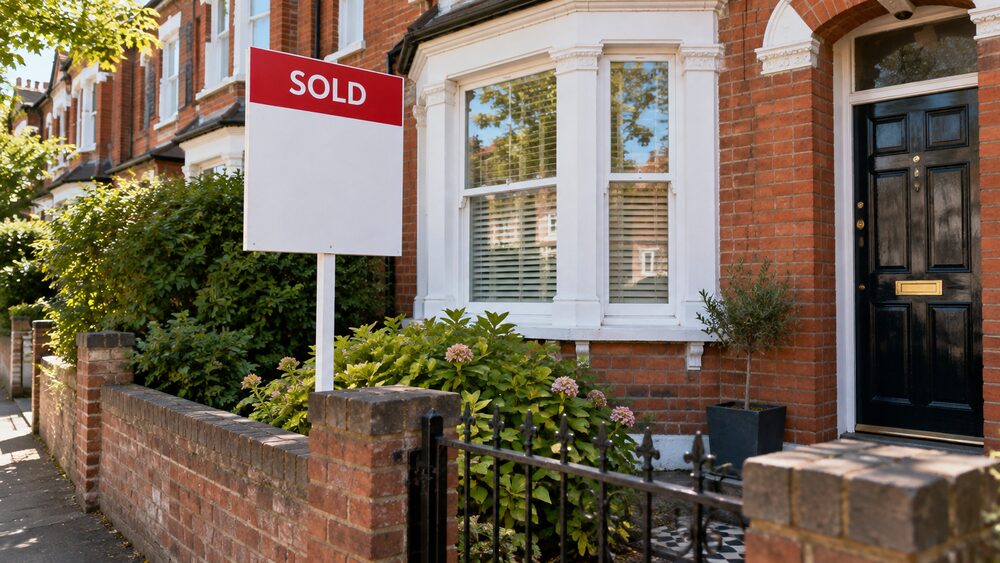
A mortgage is a loan secured against your home. You borrow money to buy the property, and the lender keeps a legal claim on it until the loan is repaid. That security is what makes a mortgage different from every other kind of borrowing: if the payments are not made, the lender can ultimately take the home and sell it. Official guidance is blunt about the consequence, describing mortgages as priority debts, because your lender could repossess your home and sell it to get their money1.
The cost of that borrowing moves with the market. The average two-year fixed mortgage rate was 4.92% in August 2026, up 0.82 percentage points on a year ago, according to official statistics2. Rates have been climbing since: reported figures from late September 2026 put the average two-year fixed rate at 5.92% and the average five-year fixed rate at 5.91%, their highest in around two years3. Where a mortgage sits in that range depends mainly on how much deposit you have, how long you fix, and your circumstances.
This guide explains how mortgages work, the main types available, what help exists for first-time buyers, what your lender must do if you cannot pay, and how to complain if something goes wrong.
What a mortgage is and why it is a priority debt
A mortgage is a loan used to buy a home, repaid over a term of years, with the property itself used as security. Because the lender holds a claim over the home, it can take possession and sell it if the borrower cannot keep up the payments. That is why official guidance classifies mortgages as priority debts, to be paid before other borrowing: the consequence of default is the loss of your home rather than a damaged credit record alone1.
Most mortgages run on a repayment basis, where each monthly payment covers both interest and a slice of the loan itself, so the debt shrinks over the term. Interest-only mortgages work differently: the monthly payments just cover the interest, and the whole loan has to be paid off at the end in one go9. The two approaches are compared in detail in repayment vs interest-only.
The amount you can borrow is limited by two things: the size of the deposit relative to the property's price, known as the loan to value, and an affordability assessment of your income and outgoings, covered in how much can I borrow. Lenders also check your credit history, and borrowing with a bad credit record is possible but usually costs more.
Because the loan is secured, the protections around it differ from unsecured credit. There are rules requiring lenders to treat customers fairly and to treat repossession as a last resort, and there is a free ombudsman service to complain to. But the core fact shapes everything else: a mortgage is the one debt where the family home is directly at stake, so it comes first when money is tight1.
Mortgage rates now: the average two-year fix at 4.92%
The headline figure comes from official statistics: the average two-year fixed mortgage rate was 4.92% in August 2026, up 0.82 percentage points on a year ago2. That rise reflects a market in which lenders have been repricing steadily. Reported data from Moneyfacts Rate Watch in late September 2026 showed the average two-year fixed rate reaching 5.92%, its highest in over two years, with the average five-year fixed rate at 5.91%, its highest since October 20233.
The direction of travel is not new. The Bank of England noted in its July 2023 Financial Stability Report that rates had already risen sharply by then, with a two-year fixed-rate mortgage at 75% loan to value costing around 5.5% in June 202310. The figures since show a market that has moved higher again after a period of easing.
What a rate means in monthly cost depends on the size of the loan, not just the percentage: a small difference in rate on a large loan adds up over the full term of the mortgage, which is why the timing of a remortgage, and locking in a new rate early, can make a real difference to the total paid. Individual lenders also reprice their ranges week by week: during one week in September 2026, Barclays Mortgage withdrew a two-year offset tracker and selected fixed rates, while a new lender, Gable Mortgages, entered the market with five-year fixes at 6.60% up to 100% loan to value3.
No page can tell you today's rate for a particular deal, and rates change continuously. The figures above are averages, drawn from official statistics and reported market data, and are a guide to the level of the market rather than a quote. The pages on fixed rate mortgages, tracker mortgages and the standard variable rate explain how each type is priced.
Fixed or variable: how each one behaves when the deal ends
The single biggest choice in a mortgage is how the interest rate is set. With a fixed-rate mortgage, you pay the same interest rate for an agreed number of years, before going back to the lender's standard variable rate (SVR) or, if you choose, remortgaging11. Variable types, including trackers and discounted rates, move with the lender's rate or the Bank of England's base rate, so payments can go up or down during the deal.
The fixed period is the calm part. The critical moment is when it ends, because the loan does not stop: it reverts to the SVR, which is usually much more expensive12. At that point the borrower has two options, to remortgage to a new deal elsewhere, or to take a new deal with the same lender, known as a product transfer.
One protection is worth knowing about. Under the Mortgage Charter, customers who are up to date with payments can switch to a new mortgage deal with their lender at the end of their existing fixed-rate agreement without a new affordability check13. That matters for people whose circumstances have changed since they took the original loan, for example the self-employed or those whose income has fallen, because a fresh affordability test is the point at which many remortgages stall. The Mortgage Charter page explains the full range of help it requires signatory lenders to offer.
The choice between fixed and variable is a choice about certainty. A fix guarantees the payment for the term but leaves you paying above the market rate if rates fall, and usually carries an early repayment charge if you want to leave. A tracker follows rates down as well as up, with no exit window that is free of risk either way. Fixed vs tracker sets the two side by side.
First-time buyers: discounted homes and Scotland's First Homes Fund
First-time buyers have two main forms of government help open to them, and they differ by nation. In England, the First Homes scheme offers new homes to first-time buyers with at least 30% of the market value taken off the price5. An evaluation of the wider Help to Buy era found the First Homes scheme allows first-time buyers and key workers to buy a property discounted to at least 30% compared to the market price14. Purchasers must use a mortgage, or a home purchase plan if required to comply with Islamic law, to fund at least 50% of the discounted purchase price15.
In September 2026 the government announced a further scheme for England, Your First Home, for first-time buyers buying new-builds. Under it, the buyer puts down a 2.5% deposit, the government provides a 20% equity loan, and a mortgage covers the remaining 77.5%16. The details of how such schemes work in practice, including what happens when the equity loan has to be repaid, are covered in remortgaging and repaying a Help to Buy equity loan.
Scotland runs its own support. The First Homes Fund gives first-time buyers up to £10,000 towards a home6. If you are buying with someone else, at least one of you must be a first-time buyer17. The Scottish Government directs applicants to its First Homes Fund: guidance for buyers publication, which gives eligibility information and step-by-step instructions on how to apply18. One condition affects the mortgage itself: it needs to be capital repayment and not interest-only19.
Beyond the schemes, the practical hurdles for a first mortgage are the deposit and the affordability check. A gifted deposit from family is accepted by most lenders, and the Mortgage Guarantee Scheme allows buying with a 5% deposit. The old Help to Buy mortgage guarantee scheme was heavily used: official statistics show its mortgages financed properties worth £16.7 billion in total to the end of June 2017, with 2,903 completions, 3% of the total, on properties valued between £350,001 and £500,00020. The dedicated first-time buyer mortgages page covers what is different about applying.
Early repayment charges and when they can be challenged
A fixed or discounted rate usually comes with a condition: leave it early and you pay. Accord Mortgages, describing its buy-to-let range, states the position that applies across the market, that early repayment charges are payable if you repay the mortgage before the end of any initial interest rate period, or on lump sum overpayments above the annual overpayment allowance21. Residential lenders work the same way, though the size of the charge and how it is calculated varies from lender to lender.
The charge is triggered by more than people expect. Repaying the whole mortgage, moving it to another lender, or overpaying beyond the allowance during the deal period can each set it off. The exact charge for a particular mortgage is set out in its mortgage illustration and offer, and the early repayment charges page explains how they are shown and how they step down over the term. If you plan to overpay within the allowance, making overpayments explains how the allowance works.
There are circumstances in which a charge can be challenged. The Financial Ombudsman Service looks at complaints where a lender has not done enough to help a borrower in difficulty, and where the complainant is experiencing or has recently experienced financial difficulties, the ombudsman checks whether the lender carefully considered whether the borrower could afford the interest rate, since otherwise the borrower would incur an early repayment charge if the property needs to be sold11. In other words, a lender that put someone into a rate they could not afford, knowing a sale was likely, may have to put things right.
Where a third party such as a broker made the mistake, the ombudsman cannot restructure the mortgage account itself, but it can tell the third party to pay the money to the mortgage account instead22. The ESIS illustration page explains the document that must set out the charge before you commit.
Moving home with a mortgage: porting and its limits
Most mortgages are portable, meaning you can transfer or port them from the property you originally borrowed against to the home you are moving into23. Porting is what allows someone mid-way through a five-year fix to move house without paying the early repayment charge to escape the deal.
The limits matter as much as the headline. Porting is not automatic: you apply to transfer the existing deal to the new property, and the lender treats it as a new lending decision on the new security. If you need to borrow more as well, the additional amount is a further advance on different terms, often at a different rate from the ported portion. If your circumstances have changed since the original loan, a lower income, a change to self-employment or a damaged credit file, the lender can refuse the port, and the early repayment charge then becomes due if you pay the mortgage off instead.
The alternative to porting is to redeem the old mortgage and take a new one, paying any early repayment charge, or to keep the old property, with the lender's permission, and let it out under consent to let, while buying the new home on a let to buy basis. The porting a mortgage page works through each route, and selling a house covers the costs of the move itself.
Struggling to pay: what your lender must offer
The law says mortgage lenders must treat you fairly and take your circumstances into account1. That is not a slogan: it translates into concrete duties when payments become hard to make. If you are finding it difficult to pay your mortgage, official guidance is to contact your lender immediately24. The earlier the conversation happens, the more options exist, and, importantly, discussing your options with your lender will not have any impact on your credit file if you are still up to date with payments7.
If your lender has signed up to the Mortgage Charter, you could get help from them under its terms25. The kinds of help lenders can offer include changing the term, temporarily reducing payments or moving to interest-only. If you have already missed payments, any help you receive will impact your credit file7, which is why the sequence, talk first, miss payments second, matters so much.
Where arrears have arisen because of illness or a medical condition that may prevent you from working or making payments for a period of time, official guidance is to bring a letter from your GP, consultant or medical social worker explaining your condition to any proceedings26. Evidence of the cause of the arrears changes what the lender, and a court, is able to do.
Scotland has a scheme of last resort, the Home Owners' Support Fund. One of its eligibility conditions is that your bank or mortgage lender will not let you lower your mortgage payments27, so it sits behind, not instead of, the conversation with the lender. The Home Owners' Support Fund page explains who can apply. The practical steps, and the charges a lender can and cannot add, are covered in mortgage arrears and arrears charges.
Repossession should be a last resort
The rules on repossession are unusually explicit. FCA rules state that a firm must not take steps to repossess a customer's home other than as a last resort, having explored all other possible options28. The regulator's handbook goes further and names "taking steps to repossess a customer's home, other than as a last resort" as an example of behaviour likely to contravene its principles and the Consumer Duty29. A lender that jumps to possession without working through alternatives is breaking the rules, not just falling short of good practice.
Before any court action, the lender must follow pre-action requirements, giving notice, discussing options and providing information, which the pre-action rules page explains. If proceedings start, the repossession timeline and what happens at a hearing pages set out the stages, and the defence form page covers the deadline that must not be missed. The process differs in Scotland, where repossession goes through the sheriff court, and in Northern Ireland.
If repossession does happen, the debt may not end there. If the home sells for less than the amount owed, the lender may want you to pay back the rest of the debt, the mortgage shortfall1. The shortfall after repossession page explains when a shortfall can be chased and for how long, and borrowing again after a repossession covers the longer-term consequences.
Interest-only mortgages and repaying the capital
With an interest-only mortgage, monthly repayments just cover the interest on the mortgage, with the capital paid off at the end of the term in one go9. Because the balance never shrinks during the term, the monthly payment is lower than on a repayment loan for the same amount, but the full loan falls due on the final day. Independent guidance puts it plainly: you only pay the interest each month, meaning you have to pay off the entire loan at the end of the mortgage term12.
That structure makes the repayment plan the whole risk. A borrower who reaches the end of the term without the means to clear the loan faces selling the home or negotiating an extension. Lenders want to see a credible repayment strategy when the loan is taken out, and the repayment strategies lenders accept page explains what counts. If the plan has failed, what if I cannot pay off my interest-only mortgage sets out the options.
Some schemes rule interest-only out altogether: Scotland's First Homes Fund requires the mortgage to be capital repayment and not interest-only19. Later-life lending reverses the usual concern: retirement interest-only mortgages and equity release are built around the capital being repaid from the property itself when the home is sold or the last borrower dies or moves into care. Those products carry their own risks, set out in the downsides of equity release.
Interest-only lending was also at the centre of a past mis-selling issue around endowment policies sold to repay the capital, and complaints about it are still seen by the ombudsman. The mis-sold interest-only page explains how such a complaint works.
Complaining about a mortgage: lender first, then the ombudsman
The process for complaining about a mortgage is fixed, and the order matters. Before bringing a complaint to the Financial Ombudsman Service, the formal complaint goes first to the company involved30. The firm then looks into things and replies within 8 weeks. If it does not send you a final response letter within that time, or you are unhappy with its response, the complaint can be brought to the ombudsman7. Once you have the final response, the referral window is 6 months from the date on it30.
The deadline is not theoretical. In one published case study, a complainant named George had contacted the ombudsman too late, and it could not look into his complaint about his lender32. Missing the six month window closes the door regardless of how strong the complaint is.
Two details are worth knowing. First, if you complain to a credit broker about a mortgage, the broker must forward the complaint to the lender and inform you it has done so33. Second, the mortgage offer document itself must include information on how to complain to the firm and whether complaints may be referred to the Financial Ombudsman Service34, so the route should be in the paperwork you already hold. The ombudsman decides cases on the relevant law and regulations, the regulator's rules, guidance and standards, and industry codes and practice where appropriate8. The complaining to the ombudsman page walks through the form.
What the ombudsman can award
The ombudsman's job is to put you back where you would have been if the business had not made a mistake, and possibly to add an award for distress and inconvenience35. In the mortgage context it may tell the lender to pay compensation for any distress or inconvenience where the lender has not done enough to help9. Where a third party such as a broker was at fault, the ombudsman cannot restructure the account but can tell them to pay the money to the mortgage account instead22.
The scope of what can be complained about is wide. The ombudsman can look at complaints about mortgage arrears and charges, not being able to change or move a mortgage or take a payment holiday, and complaints about repossession before possession takes place or after it has happened7. It also handles complaints about delays arranging a new mortgage or interest rate leading to a higher rate, lenders not telling borrowers their interest rate product was ending in time, and lenders not offering new interest rate products, the position known as affecting mortgage prisoners11.
On money limits, the ombudsman's published position is compensation of up to £150,000, or £100,000 for complaints received before 1 January 201236. Mortgage complaints are a significant share of its workload: in the first half of 2025 it recorded 3,189 mortgages and home finance cases overall, including firms below the publication threshold37. Historically the numbers were far larger: 11,920 new mortgage cases in the year to 31 March 201336, rising to 12,606 in the year to 31 March 201438, alongside thousands of mortgage endowment complaints each year in that era39.
Buy-to-let, home purchase plans and who provides mortgages
Mortgages in the UK are provided by banks, building societies and specialist lenders, and the differences between them are covered in bank or building society and specialist lenders. Some lenders only take applications through intermediaries, explained in broker-only lenders, which is one reason using a broker rather than applying direct can widen the choice.
Buy-to-let is a distinct market. A buy-to-let mortgage is secured on a property you rent out rather than live in, and the lending decision is based mainly on the expected rental income. Accord Mortgages' guide to the market notes that early repayment charges apply on its products if the mortgage is repaid before the end of the initial interest rate period, or on lump sum overpayments above the annual overpayment allowance21, a reminder that buy-to-let deals carry the same exit conditions as residential ones. The buy-to-let mortgages page covers the market in full.
Islamic home finance works on a different structure. Gatehouse Bank offers Buy-to-Let purchase plans as a Shariah-compliant alternative to a mainstream buy-to-let mortgage, with Acquisition and Rent products and Rent Only products41. The bank states these products fall outside the scope of regulation by the Financial Conduct Authority41, which is a material difference in protection worth checking before committing. The home purchase plan page explains how the structures compare with a conventional mortgage.
Regulation itself is split. The Financial Conduct Authority is the conduct regulator, and one of its responsibilities is ensuring fair practice in consumer credit42. The Prudential Regulation Authority, part of the Bank of England, supervises the safety and soundness of major lenders42. For a consumer, the practical point is simpler: before dealing with any firm, you can use the FCA's Firm Checker to confirm it is authorised, which also helps avoid scams35.
Where the rules differ across the UK
Most mortgage rules, the conduct rules, the complaint route and the ombudsman, apply UK-wide. The differences lie in the help schemes and in the repossession process. In England, first-time buyer support centres on the First Homes scheme, with at least 30% off the market price5, and the newly announced Your First Home scheme with its 2.5% deposit, 20% equity loan and 77.5% mortgage structure for new-builds16. In Scotland, the First Homes Fund offers up to £10,0006, with eligibility rules including the first-time buyer condition for joint applications17 and the requirement for a capital repayment mortgage19.
Scotland also has the Home Owners' Support Fund, with eligibility conditions that include your lender not letting you lower your payments27, and the Scottish Government's cost of living guidance points borrowers with mortgage problems to lenders signed up to the Mortgage Charter25. Northern Ireland's guidance runs on the nidirect service, which covers arrears, the lender's duty to treat you fairly1, and the steps a lender can take, including the medical evidence that should be brought if arrears stem from illness26. Northern Ireland also had its own guidance on the Help to Buy mortgage guarantee scheme, which directed borrowers struggling to pay to contact their lender immediately24.
Repossession procedure differs too: in England and Wales it runs through the county court, in Scotland through the sheriff court, and Northern Ireland has its own court process. The nation pages, mortgages in Scotland, mortgages in Wales and mortgages in Northern Ireland, cover the local schemes and procedures, and the wider differences in money rules across the nations are pulled together in money in Scotland, Wales and Northern Ireland.
Where to get free help
The first port of call for payment problems is your own lender, immediately, since discussing options while still up to date has no impact on your credit file7. If the lender has signed the Mortgage Charter, its help obligations apply25. In Scotland, the government's cost of living guidance and the Home Owners' Support Fund provide routes for those who cannot restructure with their lender25.
For complaints, the Financial Ombudsman Service is free and easy to use8, and you do not need to pay anyone to represent you, for example a lawyer or a claims management company30. You fill in the complaint form yourself, and if you are considering using AI to help complete it, the ombudsman publishes guidelines: avoid entering personal information you would not want shared, only use AI to organise information or put it clearly, and check the resulting text carefully30. The FCA publishes contact details for regulated businesses, and its Firm Checker confirms whether a firm is authorised35.
If you have already paid a claims management company and are unhappy with its service, the ombudsman's process is to give the company a chance to sort things out before the complaint is brought to it43. Claims companies charge for a complaint route that is free, which is why the ombudsman states plainly that representation is unnecessary30. For wider debt problems, the debt guide covers the free options and your rights, and mortgage rules, your rights and protection summarises the protections around the loan itself.
Sources43 cited
- Mortgage arrears or payment difficulties nidirect, 2025-11-07
- Mortgage rates: key statistics House of Commons Library, 2026
- Mortgage rates edge closer to 6% as lenders continue to reprice Mortgage Strategy, 2026-09-25
- Average five-year fixed mortgage rate climbs to 5.91% Birmingham Live, 2026-09-26
- First Homes scheme: how the scheme works GOV.UK, 2026-09-28
- Help to buy a home mygov.scot, 2026-06-24
- Complaints we can help with: financial difficulties with mortgages Financial Ombudsman Service, 2026-09-26
- Complaints we can help with: wedding insurance Financial Ombudsman Service, 2026-09-26
- Complaints we can help with: interest mortgages Financial Ombudsman Service, 2026-09-26
- Financial Stability Report, July 2023 Bank of England, 2023
- Complaints we can help with: interest rates applied to mortgages Financial Ombudsman Service, 2026-09-26
- Mortgage types explained Which?, 2026-04-02
- Mortgages: financial support and the Mortgage Charter House of Commons Library, 2026-07-08
- Evaluation of the Help to Buy scheme: evaluation findings report GOV.UK, 2026-09-16
- First Homes scheme research briefing CBP-10740 House of Commons Library, 2026-07-08
- Government announces Your First Home scheme HomeOwners Alliance, 2026-09-26
- First Homes Fund: how to apply, eligibility Scottish Government, 2026-06-24
- First Homes Fund Scottish Government, 2026-09-26
- First Homes Fund: before you apply mygov.scot, 2026-08-31
- Help to Buy: mortgage guarantee scheme official statistics, September 2017 GOV.UK, 2017
- Buy to Let Mortgage Guide Accord Mortgages, 2026-09-17
- Complaints we can help with: mortgage underfunding Financial Ombudsman Service, 2026-09-26
- The cost of selling a house Which?, 2026-01-27
- Help to Buy mortgage guarantee scheme nidirect, 2025-08-26
- Rent and mortgage help Scottish Government, 2026-09-26
- When a lender takes action against you nidirect, 2025-09-05
- Home Owners' Support Fund: who can apply mygov.scot, 2026-07-14
- CONC 7.3.17 FCA Handbook, 2024-11-04
- CONC 2.2.2 FCA Handbook, 2026
- How to complain Financial Ombudsman Service, 2026-09-25
- Sending money abroad Financial Ombudsman Service, 2026-09-26
- Consumer changes their mind about complaining to us Financial Ombudsman Service, 2026-09-26
- CONRED 5 FCA Handbook, 2026-03-31
- MCOB 6A.3.14 FCA Handbook, 2016-03-21
- Complaints we can help with: banking and payments Financial Ombudsman Service, 2026-09-25
- Annual Report 2013 Financial Ombudsman Service, 2013-05
- Half-yearly complaints data, H1 2025 Financial Ombudsman Service, 2025
- Annual Report 2014 Financial Ombudsman Service, 2014
- Annual Report 2009 Financial Ombudsman Service, 2009
- Annual Report 2010 Financial Ombudsman Service, 2010
- Buy-to-Let purchase plans Gatehouse Bank, 2026-09-26
- What is the Prudential Regulation Authority? Bank of England, 2026-02-11
- Complain about a claims management company Financial Ombudsman Service, 2024-08-20







 MoneyHelperFree, impartial money and pensions guidance, set up by government
 StepChangeFree debt advice and solutions from a charity
 Financial Ombudsman ServiceFree, independent help when a complaint about a firm is not put right
 Citizens AdviceFree advice on money, consumer and legal problems in England and Wales
 ShelterFree housing advice from a charity