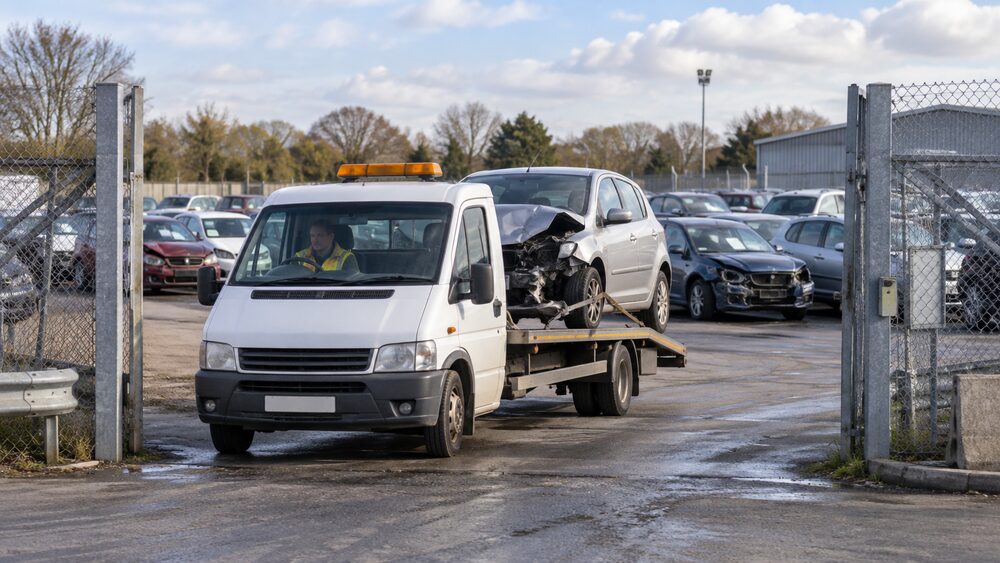
GAP insurance (guaranteed asset protection) is designed to cover the difference between the price you paid for a vehicle and the amount your car insurer is willing to pay if it is stolen or written off soon after buying it1. A car insurer settling a total loss normally pays the vehicle's market value at the time of the loss, not what you paid for it or what you still owe on finance. Because cars lose value quickly, especially in the first years, that settlement can fall thousands of pounds short of the invoice price or the outstanding finance balance.
That shortfall is what GAP cover addresses. It sits on top of your main car insurance policy and pays out only when that policy has already settled a total loss. It is usually sold as an add-on to car insurance but can be bought as a standalone policy2. The market has been through a turbulent period: in early 2024, sales were suspended by 80% of providers after the Financial Conduct Authority (FCA) raised concerns about whether customers were getting fair value, with data showing only 6% of the amount customers pay in premiums being given out in claims in 20222.
What GAP insurance covers when a car is written off or stolen
A new car can lose a substantial part of its value in the first year or two of ownership. If it is then stolen or written off, the car insurer pays what the car was worth immediately before the loss, and the owner is left to make up the rest, whether that means replacing the car or clearing finance that is no longer matched by an asset. GAP insurance is meant to cover exactly that difference1.
The cover matters most in two situations. The first is where you paid a set price for the car and want to recover that amount: a policy paying the difference between the insurer's settlement and the original invoice price is often called return to invoice cover. The second is where the car is on finance: if the settlement from the car insurer is less than the amount still owed, finance GAP cover pays the difference so the debt can be cleared. On a personal contract purchase (PCP), you agree a guaranteed future value with the dealer at the start, based on the car type and how many miles you think you will drive, and the way PCP payments are structured means the amount owed can sit above the car's market value for a period4.
GAP insurance is not the only thing to check when a car is written off. Some car insurance policies include extras that help in the same situation: around 15% of policies would provide a temporary replacement vehicle as standard if your car was stolen or written off5. And if you want to keep the vehicle after a write-off, for category N or S vehicles the insurance company will give you an insurance payout and sell the vehicle back to you6. The dedicated guide to what happens if your car is written off covers the write-off process in full.
When a GAP policy pays out: the car must be a total loss
A GAP policy does not pay out for minor damage, repairs or partial losses. It is triggered only when the main car insurer declares the vehicle a total loss, which happens when it is written off or stolen and not recovered. The GAP claim then sits on top of the main insurer's settlement: the car insurer pays the vehicle's current value, and the GAP insurer pays the difference set by the policy terms1.
That means the process runs in a fixed order, and the GAP claim cannot start until the main insurer has settled:
There are administrative steps alongside the claim. DVLA requires notification that a vehicle has been written off by an insurance company, stolen, sold or transferred, or scrapped7. When a vehicle is written off, the vehicle log book (V5C) goes to the insurance company, while the yellow "sell, transfer or part-exchange your vehicle to the motor trade" section is kept by the owner6. Insurance companies may also want a damage assessor to inspect the vehicle, or require estimates, before any repairs are carried out8.
One further point affects the timing of a GAP claim. In a Financial Ombudsman case, the ombudsman noted that the GAP insurer would not have had to pay a claim over the policy's deferred period, a window at the start of cover during which claims are not payable9. Deferred periods vary between policies, so the terms are worth reading before you rely on the cover.
Who can get it: comprehensive car insurance only
GAP insurance works by topping up a main insurer's payout, so it depends on there being a comprehensive policy in place. The three levels of motor insurance in the UK sit one inside the other. Third party only cover makes sure that compensation is available for injury to other people, including passengers, or damage to other people's property resulting from an accident caused by the driver10. Third party, fire and theft provides the same cover as third party only and also insures the vehicle against damage by fire or theft3. Comprehensive cover provides the same cover as third party, fire and theft, and also covers damage to the vehicle in an accident3.
Because third party and third party, fire and theft policies do not pay you the value of your own car after an accident, there is normally no settlement for GAP to top up after a collision write-off. Drivers with a basic third-party or third-party, fire and theft policy are also unlikely to be offered any protection for weather damage11, which removes another route to a total loss settlement. The comparison between third party and comprehensive car insurance explains the trade-offs between the levels.
Comprehensive policies vary in what they include beyond the vehicle itself. Cover usually includes damage to upholstery and the vehicle's entertainment system, but the insurer may not pay out for personal possessions left in the vehicle11. GAP insurance does not extend these boundaries: it only tops up the vehicle settlement. Very few companies will sell third party only cover on its own in any case12, so most drivers comparing GAP quotes will already be looking at comprehensive policies.
Dealer or standalone: where GAP cover is sold
GAP insurance reaches customers through two main routes: at the dealership when the car is bought, and separately, as an add-on to car insurance or as a standalone policy bought direct2. The dealership route is the one most buyers encounter, because the moment of buying a car is when the risk of a shortfall feels most real and the finance agreement is being signed at the same time.
The two routes can differ sharply in price. A 2019 investigation into insurance extras sold with new cars found a Ford Fiesta quoted at £499 for GAP insurance at a Ford dealership, against £132 for cover bought direct from an insurer13. The same investigation found insurance premium tax of 16.67% applied to insurance bought at a dealership13. The figures are from 2019 and prices will have moved since, but the pattern, that the dealership route can cost several times the direct route for comparable cover, is the reason consumer guidance consistently suggests shopping around before signing anything at the point of sale.
The rules recognise the pressure of the point of sale. In January 2015 the FCA changed the rules so dealers must explain GAP insurance at the point of sale and leave two days after selling a car before approaching the customer about it14. That two-day gap exists precisely so the decision is not made in the same breath as the car purchase.
Where the car is on finance, it helps to know who is who. With hire purchase (HP) or conditional sale, the finance is normally from a company separate to the garage or dealership4, so the GAP policy, the finance agreement and the car sale can involve three different firms. The guide to car finance debt explains how these agreements work when payments become difficult.
What GAP insurance costs and how you pay
The price of GAP insurance depends on the car, the level of cover and, as the Ford Fiesta example shows, the channel it is bought through13. Policies are typically sold either as a one-off premium covering a set number of years, or added to the car insurance premium and paid annually or monthly. Where it is paid monthly, the same considerations apply as for any insurance instalment plan: the guide to paying monthly for insurance explains how instalments usually work and what they cost overall.
The cost also has to be weighed against the likelihood of a claim. GAP insurance pays out only in a total loss, which for most drivers is a rare event, and the claims ratio data in the later sections of this page shows how little of the premium pool has historically come back to customers2. That is not in itself a reason not to buy: all insurance involves paying for a low-probability, high-cost event. But it is the reason the FCA scrutinised whether the prices charged, particularly where high commission was involved, represented fair value2.
Insurance premium tax is part of the price. The 2019 investigation found the 16.67% rate applied to dealership-sold insurance13, and the guide to how premiums are calculated explains how tax and other elements feed into what you pay.
When to buy: at the point of sale or later
GAP insurance is most often offered at the moment of buying the car, and that is when the cover is most relevant, because the gap between the price paid and the car's market value is at its widest in the early period of ownership1. The cover is designed for a car that is stolen or written off "soon after buying it"1, so a policy taken out at the point of sale runs from the moment the exposure begins.
But the dealership desk is not the only moment. GAP insurance can be bought as a standalone policy at any point2, and insurers set their own rules on how old the car can be and how many miles it can have done when the policy starts. If you are buying later, the cover still only responds to a total loss, and the deferred period at the start of some policies means a claim in the first weeks may not be payable9.
One rule of timing is fixed: the cover must be in place before the loss. GAP insurance cannot be bought after a car has been damaged, stolen or written off, any more than any insurance can respond to an event that has already happened. If you are buying a used car, the checks you make before purchase, which Citizens Advice sets out for used car buyers15, are separate from GAP cover, which protects value rather than quality.
Selling or changing your car: cancelling cover and refunds
If you sell the car, part-exchange it or otherwise no longer need the cover, GAP policies can usually be cancelled, but the refund may be smaller than expected. A Financial Ombudsman case is instructive. Theo took out 24 months' GAP insurance cover on his car, then cancelled partway through. The insurer said his premium was based on the whole 3 years, and he received less than a third of his premiums back. The ombudsman looked at the policy terms, which said Theo was entitled to a proportional refund, and told the insurer to calculate it based on the 24 months of cover9.
The lesson is to check the refund basis before buying, not at the point of cancelling. A "proportional" refund can be worked out in more than one way, and the gap between what a customer expects and what the insurer pays is exactly the kind of dispute the ombudsman ends up resolving. The guides to cancelling insurance and insurance renewals cover cooling-off periods, mid-term cancellation and what firms may deduct.
Selling or writing off the car also triggers obligations outside the insurance. You must tell DVLA that your vehicle has been sold or transferred, taken off the road, written off by your insurance company, scrapped at a vehicle scrapyard, or stolen7. And if you are selling privately, the seller can't legally transfer any car tax that they've already paid over to the buyer, as the rules around this changed recently15, so tax refunds and retaxing are part of the same process, handled through the vehicle tax refund system7.
Why many insurers paused GAP sales after FCA value concerns
In early 2024, GAP insurance sales were suspended by 80% of providers after the FCA set out concerns about whether the product offered fair value2. The regulator's findings were stark: firms in the distribution chain, such as motor dealerships, were being paid up to 70% of the value of insurance premiums, and only 6% of the amount customers pay in premiums was given out in claims2. Existing policies remained valid during the pause, though finding a new policy became harder2.
The pause did not come out of nowhere. The FCA had investigated how insurance is sold, including GAP and cosmetic scratch and dent insurance, as far back as April 201913, and it warned insurers and dealerships that setting commission at a level that "bears no reasonable relationship to the benefits or services provided" by firms in the distribution chain can indicate that the product value is causing harm to the customer13. Mercedes-Benz Insurance Services UK stopped selling Mercedes-Benz GAP Insurance with effect from 1 November 202316, and several GAP insurers suspended sales in early 2024 following the FCA's fair value concerns under the Consumer Duty17.
For a consumer, the practical meaning is this: if you held a policy when the pause began, it remained valid and a claim on it was unaffected2. If you were looking for a new policy, the choice was narrower, and the episode is a reason to check what proportion of the premium goes on commission and claims before buying. The rules on add-on insurance sold by opt-out and insurance pricing rules explain the wider protections around how insurance is sold.
Only 6% of premiums paid out in claims
The headline figure from the FCA's work is that only 6% of the amount customers pay in premiums is given out in claims, based on data covering January to December 20222. The regulator's own findings went further, with as little as 4% of premiums paid out in claims for some products in the market2. More than 2 million GAP policies were in force in 20222, so the low claims ratio reflects a large number of policies against a small number of total losses, not a small market.
Comparison with other products puts the figure in context. Evidence to a parliamentary committee in 2013 on payment protection insurance (PPI) stated that only 11 to 28 per cent of premiums were ever paid back in claims to policyholders, depending on the type of PPI, compared with 82 per cent for car insurance19. GAP insurance's 6% sits well below even the PPI range, which is what prompted the FCA's intervention.
A low claims ratio is not automatically evidence of a bad product: insurance for rare, severe events will always pay out less than it collects in most years. But it is the number to weigh when deciding whether a premium represents value, alongside the commission the seller takes2 and the price difference between channels13. The guide to how insurance works explains premiums, excesses and exclusions in general terms.
Complaints and where to get help
Complaints about GAP insurance have been few relative to the number of policies. The Financial Ombudsman Service had received fewer than 30 complaints about GAP insurance across the first and second quarters of the financial year covered by its reporting in early 20242. More recently, its quarterly complaints data recorded 32 complaints opened about GAP (Guaranteed Asset Protection Insurance) in the first quarter of 2026/2720. For comparison, in the financial year 2011/2012, PPI accounted for 28% of what consumers contacted the ombudsman helpline about most, with car and motorbike insurance at 8% and general insurance at 6%21.
If something goes wrong with a GAP policy, a claim, a refund or the way it was sold, the first step is to complain to the insurer or dealer directly. The guide to complaining about an insurer and the Financial Ombudsman Service sets out the process and the timeframes firms must meet. The ombudsman can look at cancellation refunds, as the Theo case shows9, and at sales practices.
There is also protection if the insurer itself fails. The Financial Services Compensation Scheme (FSCS) pays either 90% or 100% of the claim value if policyholders have valid claims under an insurance policy with a failed insurer22. For compulsory insurance, such as the motor insurance that GAP sits alongside, the protection is 100% of the claim; for other types of insurance it is 90%23. The guide to what happens if your insurer goes bust explains the scheme in full.
If a claim is refused, the reasons matter: why insurance claims are rejected and giving wrong information to an insurer explain the common grounds, and free, impartial help is available from MoneyHelper and from the ombudsman itself.
Sources23 cited
- Gap insurance explained Which?, 2026-01-22
- Gap insurance sales suspended: what it means for you Which?, 2024-02-16
- Motor insurance explained nidirect, 2026-05-27
- Car finance debt StepChange, 2026-09-25
- Legal expenses insurance reviews Which?, 2026-01-22
- Insurance write-offs GOV.UK, 2026-09-28
- Vehicle tax refund GOV.UK, 2026-09-25
- Accident checklist British Insurance Brokers' Association, 2026-09-26
- Customer cancels GAP policy, receives less than expected Financial Ombudsman Service, 2026-09-27
- Vehicle insurance GOV.UK, 2026-09-26
- Does your insurance cover damage caused by bad weather? Which?, 2025-12-08
- Motor insurance guides British Insurance Brokers' Association, 2023-02-13
- Revealed: the hidden cost of insurance extras when buying a new car Which?, 2019-09-21
- FCA rules on dealer GAP insurance sales Saga, 2015-01
- Buying a used car Citizens Advice, 2026-09-25
- Mercedes-Benz GAP Insurance removed from sale Mercedes-Benz, 2023-11-01
- GAP insurers pause sales after FCA fair value concerns Insurance Business UK, 2024-01
- Written evidence on regulation of the consumer insurance market Which?, 2023
- Written evidence on mis-selling Parliament.uk, 2013-04-10
- Quarterly complaints data Q1 2026/27 Financial Ombudsman Service, 2026
- Annual report 2012 Financial Ombudsman Service, 2012
- What we cover: insurance FSCS, 2026-09-25
- Are my savings safe? FSCS protection Which?, 2025-12-01
 MoneyHelperFree, impartial money and pensions guidance, set up by government
 Financial Ombudsman ServiceFree, independent help when a complaint about a firm is not put right
 FSCSProtects your money if a bank, insurer or investment firm fails
 Citizens AdviceFree advice on money, consumer and legal problems in England and Wales
 GOV.UKOfficial information on tax, benefits and government services