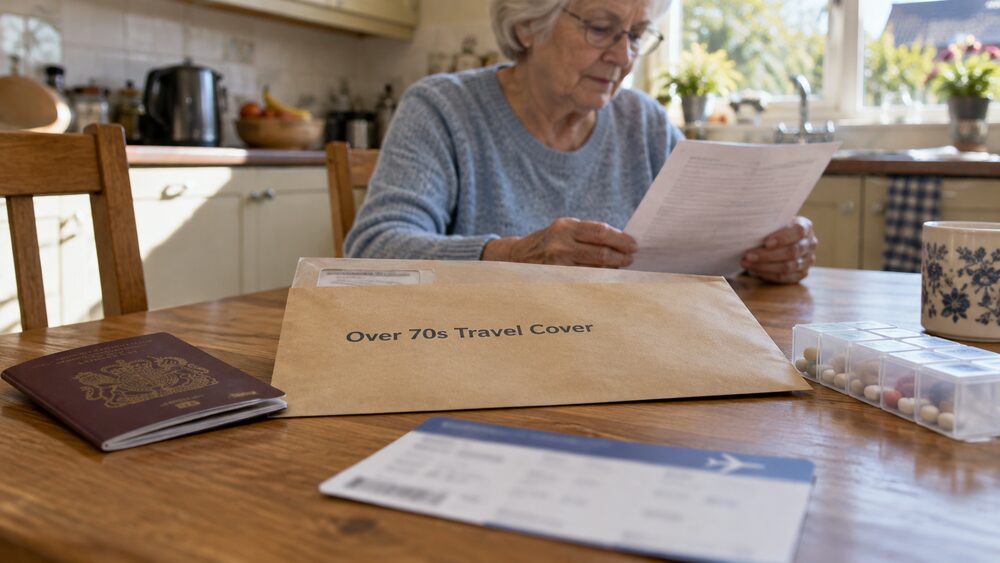
Travel insurance can become more expensive as you get older, especially if you have a medical condition or disability, but age alone does not close the market1. There is no rule that forces insurers to sell to every age, and many mainstream policies cap how old you can be when you buy, particularly annual multi-trip cover. Even so, cover exists at almost any age: specialist insurers, cruise specialists and brokers who work in this market routinely insure travellers well into their 80s and beyond.
Since April 2021 there has also been a formal safety net. If a medical condition adds £100 or more to the premium you are quoted, the insurer must signpost you to a directory of specialist firms2. There are two accredited directories: one run by the Money and Pensions Service through MoneyHelper, and one run by BIBA, the British Insurance Brokers' Association3. Between them, they exist precisely so that an older traveller or someone with health conditions is never simply told "no" with nowhere to go.
How travel insurance works for older travellers
A travel insurance policy for an older traveller works the same way as any other: it pays out if you have to cancel, if you fall ill abroad, or if your belongings are lost or stolen. What changes with age is the price, the choice and the questions. Travel insurance can become more expensive as you get older, especially if you have a medical condition or disability1. The choice of annual policies is disproportionately reduced for travellers over 70, which pushes many older travellers towards single-trip policies even when they travel several times a year8.
The practical approach that consumer guidance recommends is the same at any age, but it matters more when the stakes are higher. Use a specialist medical travel insurer if you have ongoing health issues, call the insurer before buying if anything about your situation is unusual, check the policy exclusions, and compare policies carefully rather than taking the first quote9. A broker can do much of this legwork: brokers are experts who help you decide what type of insurance and level of cover you need and recommend a suitable policy at a price you can afford, and you can search for a regulated, authorised broker through BIBA's free Find Insurance service10.
The rest of this page walks through why the price rises, what must be declared, the choice between single-trip and annual cover, the traps in bank account travel insurance, where to find cover at 80 and over, and what happens when claims go wrong.
Why age and health change the price and the cover
Insurers price on risk, and both age and health feed directly into that calculation. Travel insurance can become more expensive as you get older, especially with a medical condition or disability1. The same pattern appears across insurance generally: car insurance premiums usually start to increase once a driver is 70 and go up significantly after the age of 801, and in the car market premiums for drivers aged 85 and over are 78% higher than for those aged 75 to 8411. Travel insurers work the same way, because the cost of medical treatment abroad, and the likelihood of needing it, both rise with age.
The rules allow this. Age-based pricing is not banned, and neither is pricing that reflects a declared medical condition. What the rules do require is that you are not left stranded: since April 2021, consumers who are offered a travel insurance policy with a £100 or more additional premium due to a medical condition must be signposted to a directory of specialist providers2. That directory route is the main protection an older traveller has against simply being priced out.
The effect on choice is real, though. The exception to the wide choice most travellers enjoy is if you are over 70, where the choice of annual policies is disproportionately reduced8. Over half of policies that offer both single-trip and annual cover have higher maximum age limits for single-trip policies than for annual ones5, which is why many older travellers end up buying single-trip cover even for a second or third holiday in a year. The dedicated pages on how insurance premiums are worked out and insurance pricing rules explain the mechanics, and the ABI Agreement on Age and Insurance sets out what the industry has committed to for older customers.
Declaring pre-existing medical conditions, such as heart conditions
Any health conditions you have when you take out travel insurance, including a terminal illness, are known as pre-existing medical conditions12. The rule on them is simple and unforgiving: insurers usually will not cover pre-existing medical conditions unless they have been declared and added to the policy13. Failure to declare can void your policy, or result in your claim not being settled, or not being settled in full14. If you suffer from a permanent or recurring illness, you must tell your insurer15.
The declaration is not a one-off event. Once you buy travel insurance, you must tell the insurer if there are any changes in your health or condition16. All medical conditions must be declared, including anything that develops between taking out the policy and the day you travel17. Diagnosed conditions of any kind count, including conditions relating to mental health18. If you do not let the insurer know and then need to make a claim, your policy may be invalid and the company may not pay16.
There is a rule that works in the consumer's favour here too. Under the FCA's rulebook, when a firm provides a quotation for a travel insurance policy or information on eligibility to claim benefits, it should disclose whether any medical condition exclusion can be removed from the policy, in whole or in part, and if so, how, and the terms on which it can be removed19. In other words, an insurer quoting you a policy that excludes your heart condition has to tell you if paying more, or meeting certain conditions, would lift that exclusion.
Despite the stakes, non-declaration is common: a third of travellers with pre-existing medical conditions admitted they would not declare all of them when buying travel insurance3. The consequences fall hardest on those with serious illnesses. If you have or have had cancer, it can be more difficult to get travel insurance, but some companies specialise in providing cover for people with cancer20. Specialist insurers also exist for pre-existing mental health conditions21. The dedicated guide to travel insurance with pre-existing medical conditions goes further, and giving wrong information to an insurer explains the legal consequences of getting it wrong.
Single-trip or annual cover: how each one works
A single-trip policy covers one trip, from the day you leave home to the day you return. An annual multi-trip policy is based on a yearly fee regardless of the number of trips you make15. For a traveller who goes abroad two or three times a year, an annual policy is often the natural first thought, but for older travellers two things get in the way: the higher age limits on annual cover, and the length of trip each policy allows.
On trip length, the differences are stark. One annual policy examined covered trips of up to 60 days for policyholders aged 65 or under, but just 21 days for older travellers4. Many insurers put a time limit on how long they will cover you per trip, usually 31 days22. A long cruise, an extended winter abroad or a long visit to family can fall outside these limits even when the policy itself is valid.
On age limits, over half of policies offering both single-trip and annual cover have higher maximum age limits for single-trip5, and the choice of annual policies is disproportionately reduced for over-70s8. The practical result is that many travellers in their 70s and 80s buy single-trip policies for each holiday, comparing the total cost against the annual policies that will still accept them. Insurers such as ABTA Travel Insurance offer both single-trip and annual multi-trip cover23, and the choice between them is covered in full on single trip or annual travel insurance. If you are buying either type, when to buy travel cover matters: buying as soon as you book gives you cancellation cover from that moment.
Travel insurance through a packaged bank account: check the age limits
Many packaged bank accounts, accounts with a monthly fee that bundle insurance perks, include annual travel insurance. For an older traveller this cover needs careful checking before it is relied on. These policies often come with strict rules, such as age limits, exclusions for pre-existing medical conditions or short maximum trip lengths, and winter sports, cruises and gadget cover are often missing6.
The age limits are not theoretical. One account, Citigold, offered free annual worldwide travel insurance covering travellers up until the age of 8024. In a documented case involving a Lloyds Gold account, the travel insurance would not have paid out because the customer was over 8025. A traveller who assumed the cover in their bank account was the same as a standalone policy could find, at the point of claiming, that it never applied to them at all.
The wider story of packaged accounts, including what to check before paying a monthly fee for insurance you may already have elsewhere, is covered on insurance in packaged bank accounts. If cover was sold to you that you could never have claimed on because of your age, that may be a mis-selling issue, and the complaints route in the final section of this page applies.
Travellers aged 80 or over: where to find cover
Past 80, the mainstream comparison sites thin out and the specialist market takes over. This does not mean cover stops being available. A specialist cruise insurance policy, for example, will generally be able to cater for increased age limits and people with medical conditions, subject to the normal medical screening26. Specialist insurers also serve people with cancer20 and people with pre-existing mental health conditions21.
The two accredited directories exist for exactly this situation. They help you track down specialist travel insurance companies covering customers with medical conditions3. The first is run by the Money and Pensions Service, a government body whose MoneyHelper website carries the directory; MaPS replaced the three previous providers of government-sponsored financial guidance, the Money Advice Service, the Pensions Advisory Service and Pension Wise27, and is sponsored by the Department for Work and Pensions28. The second is BIBA's Find Insurance service, which can be reached on 0370 950 1790 and matches you with a regulated broker with the expertise to track down cover suitable for your needs10.
Expect the medical screening to be more detailed at this age, and expect the premium to reflect it. The screening is also where the value of a broker shows: they will know which insurers take which conditions and at what ages, and can compare policies on your behalf rather than you repeating your health history to a dozen call centres. The choice between using a broker and going direct is set out on using a broker or buying direct and insurance broker or comparison website.
Destinations the FCDO advises against: where cover stops
The Foreign, Commonwealth and Development Office (FCDO) publishes travel advice for every country, and your travel insurance is tied to it. Going against government guidance could invalidate your travel insurance policy and leave you unprotected29. With the vast majority of travel insurance policies, travelling to a destination the FCDO advises is unsafe means invalidating the policy30. ABTA Travel Insurance, for example, covers destinations worldwide only providing there is no FCDO advice against all travel or all but essential travel23.
The FCDO advises against any travel to some countries outright, including Iran and Syria29. If you travel to a country despite FCDO advice against all but essential travel, your travel insurance is unlikely to be valid17. Some insurers make narrow exceptions: Aviva has said its policies may cover trips to areas the FCDO warns against, provided the trip is deemed essential, typically family emergencies or other urgent matters, with no cover for holidays or leisure travel29.
The rule cuts both ways, and this is where older travellers are sometimes caught out. If the FCDO changes its advice to recommend against all travel or all but essential travel to a country you are already in, your policy would generally cover the costs of cutting your trip short, including additional accommodation and travel expenses to get home safely29. Pandemic-related FCDO warnings are rarer territory: only 20% of policies cover FCDO warnings due to pandemics, and many policies exclude Covid8. ABTA's policies, for instance, will not cover cancellation due to government restrictions on travel imposed because of coronavirus or any future pandemic23. The full picture is on travel insurance and Foreign Office travel advice.
Delays, missed departures and cancelled trips
Delay and missed departure cover is one of the areas where older travellers, who are more likely to need medical treatment abroad, need to read the policy wording closely. The starting position is reasonable: you can claim on about 93% of policies if unexpected transport delays cause you to miss your flight8. A standard travel insurance policy will typically cover the costs of missed departure travelling from the UK on holiday, or the return to the UK at the end of a holiday26. You may also receive a lump sum if your departure is delayed or if you miss your flight for a valid reason15. Travel insurance can pay you money if your luggage is lost or stolen, or your trip is cancelled or delayed12.
The limits matter as much as the cover. If you change your mind about travelling or miss your flight, your insurance may not cover you: cover is usually provided only if a cancellation or missed flight is caused by a specific event31. Delays caused by not allowing adequate time to get to the airport are not covered17. So a missed connection on a delayed train is one thing; setting off too late to allow for the traffic is another.
If a trip is cancelled rather than delayed, there can be more than one route to compensation. Where a travel service was paid for on a credit card, you can make a Section 75 claim at any time if the travel service has not been provided with reasonable care and skill32. The guide to travel insurance cancellation cover explains when a policy pays out, and how to make a home or travel insurance claim sets out the process step by step.
Complaints and help: the Financial Ombudsman Service
Travel insurance is one of the more complained-about products at the Financial Ombudsman Service, the free, independent body that settles disputes between consumers and financial firms. In Q1 2026/27 the ombudsman opened 1,300 travel insurance complaints, up 30% (300 cases) year on year, and up slightly on the previous quarter's 1,2007. If you have a complaint about an insurance company or a claim, the ombudsman can help33.
When it investigates a complaint about travel insurance, the ombudsman checks what the policy says and what type of cover is offered, to decide whether you have been treated unfairly31. If it finds in your favour, it may tell the insurer to put things right, and may also tell it to pay you compensation for any distress or inconvenience34.
Age is specifically recognised in the ombudsman's guidance on mis-selling. Where a customer was not eligible for a policy, for example because of their age or residency, they would never have been able to claim under it, and in those cases the ombudsman would be likely to uphold the complaint35. Where the customer would have bought a different policy that would have covered their claim, the ombudsman would ask the insurer to pay the claim35. Firms giving advice about insurance are expected to ask about age, residency and health, and travel plans including where the customer is going and for how long36. The ombudsman can help with complaints about insurance for travel to another country, alongside bank accounts, cards and loans37.
The process is free to the consumer. You fill in the complaint form, the case is assigned to a case handler who investigates, and further information may be requested from you, the insurer and third parties10. Before going to the ombudsman you must first give the insurer the chance to settle the matter, and the pages on complaining about an insurer, why insurance claims are rejected and compensation for distress and inconvenience cover each stage in more detail.
Sources38 cited
- Shopping around for insurance Independent Age
- Signposting and access to insurance British Insurance Brokers' Association, 25 March 2026
- The 8 dos and don'ts of buying travel insurance with medical conditions Which?, 21 August 2024
- Why travel insurance goes wrong and what you can do about it Which?, 6 June 2025
- 6 questions to ask yourself before buying travel insurance Which?, 30 May 2025
- 7 costly travel insurance mistakes and how to avoid them Which?, 7 December 2025
- Quarterly complaints data Q1 2026/27 Financial Ombudsman Service, 2026
- 7 questions to ask yourself when buying travel insurance Which?, 18 June 2024
- Do you need to declare an undiagnosed condition for travel insurance? Which?, 17 July 2026
- When to use an insurance broker MoneyHelper, 25 September 2026
- Do older drivers really pay more for car insurance? Which?, 8 May 2025
- Travel insurance Marie Curie, 12 July 2022
- How to claim on your travel insurance Which?, 21 May 2026
- Travel insurance ABTA, 2026
- Travel insurance checklist British Insurance Brokers' Association, 10 November 2022
- Insurance Scope, 14 October 2025
- Travel insurance guides British Insurance Brokers' Association, 19 January 2026
- Travel insurance for people with mental health conditions British Insurance Brokers' Association, 26 September 2026
- ICOBS 6: Travel insurance Financial Conduct Authority, 2026
- Insurance and cancer Macmillan Cancer Support, 1 September 2023
- Specialist insurance providers for pre-existing mental health conditions Mental Health and Money Advice, 8 September 2025
- 7 common travel insurance mistakes to avoid when holidaying abroad Which?, 27 April 2024
- ABTA Travel Insurance ABTA, 2026
- Should you ever open a premium bank account? Which?, 26 April 2018
- I think Lloyds mis-sold a packaged bank account, can I claim the money back? Which?, 4 June 2025
- Cruise insurance British Insurance Brokers' Association, 28 October 2022
- Pension Wise celebrates decade of empowering pension choices Money and Pensions Service, 15 September 2025
- Getting information and help: pensions nidirect, 26 June 2026
- Will travel insurance cover a summer holiday to Cyprus or Dubai? Which?, 4 July 2025
- Will your travel insurance actually cover you this summer? Which?, 22 May 2026
- Problems with travel insurance Financial Ombudsman Service, 14 March 2025
- Consumer Rights Act: travel amendments Which?, 18 June 2025
- Complaints we can help with: insurance Financial Ombudsman Service, 26 September 2026
- Travel insurance policy complaints Financial Ombudsman Service, 26 September 2026
- Mis-sold travel insurance Financial Ombudsman Service, 26 September 2026
- Our complaints leaflet, easy read Financial Ombudsman Service, 26 September 2026
- Mis-sold travel insurance, business guidance Financial Ombudsman Service, 27 September 2026
- Black box insurance complaints Financial Ombudsman Service, 2022-05-25




 MoneyHelperFree, impartial money and pensions guidance, set up by government
 Financial Ombudsman ServiceFree, independent help when a complaint about a firm is not put right
 FSCSProtects your money if a bank, insurer or investment firm fails
 Citizens AdviceFree advice on money, consumer and legal problems in England and Wales
 GOV.UKOfficial information on tax, benefits and government services