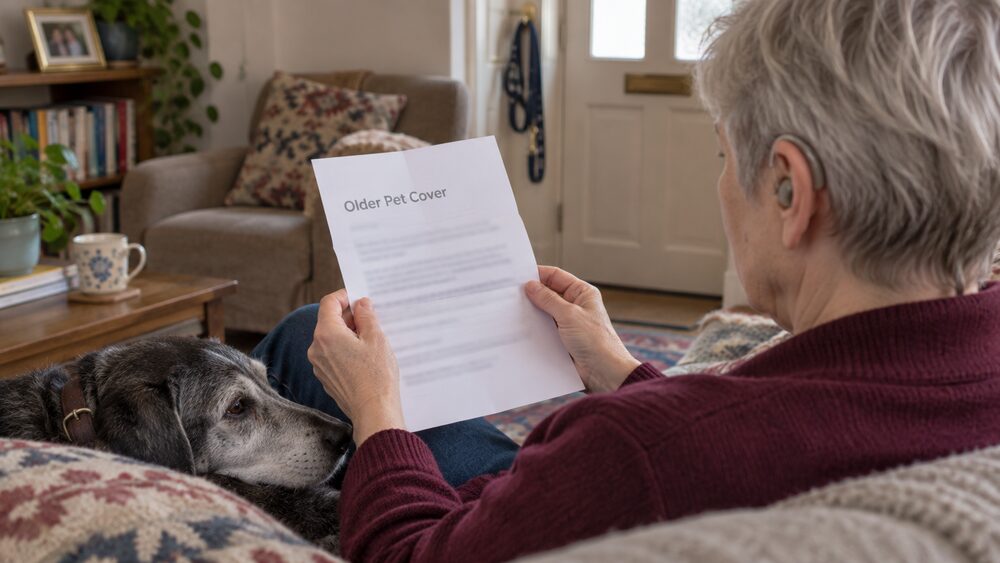
Yes, you can insure an older cat or dog, but the type of policy matters more than the pet's age. Insurers typically treat cats and dogs over the age of eight as "older pets"1. The key to keeping an older pet covered is a lifetime policy renewed without a break: John Lewis states that once your cat is insured on a Lifetime policy, cover can continue as they get older, provided you renew your policy with no break in cover2.
Yes, you can insure an older cat or dog, but the type of policy matters more than the pet's age. Insurers typically treat cats and dogs over the age of eight as "older pets"1. The key to keeping an older pet covered is a lifetime policy renewed without a break: John Lewis states that once your cat is insured on a Lifetime policy, cover can continue as they get older, provided you renew your policy with no break in cover2.
What it costs is the other half of the question. The UK average annual pet insurance premium was between £325 and £419 a year, based on quotes data published in March 20243. Against that, average claims ran at £691 for cats and £822 for dogs, according to Tesco Bank Pet Insurance claims data4. Whether cover is worth it for an older pet is a personal judgement, but those are the figures to weigh.
The main risk is not age itself but a gap in cover. Let a policy lapse, or switch to a new insurer later in the pet's life, and pre-existing conditions and age limits can bite. This page sets out how lifetime cover works for older pets, what it costs, the cover limits involved, and where to get help if something goes wrong.
Lifetime cover keeps an older pet insured as it ages
The reason lifetime cover matters for an older pet is that it is the type designed to keep paying as the animal ages. Lifetime policies pay out indefinitely for treatment over your pet's lifetime, subject to annual limits1. That is different from time-limited cover, which pays for a set period and then stops for that condition.
Annual cover under a lifetime policy has a maximum overall limit that includes all conditions your pet may experience, and that limit resets each year5. So the pot of cover is refreshed annually rather than being a single lifetime total that runs down. For an older pet with a condition that needs ongoing treatment, that reset is the feature that keeps the policy useful.
Providers structure this in different ways. Lloyds Pet Insurance offers lifetime insurance with benefits renewing each year, for both cats and dogs6. Agria's Lifetime cat products offer up to £20,000 each year, renewed in full every year8. Petplan provides a selection of lifetime policies with annual limits for vet fees, as well as time-limited cover, for dogs and cats5.
There is a hard edge to watch for. NFU Mutual states that all cover will stop after a pet's 15th birthday unless the policyholder has taken out the Permanent Health Cover extension9. That is a specific term of one provider's policy, not a market-wide rule, but it shows why the renewal terms and any age cut-offs in the policy wording matter as a pet gets older. The general principle is that continuous cover on a lifetime policy is what protects an older pet; a break is what puts it at risk.
What it costs: typically £325 to £419 a year on average
The headline cost figure is the UK average annual pet insurance premium of between £325 and £419 a year, from quotes data published in March 20243. That is an average across the market, not a quote for any particular pet, and an older animal will generally sit above a younger one because age is one of the factors insurers weigh.
It helps to set that premium against what claims actually cost. Tesco Bank Pet Insurance claims data puts the average claim at £691 for cats and £822 for dogs4. A single significant claim can therefore exceed a year's premium, which is the arithmetic behind insuring a pet at all. But averages hide a wide spread: a minor consultation costs far less, and a complex or long-running condition costs far more.
The premium is not the only cost. An excess is typically payable when a claim is made4. Excesses on pet policies are often charged per condition or per year rather than per claim, and some policies also apply a percentage co-payment on top, particularly for older pets. Those mechanics matter when comparing policies, because a low premium with a high excess can cost more in the year a claim happens.
Pre-existing conditions are the other cost driver that matters most for older pets. Only a small proportion of policies potentially cover them: 29% for dogs and 21% for cats, according to Which? analysis10. That means for an older pet with an existing condition, most policies will exclude it, and the ones that might cover it are a minority. This is the single strongest reason to keep an existing lifetime policy going rather than shopping around later in a pet's life.
Cover limits: from £1,000 to £25,000
Vet fee cover limits vary enormously between policies, and the limit is one of the most important numbers to compare. Pet insurance covers the cost of vet fees and certain medical expenses, and can range from £1,000 to as much as £25,0001. Where a policy sits in that range determines how much of a serious or long-running condition it will pay for.
The table below shows how some named providers set their limits. These are the providers' own stated figures for their own products, and they are not directly comparable because the products differ in type and scope.
| Provider | Product | Vet fee cover limit |
|---|---|---|
| Agria | Lifetime cat and dog policies | Up to £20,000 each year, renewed in full every year11 |
| Agria | Multi-pet insurance | Up to £20,000 towards vet fees every year12 |
| Agria | Lifetime Premium dog | Up to £20,000 in vet fee cover13 |
| Lloyds | Cat and dog insurance | Up to £12,000 each year towards vet bills6 |
| Post Office | Cat and dog policies | Up to £7,000 per policy year14 |
| NFU Mutual | Dog and Cat Insurance | £2,000 standard, with options to increase to £3,000 or £4,0009 |
Beyond the headline vet fee limit, policies bundle in other cover that matters for an older pet. Agria's cat insurance includes lost or stolen cover as standard16, and its missing pet cover runs to up to £1,000 or £1,500 depending on the product chosen, including £250 for reward17. Lloyds cat insurance offers up to £1,000 to help find your cat and up to £250 for a reward after they are found6. Post Office pet insurance covers theft or straying up to £2,000 on its Lifetime cover, and dogs must be microchipped14. NFU Mutual includes rescue costs up to £7509.
Third party liability is another element, and it matters more for dogs than cats. Agria's Lifetime dog insurance includes third party liability up to £2 million13, while its Lifetime Premium dog product states third party liability up to £3 million13. These limits are set by each provider for its own products.
Is pet insurance a legal requirement in the UK?
No. There is no legal requirement in the UK to have pet insurance, and no law states that you must have it1. That is worth stating plainly because it is the question many people arrive with, and the answer is that pet cover is entirely optional.
The contrast is with car insurance, where it is against the law to drive if you do not have valid insurance18. Home insurance is also not a legal requirement19. Pet insurance sits in the same voluntary category as home cover: you choose it to protect against a cost you would otherwise meet yourself, not because the law demands it.
If you rent, there is a further point. Tenants with pets do not need to pay for additional insurance or pay an extra amount of rent to cover the risk of pet damage20. So the decision to insure an older pet is purely about whether the protection is worth the premium to you, not about any legal or tenancy obligation.
Some pet cover is offered as an add-on rather than a stand-alone policy. NFU Mutual offers its Dog and Cat Insurance to home contents insurance policyholders21. That is one route to cover, and it means the pet policy is tied to holding a home contents policy with the same provider.
Do M&S or John Lewis offer pet insurance?
Both names offer pet insurance. M&S Pet Insurance is listed as a pet insurance product22, and John Lewis offers pet insurance for older cats2. These are familiar high street names rather than specialist pet insurers, and they sit alongside the specialists such as Agria, Petplan and NFU Mutual in the market.
For an older pet specifically, the John Lewis position is the relevant one: it states that you can get pet insurance for older cats, and that once your cat is insured on a Lifetime policy, cover can continue as they get older provided you renew with no break in cover2. That is the same lifetime principle that applies across the market.
The practical point for a reader is that the brand on the policy is less important than the terms inside it. Which? analyses and rates 38 elements of cat insurance policies and 42 elements of dog insurance policies, plus how much each costs5. That level of detail is what distinguishes policies from one another, not the name above the door.
Will pet insurance cover my dog for heatstroke?
No specific answer on heatstroke is available here. What the evidence shows is that cover depends on the individual policy wording, and that policies differ widely in what they include.
The evidence for that variation is in how policies are assessed. Which? analyses 38 elements of cat insurance policies and 42 elements of dog insurance policies when it rates them5. That many separate elements exist because policies are not uniform: what one covers, another may exclude or limit.
The general lesson for an older pet is that conditions common in older animals are exactly where exclusions tend to cluster. Pre-existing conditions are the clearest example: only 29% of dog policies and 21% of cat policies potentially cover them10. For any specific condition, including heatstroke, the policy wording and the exclusions section are where the answer lies.
Complaints and where to get help
If something goes wrong with a pet insurance claim or policy, there is a formal route. The Financial Ombudsman Service handles complaints about insurers, and its published data shows how often consumers succeed.
In Q1 2026/27 the ombudsman recorded 593 pet insurance complaints23. In the same quarter a year earlier, Q1 2025/26, it recorded 509 pet insurance complaints with a 49% uphold rate24. An uphold rate is the share of complaints decided in the consumer's favour, so it indicates how often escalation changes the outcome.
For context on how complaints are resolved more generally, in over half of complaints made to insurers, the insurer upholds the complaint25. That is a different measure from the ombudsman's uphold rate, and it reflects complaints resolved by the insurer directly rather than escalated.
If you need to complain, the process is to raise it with the insurer first and then escalate to the ombudsman if you are not satisfied. For free, impartial help with money decisions more broadly, MoneyHelper is the government-backed service. If a complaint is about a different kind of insurance, the same ombudsman route applies, and there is more detail on complaining about an insurer and the Financial Ombudsman Service.
Sources25 cited
- Pet insurance explained Which?, 2025-12-04
- Pet insurance for older cats John Lewis Finance, 2026-09-26
- Ways to save money on pet insurance Which?, 2024-03
- Do you need pet insurance for puppies and kittens? Which?, 2024-05-19
- Petplan pet insurance review Which?, 2025-12-04
- Cat insurance Lloyds Bank, 2026-09-27
- Dog insurance Lloyds Bank, 2026-09-27
- Agria cat insurance Agria Pet Insurance, 2026-09-26
- Dog and cat insurance NFU Mutual, 2026-09-26
- Six traps to avoid when taking out pet insurance Which?, 2024-01-31
- Lifetime pet insurance Agria Pet Insurance, 2026-09-26
- Multi-pet insurance Agria Pet Insurance, 2026-09-26
- Lifetime Plus dog insurance Agria Pet Insurance, 2026-09-26
- Pet insurance Post Office, 2026
- Cat insurance Post Office, 2026
- Cat insurance Agria Pet Insurance, 2026-09-26
- How to claim Agria Pet Insurance, 2026-09-26
- Bankruptcy and insurance StepChange, 2026-09-25
- Santander home insurance review Which?, 2026-09-17
- Rent arrears Business Debtline, 2026-09-26
- Homeworker insurance NFU Mutual, 2026-09-26
- Pet insurance M&S Bank, 2026
- Quarterly complaints data Q1 2026/27 Financial Ombudsman Service, 2026
- Quarterly complaints data Q1 2025/26 Financial Ombudsman Service, 2025
- Will your travel insurance actually cover you this summer? Which?, 2026-05-22





 MoneyHelperFree, impartial money and pensions guidance, set up by government
 Financial Ombudsman ServiceFree, independent help when a complaint about a firm is not put right
 FSCSProtects your money if a bank, insurer or investment firm fails
 Citizens AdviceFree advice on money, consumer and legal problems in England and Wales
 GOV.UKOfficial information on tax, benefits and government services