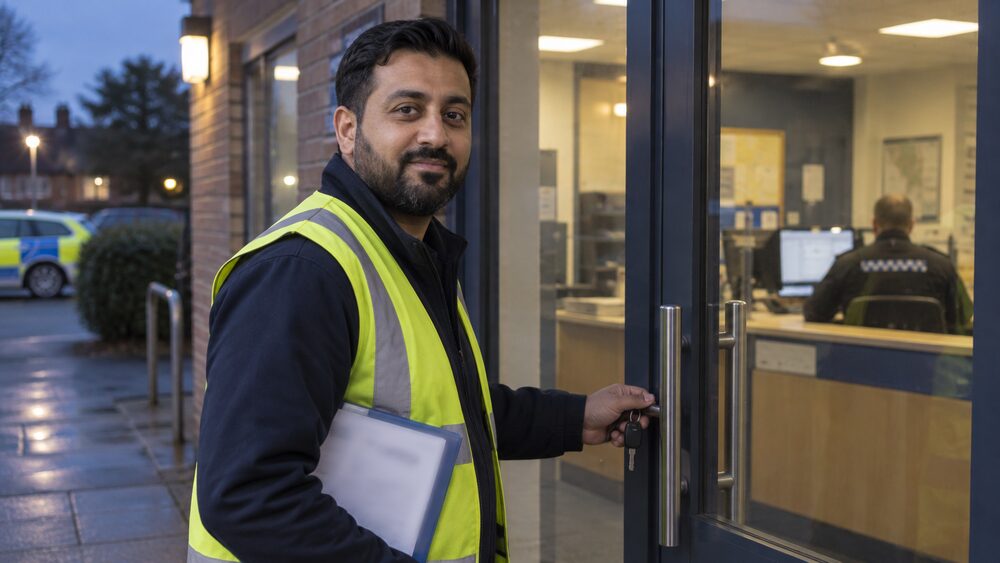
If you did not give your details at the scene of a crash, you must report the accident to the police as soon as possible and within 24 hours1. That is the rule that catches most people out: the 24-hour clock is not a general deadline for every collision, it is the deadline that applies when details were not exchanged.
If you did not give your details at the scene of a crash, you must report the accident to the police as soon as possible and within 24 hours1. That is the rule that catches most people out: the 24-hour clock is not a general deadline for every collision, it is the deadline that applies when details were not exchanged.
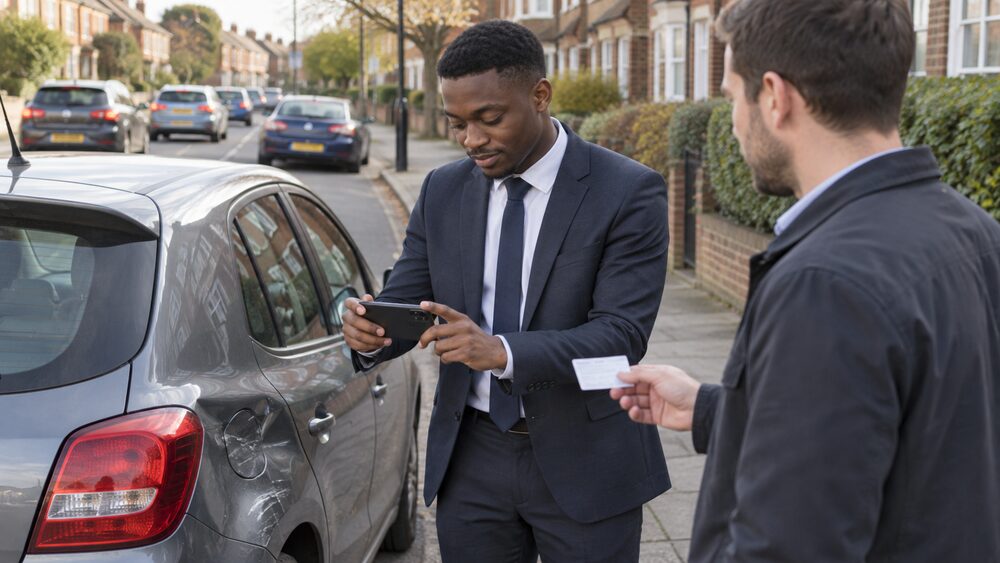
If you did stop and swap names, addresses, registration numbers and insurance details with anyone who had good reason to need them, the police reporting duty does not apply to you2. What does still apply is a separate duty to tell your own insurer, even if you are not making a claim1.
The two duties are often confused. Reporting to the police is about the collision itself and any offence committed. Telling your insurer is a condition of your policy, and it applies whether or not you ever ask them to pay anything2.
Report within 24 hours if you did not give your details at the scene
The 24-hour rule is conditional. It bites when you leave the scene without giving your details to the people entitled to them. Independent guidance for the rest of the UK says the same thing in substance: you must report the accident at a police station or to a police officer as soon as you can, and in any case within 24 hours2.
There is a second, longer deadline that sits behind the first. If you did not produce your insurance certificate at the scene, you must deliver it within seven days of the accident to a police station nominated by the police2. That is a separate requirement from the 24-hour report, and missing it is its own problem.
What counts as giving your details is specific. You need to provide your vehicle registration number, your name, your address, and the name and address of the vehicle owner if that is someone else2. A failure to provide your insurance details without a reasonable excuse is an offence2.
The rules are the same across England, Scotland, Wales and Northern Ireland, because the underlying offences come from the same road traffic framework. Northern Ireland publishes its own consumer guidance, which is why the wording differs slightly between sources, but the substance does not1.
When the police must be told about an accident
Beyond the missing-details rule, there are situations where the police need to know regardless. If anyone was injured, report it to the police within 24 hours4. Insurers' own claims guidance repeats this: report to the police within 24 hours if anyone was injured or you have not exchanged details at the scene4.
If someone else's property has been damaged, the accident must be reported to the police when they do not attend the scene3. That covers the parked car you clipped, the garden wall, the shop front.
Theft claims normally need a crime reference number, and insurers often require a written police report6.
Where there is danger or an emergency, dial 999 and ask for the police7. That is the general emergency route, and it applies to a collision as much as to anything else.
Telling your insurer: a separate step from the police report
You must tell your insurer about an accident even if you do not intend to make a claim1. This is a condition of the policy, not a courtesy. Independent guidance is blunt about it: "Yes, if you've been in an accident, you do have to tell your insurer"2.
The timing is looser than the police deadline but still real. It will be a condition of your insurance policy that you report the accident to your insurance company within a reasonable time, and what counts as reasonable differs between policies2. There is no single number to rely on, so the practical answer is to tell them promptly.
Some policies do set hard deadlines for particular events. Mobile phone insurance commonly requires you to report a phone as lost or stolen within 24 hours of discovering the incident, and some insurers allow as little as 12 hours8. Travel policies often require theft to be reported to the local police within 24 hours, with a written report to follow10. Winter sports cover can require lost or stolen ski equipment to be reported to the police within 24 hours11. These are policy terms, not the road traffic rule, but they show how routinely insurers use a 24-hour window.
If you have a black box or telematics policy, be aware that your data may be shared with third parties who work with the insurer, such as claims professionals, and may be handed over to the police with a court order, with your permission, or if you are suspected of fraud12.
Claiming or paying yourself: the no-claims trade-off
Reporting an accident and claiming on it are two different decisions. You do not have to submit a claim to your insurer if you pay for repairs yourself or recover the cost from the other driver, and doing so is one way to try to preserve your no claims discount2.
The Financial Ombudsman Service has set out what should happen when a customer reports an accident but pays the other person themselves instead of claiming. In those cases, "we'd expect the claim to be recorded as 'notification only', and there shouldn't be any reduction of their no-claims bonus"13. Its consumer guidance says the same: the claim should be recorded as "notification only", and there should be no reduction of your no-claims bonus14.
That protection has limits. The fact an incident has happened, however minor, signals to an insurer that you are statistically more likely to make additional claims in future, and that can affect what you pay14. The report will normally stay on your insurer's record and will also be recorded on the shared industry central database14. So notification-only protects the bonus, not necessarily the premium.
There is also the question of fault. A "fault" claim is recorded when an accident is either the driver's fault, or not the driver's fault but the cost cannot be claimed from another party14. In a non-fault accident, your insurer should only treat it as a claim if they receive a claim from the other driver or a third party14.
| Situation | Police report needed? | Tell your insurer? |
|---|---|---|
| Details exchanged at the scene, no injuries | No2 | Yes, even if not claiming1 |
| Details not exchanged | Yes, within 24 hours1 | Yes1 |
| Anyone injured | Yes, within 24 hours4 | Yes1 |
| Someone else's property damaged | Yes, if police do not attend3 | Yes1 |
| Vehicle stolen | Yes, immediately15 | Yes, and tell your broker15 |
What happens if you report late, or not at all
The consequences run on two tracks. The criminal track is the sharper one: failure to stop and failure to report are offences2. The insurance track is slower but can be more expensive over time, because a failure to report can give your insurance company the right to refuse to cover you in the future2.
That does not mean every late report ends in a refused claim. The Financial Ombudsman Service decides these cases on their facts, and it publishes its approach to fault claims and no-claims bonuses so both consumers and insurers can see how it reasons13. If you reported late because you were injured, or because you only discovered the damage afterwards, that is the kind of circumstance an insurer or the ombudsman will weigh.
There is a wider point about claims generally. Car insurance claims are accepted in the great majority of cases, with 99% of claims accepted according to independent reporting16. Refusals tend to cluster around specific causes: non-disclosure, excluded events, or a failure to meet a condition such as reporting. If a claim is refused, there is a route to challenge it.
If the other driver does not stop, or you think they were uninsured
A driver who leaves the scene without stopping has committed an offence2. Note the registration number if you can, along with the time, place, vehicle description and any witness details, and report it to the police.
At the scene, do not admit liability. Take the name and address of the other driver, their insurance details and witness details, and call the police if anyone is injured3. If you believe the other driver was uninsured, drunk or otherwise committing an offence, that is a matter to report to the police as well.
If the driver is never traced, or turns out to have no insurance, the claim does not necessarily die. The Motor Insurers' Bureau exists to deal with claims involving uninsured and untraced drivers, and it is worth knowing about before you assume you are on your own.
Someone who holds you responsible for an accident has the right to request your insurance details, and that request can be made later rather than at the time of the accident2. So exchanging details at the roadside is not the only moment it can happen.
Where to get help with a claim or a complaint
Start with your insurer. Most companies have a 24-hour helpline you can call to start a claim18. If the claim goes wrong, appeal to your insurer first: explain clearly what went wrong from your perspective and how you would like it resolved19. Put it in writing, head it "Complaint", include dates and the names of people you spoke to, and say what outcome you want19.
Insurers have eight weeks to reply to a complaint before you can take it further20. If you are still unhappy, the Financial Ombudsman Service can look at it. Its published complaints data shows how many cases it opens by product, which gives a sense of how often these disputes reach it: 25 motor insurance complaints were opened in Q1 2026/27, alongside 224 for roadside assistance insurance21.
Free, impartial help is available. MoneyHelper offers guidance on insurance and on complaining. The Financial Ombudsman Service is free to consumers. If an insurer has failed and cannot pay, the Financial Complaints Scheme and the Financial Services Compensation Scheme are the backstops, and there are limits to both.
Sources21 cited
- Motor insurance explained nidirect, 2026-05-27
- I've been in a car accident: do I have to claim on my insurance? Which?, 2026-03-31
- Accident checklist British Insurance Brokers' Association, 2026-09-26
- Motor insurance claims guide NFU Mutual, 2026-09-26
- Car insurance FAQs John Lewis Finance, 2026-09-25
- Travel insurance guides British Insurance Brokers' Association, 2026-01-19
- Report tax fraud GOV.UK, 2026-09-25
- Mobile phone insurance: how to get the best cover Which?, 2025-08-05
- Gadget insurance: how to get the best cover Which?, 2025-08-05
- How to claim on your travel insurance Which?, 2026-05-21
- Chase Protect travel insurance terms and conditions Chase, 2026
- How black box car insurance works Which?, 2026-01-22
- Fault claims and no-claims bonuses: for businesses Financial Ombudsman Service, 2026-09-16
- Fault claims and no-claims bonuses: for consumers Financial Ombudsman Service, 2026-07-10
- Vehicle theft British Insurance Brokers' Association, 2026-09-26
- Will your travel insurance actually cover you this summer? Which?, 2026-05-22
- Have my penalty points pushed up my car insurance premiums? Which?, 2025-12-29
- Flooding Shelter Cymru, 2026-08-17
- How to complain about your insurance company Which?, 2025-09-10
- Underinsurance complaints Financial Ombudsman Service, 2026-09-26
- Quarterly complaints data Q1 2026/27 Financial Ombudsman Service, 2026


 MoneyHelperFree, impartial money and pensions guidance, set up by government
 Financial Ombudsman ServiceFree, independent help when a complaint about a firm is not put right
 FSCSProtects your money if a bank, insurer or investment firm fails
 Citizens AdviceFree advice on money, consumer and legal problems in England and Wales
 GOV.UKOfficial information on tax, benefits and government services