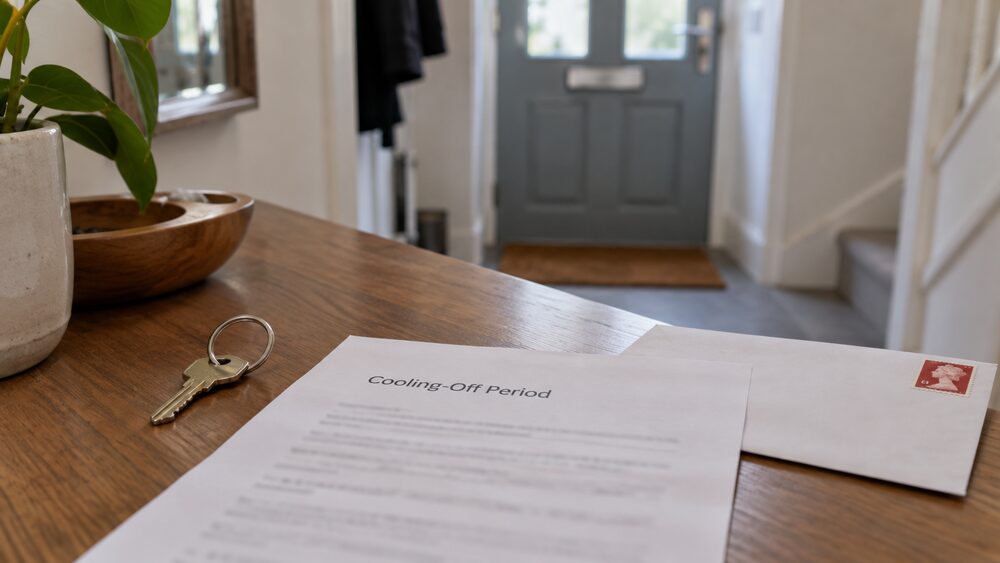
Most insurance policies can be cancelled, but what you get back and what it costs depends on when you cancel and what kind of policy it is. Nearly every policy bought as a consumer comes with a cooling-off period: 14 days for most general insurance such as car and home cover, and usually 30 days for life insurance and income protection1. Cancel inside that window and you are normally entitled to your money back, though some insurers still charge an admin fee. Cancel later, and the refund is likely to be reduced and a cancellation fee may apply.
Your rights do not stop at the cooling-off period. You can cancel most policies at any point during the term, and an insurer can only cancel or change a contract in limited circumstances, such as a significant change in your circumstances or a misrepresentation when you applied. This page explains how cooling-off periods work, how refunds and fees are calculated, what happens if you have made a claim or pay monthly, and where to complain if you and your insurer cannot agree.
Your rights when cancelling insurance
Consumer law gives you a set of rights when you buy insurance, and the strongest of them apply in the days immediately after you buy. The Consumer Contracts Regulations explain your right to cancel an order, how long you have to do so, and your right to a refund1. These rules apply to things bought at a distance, meaning online, by phone or by post, which is how most insurance is now sold.
One point that catches people out: asking for the service to start straight away does not weaken your position. Unlike the old Distance Selling Regulations, you do not waive your right to cancel within the cooling-off period even if you ask for cover to begin immediately8. So a car policy that starts the same day can still be cancelled within 14 days.
Where and how you bought also matters. If you buy something as a result of an unsolicited visit to your home, you have a legal right to cancel9. And when a main contract is cancelled, related contracts, such as insurance cover or finance for a mobile phone or sofa, should also be cancelled by the trader10. Subscription contracts have their own rules: under the Digital Markets, Competition and Consumers Act 2024, a consumer has the right to cancel a subscription contract during the initial cooling-off period and any renewal cooling-off period, in any circumstances and without conditions11.
The Financial Conduct Authority's rules sit alongside these rights. Its handbook states plainly that cancellation rights do not affect what information a firm must give you so you can make an informed purchasing decision12. In other words, the right to cancel is not a substitute for being told what you are buying. For some investment and pension products sold on a personal recommendation, separate cancellation rights arise only following a personal recommendation or ready-made suggestion of the contract13.
Finally, cancelling is not the only right you have. Guidance for people struggling with insurance costs notes that you have the right to complain and the right to switch providers14. If a premium has become unaffordable, cancelling is one option; switching to a cheaper policy, or complaining about how you were sold the policy, are others.
Cooling-off periods: 14 days for most policies, 30 for life and income cover
The cooling-off period is the window after you buy in which you can cancel for any reason, or no reason at all, and normally get your money back. For most general insurance, the period is 14 days. Which?'s research on car insurance refers to the 14-day cooling-off period as the standard window, and notes that even within it, an insurer may charge you a fee to cancel2. For income protection insurance, Citizens Advice states you usually have 30 days to cancel the policy and get a full refund3. Term life insurance bought from the provider Cavendish Online comes with a 30-day cooling-off period where you would be refunded any premiums paid so far4.
The 30-day right for life policies is set out in the FCA's conduct rules. For a life policy, the 30 calendar day right to cancel applies to the entire arrangement where the policy was effected when opening or transferring a wrapper, while a 14 calendar day right applies to a unit bought when opening or transferring a wrapper or pension wrapper13. The same 14-day principle runs through other financial products: consumer credit agreements come with a 14-day cooling-off period in which to change your mind and cancel15.
Two further points are worth knowing. First, cancelling one contract can sometimes cancel another: under the FCA's distance-selling rules, a consumer's notice to cancel a distance contract may also operate to cancel any attached contract which is also a distance financial services contract, unless the consumer says otherwise16. This can matter where an insurance policy was attached to a larger purchase. Second, the cooling-off period is not a substitute for checking the policy itself. The refund you get inside the window is normally full, but an admin fee may still be deducted, so it is worth asking the insurer what will actually land in your account.
Life cover can be cancelled at any time, free of charge
Life insurance is the easiest type of cover to leave. A decreasing term life insurance policy can be cancelled at any time, with no additional fees, though you may not receive any refund of the premiums paid, and cover ends on cancellation4. The trade-off is simple: no exit charge, but no money back either.
Which? puts it bluntly for over 50s life insurance: if you cancel, the policy simply stops and you do not get any money back6. Over 50s plans are stricter still about payments: you must pay the premium until you die, and if you stop paying, your entire policy is cancelled and you get nothing back6. That makes over 50s cover a poor fit for anyone who might need to stop and restart cover later, because the money paid in is gone for good.
Term life insurance has one feature that changes the calculation at renewal. Renewable term policies let you renew for another term at the end, but medical underwriting is bypassed at renewal and the renewed premium is based on your increased age at that point17. So cancelling a renewable term policy means giving up the right to renew without new medical questions, which may matter if your health has changed since you took the policy out.
Refunds: what you get back after cooling-off ends
Inside the cooling-off period, the refund position is strong. Citizens Advice guidance on cancelling services you have arranged states that if you paid up front or made a deposit and cancel in the cooling-off period, you are entitled to receive all of the money back, unless you asked for services to be provided during the period18. Applied to insurance, that means the premiums come back, though cover you actually used at your request may be deducted.
After cooling-off, the refund shrinks. For income protection insurance, Citizens Advice notes that if you cancel the policy after 30 days, the money you are refunded may be less than the amount you have put in3. Insurers typically refund the unused portion of the annual premium, less their costs, and less any cancellation fee. If you pay monthly, there may be nothing to refund at all, and worse, you may still owe money.
That last point matters most with car insurance. When a car is written off, the policy usually ends once the claim is settled, but a total loss claim does not cancel the remaining monthly payments: the outstanding balance remains owed19. Monthly car insurance is often a credit agreement, so the debt survives both the claim and the end of the policy.
It is also worth being clear about what insurance does not do. If you cancel travel arrangements and have no travel insurance, you will generally get no refund from the travel company: ABTA's guidance is that it is down to you to buy appropriate insurance at the time of booking20. Insurance refunds and travel company refunds are two separate things, and cancelling a policy does not recover money lost on the trip itself.
Cancellation fees and admin charges
Once the cooling-off period has passed, most insurers charge an admin fee to cancel. The law sets a boundary but not a number: the fee has to be "reasonable", but can still vary greatly between providers2. Which?'s survey work shows how wide that variation is. With two in 10 policies examined, you will be charged £60 or more if you cancel in the first year after the cooling-off period, yet with two policies reviewed, you can cancel for free2.
Examples from Which?'s December 2025 fee survey of car insurance policies show the range on named policies:
| Policy | Fee to cancel during cooling-off | Fee to cancel after cooling-off |
|---|---|---|
| Admiral | £25 | £602 |
| Zero | £28 | £562 |
| Plus with Legal | £28 | £562 |
| Essential | £10 | £452 |
| Select | No fee | £502 |
| Comprehensive | No fee | £53.762 |
| Cover + | No fee | £52.502 |
| Zero Essentials | No fee | £52.502 |
| Extra | No fee | £102 |
The pattern is that a fee charged inside the cooling-off period is usually smaller than the fee after it, and some policies charge nothing at all to cancel early. Fees are not limited to cancellation: the same survey found renewal fees of up to £50 each year on some policies, and a quarter of the car insurance policies looked at charged renewal fees2.
Cancelling car or home insurance mid-term
You are not locked into a policy once the cooling-off period ends. A policyholder can cancel their policy and set up a new one with a different insurer whenever they want, even if a claim is ongoing, although the claim will affect their no-claims bonus21. Mid-term cancellation is therefore always possible; the question is what it costs and what it leaves behind.
For monthly payers, the arithmetic is the main trap. If you cancel halfway through the year having paid six of twelve instalments, you have received half a year of cover but may still owe the remaining balance, less any refund the insurer calculates, and plus the cancellation fee. The written-off car example above shows how this debt can persist even after the car is gone19.
Financial difficulty changes the picture rather than removing it. StepChange's guidance on bankruptcy and insurance notes that if you fall behind, you may be given a short time to pay off the instalments for the rest of the year, and the policy is cancelled if you do not do this22. Cancelling cover you still need, such as home insurance on a mortgaged property, can create new problems, so it is worth checking what cover is compulsory before cancelling anything.
Some policies cannot be cancelled individually at all. Nationwide's FlexPlus packaged account includes worldwide family travel insurance, and the only way to cancel the travel insurance is to close the FlexPlus current account: individual policies cannot be cancelled23. Insurance bundled into a bank account is cancelled by changing the account, not by contacting the insurer.
Automatic renewal and pricing at renewal
Automatic renewal is where many cancellations actually happen: at the renewal date rather than mid-term. StepChange's cost-saving guidance warns that letting a policy auto-renew ties you in for another year, often at a higher price14. Since January 2022, insurers must ensure renewal prices are no higher than equivalent new-customer prices and must make cancelling automatic renewals easier, which has narrowed the gap, but checking the renewal notice remains worthwhile.
Insurers are required to give you warning. Many pet insurers will notify you at least 21 days in advance to give you the chance to cancel before the policy renews24. A similar notice period applies across most general insurance, so a renewal notice arriving weeks before the renewal date is normal, and it is the point at which cancelling is cheapest and simplest.
Fees can attach to renewal as well as to cancellation. In Which?'s last survey, a quarter of the car insurance policies looked at charged renewal fees, with some providers charging up to £50 each year2. Subscription contracts also have a renewal cooling-off period under the 2024 Act: a consumer has the right to cancel during the initial cooling-off period and any renewal cooling-off period, in any circumstances and without conditions11.
How to cancel a policy step by step
- Check the policy documents for the cooling-off deadline, any notice period and the cancellation fee. The fee to cancel during cooling-off and after it may be different2.
- Contact the insurer, in writing if possible, stating that you want to cancel and from what date. Ask for written confirmation and for the exact refund figure, including any fee.
- If you pay monthly, ask how the remaining instalments are treated. The outstanding balance may still be owed even after cancellation, and a total loss claim does not cancel this debt19.
- Cancel the direct debit only after the insurer confirms cancellation. If you cancel a direct debit, your bank should ensure no payments are taken, whether or not you owe the company money25, but stopping the payment does not end the contract.
- Get and keep the cancellation confirmation. If a claim or complaint later arises about the period of cover, the confirmation is your evidence of when cover ended.
- Tell connected organisations. If you cancel car insurance, tell DVLA where relevant: if you pay vehicle tax by Direct Debit, the Direct Debit will be cancelled automatically when the vehicle is taxed off or refunded26.
Guidance for people in financial difficulty suggests continuing to pay if you can afford the monthly payment, and only cancelling a direct debit if the payment will bounce or taking it would cause more financial difficulty27. Cancelling the payment without cancelling the policy leaves you with no cover and a debt.
When an insurer can cancel a policy
Most cancellations are started by the customer, but insurers have powers of their own, and they are limited. The Financial Ombudsman Service explains that an insurer can change or end an insurance contract if your circumstances change during the course of the policy in a way significantly alters the risk28. On travel insurance, for example, if you tell the insurer about a change in health, the insurer's options are to cover the condition for no additional premium, charge an additional premium, apply an exclusion, or withdraw cover altogether28.
Misrepresentation is the other main ground. In one Ombudsman case study, Benjamin's insurer cancelled his insurance policy and turned down his claim after it discovered he had not mentioned a driving conviction when taking out the policy29. The insurer treated the omission as a misrepresentation, which allowed it to cancel from inception and refuse the claim.
Underinsurance can also lead a insurer to act. The Ombudsman notes that an insurer may apply the average clause, cancel (void) the policy, or adjust the claim, but is likely to say these outcomes are unfair if the insurer's questions were unclear30. The consumer's side of the bargain is to give a reasonable answer to the question asked, taking into account any guidance given; if estimates are unreasonable, the insurer could reduce or decline claims or cancel the policy30.
Where cancelling leaves you exposed
Cancelling a policy removes the cover, and the risks of being uninsured are not always obvious. On travel, insurance usually pays out if you have to cancel or cut short your trip because of illness or the death of a close relative31, but the Ombudsman warns that if you change your mind about travelling or miss your flight, your insurance may not cover you: cover is usually provided only if a cancellation or missed flight is caused by a specific event32. Cancelling the policy before a trip leaves every one of those risks with you.
Wedding insurance shows how conditions shape what is covered: policies will cover cancellation so long as it is unforeseen, unavoidable and beyond your control, unless an exclusion applies33. Mental health related cancellation is likely to be covered under travel insurance if a medical professional deems you unfit to travel owing to your anxiety, or in circumstances such as an unexpected medical emergency that stops you travelling34.
On car insurance, the exposure runs both ways. A failure to report an accident to your insurer can give the company the right to refuse to cover you in the future35, and claiming for damage can cost you your no-claims bonus: Which? warns that you might lose your no claims bonus if you claim for damage on your car insurance36. Cancelling a policy does not undo either consequence.
Finally, cancelling insurance you are required to hold has knock-on effects elsewhere. A Universal Credit claim may be cancelled if you do not tell the office you cannot attend an appointment because of your condition or treatment37, and mortgage conditions normally require buildings cover to stay in force. Before cancelling, check whether the cover is optional or whether something else depends on it.
Complaints about cancellation: the insurer, then the Financial Ombudsman
If you think an insurer has cancelled your policy unfairly, charged an unreasonable fee or mishandled your cancellation, there is a set route to follow. The Financial Ombudsman Service's first instruction is to talk to your insurance provider first, as they need to have the chance to put things right7. Before a general insurance contract is concluded, firms must inform customers who are natural persons of the arrangements for handling policyholders' complaints, including the existence of a complaints body, usually the Financial Ombudsman Service38, so the details will be in your policy documents.
If the insurer's answer does not satisfy you, the Ombudsman can look at the complaint. Its redress can include asking the insurer to reconsider, or pay, some or all of your claim, or refund your premiums, and it may also ask the insurer to pay interest, or compensation for distress or inconvenience33. In mis-selling cases, the Ombudsman may ask the insurer to cancel the policy and refund premiums from the beginning, with interest added from when each premium was paid until settlement39.
The Ombudsman decides what is fair, not just what the policy says. In one case it found that an insurer had carried out a fair and reasonable investigation and was correct to pay a third party's claim, so the complaint failed40; in others, it asks insurers to pay claims in full where their questions were unclear30. Complaints about repairs and claim handling, such as an insurer arranging repairs that have not fixed the damage, are handled the same way41. The service is free to consumers, and you can find more detail on the process in the guide to complaining about an insurer.
Sources41 cited
- What are my statutory rights and when do they apply Which?, 2026-07-30
- Car insurance add-ons, fees and charges Which?, 2025-12
- Income protection insurance Citizens Advice, 2026-09-26
- Term life insurance Cavendish Online, 2026-09-26
- Legal expenses insurance reviews Which?, 2026-01-22
- Over 50s life insurance Which?, 2025-12-03
- Critical illness cover complaints Financial Ombudsman Service, 2026-09-27
- Can I cancel an online order Which?, 2025-07-30
- Doorstep scams and how to avoid them Which?, 2026-08-07
- Other laws that protect your consumer rights Consumer Council Northern Ireland, 2026
- Digital Markets, Competition and Consumers Act 2024, Part 4 legislation.gov.uk, 2024-05-24
- ICOBS 6.1.9, Cancellation rights Financial Conduct Authority, 2026
- COBS 15.2, The right to cancel Financial Conduct Authority, 2026-04-06
- Save money on insurance StepChange Debt Charity, 2026-09-25
- Consumer Credit Act Which?, 2025-06-18
- ICOBS 7, Distance communications Financial Conduct Authority, 2008-01-06
- Term life insurance explained Which?, 2025-12-03
- Cancelling a service you've arranged Citizens Advice, 2026-09-25
- My car's been written off, so why am I still paying for the insurance Which?, 2026-07-13
- I have to cancel my travel arrangements but I don't have travel insurance, will I get a refund ABTA, 2026
- Fault claims and no-claims bonuses Financial Ombudsman Service, 2026-09-16
- Bankruptcy and insurance StepChange Debt Charity, 2026-09-25
- FlexPlus worldwide family travel insurance Nationwide, 2026
- Pet insurance explained Which?, 2025-12-04
- Direct debits and standing orders explained Which?, 2026-03-05
- Vehicle tax refund GOV.UK, 2026-09-25
- Costs of living: making the most of your money Business Debtline, 2026
- Travel insurance: change in health Financial Ombudsman Service, 2026-09-26
- Case study: insurer cancelled policy and turned down claim after misrepresentation Financial Ombudsman Service, 2026-09-26
- Underinsurance on home insurance Financial Ombudsman Service, 2026-09-26
- I have to cancel my package holiday: what are my rights Which?, 2026-03-10
- Problems with travel insurance Financial Ombudsman Service, 2025-03-14
- Wedding insurance complaints Financial Ombudsman Service, 2026-09-27
- Travel insurance for people with mental health conditions British Insurance Brokers' Association, 2026-09-26
- I've been in a car accident: do I have to claim on my insurance Which?, 2026-03-31
- Problems with a car repair Citizens Advice, 2026-09-25
- Universal Credit: how to claim Macmillan Cancer Support, 2025-06-01
- ICOBS 6.2.2, Pre-contract disclosures Financial Conduct Authority, 2026
- Private medical insurance complaints Financial Ombudsman Service, 2026-09-26
- Case study: customer questions third party driver's injury claim Financial Ombudsman Service, 2026-09-27
- Settling home insurance claims Financial Ombudsman Service, 2026-09-26

 MoneyHelperFree, impartial money and pensions guidance, set up by government
 Financial Ombudsman ServiceFree, independent help when a complaint about a firm is not put right
 FSCSProtects your money if a bank, insurer or investment firm fails
 Citizens AdviceFree advice on money, consumer and legal problems in England and Wales
 GOV.UKOfficial information on tax, benefits and government services