
Insurance fraud covers two very different situations, and this page deals with both. The first is fraud aimed at consumers: scammers selling fake car or home insurance through "ghost brokers", staged accidents such as "crash for cash", and other tricks that leave people uninsured or out of pocket. The second is fraud by policyholders: exaggerating a claim, inventing a loss, or giving false details when buying a policy, which can cost someone the whole of their cover, not just the dishonest part.
The consequences on both sides are serious. Official statistics for the year ending March 2025 show that around a fifth of fraud victims, 19%, lost between £250 and £999 in a single incident1. And where an insurer believes a customer has been fraudulent, the onus is on the insurer to show "beyond reasonable doubt" that a fraud has taken place2, but if it succeeds the insurer may refuse all claims and keep the premiums paid3.
What counts as insurance fraud
Insurance fraud is where policyholders obtain money or replacement goods through false insurance claims, or obtain policies by submitting false details7. That definition covers a wide range of behaviour, from the obvious, such as inventing a burglary or staging a car accident, to things many people would not think of as fraud at all, such as rounding a claim up, claiming for an item that was already broken, or understating a mileage or a medical condition when buying a policy.
The same research also describes insurance broker fraud, where victims get insurance cover from a broker, or from fraudsters pretending to be brokers, and later discover they are not insured at all, or that the cover differs from what they paid for7. This is the ghost broking scam covered in the next section, and it matters because the victim is often completely unaware anything is wrong until they come to claim.
Fraud also includes organised schemes run against insurers and against innocent drivers. Crash for cash, where an accident is staged or deliberately caused so that a claim can be made, falls squarely within the definition of obtaining money through false claims. Innocent motorists can be caught up in these schemes as the other party, and may only realise later that the accident was engineered.
It is worth separating fraud from honest mistakes. Giving wrong information to an insurer is treated under the Consumer Insurance (Disclosure and Representations) Act 2012, which requires consumers to take reasonable care not to misrepresent8. A careless mistake is handled very differently from a deliberate or reckless lie, and the sections below set out what the law allows an insurer to do in each case. The dedicated page on misrepresentation covers the duty of reasonable care in more detail.
Ghost broking: fake insurance sold by scammers
Ghost broking is the name given to fraudsters who pose as insurance brokers, or who set up as intermediaries, sell what looks like a genuine policy, and then disappear. The Scottish Government's preventative spend research describes the pattern: victims get insurance cover from a broker or someone pretending to be a broker, and only when a claim is made do they discover they are not insured, or that the cover differs from what they paid for7. The most common target is motor insurance, where a fake policy also leaves the driver open to the penalties for driving uninsured.
A genuine insurance broker is a regulated financial adviser who specialises in general insurance, paid by commission, whose professional opinion can be valuable if your insurance needs are complicated9. Brokers and their sub-brokers act as intermediaries between customers and insurance providers9. A ghost broker imitates exactly that position of trust, which is what makes the scam effective.
Part of the difficulty is that scammers can make their communications look genuine. Spoofing is where scammers use software to make a display name or phone number appear to be that of a genuine organisation10. So a call, text or advert that appears to come from a well-known insurer or broker may not have done, and a website can be made to look like the real firm's.
The practical protection is to verify the seller independently. MoneyHelper advises always checking that a company or organisation contacting you is legitimate by searching for it on Companies House and using the contact details listed there, not the ones provided in the message11. The same principle applies to financial firms: check the details on the FCA's website, including whether the provider is genuine, through its ScamSmart service12. The page on using a broker or buying direct explains what a broker does and how they are paid.
What fraud costs: at least £14.4 billion a year to society
Fraud is not a victimless crime, and its costs are spread across everyone who buys financial products, including insurance. The losses run from small sums that individuals never recover through to organised frauds that take life savings.
The scale of individual losses is documented in official statistics. For the year ending March 2025, around a fifth of fraud victims, 19%, incurred a loss of between £250 and £9991. Research prepared for the Scottish Government estimated that the average amount lost by each older vulnerable person to telephone scams each year is £3134. At the top end, an official consultation on pension scam protections put the average financial loss per pension fraud victim at £18,400 in 2024 to 2025, rising to £38,400 where an investment was the primary vehicle for the fraud5.
For the insurance market specifically, these costs feed back into premiums. Insurers price the cost of claims, including fraudulent ones, into what everyone pays, which is why honest customers end up bearing a share of the bill. How premiums are built up is explained on how insurance premiums are calculated.
The costs are not only financial. A parliamentary research briefing notes that in addition to financial loss, fraud can cause emotional, psychological and health impacts, and can harm people's relationships13. That is as true of a pension scam that takes retirement savings as it is of a fake insurance policy that leaves someone uninsured after a crash.
What happens if an insurer finds fraud in a claim
The first thing to know is that finding fraud does not automatically wipe out everything. Ombudsman guidance sets out an important principle: if the fraud is perpetrated only in order to recover a genuine loss and does not affect the insurer's ultimate liability, then the policyholder will still be able to recover their losses2. So a customer who pads an otherwise genuine claim may still be entitled to the genuine part of it, depending on how the insurer and, if it goes that far, the ombudsman treats the dishonesty.
The ombudsman's own case decisions show this in practice. In one case from its Ombudsman News, a complaint was upheld where an insurer had wrongly avoided an entire policy after a forged receipt, and the fair solution was to reinstate the policy and pay the claim14. In other words, a single piece of dishonesty in the claims process did not justify the insurer in walking away from a genuine loss.
There are limits, though. The same guidance makes clear that a firm is only entitled to recover any payments it made in connection with earlier claims if it can show that the customer completed the insurance proposal fraudulently15. An insurer cannot claw back earlier payouts on the basis of a later exaggeration; it needs fraud at the point the policy was bought.
Where an insurer does have grounds to act, the effect can be dramatic. Ombudsman guidance on misrepresentation complaints explains that when a policy is avoided, the policy is cancelled from the date the misrepresentation occurred, which may be the start of the policy, a later renewal, or the point mid-term when the misrepresentation was made16. Avoidance treats the policy as if it never existed for the period in question. The page on rejected claims covers the other common reasons insurers refuse to pay.
When an insurer must prove fraud, and what it can refuse to pay
An insurer that wants to treat a customer as fraudulent has to prove it. Ombudsman guidance is explicit that the onus is on the insurer to show "beyond reasonable doubt" that a fraud has taken place2. Suspicion is not enough, and the ombudsman also checks the insurer's process: if it finds that fraud was a possibility, it will check whether the insurer investigated further before deciding to pay out, and if the insurer did not, the ombudsman may say it was unreasonable for the insurer to have paid out on that basis17.
For misrepresentation made before a policy was taken out, the insurer's powers come from the Consumer Insurance (Disclosure and Representations) Act 2012. Under section 4 of the Act, an insurer has a remedy only if the consumer made the misrepresentation in breach of the duty to take reasonable care, and the insurer shows that without the misrepresentation it would not have entered into the contract at all, or would have done so only on different terms18. A briefing on the Act summarises the effect: if customers do not take reasonable care, insurers may be allowed to void policies, refuse false claims or alter the terms of a policy8.
What the insurer can then do depends on how the misrepresentation is characterised:
If a qualifying misrepresentation was deliberate or reckless, the insurer may avoid the contract and refuse all claims, and need not return any of the premiums paid, except to the extent that it would be unfair to the consumer to retain them3. For less serious cases, the ombudsman lists the insurer's realistic options: charge more for the policy where there has been no claim, retrospectively apply a restriction, settle a claim proportionately, or avoid the policy16.
Proportionate settlement works by comparing what was paid with what should have been paid. The ombudsman's example: if the customer paid a £100 premium but should have paid £150, they paid two-thirds of the premium, so two-thirds of the claim should be paid16. A similar example applies where terms as well as price would have differed: if the insurer would have applied a £10,000 valuables limit and charged double the premium, it might be fair to apply the £10,000 limit and pay £5,00016. The same approach appears in underinsurance complaints, where a consumer who paid £400 but should have paid £500 has paid 80% of the premium and it is fair for them to receive 80% of the claim value19.
Some exclusions operate regardless of honesty. Most insurance policies exclude claims involving theft by deception, though the ombudsman sometimes decides an insurer has applied this too strictly, for example where violence was used, which is more like car-jacking20. The page on insurance excess and the guide to making a claim cover the practical steps around claiming.
Other consequences: credit, stress and repeat targeting
Being caught up in fraud, whether as a victim or as someone whose own claim was dishonest, has consequences well beyond the immediate money. Official guidance on doorstep fraud warns that even if a bank or insurance policy covers the loss, a victim still has to contend with a damaged credit rating, continued correspondence over a long period to repair the damage, and the emotional distress and anxiety identity theft can cause21. A fraud that is financially made good can still leave a mark on someone's life for years.
The emotional toll is recognised at the highest level. A parliamentary briefing notes that in addition to financial loss, fraud can cause emotional, psychological and health impacts, and can harm people's relationships13. Victims of insurance-related frauds, including ghost broking, often describe the shock of discovering they were never insured at all.
There is also a specific risk of being targeted twice. The Pensions Regulator's threat assessment warns that developments in this area increase vulnerability to specific threats, such as cloned firms and recovery fraud, where victims are targeted again with false promises of assistance in retrieving their lost funds22. Someone who has lost money to a fake insurance broker is a natural target for a second fraudster offering to get the money back, usually for an upfront fee.
For those whose own dishonesty is established, the consequences run the other way: a policy avoided for fraud is cancelled from the date the misrepresentation occurred16, the insurer may keep the premiums3, and details of the fraud will affect how the customer is treated by insurers thereafter, since applications ask about previous refusals and cancellations.
Checks to make before you claim
The checks that protect a claim fall into two groups: checks before you buy, and checks before you claim. Before buying, the golden rule is to verify the seller independently. MoneyHelper advises always checking that a company or organisation contacting you is legitimate by searching for it on Companies House and using the contact details listed there, not the ones provided in the message11. For financial firms, check the details of the investment or product and whether the provider is genuine on the FCA's website, through ScamSmart12. A genuine broker is a regulated financial adviser specialising in general insurance9, and can be confirmed as such before any money changes hands.
Before you claim, the checks are about accuracy rather than honesty of the counterparty:
- Check what your policy actually covers before you claim, including limits and excesses, so the claim you make matches the cover you bought.
- Check the details you gave when you bought the policy. If something has changed, tell the insurer: the page on changes you must tell your insurer about mid-policy lists the common ones.
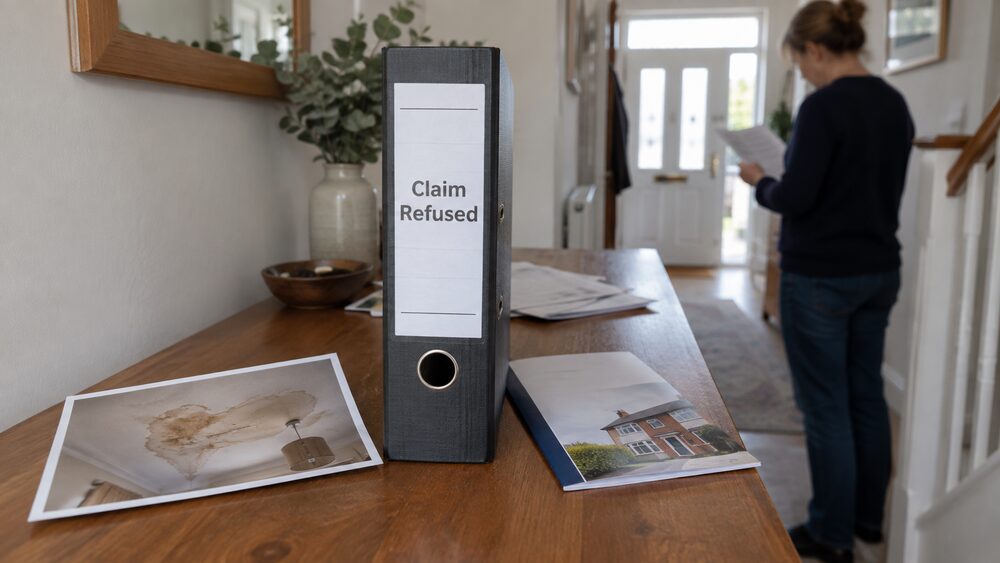
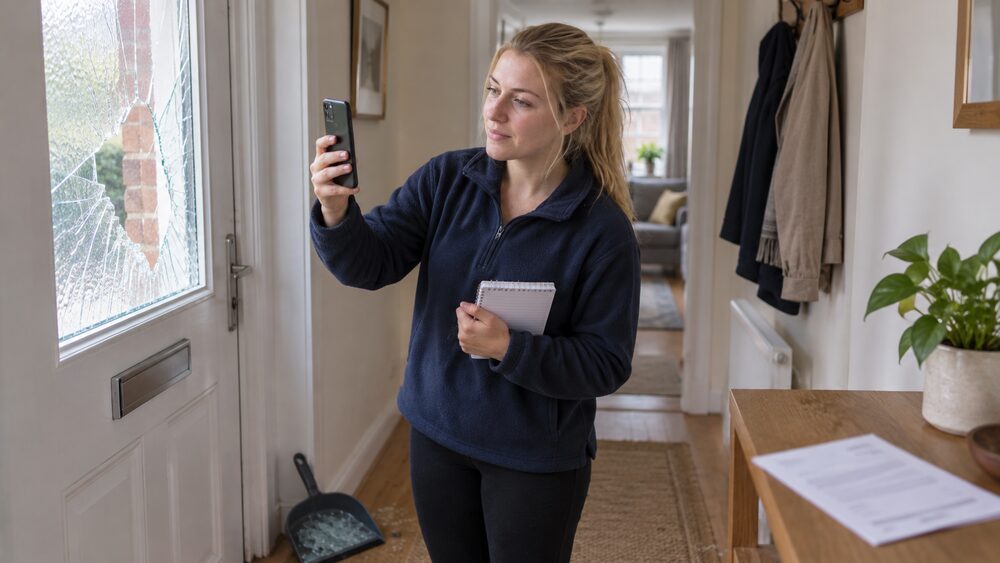
- Keep evidence of the loss: receipts, photographs, police reference numbers where relevant.
- Claim only for what you actually lost. An inflated claim can turn a genuine loss into a fraud finding, with the consequences set out above.
- If you were sold the policy by someone you now suspect, check with the insurer named on the documents, using contact details you have found independently, not those the seller gave you11.
If you are unhappy with how an insurer recorded a claim, note that you are not locked in: a policyholder can cancel their policy and set up a new one with a different insurer whenever they want, even if a claim is ongoing, though the claim will affect their no-claims bonus23. The pages on cancelling insurance and no claims discount explain how each works.
Reporting insurance fraud: Report Fraud and Police Scotland
If you believe you are a victim of fraud, you can make a report to Report Fraud, the national fraud reporting service24. The old name, Action Fraud, has been retired: Which? notes the service is now called Report Fraud10. Reporting routes differ by nation:
| Where the fraud happened or you live | Where to report |
|---|---|
| England, Wales or Northern Ireland | Report Fraud, online or by phone6 |
| Scotland | Police Scotland, on 1016 |
For computer software service fraud, a related scam pattern, official guidance is to report it online to Report Fraud or by phoning 0300 123 2040, and you can also call police on the non-emergency number 10125. The same reporting structure applies to insurance frauds such as ghost broking and crash for cash.
The first step in the diagram matters as much as the report itself. If you have been tricked into making a payment, contact your bank, building society or credit union immediately: they can protect and reimburse victims of certain frauds12. The Information Commissioner's Office guidance adds that you can report fraud in England, Wales or Northern Ireland through Report Fraud, and if you live in Scotland or the fraud happened there, contact Police Scotland on 1016.
Reports about suspected insurance fraud can also be made to bodies that collect intelligence on organised fraud, including the Insurance Fraud Bureau, which works with insurers and police on patterns such as ghost broking and crash for cash. Reports from the public feed that picture. The wider scams and fraud guide covers the other main types of scam and how each is reported.
Complaints about fraud decisions and where to get help
If the dispute is with an insurer rather than with the fraudster, the complaint route is the Financial Ombudsman Service. The ombudsman receives complaints from consumers about a range of insurance products, and if you have a complaint about an insurance company or claim, it can help28. That includes decisions to refuse a claim, avoid a policy or treat a claim as fraudulent, as well as complaints that a genuine claim was handled badly.
The sequence is fixed: complain to the insurer first, give it the chance to respond, and take the matter to the ombudsman if you remain unhappy. The ombudsman's approach to fraud findings is balanced: it requires the insurer to prove fraud beyond reasonable doubt2, and it checks whether the insurer investigated properly before paying out17. The page on complaining about an insurer sets out the process and timescales.
Some complaints belong elsewhere:
- Complaints about fraud and scams themselves are referred to Report Fraud29, and in Scotland to Police Scotland6.
- If you are unhappy with the conduct of a claims company, complain to the FCA30.
- If you suspect a fraud involving the Financial Services Compensation Scheme itself, FSCS asks to be told about it through its contact us page12.
Where an insurer has got a claim recording wrong, redress can be practical: the ombudsman may tell the insurer to change the way the claim was recorded so the customer's current premium can be recalculated, refund extra money paid, and may pay compensation for distress or inconvenience for poor customer service23. The page on compensation for distress and inconvenience explains when that applies.
Free, impartial help is available at each stage: MoneyHelper for general guidance on scams and insurance11, the Financial Ombudsman Service for disputes with insurers28, and Report Fraud or Police Scotland for the fraud itself6. The consumer protection guide maps out which body handles which kind of problem across financial services.
Sources30 cited
- Fraud and computer misuse in England and Wales, year ending March 2025 Office for National Statistics, 2026
- Ombudsman News issue 42: insurance fraud Financial Ombudsman Service, 2004
- Consumer Insurance (Disclosure and Representations) Act 2012, Schedule 1 legislation.gov.uk, 2012
- Preventative spend research: telephone scams Scottish Government, 2018
- Protecting pension savers: consultation on transfers regulations HM Government, 2024
- Credit: reporting fraud Information Commissioner's Office, 2026
- Preventative spend research: fraud Scottish Government, 2018
- Insurance Act 2015 and consumer insurance: research briefing House of Commons Library, 2026
- When to use an insurance broker MoneyHelper, 2026
- Scams glossary Which?, 2026
- Types of scam MoneyHelper, 2026
- What if you're a victim of fraud? Financial Services Compensation Scheme, 2026
- Fraud: impacts on victims Parliamentary Office of Science and Technology, 2026
- Ombudsman News issue 42: case 42/3 Financial Ombudsman Service, 2004
- Ombudsman News issue 21: credit unions Financial Ombudsman Service, 2002
- Misrepresentation and non-disclosure complaints Financial Ombudsman Service, 2026
- Fault claims and no-claims bonuses Financial Ombudsman Service, 2026
- Consumer Insurance (Disclosure and Representations) Act 2012, section 4 legislation.gov.uk, 2026
- Underinsurance in home insurance complaints Financial Ombudsman Service, 2026
- Vehicle theft claims Financial Ombudsman Service, 2026
- Doorstep fraud nidirect, 2021
- Pension scams threat assessment summary The Pensions Regulator, 2022
- Fault claims and no-claims bonuses: business guidance Financial Ombudsman Service, 2026
- Check your agent's name HM Government, 2025
- Computer software service fraud nidirect, 2026
- Podcast episode 46 transcript Financial Services Compensation Scheme, 2025
- Complaint following a vehicle purchase scam Financial Ombudsman Service, 2026-09-27
- Insurance complaints we can help with Financial Ombudsman Service, 2026
- Nuisance calls: reporting fraud Information Commissioner's Office, 2026
- Complain about a claims company HM Government, 2026


 MoneyHelperFree, impartial money and pensions guidance, set up by government
 Financial Ombudsman ServiceFree, independent help when a complaint about a firm is not put right
 FSCSProtects your money if a bank, insurer or investment firm fails
 Citizens AdviceFree advice on money, consumer and legal problems in England and Wales
 GOV.UKOfficial information on tax, benefits and government services