
Buildings insurance pays to repair or rebuild the physical structure of your home if it is damaged by something like a storm, fire, flood or burst pipe. Home insurance is usually made up of two parts: cover for the building itself and cover for the contents within it1. Buildings insurance is the first of those, and it is the part your mortgage lender will normally insist on.
It is not a legal requirement. Nobody is prosecuted for not having it, but if you own your home with a mortgage, the lender will almost certainly make buildings insurance a condition of the loan2. The average buildings-only premium was £309 in the second quarter of 2026, 5% (£16) lower than a year earlier3. What a policy pays out depends on being insured for the right amount, which is the cost of rebuilding your home, not its market value.
What buildings insurance covers: the structure, fixtures and fittings
Buildings insurance covers the cost of repairing damage to the structure of your property2. That means the walls, roof, floors and permanent fixtures: the parts of the home that would stay behind if you turned it upside down and shook it. Home insurance is usually split into two parts, one covering the building and one covering the things you own1, and the buildings side also usually includes outbuildings such as garages and sheds, though it is important to check with your insurer what counts1.
Weather damage is the most common reason people claim. Buildings insurance should cover damage caused by hail, wind, rain, snow and ice, including broken roofs, burst pipes, falling trees and power cuts8. The same ground is covered in Which?'s bad weather guidance: damage from hail, wind, rain, snow or ice, including broken roofs, frozen pipes, falling trees and loss of power9.
What counts as "the building" is not always obvious at the edges. Fitted kitchens and bathrooms, permanent fittings such as baths and boilers, and attached structures generally fall on the buildings side, while anything you would take with you when moving house falls on the contents side. Because policies differ, the safest approach is to read the policy documents before buying rather than assuming a particular item is covered.
Who needs buildings insurance: homeowners, landlords, renters and leaseholders
If you own your home, you need buildings insurance, and it is usually a condition of your mortgage10. If you rent, the position is reversed: your landlord is responsible for buildings insurance, and you need your own cover only for personal belongings7. People who rent a property only need to buy contents insurance, because the landlord will be responsible for arranging the buildings cover1.
That division is consistent across independent guidance. While your landlord is responsible for arranging buildings insurance, you will need a home contents insurance policy for your own possessions11. Lloyds Bank puts the same point plainly for tenants: the landlord should have buildings insurance covering damage to the building and its fixtures and fittings, so renters do not need to pay for buildings insurance, and damage to the building itself should be insured by the property owner or landlord12.
Landlords need a different product from owner-occupiers. A standard home policy is designed for someone living in the property, so landlords typically need a specialist landlord policy, which may also cover an empty property for up to three months between tenants, though this varies7. Renting out a home you previously lived in changes the risk, so the insurer needs to be told.
Leasehold flats: the freeholder usually insures the block
If you live in a block of flats, the building may already be insured, with your contribution collected through the service charge7. For leasehold flats, the building may be insured by the freeholder rather than by the individual flat owners10. This is the normal arrangement, and it means most leasehold flat owners do not buy their own buildings policy.
What leaseholders should check is what the freeholder's policy actually covers. If you own a leasehold flat, check whether the freeholder's insurance covers repair costs, and that buildings insurance covers flood risks13. The freeholder's policy protects the building, not your belongings or your liability, so contents insurance is still your responsibility. If you are unhappy with the cost or quality of the block policy, the charges appear in your service charge, and complaints about them follow the same route as any other insurance complaint.
Buildings insurance and your mortgage: cover from exchange of contracts
The timing of buildings insurance is fixed by the house-buying process, not by the insurer. You must insure your new property from the point you exchange contracts, which is the time you become liable for the building4. Citizens Advice confirms the same rule for England: it is the buyer's responsibility to insure the property from the date of exchange of contracts and to have the repairs carried out14. If you are selling one home and buying another, you need buildings insurance in place on the new property from the exchange date onwards15.
There are two exceptions worth knowing. If you are buying a new-build property, the insurance does not need to come into effect until the day of completion16. And in Scotland, the buying process works differently, so you will usually need to get buildings insurance for the move-in date rather than at an earlier stage17.
Your mortgage lender can require you to have buildings insurance, but it cannot require you to buy it from the lender. You do not have to buy insurance from your mortgage lender18, and shopping around is normally worthwhile. Home insurance is not a legal requirement, but your mortgage lender might make buildings insurance a condition of the loan19.
Insure for the rebuild cost, not the market value
Buildings insurance is based on the rebuild cost of your home, not its market value5. The rebuild cost is what it would cost to completely rebuild the property, and it is usually less than the sale price because the land underneath is not destroyed and does not need replacing10. Citizens Advice warns against getting this wrong in either direction: rebuild costs are usually less than the current market value, so make sure you do not over or under insure yourself2.
Two features can remove the guesswork. Some insurers offer unlimited cover so you do not have to work out the rebuild costs, and some offer index-linked policies that increase the sum insured automatically in line with rebuild costs2. Policies themselves vary in structure: your policy may be based on a specific buildings sum insured, a high standard limit, bedroom-rated cover, or unlimited cover5.
The penalty for underinsuring is severe because of the average clause. If the rebuild cost of your home is £400,000 but you valued it at £200,000 in your policy, you are 50% underinsured, and some insurers would only pay 50% of a claim, leaving you to find the rest20. The Financial Ombudsman Service has published real examples: in one case a loss adjuster estimated the cost of rebuilding a house at around £150,000 when it was insured for only £100,00021, and in another an insurer told a customer it would actually cost £600,000 to rebuild her home, based on a loss adjuster's valuation22. The dedicated guide to rebuild cost explains how to arrive at the figure, and underinsurance and the average clause explains how payouts are reduced.
What it costs: average premiums and what affects the price
The average buildings-only premium was £309 in the second quarter of 2026, 5% (£16) lower than a year earlier, and up £4 compared with the first quarter of 20263. For combined buildings and contents cover, average prices vary by region. In the first half of 2026 the average combined annual premium was £226 in the North East, £250 in the West Midlands, £250 in the North West, £251 in Yorkshire and the Humber, £258 in the East Midlands and £268 in the South West6.
Several things push the price up or down. The risk of flooding, subsidence and the age and construction of the building all feed into the premium, as does the excess you choose. Where you buy matters too: commissions paid to intermediaries were often at least 30% of the total insurance premium, with some commissions over 50%, according to figures cited in legislation from 202323. The same legislation noted that premiums for residential multi-occupacity buildings had increased by 187% for buildings with flammable cladding between 2016 and 2021, and by 94% for buildings without it23, which is why some flat owners have seen large service charge insurance increases.
The guides on how premiums are calculated, including Insurance Premium Tax, and on insurance pricing rules explain the mechanics, and paying monthly for insurance covers the cost of spreading the premium.
Excess, cover levels and optional extras
The excess is the amount you pay towards a claim. Some parts of a policy carry a higher excess than others: subsidence cover is included in most buildings insurance policies but often comes with a higher excess, typically around £1,0007. Escape of water claims can also carry a larger excess; for example, Nationwide's Enhanced policy lists a £500 escape of water excess for buildings cover as of September 202624. The general guide to insurance excess explains how compulsory and voluntary excess interact.
Buildings policies differ in how the cover level is set, as noted above: a specific sum insured, a high standard limit, bedroom-rated cover or unlimited cover5. Beyond the core cover, insurers sell optional extras, and general wear and tear is not included even where accidental damage cover is added25. Common add-ons include accidental damage cover, home emergency cover and legal expenses insurance; the guide to home insurance add-ons is not the place for these, but the add-ons guide elsewhere on the site sets out which are worth considering.
One extra sits close to buildings insurance for new-build buyers. Building warranties, such as those covering new homes, are separate from insurance, but if your insurer carried out building control or building regulations inspections you may have extra cover for health and safety issues and contaminated land26. The pages on NHBC Buildmark and Premier Guarantee for New Homes explain these warranties.
Buying combined cover can be cheaper than buying separately. Tesco Insurance, for example, gives a discount for buying combined cover rather than buying buildings or contents insurance separately27, though the size of any discount varies by insurer and by your circumstances.
Where cover stops: wear and tear, empty homes and groundwater
Every policy has exclusions, and the most common ones are consistent across the market. The Financial Ombudsman Service lists the most common exclusions on buildings policies as gradual damage, wear and tear, and poor design, construction or workmanship28, and its separate guidance repeats gradual damage and wear and tear29. Which? makes the same point about winter risks: standard home insurance will not usually cover damage caused by wear and tear8, and you might not be covered if the damage results from general wear and tear, for example water entering through a poorly maintained roof9.
Groundwater flooding is often excluded8, although some policies do include it: Tesco's standard home insurance policy lists groundwater flooding as included for buildings cover as of September 202627. This is a genuine point of difference between policies, so it is worth checking the policy documents if your home is at risk.
Empty homes are the other common trap. Standard home insurance typically requires that your house is not left unoccupied for longer than 30 days, with some policies allowing up to 606. If your home is going to be empty for more than 30 consecutive days, you will likely need a specialist unoccupied home insurance policy6. Landlord policies may cover an empty property for up to three months between tenants, but this varies7, and HSBC's guidance similarly notes landlord insurance might cover an empty property for up to three months30. The narrow guide to how long a home can be empty covers the detail.
Flood and storm damage: what a typical policy pays for
Flood cover is usually included as standard with buildings insurance and is widely available, even for homes in high-risk areas8. A typical buildings policy provides cover, at least in principle, for damage caused by floodwater entering your home from an external source, including a river or canal bursting its banks, storms and high tides, and heavy rainfall11. Standard buildings insurance policies also generally include cover for damage from a fire, including wildfires31.
Storm damage has sharper edges than many people expect. Only 1% of buildings policies will pay out for storm damage to fences, gates and hedges, according to Which?'s analysis of 76 home insurance policies from 35 providers in summer 202532. Its earlier garden cover research found just one of 75 policies examined would pay out for fences, gates and hedges damaged by storms and floods33. Most policies are clearer about what counts as a storm than they used to be: 83% of buildings policies include a definition for storms32. The narrow guides on what counts as a storm and storm, flood and escape of water claims cover the detail, and Flood Re explains the scheme that keeps cover available for high-risk homes.
In Northern Ireland, nidirect advises anyone flooded to contact their insurance company, tell them about the flooding and say they want to make a claim34. Tenants should claim on contents insurance for their belongings, while the landlord's buildings policy deals with the structure34. The pages on what to do after a flood and getting home insurance after a flood pick up from there.
How to make a claim and what happens next
A claim starts with the evidence. Read your insurance documents, give your insurer as much detail as possible, list everything lost or damaged, take photos to prove items are yours, and keep receipts and records12. For buildings claims, that means photographing the damage before anything is cleaned up or thrown away, keeping quotes and invoices for emergency work, and noting the date and time of the event.
Once the insurer accepts a claim, it can settle it in three ways: repairing the damage, replacing something lost or damaged, or paying cash to cover the cost of repair or replacement35. Policy terms often leave the choice to the insurer, with wording such as "We will decide whether to repair, replace, pay cash or reinstate the damaged part of the building."35
Two ombudsman case studies show where disputes arise. In one, the insurer argued that betterment was not covered, meaning it was only responsible for repairing what was already there, not adding to it36. In another, an insurer considered stabilisation work to be "preventative, not restorative" and not strictly part of its liability, since its policy only covered the cost of repairs37. Both cases are reminders that a buildings policy puts the home back as it was, not better than it was. The guides to making a claim, loss adjuster or loss assessor and why claims are rejected go further.
Renovations and changes to your home
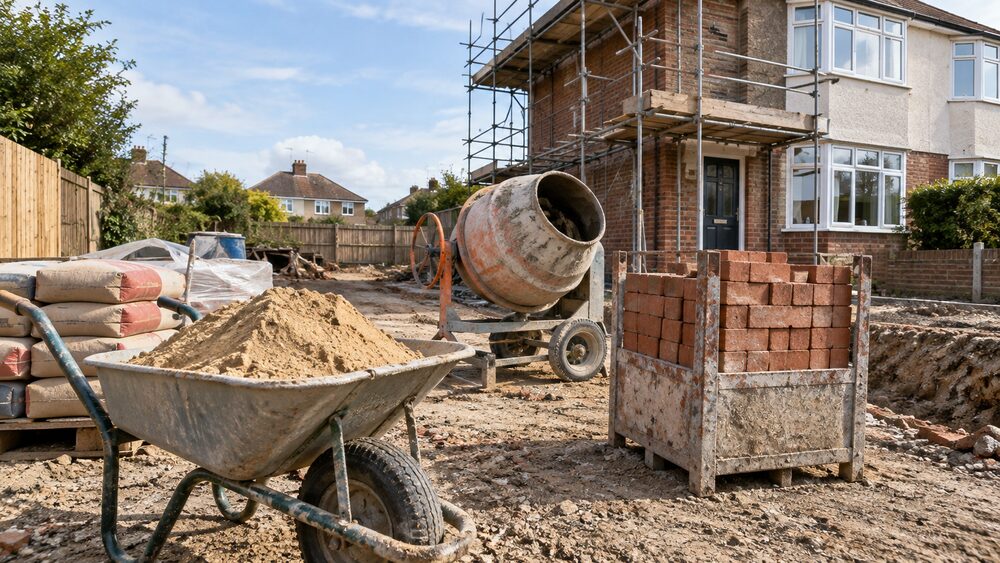
Tell your insurance provider if you have work done on your home, especially if there is anything that may affect the security of your home, such as scaffolding38. Scaffolding makes a property easier to burgle, and a major project can leave parts of the building exposed to weather, so insurers treat a home under renovation as a different risk from a settled home.
For major projects, a standard policy is usually not the right tool. Renovation insurance is a specialist policy covering renovations, extensions, conversions, new builds, self-builds, restorations and contract works, and the British Insurance Brokers' Association notes that most people undertaking renovation or conversion projects are not even aware that they need it39.
The disclosure rules cut both ways. In general, if something changes after the policy has started, the customer will not usually have to tell the insurer about it until they renew the policy40. But that is a rule about answering the insurer's questions correctly, not a guarantee that cover is unaffected: a standard policy can still exclude damage arising from building work. The narrow guide to changes you must tell your insurer about sets out the detail.
Complaints about buildings insurance and where to get help
Buildings insurance generates a substantial volume of complaints. The Financial Ombudsman Service received 1,766 complaints about buildings insurance in the first quarter of 2026/27, of which 33% were upheld in the consumer's favour41. For context, that quarter also saw 550 complaints about home emergency insurance, 402 about commercial property insurance and 100 about building guarantees41.
The first step is always to complain to the insurer directly, following its complaints process. If the insurer does not resolve the matter, the Financial Ombudsman Service can help with complaints about an insurance company or claim42. Its decisions are free to the consumer and binding on the insurer if the consumer accepts them. The guide to complaining about an insurer explains the process and the time limits, and how long an insurer has to respond covers the deadlines.
If the dispute is about the amount of cover rather than the handling, underinsurance complaints are a recognised category: the ombudsman has published a case in which underinsurance issues reduced a buildings insurance claim payout by 50%20. Free, impartial help is available from Citizens Advice, and MoneyHelper, the government-backed money guidance service, can point you in the right direction if you are unsure where to start.
Sources42 cited
- Home insurance Financial Ombudsman Service, 2026
- Buildings insurance Citizens Advice, 2020
- Average claim for subsidence reaches record £20,000 amidst hot weather Association of British Insurers, 2026
- Home buying and selling jargon HomeOwners Alliance, 2026
- Could you be underinsured? Why your rebuild cost matters Which?, 2026
- Santander home insurance review Which?, 2026
- 6 questions to ask before you choose a home insurance policy Which?, 2025
- 5 winter risks your home insurance might not cover Which?, 2026
- Does your insurance cover damage caused by bad weather? Which?, 2025
- Shopping around for insurance Independent Age, 2026
- Home insurance: flooding Which?, 2026
- Tenants and renters: home insurance guidance Lloyds Bank, 2026
- Housing help if your home is flooded Shelter England, 2025
- Problems with buying and selling a home Citizens Advice, 2026
- How to sell your house Which?, 2026
- How to buy a house Which?, 2026
- After you buy: buildings insurance in Scotland Shelter Scotland, 2024
- Ways of saving money Shelter Cymru, 2026
- Is self-insurance ever a good idea? Which?, 2026
- Underinsurance Financial Ombudsman Service, 2026
- Consumer questions on loss adjusters' valuation after fire Financial Ombudsman Service, 2026
- Insurer didn't provide guidance on rebuild cost Financial Ombudsman Service, 2026
- Act explaining insurance commission and cladding premium data legislation.gov.uk, 2024
- Nationwide home insurance review Which?, 2026
- Do you need home insurance add-ons? Which?, 2026
- Building warranties Financial Ombudsman Service, 2026
- Tesco home insurance review Which?, 2026
- Storm damage Financial Ombudsman Service, 2026
- Storm damage Financial Ombudsman Service, 2026
- HSBC home insurance review Which?, 2026
- The ABI shares advice following recent wildfires across the UK Association of British Insurers, 2026
- Why your home insurance could leave you out in the cold this winter Which?, 2025
- Does your home insurance cover your garden? Which?, 2025
- After a flood: making an insurance claim nidirect, 2024
- Settling home insurance claims Financial Ombudsman Service, 2026
- Insurer rejects betterment claim, expert opinion needed Financial Ombudsman Service, 2026
- Insurer says not liable for preventative work, investigation found otherwise Financial Ombudsman Service, 2026
- Maintaining your home Independent Age, 2026
- Home renovation insurance guide British Insurance Brokers' Association, 2026
- Misrepresentation and non-disclosure Financial Ombudsman Service, 2026
- Quarterly complaints data Q1 2026/27 Financial Ombudsman Service, 2026
- Complaints we can help with Financial Ombudsman Service, 2026



 MoneyHelperFree, impartial money and pensions guidance, set up by government
 Financial Ombudsman ServiceFree, independent help when a complaint about a firm is not put right
 FSCSProtects your money if a bank, insurer or investment firm fails
 Citizens AdviceFree advice on money, consumer and legal problems in England and Wales
 GOV.UKOfficial information on tax, benefits and government services