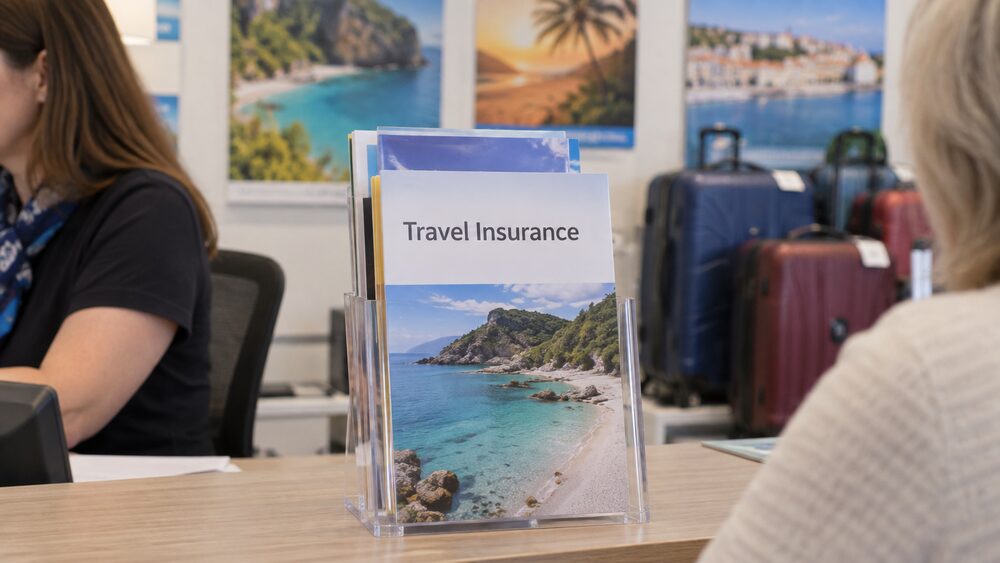
Travel insurance is a short-term policy that pays out if things go wrong on a trip: medical costs abroad, having to cancel or cut a holiday short, lost or stolen baggage, and delays. A typical policy covers medical treatment, cancellation, baggage and personal belongings, personal liability and delays1. It is not compulsory in law, but without it you pay your own bills if you fall ill overseas, and those bills can be enormous: an air ambulance alone can cost up to £30,0002.
Policies are sold as single trip cover for one holiday, annual multi-trip cover for a year of travel, or as an add-on to a packaged bank account3. The price depends on where you are going, how long for, your age and your health, and most claims are handled not by the firm that sold the policy but by a specialist claims handler4.
What catches people out is not usually the price, it is the small print. Policies have excesses, per-person and per-section limits, exclusions for anything recoverable elsewhere, and strict rules about declaring medical conditions. This page explains how the cover works, what it costs, when to buy it and what to do if a claim is refused.
What travel insurance covers: medical, cancellation, baggage and delays
A standard travel policy bundles together several quite different types of cover, each with its own limit and excess. The core sections are medical expenses, cancellation and curtailment (cutting a trip short), baggage and personal belongings, personal liability, and delay1. Independent reviews of policies examine 120 separate areas of cover, from medical expenses to cancellation and protection if a travel company fails4, so what looks like one product is really a package of promises.
Medical cover is the part that matters most. It pays for treatment if you are ill or injured abroad, and, on many policies, for getting you home if you cannot travel as planned. Cancellation cover pays back what you lose if you cannot go at all. Insurers typically list the events they will pay out for, including accident, illness, family bereavement, pregnancy that was unknown when you bought the policy, jury service or a witness summons, redundancy and bad weather2. Cancellation cover usually pays out if you have to cancel or cut short your trip because of illness or the death of a close relative6. Where mental health is concerned, cancellation is likely to be covered if a medical professional deems you unfit to travel, for example because of anxiety, or if an unexpected medical emergency stops you travelling7.
What is not covered is simply changing your mind. The industry calls this "disinclination to travel", and it is not covered under travel insurance7. Equally, if you cancel a package holiday for personal reasons you are not legally entitled to a refund from the travel agent or tour operator6, which is precisely the gap cancellation cover exists to fill.
Baggage cover pays for lost, stolen or damaged belongings, but with strings attached. Many policies do not cover valuables checked into the aircraft hold, and often require you to keep valuables under your custody and control8. If a bag goes missing in transit, the claim may fall to the airline under its own liability rules rather than the insurer. Some policies also include personal accident cover, which pays out if you are killed or permanently disabled on holiday, for example if you lose a limb or your eyesight9.
Delay and missed departure cover varies more than any other section. You can claim on about 93% of policies if unexpected transport delays cause you to miss your flight10. But if you need cover for outgoing, connecting and return flights, for example on a complex long-haul journey, only 43% of policies cover all legs10. Travel disruption cover, which pays when flights are cancelled or delayed because of events such as bad weather, is included automatically by some providers and sold as a paid extra by others, so the terms of each policy need checking11.
Single trip, annual multi-trip or packaged bank account cover
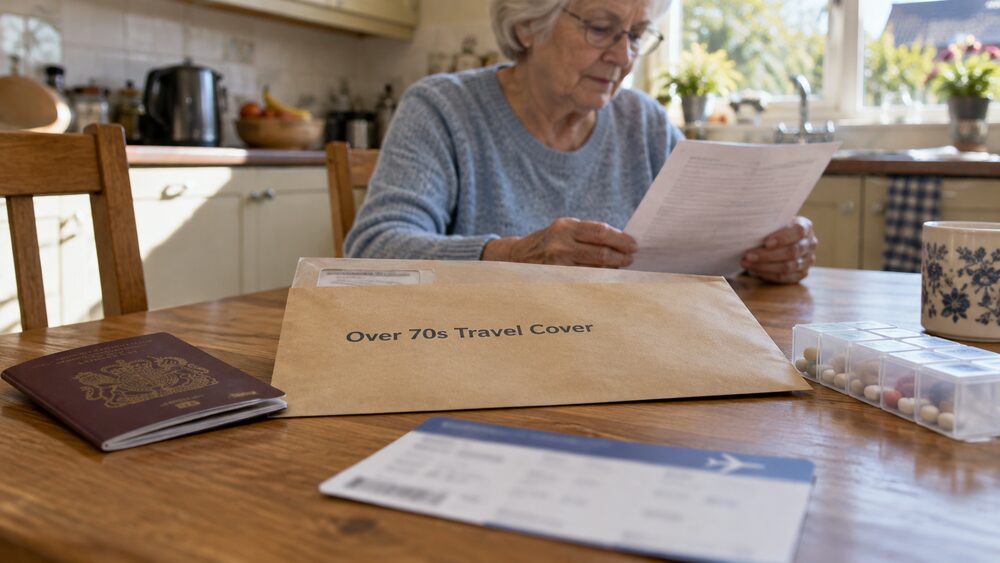
Travel insurance comes in three broad shapes. Single trip policies cover the risk of a single holiday. Annual multi-trip policies cover the risk of multiple trips during a 12 month period. And there are ongoing rolling multi-trip policies that renew over a 12 month period, which are generally provided with a packaged bank account3. Insurers such as ABTA Travel Insurance sell both single trip and annual multi-trip policies12.
A single trip policy runs from the day cover starts until you return home. It suits people who take one main holiday a year, and it is often the only realistic option for a long trip, because annual policies cap the length of each trip. An annual multi-trip policy pays for itself in convenience if you travel two or three times a year, but the per-trip limit is the thing to check: many insurers cap each trip, usually at 31 days13. One analysis of 145 annual policies found the standard length covered per trip was 30 to 40 days, sometimes as high as 94 days14. Age matters too: one policy covered trips of up to 60 days for policyholders aged 65 or under, but just 21 days for older travellers14.
Packaged bank accounts charge a monthly or annual fee and can include travel insurance alongside car breakdown cover and mobile phone cover15. The travel insurance in these accounts often looks like a free benefit, but it frequently comes with strict rules: age limits, exclusions for pre-existing medical conditions, short maximum trip lengths, and winter sports, cruises and gadget cover are often missing16. Over half of policies offering both single-trip and annual cover have higher maximum age limits for single-trip than for annual cover17, so an older traveller may find the packaged account cover simply stops applying.
What travel insurance costs and how the excess works
The premium is what you pay for the policy; the excess is what you pay towards a claim. A policy excess is an amount you have to pay towards making a claim, agreed when you take out the policy and set out clearly in the policy documents18. Most insurance policies carry an excess, although some travel policies give the option to have no excess18. On some cheaper policies the excess can be as high as £5004.
Travel policies structure their excesses in a way that can multiply the cost of a claim. Policies usually charge separate excesses for each individual claiming under the policy and for each section of the policy being claimed under18. A family of four claiming for medical costs and lost baggage could therefore face several excesses on one incident. Some insurers also apply an excess per item, for example a passport, wallet or luggage19. A Financial Ombudsman Service case study examined a policy where an excess was payable per insured person, for each and every incident, under each and every section of cover20.
A policy limit is the maximum the policy will pay out under a certain section, and there may be sub-limits within it. The ombudsman gives the example of a policy that pays a maximum of £1,000 for lost baggage but also has a sub-limit of £200 for valuables18. Insurers are expected to tell customers about the excesses and limits that apply to things like cancellation, medical expenses and baggage, and each policy comes with a table of benefits setting out the excesses and limits in a clear and easy to understand format18.
What drives the premium is mainly risk. Travel insurance can become more expensive as you get older, especially if you have a medical condition or disability1. Where you are going matters, because medical costs and repatriation differ hugely between countries. Almost a quarter of holidaymakers, 22%, simply buy the cheapest travel insurance they can find, and only a third, 33%, check their policy covers the cost of their holiday, luggage and contents10. The cheapest policy is the one most likely to carry the highest excess, the lowest limits and the longest list of exclusions. The guide to how insurance premiums are worked out explains the pricing behind this.
Medical cover: at least £2m in Europe and £5m worldwide
The single most important number on a travel policy is the medical expenses limit. ABTA suggests choosing a policy with a minimum of £2m of medical cover in Europe and £5m worldwide2. The reason for the scale is that overseas medical treatment is billed privately, and getting someone home adds more on top. An air ambulance can cost up to £30,0002.
Not every policy reaches those figures. Scope's guidance gives the example of an insurer that says it will cover costs of up to £1 million in medical fees on a trip in Europe21, half the suggested European minimum. A policy with a lower limit may still be adequate for some destinations, but the limit is the ceiling: treatment beyond it comes out of your own pocket.
Medical cover also interacts with the other sections. If you are injured, the medical section pays for treatment, but getting you home early, or paying for a relative to travel out, may fall under curtailment or additional expenses sections with their own, smaller, limits. Repatriation, being flown back to the UK, is precisely what a GHIC does not cover16, so it has to come from the policy.
Two practical points are worth checking before buying. First, whether the policy pays the medical provider directly or reimburses you, which matters if you are facing a large bill abroad. Second, whether the insurer runs a 24 hour emergency assistance line, which most medical sections require you to call before arranging treatment where reasonably possible. The ombudsman's guidance on travel insurance notes that most policies do not cover claims if the losses can be recovered from another source3, and medical costs are a common example, since airlines, employers or the NHS may be liable for part of them.
A GHIC is not a replacement for travel insurance
The UK Global Health Insurance Card (GHIC) lets you get state healthcare in Europe at a reduced cost or sometimes for free21. It allows UK residents to access medically necessary state healthcare when travelling, either at a reduced cost or for free2. The card is free of charge and is accepted in all 27 EU countries, as well as Switzerland, Montenegro, the Channel Islands and Australia, and it is valid for five years2. You can apply for a GHIC for free on the NHS website2.
But the GHIC is not a replacement for travel insurance. It will not cover all of the medical bills that can arise from falling ill or being injured abroad, for example if you need an air ambulance, treatment in a private facility, ski or mountain rescue, or being flown back to the UK2. It gives access to state healthcare in EU countries on the same terms as local residents, and does not cover private hospitals, medical repatriation back to the UK, or non-medical issues such as cancellations, lost baggage or stolen belongings16. Marie Curie's guidance is blunt: these cards are not a replacement for travel insurance, and travellers still need to be insured before they travel22. BIBA makes the same point: an EHIC or GHIC is not a replacement for travel insurance23.
There are two useful things a GHIC does beyond the basics. Both the GHIC and the older EHIC cover treatment of a chronic or pre-existing condition if symptoms flare up during your holiday, and routine medical care for people with pre-existing conditions that need monitoring24. Neither card covers you if you are going abroad specifically to have treatment24. Travelling with an EHIC can also reduce premiums when travelling within the EU, though ABTA notes this is because your insurer will expect the state system to carry some of the risk2.
Pre-existing medical conditions must be declared
The rule that invalidates more travel policies than any other is the medical declaration. You must declare any pre-existing medical conditions or you may not be covered1. Insurers usually will not cover pre-existing medical conditions unless they have been declared and added to the policy4. In most policies, pre-existing conditions, meaning conditions you had before insuring your trip, are not covered unless they have been declared25. Failure to declare can void your policy, or result in your claim not being settled, or not settled in full2.
The definition of what must be declared is wider than many people expect. All of your medical conditions must be declared to your insurer, including anything that develops between taking out the policy and the day you travel19. Insurers need to be told about past or current health issues even if you have recovered26. Some insurers now say weight loss jabs must be declared25. And if you have an undiagnosed condition, some policies may offer cover but exclude claims linked to that specific issue27. If you buy travel insurance without declaring a health issue that is still being investigated, your policy could be treated as invalid, and if you make a claim the insurer later discovers you were waiting for medical investigations, it may refuse to pay out, even if the claim seems unrelated27.
Once you buy travel insurance, you must tell the insurer if there are any changes in your health or condition21. If you do not, and then need to make a claim, your policy may be invalid and the company may not pay21.
Declaring conditions does not mean being refused cover. For travel insurance, unlike private medical insurance, the insurer may be able to offer cover, sometimes for a higher premium28. There is no reason why travel insurance should not be available to people with mental health conditions such as depression or anxiety, with many providers offering comprehensive cover7. Specialist routes exist: Insurance Surgery helps people with pre-existing conditions find travel insurance, MIA offers travel insurance for people with pre-existing medical conditions, and JustTravelcover.com provides a way to compare cover for pre-existing conditions such as mental health or for people over 6529. Under FCA rules, when providing a quotation for a travel insurance policy, the firm should disclose whether any medical condition exclusion can be removed from the policy, in whole or in part, and if so, how, and on what terms30.
The dedicated guides to travel insurance with pre-existing medical conditions, travel insurance for older travellers and cover with mental health conditions cover this in depth.
When to buy: cancellation cover starts from the day you buy
The timing rule is simple and often missed: buy the policy when you book the holiday, not when you travel. ABTA's advice is that it is down to you to buy appropriate insurance at the time of booking, so your money is protected if you have to cancel31. If you cancel travel arrangements and have no travel insurance, you will not get a refund31.
The reason is that cancellation cover runs from the start date of the policy, not the departure date. The Financial Ombudsman Service has seen the consequences of getting this wrong: where an annual policy starts on the first day of the next trip, the policyholder is not covered for any cancellation of that holiday, because the policy cover has not yet started5. A holiday booked months in advance is exposed from the moment it is paid for, and only a policy already in force can pay that money back.
There is also a statutory cooling-off right to be aware of. The cancellation period begins either from the day of the conclusion of the contract, or from the day on which the consumer receives the contractual terms and conditions and any other pre-contractual information, if that is later32. For life policies the period runs from when the consumer is informed the contract has been concluded32. This is what lets you read a policy after buying it and back out if it is not suitable; the guide to cancelling insurance covers cooling-off periods, refunds and fees.
One further protection depends on when the policy was sold. The Financial Services Compensation Scheme will only consider claims relating to travel insurance where the policy is sold alongside a holiday or other related travel if the failure of the insurer relates to business conducted on or after 1 January 200933. The guide to what happens if your insurer goes bust explains that protection.
Winter sports, cruises and backpacking need extra cover
Standard policies assume an ordinary holiday, and charge extra, or exclude entirely, anything outside that. If you are planning a ski or snowboard trip, you will need winter sports cover, which is readily available from most insurance providers but is not included in standard policies2. There are usually limits on pursuits: while many policies cover a range of sports and leisure activities, they may not allow you to claim for winter sports such as skiing13. The guide to winter sports travel insurance covers what this add-on includes.
Cruises need their own consideration. Specialist cruise cover is suggested because cruising presents particular challenges to medical care, for example access to treatment2. Cruise cover is often a mandatory requirement, and the cruise operator may not let you on board without it13. The scope of the add-on matters: a Financial Ombudsman Service case study found that, unlike the basic travel insurance policy, which provided cover for the cancellation of the holiday, cruise cover only provided a benefit while the policyholder was actually travelling34. The sub page Does standard travel insurance cover cruises? works through the differences.
Long trips and backpacking are a third category. If you are going backpacking or taking a gap year, ABTA suggests taking out specialist travel insurance2. The per-trip limits on ordinary annual policies, typically 31 days13, rule them out for months away, and a specialist policy also tends to cover activities, work abroad and multiple destinations that standard policies exclude.
Where travel insurance does not pay out
Every policy has boundaries, and most disputes come from four of them.
Losses recoverable elsewhere. Most travel insurance policies do not cover claims if the losses can be recovered from another source3. Policies usually only cover "unrecoverable costs"35. If an airline refunds a cancelled flight, or a tour operator rebooks a holiday, the insurer pays only what is genuinely lost. The same principle applies across payment routes: you cannot claim the same loss twice, and it is up to you to decide where to make your claim, with travel insurers and card issuers required to help you rather than automatically referring you elsewhere36.
Travel company failure. Very few travel insurance policies cover companies going out of business37. Only 12% of policies cover holiday company bankruptcy, and just 10% cover airline failure10. Package holidays have their own financial protection, but a flight-only booking with a failed airline often leaves you claiming from the administrator. A Financial Ombudsman Service case study illustrates the trap: a traveller whose travel company stopped trading had not paid extra for end supplier failure or travel disruption cover, and as no other section of her policy applied to her circumstances, she was unlikely to be covered38.
Undeclared medical conditions. Where a claim arises from an undisclosed medical condition, it is very likely the claim will be rejected, leaving you to pay for the cost of your treatment yourself7.
Events you knew about, and places the Foreign Office warns against. If you travel to a country despite Foreign Office advice against all but essential travel, your travel insurance is unlikely to be valid19. Cover is usually provided only if a cancellation or missed flight is caused by a specific event; changing your mind or missing your flight may not be covered26. Three in 10 policies will not allow you to claim for the expenses of missed activities, such as tours or shows, when you were ill but did not return home early14. And foreign travel insurance is not intended to cover you if you live abroad permanently39.
How to make a claim and what to do if it is refused
The first practical point about claiming is who you deal with. In most cases, when you make a travel insurance claim, you will not be dealing directly with the company that sold you the policy: claims handling is typically outsourced to specialist companies4. The guide to claims handlers and policy administrators explains who does what.
Act quickly and gather evidence. If you are a victim of theft, report it immediately to the local police, your hotel and your tour operator; insurers often require a written report19. Keep receipts, medical reports and confirmation of delays. Check the table of benefits for the section limit and the excess before claiming, since a small loss may fall below the excess and not be worth claiming18.
If a claim is refused, the insurer should explain the reasons clearly and fairly, and explain any further options you might have36. If you paid by credit card, Section 75 or chargeback may be an alternative route for the same loss, but remember you cannot claim the same loss twice36. The ombudsman's insight on travel insurance problems notes that insurers need to be told about medical conditions even if you have recovered, and that non-disclosure is a recurring cause of refused claims26.
If you think the policy was mis-sold, the ombudsman has a framework for putting things right. Where the customer was not eligible for the policy, they would never have been able to claim under it, and the ombudsman would be likely to uphold the complaint5. Where the customer would have bought a different policy that would have covered their claim, the ombudsman would ask the insurer to pay the claim5. Where the customer would have bought the policy anyway but paid extra for an optional cover, the insurer should pay the claim with interest, minus the additional premium5. And where the customer would not have done anything differently, the ombudsman may find the insurer did something wrong but needs to do nothing financially to put it right5.
Complaints that the insurer will not resolve go to the Financial Ombudsman Service, which can award up to £5,000 for distress and inconvenience3. Travel insurance generates significant complaint volumes: the ombudsman received 996 travel insurance complaints in one quarter of 2025/2640, and 4,451 new cases across the year 2025/2641. The guides to complaining about an insurer, why claims are rejected and how to make a claim cover the process in detail.
Home insurance, UK trips and compulsory cover
Three questions come up repeatedly about the edges of travel cover. First, home insurance: it may cover certain possessions away from your home, but it will not cover you for medical care and cancellations2. Claiming on household insurance for something stolen on holiday also risks losing your no claims bonus9, so check both policies before deciding where a loss belongs. The guide to personal possessions cover explains what home insurance does extend to.
Second, UK trips. Most travel insurance policies cover UK trips longer than a couple of nights and further than 25 miles from home, but only for disruption caused by an event outside your control which you were not aware of when booking42. The same rule applies to disruption from bad weather11. A UK break cancelled on a whim is not covered, and medical treatment is not the issue it is abroad because the NHS is there.
Third, whether cover is compulsory. No law requires it, but the consequences of travelling without it are entirely yours: if you cancel a holiday without insurance, no one refunds you31. Some operators make insurance a condition of travel, notably cruise lines13. Some credit card companies provide a very basic level of cover similar to travel insurance, but it contains many exclusions and ABTA would not recommend relying on it2. And if you book a holiday from outside the UK, protection against the tour operator's financial failure might not apply unless they opted to protect your holiday voluntarily37.
Sources42 cited
- Shopping around for insurance Independent Age, 2026
- Travel insurance tips and advice ABTA, 2026
- Travel insurance complaints guidance Financial Ombudsman Service, 2026
- How to claim on your travel insurance Which?, 2026
- Mis-sold travel insurance Financial Ombudsman Service, 2026
- Cancelling a package holiday: your rights Which?, 2026
- Travel insurance for people with mental health conditions British Insurance Brokers' Association, 2026
- Travelling with valuables British Insurance Brokers' Association, 2026
- Travel insurance checklist British Insurance Brokers' Association, 2022
- 7 questions to ask yourself when buying travel insurance Which?, 2024
- Flood disruption and damage: what can your insurance pay for Which?, 2023
- ABTA Travel Insurance ABTA, 2026
- 7 common travel insurance mistakes to avoid when holidaying abroad Which?, 2024
- Why travel insurance goes wrong and what you can do about it Which?, 2025
- Packaged bank accounts and mis-selling Which?, 2025
- 7 costly travel insurance mistakes and how to avoid them Which?, 2025
- 6 questions to ask yourself before buying travel insurance Which?, 2025
- Travel insurance policy excesses and limits Financial Ombudsman Service, 2026
- Travel insurance guides British Insurance Brokers' Association, 2026
- Case study: insurer charging too much for a baggage claim Financial Ombudsman Service, 2026
- Insurance advice for disabled people Scope, 2025
- Travel insurance Marie Curie, 2022
- Travelling to Europe after Brexit British Insurance Brokers' Association, 2022
- The EHIC explained Which?, 2026
- Do you need to declare weight loss jabs Which?, 2026
- Problems with travel insurance Financial Ombudsman Service, 2025
- Do you need to declare an undiagnosed condition Which?, 2026
- Jargon buster British Insurance Brokers' Association, 2025
- Specialist insurance providers for pre-existing mental health conditions Mental Health and Money Advice, 2025
- ICOBS 6: travel insurance quotations Financial Conduct Authority, 2026
- Cancelling travel arrangements without travel insurance ABTA, 2026
- COBS 15: cancellation period rules Financial Conduct Authority, 2026
- FSCS eligibility rules Financial Services Compensation Scheme, 2026
- Case study: Amin wanted an insurance refund after a cruise was cancelled Financial Ombudsman Service, 2026
- Will travel insurance cover a holiday to Cyprus or Dubai Which?, 2025
- Chargeback rights and Section 75 UK Finance, 2026
- Is my money protected ABTA, 2026
- Case study: travel company used to book holiday stopped trading Financial Ombudsman Service, 2026
- Moving, living or retiring abroad GOV.UK, 2025
- Quarterly complaints data Q1 2025/26 Financial Ombudsman Service, 2025
- Annual complaints data and insight 2025/26 Financial Ombudsman Service, 2025
- Does your insurance cover damage caused by bad weather Which?, 2025

 MoneyHelperFree, impartial money and pensions guidance, set up by government
 Financial Ombudsman ServiceFree, independent help when a complaint about a firm is not put right
 FSCSProtects your money if a bank, insurer or investment firm fails
 Citizens AdviceFree advice on money, consumer and legal problems in England and Wales
 GOV.UKOfficial information on tax, benefits and government services