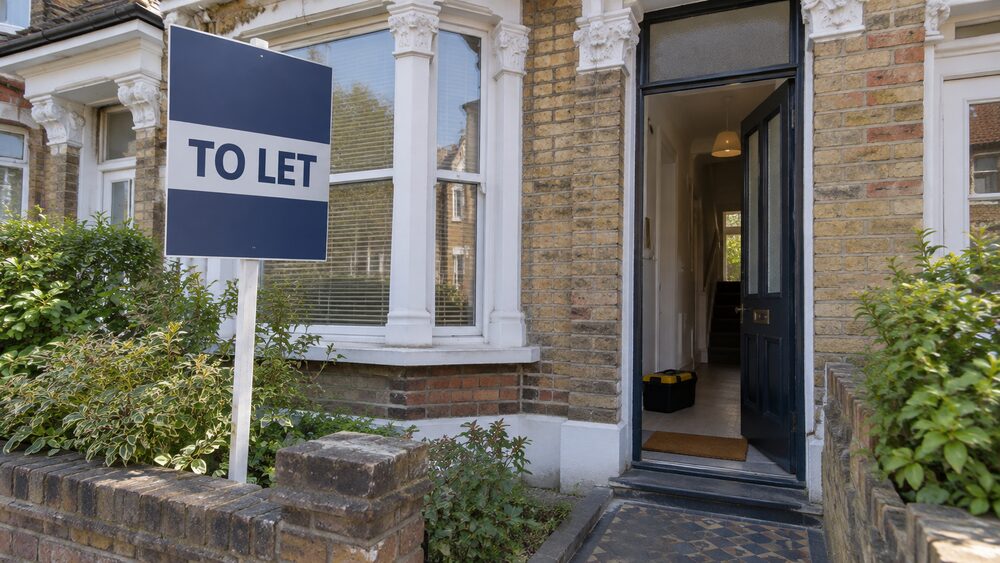
Landlord insurance is home insurance rebuilt for a property that is let to tenants. It is not a legal requirement: home insurance is not a legal requirement in the UK, though a mortgage lender might make buildings insurance a condition of the loan1. What makes a landlord policy different is that a standard home insurance policy assumes the owner lives in the property. Once tenants move in, that assumption breaks, and Halifax warns that holding only a standard home policy on a rented property may break the terms of a buy to let mortgage2.
The core of most landlord policies is buildings cover, but written for letting: it can pay to repair or replace items a tenant damages, where most home insurance policies will not cover contents damaged by a tenant at all2. Around that core sit covers an ordinary home policy either excludes or handles badly: property owners' liability if a tenant is injured, employers' liability if a cleaner or gardener is hurt, loss of rent after an insured event, and continued cover while the property stands empty between tenancies, which independent guidance puts at up to three months, though this varies3.
What landlord insurance covers that home insurance does not
A standard home insurance policy is built around an owner occupier. When tenants are in place, several of its assumptions fail. Halifax, which sells landlord insurance, is blunt about the consequence: if you only have a standard home insurance policy on a rented property, you may be breaking the terms of your mortgage, and most home insurance providers will not provide cover if tenants have an accident2.
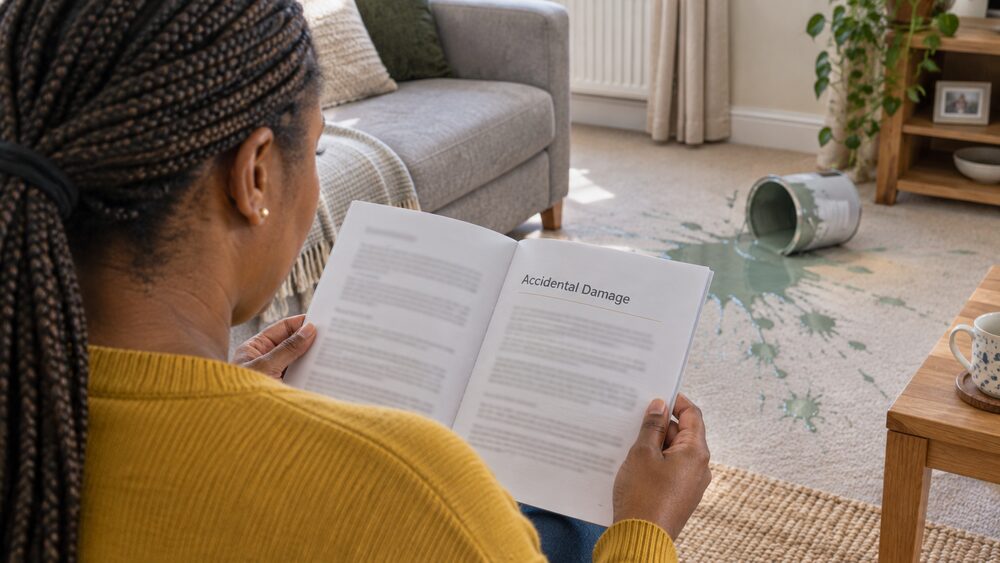
The differences show up in what each policy will pay for. A landlord policy covers replacing or repairing items when a tenant damages something, where most home insurance policies will not provide cover for contents if a tenant damages something2. Accidental damage caused by tenants is treated the same way: most home insurers exclude it, while on landlord policies accidental damage cover is either offered as standard or as an option2.
The split of responsibility runs both ways. The landlord arranges buildings insurance; tenants need their own contents policy for personal belongings, because the landlord's insurance will not provide cover for them7. The Financial Ombudsman Service makes the same point from the tenant's side: people who rent will only need to buy contents insurance, because the landlord will be responsible for arranging buildings insurance8. Independent flooding guidance repeats it: while your landlord is responsible for arranging buildings insurance, you will need to have a home contents insurance policy for your own possessions9.
Insurance is also only part of being a landlord. In Wales, a landlord has to be registered by law10, and registration, deposit protection and repair duties exist whether or not any insurance policy is in place. A landlord policy pays for defined events; it does not discharge the legal obligations that come with letting.
Property owners' liability and employers' liability
Property owners' liability is the cover that answers the question: what happens if someone is hurt in or around the property and blames the landlord? Halifax describes it in concrete terms: Property Owners Liability cover provides cover if tenants decide to pursue legal action for any injuries, medical expenses or loss of earnings2. Without it, a landlord facing a claim from an injured tenant would be funding a defence and any compensation personally.
The amounts at stake can be large, which is why liability cover is treated as a core part of a landlord policy rather than an optional extra. A claim does not have to come from a tenant: visitors, contractors and neighbours injured because of the state of the property can all bring one. The cover pays legal costs and compensation, and the policy documents set the limit it pays up to.
Employers' liability is a separate matter, because for some landlords it is not optional at all. Halifax states that employers' liability cover provides cover for legal costs and compensation claims if casual or volunteer workers such as a cleaner, handyman or gardener are injured on the property2. The British Insurance Brokers' Association notes that, with some exemptions, this insurance is compulsory in Great Britain, and it can only be provided by an authorised insurer4.
The word "casual" matters. Many landlords assume employers' liability is only for businesses with staff on payroll, but the cover is triggered by employing people in even an informal way at the property. If a landlord pays someone to clean communal areas, tend a garden or carry out repairs, that can count. Great Britain means England, Scotland and Wales; the rules for Northern Ireland differ, and a landlord there needs to check the position for that jurisdiction before assuming the same compulsion applies.
Damage by tenants is not automatically covered
Tenant damage is the claim most new landlords get wrong. The instinct is that insurance exists to pay for whatever goes wrong in the property, but a standard home policy is not written that way: most home insurance policies will not provide cover for contents if a tenant damages something, and a landlord policy is what covers replacing or repairing these items2. Accidental damage by tenants is similar: most home insurance providers will not provide cover if tenants have an accident, while accidental damage cover is either offered as standard or as an option on most landlord policies2.
Tenants carry some responsibility of their own. Citizens Advice notes that while the landlord usually takes out the insurance, a tenant may be responsible for loss or damage to fixtures and fittings11. Where a tenant causes loss, the deposit is the first port of call: landlords can usually deduct money from a security deposit to cover unpaid rent, damage to the property, missing items and cleaning costs12.
Where a tenant has a guarantor, the guarantor's promise can extend beyond rent. If you agree to be a guarantor for someone, it means you agree to pay their rent if they stop paying, and possibly to pay for any damage to the property that they cause13. Guarantor agreements on joint tenancies can go further still: they may say the guarantor can be asked to pay if any of the joint tenants do not pay their rent, not just the tenant they guarantee13.
For a landlord, the practical sequence after tenant damage is therefore: check what the landlord policy covers, then look to the deposit for what it does not, and only then consider the tenant or their guarantor. Insurance, deposit and guarantor each answer a different part of the loss, and none of them replaces the others.
Optional extras: accidental damage and legal expenses
Beyond the core covers, landlord policies are sold with a menu of add-ons, each raising the premium. Citizens Advice lists the common ones for buildings cover: flooding or subsidence if you live in a high risk area, accidental damage to your home, alternative accommodation, damage to boundary walls, fences, gates, driveways and swimming pools, damage to underground pipes, cables, gas and electricity supplies, glass in windows, doors, conservatories and skylights, liability cover and legal expenses cover11.
Which? found that accidental damage cover in particular is rarely bundled in: cover for both buildings and contents was usually an optional extra, and what was included varied between policies14. On Nationwide's Enhanced home insurance, contents accidental damage is listed as an optional extra15. Some policies do include it as standard: Which? notes that Privilege Platinum includes accidental damage cover, as well as legal assistance and home emergency cover, as standard16.
The variation is the lesson. Two landlord policies at a similar price can differ sharply in whether accidental damage, legal expenses or home emergency cover are included or charged for, so the add-on list is where a comparison is actually won or lost. The site's guides to accidental damage cover and legal expenses insurance explain what each one pays for.
For landlords, legal expenses cover is often the extra worth the closest look, because disputes with tenants can generate solicitors' costs whether or not any damage was done. Liability cover, by contrast, is normally part of the core property owners' cover rather than an add-on on a landlord policy, though Citizens Advice lists it among the add-ons available on home insurance11.
Loss of rent covers insured events, not tenants who stop paying
Loss of rent cover is widely misunderstood. What it pays for is rent the landlord loses because an insured event, such as a fire or a flood, has made the property uninhabitable. What it does not do is pay the rent a tenant simply stops paying. That is a different product, rent guarantee insurance, which is sold separately and priced on the tenant's circumstances as much as the property's.
When a tenant does fall into arrears, the routes available to a landlord run outside the insurance. The deposit is one: if a tenant does not pay the final month's rent, the landlord can keep the deposit to cover the rent17. A guarantor is another: a guarantor agrees to pay the rent if the tenant stops paying13.
Insurance can also shape who the property can be let to, which cuts across both rent guarantee and ordinary landlord policies. Shelter Cymru notes that a letting agent can refuse a tenancy if the landlord's insurance policy began before 1 June 2026 and its terms prohibit renting to people who claim benefits or have children18. Shelter England adds that all buy to let mortgages should allow tenants claiming benefits, so a mortgage term is not the obstacle an insurance term can be19.
For a landlord choosing a policy, the lesson is to read the tenant restrictions as carefully as the cover levels. A cheaper policy whose terms exclude a whole category of prospective tenants can cost more in void periods than it saves in premium, and the position differs between policies that began before and after 1 June 202618.
Empty properties: cover usually lasts up to three months
A property between tenancies is where landlord insurance and home insurance diverge most sharply. Independent guidance is consistent: landlord insurance may cover an empty property for up to three months between tenants, but this varies3. Which?'s reviews of Santander and HSBC home insurance make the same point from the other direction: landlord insurance might cover an empty property for up to three months, where a standard home policy typically requires that the house is not left unoccupied for longer than 30 days, with some policies giving more time, sometimes up to 60 days5.
Halifax's advice to landlords is to check rather than assume: if the property is likely to be unoccupied from time to time, check with insurance providers whether you are covered2. The reason is that once a property passes its unoccupied limit, some sections of cover stop or reduce, and an insurer can decline a claim for, say, water damage in a house that has sat empty for months without being notified.
The wider costs of an empty property do not pause while the insurance question is settled. In Scotland, if you own a property that is empty and unfurnished, you could get a council tax exemption for up to 6 months24. In Wales, an empty and unfurnished property is exempt for up to six months after it became vacant, a category that covered 14,866 properties in 2022 to 202325. A property requiring or undergoing major work can qualify for a Class A exemption lasting up to 12 months25. Guidance for people going into hospital makes the general point that some policies say you cannot leave your property vacant for over a set period, such as three months27.
The practical rule for a landlord facing a void: tell the insurer before the property becomes empty, ask in writing what cover remains and for how long, and diarise the date the limit runs out. The site's guide to how long a home can be empty covers the mechanics.
When a mortgage lender requires landlord insurance
Buildings insurance is the cover a mortgage lender cares about, because the building is its security. Mortgage lenders generally require it from the date of exchange3, and most mortgage lenders will require you to hold buildings insurance5. Home insurance is not a legal requirement, but the lender might make buildings insurance a condition of the loan1.
For a buy to let mortgage, the requirement goes further than the existence of a policy. Halifax warns that a standard home insurance policy may break the terms of a buy to let mortgage2, because the lender expects cover written for a tenanted property. A landlord who lets a property on an owner occupier policy can therefore be mortgage compliant on paper and in breach in substance.
Letting out a home you already own raises a separate permission question. Independent Age notes that if you rent out your home you take on responsibilities as a landlord, your mortgage interest may increase, and you may need permission from your mortgage lender28. A lender that agreed the loan on the basis you would live there can treat letting it as a material change.
The lender's requirements also shape the rent itself. With a let to buy mortgage, where you let your current home to fund buying a new one, most lenders require rent to cover around 145% of monthly repayments29. That test is about affordability, not insurance, but it is part of the same picture: a buy to let lender sets conditions on how the property is let, and insurance is one of them. The mortgage offer, not the insurance brochure, is the document that says exactly what cover the lender insists on.
What landlord insurance costs
There is no official average premium for landlord insurance, so any single price quoted for "landlord insurance" should be treated with caution. What does exist are price points and the costs around the cover. AXA states that 10% of its landlord insurance customers paid £15 a month or less between April and June 20266. That is one insurer's own figure for a slice of its customers, not a market average, and premiums vary with the property's rebuild cost, location, tenant type and claims history.
The costs of running the rental sit alongside the premium. Research by Towergate Insurance (now Everywhen) in 2024, cited by Which?, found that on average UK landlords spend £1,374.07 per year maintaining rental properties30. Maintenance spending is not insurance, but the two are connected: insurers expect properties to be kept in good repair, and neglect can lead to rejected claims.
Where a landlord arranges insurance for others, the charging is under regulatory scrutiny. A UK and Welsh government consultation launched on 2 December 2024 noted that landlords, freeholders and property managing agents are most commonly paid for arranging and managing building insurance through an insurance broker sharing a proportion of their commission31. The consultation concerned replacing opaque commissions with a permitted insurance fee, which matters to leaseholders who pay for buildings insurance through a landlord or agent.
For a landlord buying their own policy, the levers on price are the usual ones: the excess, the covers added or dropped, and how the property is let. The site's guides to how premiums are calculated, excess and paying monthly explain each of these.
Home emergency cover and who handles claims
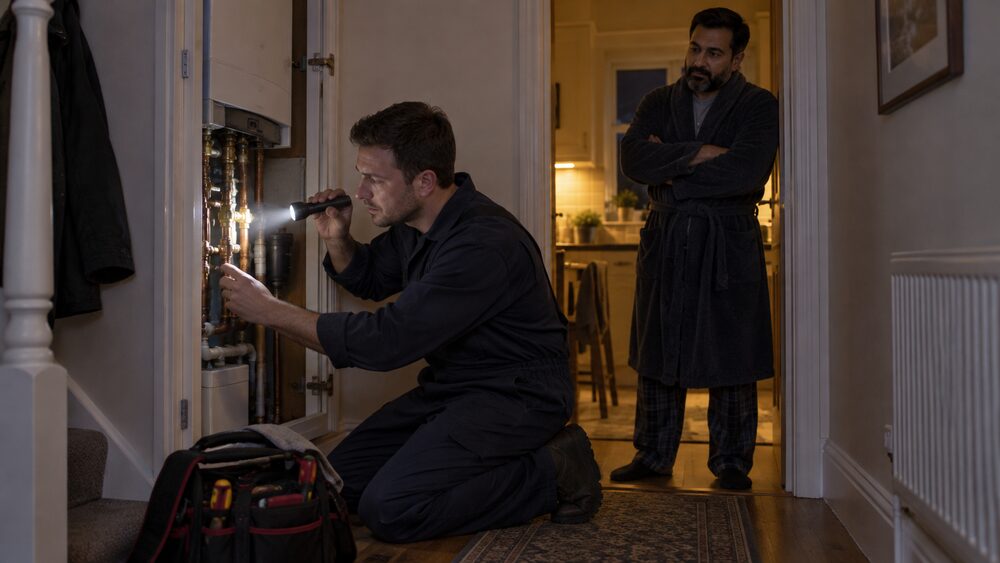
Home emergency cover pays for urgent call outs: a burst pipe, a failed boiler, a lockout. On a rented property it works differently from an owner occupied one, because responsibility for emergencies sits with the landlord. The Financial Ombudsman Service notes that if you are a private tenant and you bought home emergency cover, you may not need it, because it is usually the landlord's responsibility to sort out emergencies32. For a landlord, that same responsibility is the reason to consider the cover: tenants will call their landlord at midnight, not an insurer.
When a claim is made, who handles it is not always the insurer that sold the policy. Claims are frequently administered by specialist claims handlers, and these arrangements change. Nottingham Building Society, for example, states that for its Buy to Let and landlord home emergency policies effective on or after 1 August 2024, claims are handled by ARC Legal Assistance rather than Legal Protection Group33. A landlord mid claim needs to know which organisation is actually processing it, because that is who to chase.
After a flood, the division of labour is explicit. Northern Ireland's official guidance for flooded homes tells tenants: if you rent your home, ask your landlord to contact the company that insures your home34. The landlord makes the claim on the buildings policy; the tenant claims separately for their own contents.
If a claim or the way it was handled goes wrong, the complaint goes first to the insurer and then, if unresolved, to the Financial Ombudsman Service, which handles complaints about home insurance8. The site's guides to home emergency cover, claims handlers and complaining about an insurer set out the routes in detail.
Where protection stops
The covers above have edges, and most disputes about landlord insurance happen at them. The first edge is disclosure. Shelter Cymru warns that if you take in a lodger or rent out a room, most insurers will put up premiums, but you must inform them or the insurance may not be valid35. The same principle applies to any change in how a property is let: a new tenancy type, a change of tenant, a period left empty. The site's guide to changes you must tell your insurer about lists them.
The second edge is the unoccupied limit. Cover for an empty property lasts for the period the policy allows, up to three months on many landlord policies but far less on home policies3, and Halifax's advice is to check with insurance providers whether you are covered if the property is likely to be unoccupied from time to time2. A claim made during an unnotified void period is a claim made outside the cover.
The third edge is who is insured for what. The landlord's policy does not cover tenants' belongings, which tenants must insure themselves7. It does not automatically cover tenant caused damage unless the policy is written for it2. And it does not pay rent a tenant withholds, which is what rent guarantee insurance exists for.
Two protections sit behind all of this. Employers' liability, where it is compulsory, can only be provided by an authorised insurer4, so a policy bought from an unauthorised source is not the cover the law demands. And if a dispute with an insurer cannot be settled, the Financial Ombudsman Service can look at complaints about home insurance, including landlord policies, free8. The site's guides to rejected claims, misrepresentation and what happens if an insurer fails cover the remaining ways cover can be lost.
Sources35 cited
- Is self insurance ever a good idea? Which?, 2026-02-25
- Is home insurance enough for landlords? Halifax, 2026-09-27
- 6 questions to ask before you choose a home insurance policy Which?, 2025-10-15
- Jargon buster British Insurance Brokers' Association, 2025-02-11
- Santander home insurance review Which?, 2026-09-17
- Landlord insurance AXA, 2026-04
- Renting a property: consumer guide RICS, 2026-09-26
- Home insurance: how the Financial Ombudsman can help Financial Ombudsman Service, 2026-09-26
- Home insurance and flooding Which?, 2026-09-17
- First home advice Shelter Cymru, 2026-09
- Buildings insurance Citizens Advice, 2020-02-20
- Return of unprotected security deposits Shelter Cymru, 2026-08-27
- Guarantors for private renters Shelter England, 2026-06-08
- Do you need home insurance add-ons? Which?, 2026-09-17
- Nationwide home insurance review Which?, September 2026
- Top exclusions to watch out for when buying cheaper home insurance Which?, 2024-10-05
- Unpaid rent and bills: deposit deductions Shelter England, 2026-05-01
- Letting agencies Shelter Cymru, 2026-08-20
- How to challenge DSS discrimination Shelter England, 2026-05-01
- HSBC home insurance review Which?, 2026-09-17
- Landlord insurance AXA, 2026-09-27
- Landlord insurance The Marsden Building Society, 2026-09-26
- Landlords legal protection Hiscox, 2026
- Council tax reduction and discounts Shelter Scotland, 2025-04-16
- Council tax discounts, disregards, exemptions and reductions Welsh Government, 2026-03-17
- Council tax consultation WG45022 Welsh Government, 2022-23
- What happens to my money, home and pets when I go into hospital Mental Health and Money Advice, 2024-02-13
- Problems paying your mortgage Independent Age, 2026-09-26
- Let to buy explained Which?, 2026-06-23
- Becoming a landlord Which?, 2024
- Consultation on introducing permitted insurance fees for landlords, freeholders and property managing agents UK Government, 2024-12-02
- Home emergency insurance Financial Ombudsman Service, 2026-09-26
- Home insurance claims Nottingham Building Society, 2024-08-01
- After a flood: making an insurance claim nidirect, 2024-08-29
- Can I take in a lodger or sub let? Shelter Cymru, 2026-07-27



 MoneyHelperFree, impartial money and pensions guidance, set up by government
 Financial Ombudsman ServiceFree, independent help when a complaint about a firm is not put right
 FSCSProtects your money if a bank, insurer or investment firm fails
 Citizens AdviceFree advice on money, consumer and legal problems in England and Wales
 GOV.UKOfficial information on tax, benefits and government services