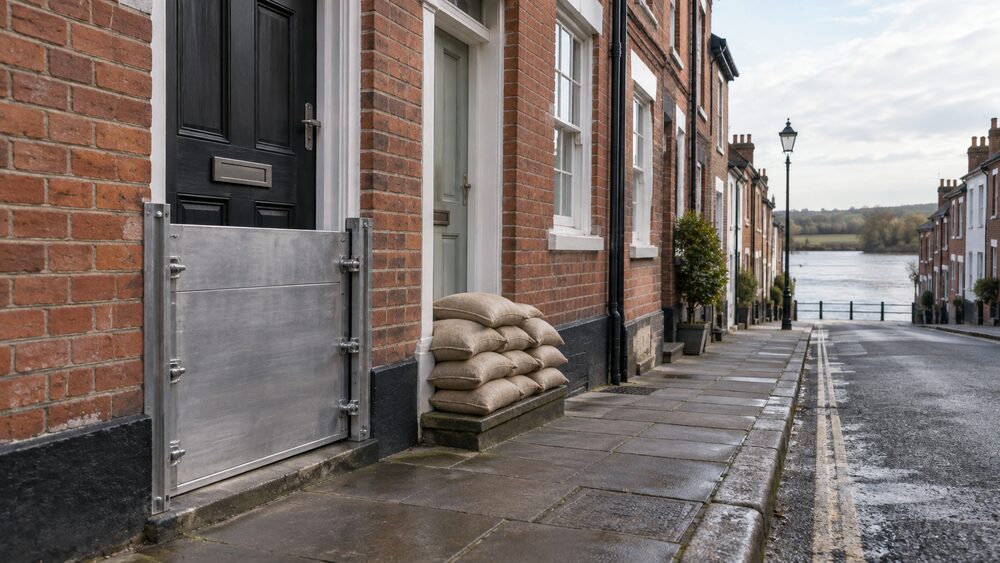
Flood cover is usually a standard part of buildings insurance, and it is widely available even for homes in high-risk areas1. So a past flood does not usually mean you cannot get cover at all. What it can change is the price, the excess and the conditions attached to the policy.
The first step after a flood is to report the damage to your home insurance company and tell them you want to make a claim3. If you own your home, you are usually responsible for repairs due to flood damage4. If you rent, your landlord normally handles the building, and your own contents insurance covers your belongings3.
The Flood Re scheme exists to keep cover affordable for many homes at high risk. It is a re-insurance scheme in which insurers pool the costs of higher-risk properties by paying a levy into a non-profit-making fund5. Almost 250,000 households have benefited, and four out of five properties that previously submitted claims for flood damage have seen prices fall by 50%5. It does not cover everything: homes built after 2009 are not eligible6.
Report flood damage to your insurer first
When your home is flooded, you need to report flood damage to your home insurance company3. Contact them to say your home was flooded and that you want to make a claim3. If you have contents insurance, tell them about the flooding and say you want to make a claim for contents3.
Speak to your insurer before carrying out significant clean-up or repair work, unless immediate action is needed to protect people or prevent further damage10. If you have to carry out emergency repairs, keep all receipts and, where possible, get an additional quote so you know you are paying a fair price11. Keep a record of the dates and times you contact your insurer3.
What a policy can pay for varies. You may be able to get flood damaged items replaced, professional help to clean up, and temporary alternative accommodation if you need to move out while your home is being repaired3. Most home insurance policies will also provide alternative accommodation where a property has been damaged and is no longer safe to live in12. Policies generally include cover for temporary accommodation if your home has been made uninhabitable1.
If you own your home, check what your insurance covers: repair costs if your home is flooded, replacing your belongings, another place to stay, and legal cover and legal advice4. If you rent, you could get help from a local assistance fund4.
What a flood claim can mean for your renewal
A flood claim can change what you pay at renewal. After a flood and making a claim, householders may see a jump in their prices from low hundreds of pounds to high hundreds or a thousand or more9. A home in a high-flood-risk area with a flood claim typically sees a jump of about another 50%, meaning these homes typically see prices that are 100 to 120% higher than low-risk, no-claim properties9.
Making a claim can increase your home insurance premium when you renew next time13. Insurers often treat storm or flood damage as an at-fault claim, because there is no third party to recover the costs from14.
The excess is the other lever. Policies in flood-risk areas often have much higher excesses for flood claims2. Some quotes for homes in high-risk flood areas, or that have flooded in the past, exclude flood cover or add a high excess1. Where a home is included in the Flood Re scheme, the flood excess is £2508. Post Office home insurance states that subsidence, flood and escape of water all have a higher compulsory excess payable in the event of a claim15. Agreeing to pay a higher excess in the event of a claim will lower the premium16.
Under-insurance is a separate risk. If your sums insured are too low, under-insurance may result in only part of a claim being paid2. Make sure you have sufficient insurance cover for your sums insured on your buildings11.
Flood Re: how it keeps premiums affordable
Flood Re is a re-insurance scheme, hence the "Re", in which insurers can pool the costs associated with higher-risk properties by paying a levy into a non-profit-making fund5. A levy is paid by all insurers, and those costs are passed on via increased premiums to all household insurance policies7. Its purpose is to enable householders in areas of high risk of flooding to get adequate cover at a reasonable price7.
The scheme's strategy is that premiums and payments should encourage householders to make their properties more flood resilient5. Almost 250,000 households have benefited, and four out of five properties that previously submitted claims for flood damage have seen prices fall by 50%5. Access to quotes has widened: the share of households at risk of flooding able to access multiple insurance quotes rose from 1% in early 2016 to 93%7. Flood Re was introduced in 20167.
Householders do not deal with Flood Re directly. Decisions about whether eligible properties are included in the scheme are made by insurers5. All insurers pay into Flood Re through an industry levy, and if an insurer considers a customer to be particularly high risk, that customer's flood cover can be ceded to Flood Re1. Where a home is included, the insurer will contact the customer ahead of the renewal date with details of the amended premium, including the excess of £250 for flood8. The premium for the flood cover is based on the property's Council Tax band8.
The scale of what is at stake is significant: the average cost to repair a flooded home is now in excess of £70,0009. Before the scheme, just over half of flood-claim homes would have paid thousands of pounds, while the remainder would have been unable to obtain insurance altogether9.
Who Flood Re does not cover
Flood Re is only available to households in properties built before 20097. The scheme generally excludes properties built since 20095, and homes built after 2009 are not eligible6. That cut-off has drawn criticism: responses to a Welsh Government consultation raised concerns particularly from those in homes built after 2009, small businesses, and multiple dwellings in one building18. One submission argued that ineligibility for Flood Re coverage for properties built after 2009 raises an equity issue that negatively impacts a growing proportion of households over time18.
Other groups sit outside the scheme too. Flood Re does not cover buildings insurance for a block of more than three leasehold flats7. Flood Re, and hence many insurers, do not cover properties used for business purposes, for example if you pay business rates1. Properties built from 2009, tenants and businesses sitting outside Flood Re criteria are among the groups affected9.
For commercial property, there is a British Insurance Brokers' Association scheme, but it does not offer subsidised cover in the way Flood Re does9. Data on insurance availability is also limited: the data provided by Flood Re is at UK level, limited to only 100 in the sample for those at high risk with former claims, and does not address take-up or those ineligible for the scheme9.
If your home falls outside Flood Re, cover may still be available on the open market, but it will be priced on the risk rather than through the scheme. An insurance broker can help you work out what is available.
Shopping around and using a broker after a flood
You may want to use an insurance broker19. Brokers are experts who will help you decide what type of insurance and level of cover you need and recommend a suitable policy at a price you can afford20. If you need to make a claim, your broker might speak to loss adjusters and claims departments20.
The British Insurance Brokers' Association runs a Find Insurance website that can help you find a broker21. Most brokers and insurers have a helpline to call if disaster strikes, so it is worth checking who to call before you need it17.
The National Flood Forum has teamed up with the Association of British Insurers to provide a clear, step-by-step guide explaining what to expect when recovering your home after a flood, outlining each stage of the insurance and reinstatement process22.
When you compare policies, the questions that matter after a flood are the flood excess, whether flood cover is included or excluded, the sums insured on the buildings, and whether alternative accommodation is provided. Some elements of flood damage may be excluded, or require an expensive excess, if you live in a high-risk area23. If you are selling a home and buying another, make sure you have buildings insurance in place from the exchange date onwards24.
Flood resilience measures that can help your cover
Making your home flood resilient will reduce the likelihood and severity of a claim, and it is worth a conversation with your provider16. Flood Re's own strategy is that premiums and payments should encourage householders to make their properties more flood resilient5.
Under Build Back Better, householders can access funds up to the value of £10,000 to install property level protection measures as part of repairs after a flood7. That money is tied to the repair process, so it is worth raising with your insurer when a claim is being settled.
The cover itself has limits worth knowing. Flood cover is usually a standard part of the buildings insurance for your home, but it will not cover your belongings unless you have contents insurance too25. A typical buildings policy covers damage caused by floodwater entering your home from an external source, such as heavy rainfall, storms and high tide, or a river bursting its banks2. Many insurers will not cover damage caused by groundwater flooding, and some policies also exclude damage to certain parts of your property, such as outbuildings or fences2. Home insurers will usually cover groundwater flooding if it has built up rapidly, but not where it has risen gradually1. Groundwater flooding is often excluded6.
Damage resulting from general wear and tear, such as water entering through a poorly maintained roof, may not be covered by a standard home insurance policy2. Standard policies will usually cover loss or damage due to fire, aircraft, lightning, explosion or earthquake, theft or attempted theft, riots or vandalism, storms or flooding, subsidence, heave and landslip, falling trees, impact, escaping or leaking water or oil, and liability as occupier of the house26.
Where to get help if you cannot find insurance
If you cannot find cover, or you are offered terms you think are unfair, there are routes to take. An insurance broker can approach specialist insurers on your behalf20. The British Insurance Brokers' Association's Find Insurance service is a starting point21.
If your home is unsafe or uninhabitable, your policy might also provide alternative accommodation while the problem is being fixed27. Most home insurance policies will also provide alternative accommodation where a property has been damaged and is no longer safe to live in12.
If you are turned down for insurance and are not told why, or you feel you have been turned down unfairly, you may be able to complain to the Financial Ombudsman Service28. Where an application is refused, the institution must inform the consumer in writing and free of charge of the reason if it is lawful to do so, and advise of the complaint procedure and the right to complain to the Financial Ombudsman Service29.
The first step is to raise the problem with the insurer itself, setting out what went wrong from your perspective and how you would like it resolved, with a formal complaint headed "Complaint" that includes dates and the names of people spoken to30. If the ombudsman thinks an insurer has unfairly turned down a claim, it may recommend that the insurer reconsiders the claim in line with the terms and conditions of the policy, or pays the claim and adds interest to cover the period from the date of the claim until the date the settlement is paid31. The ombudsman can also ask an insurer to deal with a claim they have rejected, add interest to any claim that should have been paid, pay for more work to be done if you have complained about repairs, or pay compensation for any loss or inconvenience suffered32. It may also ask the insurer to pay compensation for distress or inconvenience33.
Sources33 cited
- Home insurance and flooding Which?, 2026-09-17
- Does your insurance cover damage caused by bad weather? Which?, 2025-12-08
- After a flood: making an insurance claim nidirect, 2024-08-29
- Housing help if your home is flooded Shelter England, 2025-10-27
- Affordable insurance for flood risk properties: Flood Re House of Commons Library, 2026-09-26
- 6 questions to ask before you choose a home insurance policy Which?, 2025-10-15
- Insurance and Flood Re: a Wales perspective Welsh Government, 2025-03-17
- Flood Re Ecclesiastical, 2026-09-26
- Flood insurance: a Wales perspective consultation report Welsh Government, 2025-11
- The ABI shares advice following recent wildfires across the UK Association of British Insurers, 2026-07-31
- Property damage from bad weather British Insurance Brokers' Association, 2022-09-06
- The ABI offers advice to anyone affected by wildfires in Suffolk and across the UK Association of British Insurers, 2026-08-14
- Make a claim Lloyds Bank, 2026-09-27
- Is your car covered for flood damage? Which?, 2025-11-08
- Home insurance Post Office, 2026
- Cost of home insurance British Insurance Brokers' Association, 2022-11-18
- Storm protection British Insurance Brokers' Association, 2022-11-10
- Insurance and Flood Re: a Wales perspective consultation report Welsh Government, 2025-05
- Vehicle insurance GOV.UK, 2026-09-26
- When to use an insurance broker MoneyHelper, 2026-09-25
- Will your travel insurance actually cover you this summer? Which?, 2026-05-22
- After a flood National Flood Forum, 2026-09-26
- How to claim on your home insurance after a storm Which?, 2022-02-22
- How to sell your house Which?, 2026-06-08
- Flooding guidance Halifax, 2026-09-27
- Home insurance guides British Insurance Brokers' Association, 2022-10-28
- Home emergency insurance Financial Ombudsman Service, 2026-09-26
- Safe bank accounts National Debtline, 2026-09-25
- The Insurance Act 2015 (Commencement) Regulations 2015 legislation.gov.uk, 2015-12-15
- How to complain about your insurance company Which?, 2025-09-10
- Pre-existing medical conditions Financial Ombudsman Service, 2026-09-26
- Storm damage Financial Ombudsman Service, 2026-09-26
- Underinsurance Financial Ombudsman Service, 2026-09-26

 MoneyHelperFree, impartial money and pensions guidance, set up by government
 Financial Ombudsman ServiceFree, independent help when a complaint about a firm is not put right
 FSCSProtects your money if a bank, insurer or investment firm fails
 Citizens AdviceFree advice on money, consumer and legal problems in England and Wales
 GOV.UKOfficial information on tax, benefits and government services