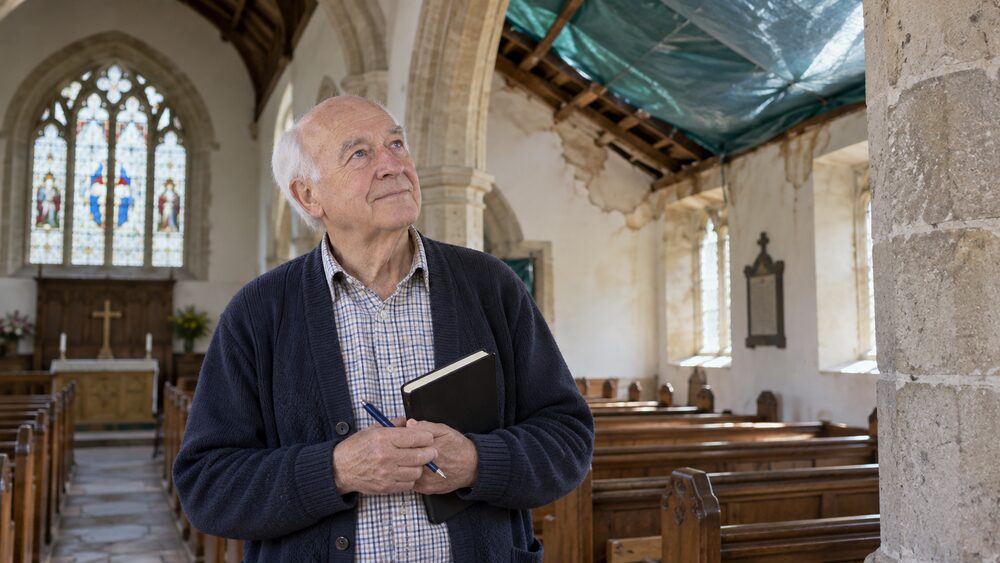
A small group of UK insurers is owned not by shareholders but by charities and churches, and their money goes somewhere different when the premiums come in. The best known is Ecclesiastical, which sells ordinary home insurance to households and, separately, insurance for churches and other buildings, and which donates £130 to the customer's church or cathedral when someone takes out a new home policy before 31 December 20261. Baptist Insurance works in a similar specialist way for Baptist churches, publishing its own risk guidance on subjects such as solar panels and unoccupied buildings3.
For a household, buying from a church or charity-owned insurer is much the same transaction as buying from any other: the policy is still home insurance, made up of cover for the building and cover for its contents, and it is regulated in the same way5. The differences that matter are where the insurer's profits and donations go, and the specialist cover and guidance some of these insurers offer for church buildings themselves, which mainstream home insurers generally do not.
What church and charity-owned insurers are
Most insurers in the UK are owned by shareholders, by parent companies in the financial sector, or by mutuals owned by their policyholders. A smaller group is owned by, or exists to benefit, churches and charities. Ecclesiastical is the clearest example: its name comes from the church, it insures both households and church buildings, and it channels money to churches through donation offers such as Trust130, under which a new home insurance customer triggers a £130 donation to their church or cathedral1. Baptist Insurance occupies a similar specialist position for Baptist churches, and publishes risk management guidance aimed at congregations rather than householders3.
What marks these insurers out is not the mechanics of the product, which are the same as any other home insurer's, but the destination of the money. A charity-owned insurer commits its profits to charitable purposes rather than to shareholders. The legal definition of a charity depends on where in the UK it is based: in England and Wales a charity is defined by section 1(1) of the Charities Act 2011, in Scotland by section 106 of the Charities and Trustee Investment (Scotland) Act 2005, and in Northern Ireland by section 1(1) of the Charities Act (Northern Ireland) 20087. So a "charity-owned" insurer in Glasgow is owned by an entity defined under Scottish charities legislation, while one in London sits under the English definition.
Charities themselves can help people in a range of ways, and this is worth understanding when an insurer's donations are part of the pitch. Charitable organisations offer money, a product, or a service depending on their purpose and resources8, and many will also help the dependants of the people they support, such as partners or children9. A donation from an insurer to a church or charity is one route by which that money reaches communities; Gift Aid can add to it, because lifetime donations to registered UK charities can benefit via the Gift Aid scheme10. For a Gift Aid declaration to be valid it must contain the donor's name and home address, name the charity, identify the gift or gifts it relates to, and confirm the gifts are qualifying donations11.
None of this changes what a policyholder buys. The cover, the premium, the excess and the complaints process are the same as for any insurer, and the sections below treat them that way.
Donation offers on new home policies: what to check
Ecclesiastical's Trust130 offer is the headline example of a donation linked to an insurance purchase. Under it, new customers taking out a home insurance policy before 31 December 2026 receive a £130 donation to their church or cathedral2. The offer appears across Ecclesiastical's home insurance pages, including its buildings insurance, contents insurance, clergy home insurance and church worker home insurance pages, all of which state the same deadline of 31 December 202612. The offer was extended to run through 20261.
The conditions to check before relying on any donation offer are:
- Who counts as a new customer. The offer applies to new home insurance policies, and Ecclesiastical's page for existing home insurance customers carries the same deadline, which suggests existing customers taking out a further new policy may also qualify, but the insurer's own terms govern this16.
- Which church or cathedral receives the money. The offer is worded as a donation to "the customer's church or cathedral", so the policyholder nominates the recipient in some way; the nomination rules are the insurer's to set and should be confirmed with it2.
- When the purchase must complete. The policy must be taken out before 31 December 2026; a policy bought on or after 1 January 2027 does not carry the donation2.
- Whether the donation is a qualifying charitable gift. If it is, the church or cathedral could also benefit from Gift Aid, which increases the value of a donation to charity at no extra cost to the donor10.
A donation offer is a reason to look at an insurer, not a reason to buy cover that does not fit. The policy itself should be compared on what it covers, what it excludes, the excess and the price, in the same way as any other home policy. The rules on how premiums are calculated and on insurance pricing apply to charity-owned insurers exactly as to the rest of the market.
Home insurance from a church-linked insurer: what it covers
Home insurance, sometimes called household insurance, is usually made up of two main parts: cover for the building itself and cover for the contents within5. A policy from a church-linked insurer follows that same structure. Ecclesiastical sells buildings insurance and contents insurance as the two halves of its home cover, and both carry the £130 donation offer for policies taken out before the end of 202612.
Buildings insurance covers the structure of the building, as well as permanent fixtures and fittings, for example baths or fitted kitchens5. It covers the cost of rebuilding a home if it is damaged or destroyed, including the costs of demolition, site clearance and architects' fees17. The risks usually covered include fire, explosion, storms, floods and earthquakes; theft, attempted theft and vandalism; frozen and burst pipes; fallen trees, lampposts, aerials or satellite dishes; subsidence; and vehicle or aircraft collisions17. Garages, sheds and fences are also covered, as well as the cost of replacing items such as pipes, cables and drains17.
Contents insurance covers the things a household owns. If a home is damaged, possessions are covered if the policy includes contents insurance, and 'contents outside the home' cover may protect personal possessions left in a vehicle18. To protect against loss or damage to contents left outside but within the boundaries of the home, such as a garden, 'contents in the open' cover is needed, and a good policy will usually include it as standard19.
A home insurance policy should cover sudden, unforeseen events such as bad weather and storms18. Flood cover is a standard part of buildings insurance19. Beyond the core cover, insurers offer add-ons: flooding or subsidence cover in high risk areas, accidental damage, alternative accommodation, damage to boundary walls, fences, gates, driveways and swimming pools, damage to underground pipes, cables, gas and electricity supplies, glass in windows, doors, conservatories and skylights, liability cover and legal expenses cover, usually at higher premiums17. Home emergency cover, which can cost around £50 a year, is one common add-on20. The rules on add-on insurance and on home emergency cover explain these in more detail.
Every policy sold in the UK must come with an insurance product information document setting out, in a standard format, what the insurance is, what is insured, what is not insured, any restrictions on cover, where the policyholder is covered, their obligations, how and when they pay, when cover starts and ends, and how to cancel21. That document is the place to check what a church-linked insurer's policy actually covers, rather than relying on the donation offer or the brand.
Insurance for church buildings: rebuild cost is the starting point
A church building is insured on the same principle as a house: the policy covers the structure and its permanent fixtures, and the sum insured should reflect what it would cost to rebuild. Buildings insurance covers the cost of repairing damage to the structure of a property17, and the insurance should cover the full cost of rebuilding, including demolition, site clearance and architects' fees17. For a church, that rebuild cost can be far higher than for an ordinary house, because of specialist stonework, stained glass, towers and heritage considerations, so the valuation needs care. Some insurers offer unlimited cover so the rebuild cost does not have to be worked out17.
The risks are the familiar ones. Most home insurance policies will cover storm damage, though some elements of flood damage may be excluded or require an extra premium22. Flood cover is a standard part of buildings insurance19. If a church owns its building, its buildings policy should provide cover for damage to the building itself; if the building is rented, the landlord is responsible22. Guidance from the British Insurance Brokers' Association is blunt about the core duty: make sure you have sufficient insurance cover for your sums insured on buildings23. Underinsurance is the most common way a church, like a householder, loses out on a claim; the page on underinsurance and the average clause explains how a payout is reduced when the sum insured is too low.
What a church should insure against, in summary:
- The structure and permanent fixtures, on a full rebuild cost basis5
- Storm, flood, fire and the other standard buildings risks17
- Contents, from furniture and liturgical items to equipment, under a separate contents policy5
- Liability, if the building is open to the public, as an add-on17
The valuation of the building is the church's responsibility to get right, and a specialist insurer that regularly values church buildings can help with this. The page on rebuild cost explains how the figure is arrived at for homes, and the same principle applies.
Unoccupied churches: why empty buildings need special attention
A church that stands empty for a period, whether between congregations, during a long closure or while repairs are planned, is a different insurance proposition from one in weekly use. Baptist Insurance maintains dedicated guidance on unoccupied church buildings, most recently updated on 20 November 2024, precisely because insurers treat empty properties as higher risk4. The risks that grow in an empty building are theft, vandalism, undetected water leaks, burst pipes and fire, because there is nobody there to notice a problem early.
The insurance market does cover empty properties. Renovation insurance, for example, is available for both residential and commercial properties and for both occupied and unoccupied properties24. So a church that stands empty can still be insured, but the cover is likely to come with conditions: regular inspections of the building, securing of doors and windows, draining down water systems in cold weather, and prompt reporting of any change in how the building is used. The page on how long a home can be empty explains the equivalent rules for households, and the same logic applies: the insurer must be told, because failing to tell it can reduce or remove cover.
If something does go wrong in an empty building, the claims process is the same as for any property. Insurers will generally pay for cleaning up and repairing the property, as well as temporary accommodation if a home has been made uninhabitable18. If a home is unsafe or uninhabitable, the policy might also provide alternative accommodation while the problem is being fixed25, and policies generally include cover for temporary accommodation if a home has been made uninhabitable26. For a church, the equivalent is cover for the costs of making the building safe and of any alternative arrangements for worship, which is a point to check with the insurer before a closure rather than after damage.
Solar panels on church roofs: what to check with the insurer
Many congregations are looking at solar panels as a way to cut energy costs and carbon emissions, and insurers have views on the risks. Baptist Insurance published guidance on 29 March 2022 setting out the considerations before installing solar PV systems on church buildings3. The concerns insurers flag are practical: the weight of the panels on an older roof, the fixings penetrating the roof covering, the standard of the installation, and what happens if the roof is damaged during storms or by fire.
Most buildings policies will cover storm damage22, and a church's buildings policy should cover damage to the building itself22. But a solar installation changes the building, and the insurer needs to know about it. The points to check with the insurer before and after installation are:
- Whether the panels themselves are covered under the buildings policy, or need to be listed separately17
- Whether the roof's structure, particularly on a historic building, has been assessed as able to take the installation3
- Whether the installer's workmanship is guaranteed, and who is liable if the installation causes a leak or damage3
- Whether the installation counts as a change that must be notified mid-policy, as with any material change to a property17
Optional extras on a buildings policy can be relevant here: accidental damage to the home, and damage to underground pipes, cables, gas and electricity supplies, are both available as add-ons, usually at higher premiums17. The general rules on telling your insurer about changes apply to a church building just as to a house.
Baptist Insurance and specialist church cover
Baptist Insurance is the specialist insurer for Baptist churches, and its role illustrates what a church-linked insurer does beyond selling policies. It publishes risk management guidance for congregations, including the solar panel guidance of March 20223 and the unoccupied buildings guidance updated in November 20244. This kind of guidance is a service in itself: it helps a congregation reduce the risks that lead to claims, which benefits both the church and the insurer.
For a church deciding where to buy cover, the choice is between a specialist insurer such as Baptist Insurance or Ecclesiastical, and the general market. A specialist knows the building type, can advise on rebuild costs and risk, and may offer cover mainstream insurers will not quote for. The general market may be cheaper for straightforward buildings. An insurance broker can help find cover in either market: GOV.UK's guidance notes that a person may want to use an insurance broker27, and the British Insurance Brokers' Association operates a Find Insurance service to help people find one28. The comparison of using a broker or buying direct sets out the trade-offs.
What a church should weigh, side by side:
| Option | What it offers | What to check |
|---|---|---|
| Specialist church insurer | Cover and risk guidance designed for church buildings3 | Price and cover against the general market |
| General insurer or broker | Quotes across the market, possibly lower premiums27 | Whether the policy covers heritage features and church use |
| Broker | Advice on sums insured and finding a willing insurer27 | Broker fees, and whether the broker is independent |
Making a claim: the order of events
The claims process for a church or a home insured with a church-linked insurer follows the same order as any buildings claim. The first step is to make the situation safe, but only with urgent work to protect people or prevent further damage: speak to your insurer before carrying out significant clean-up or repair work unless immediate action is needed29. Then contact the insurance company to say what happened and that you want to make a claim30.
After the insurer is notified, the claim is assessed and repairs agreed. Insurers will generally pay for cleaning up and repairing the property, as well as temporary accommodation if a home has been made uninhabitable18. If a home is uninhabitable, insurers should arrange and pay for temporary accommodation while repairs are carried out22. A householder whose home has flooded should check whether their insurance covers repair costs, replacing belongings, another place to stay, and legal cover and legal advice31.
The practical points that decide whether a claim goes smoothly are the same for a church as for a house: the sum insured must be sufficient23, the damage must be from a sudden, unforeseen event rather than gradual wear and tear18, and the insurer must be told before major work starts29. The pages on making a claim, on storm and flood claims and on why claims are rejected cover each stage in detail.
Complaints and where to get help
If something goes wrong with a policy or a claim from a church-linked insurer, the complaint route is the standard one. The first step is always to appeal to the insurer: clearly explain what went wrong from your perspective, make a formal complaint headed 'Complaint', include dates and the names of people spoken to, and say how you would like the problem resolved6. The Financial Ombudsman Service can then look at complaints about home insurance if the insurer does not resolve them5, and the page on complaining about an insurer explains the timescales and the ombudsman's role.
Beyond the insurer and the ombudsman, there are sources of free help. The Financial Ombudsman Service handles complaints about home insurance and home emergency insurance5. Charitable organisations offer a range of different kinds of help, depending on their purpose and resources32, and each organisation has its own rules for who it will help, which could be based on where you live, your or your partner's current or previous job, medical needs, or your financial situation33.
For churches themselves, the help tends to come from the denominations and their insurers: both Ecclesiastical and Baptist Insurance publish guidance for congregations on their websites1. A church struggling with the cost of repairs or insurance should raise it with its denomination and its insurer, and with a broker if it uses one27.
Sources33 cited
- Ecclesiastical Trust130 church donation offer Ecclesiastical, 2026
- Ecclesiastical home insurance Ecclesiastical, 2026
- Baptist Insurance guidance on solar panels for churches Baptist Insurance, 29 March 2022
- Baptist Insurance guidance on unoccupied buildings Baptist Insurance, 20 November 2024
- Financial Ombudsman Service: home insurance Financial Ombudsman Service, 26 September 2026
- How to complain about your insurance company Which?, 10 September 2025
- The Insurance Distribution (Amendment etc.) (EU Exit) Regulations, charity definitions legislation.gov.uk, 6 April 2025
- Business Debtline: help from charitable organisations Business Debtline, 26 September 2026
- Independent Age: financial help from charities and your community Independent Age, 26 September 2026
- Could donating to charity lower my inheritance tax bill? Which?, 23 February 2026
- The Gift Aid (Requirements as to Statements) Regulations 2016 legislation.gov.uk, 7 December 2016
- Ecclesiastical buildings insurance Ecclesiastical, 2026
- Ecclesiastical contents insurance Ecclesiastical, 2026
- Ecclesiastical clergy home insurance Ecclesiastical, 2026
- Ecclesiastical church worker home insurance Ecclesiastical, 2026
- Ecclesiastical existing home insurance customers Ecclesiastical, 2026
- Citizens Advice: buildings insurance Citizens Advice, 20 February 2020
- Does your insurance cover damage caused by bad weather? Which?, 8 December 2025
- Does your insurance policy cover heatwaves? Which?, 8 June 2023
- Do you need home insurance add-ons? Which?, 17 September 2026
- FCA Handbook: ICOBS 6 Financial Conduct Authority, 5 April 2024
- How to claim on your home insurance after a storm Which?, 22 February 2022
- BIBA: property damage from bad weather British Insurance Brokers' Association, 6 September 2022
- BIBA: home renovation insurance British Insurance Brokers' Association, 11 February 2026
- Financial Ombudsman Service: home emergency insurance Financial Ombudsman Service, 26 September 2026
- Which?: home insurance flooding Which?, 17 September 2026
- GOV.UK: vehicle insurance GOV.UK, 26 September 2026
- Will your travel insurance actually cover you this summer? Which?, 22 May 2026
- ABI advice for anyone affected by wildfires Association of British Insurers, 31 July 2026
- nidirect: after a flood, making an insurance claim nidirect, 29 August 2024
- Shelter England: housing help if your home is flooded Shelter England, 27 October 2025
- National Debtline: help from charitable organisations National Debtline, 25 September 2026
- Business Debtline: making the most of your money Business Debtline, 26 September 2026
 MoneyHelperFree, impartial money and pensions guidance, set up by government
 Financial Ombudsman ServiceFree, independent help when a complaint about a firm is not put right
 FSCSProtects your money if a bank, insurer or investment firm fails
 Citizens AdviceFree advice on money, consumer and legal problems in England and Wales
 GOV.UKOfficial information on tax, benefits and government services