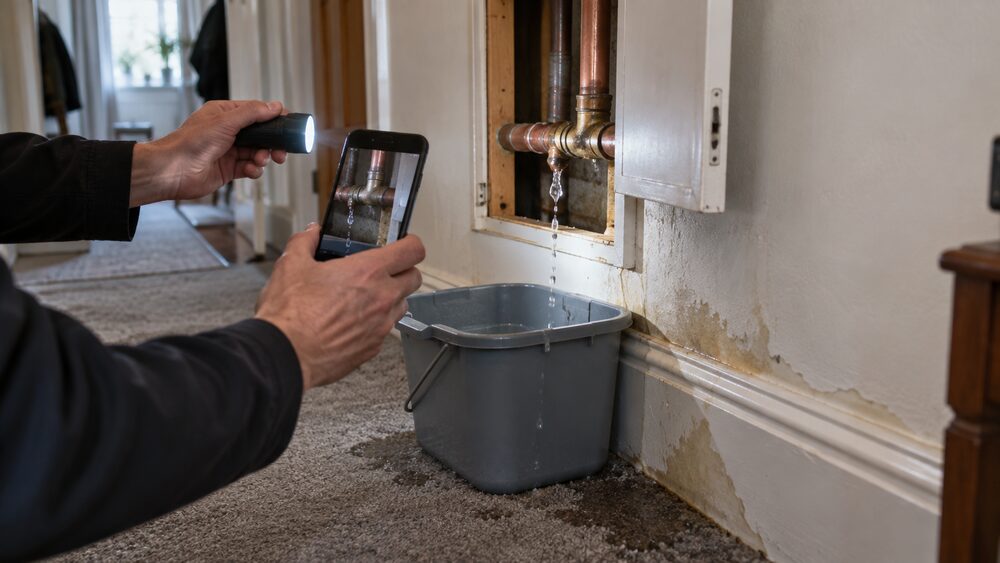
Storm, flood and burst pipe damage is what most people's home insurance is actually for. A standard buildings policy covers loss or damage from storms, floods, earthquakes, fire, explosion, theft, vandalism, frozen and burst pipes, fallen trees, subsidence and vehicle or aircraft collisions1. Insurers paid out £322 million for weather-related damage between April and June 2025 alone, a 7% rise on the first three months of that year2. Flood cover is a standard feature of home insurance, and policies generally also include temporary accommodation if your home has been made uninhabitable3.
What the policy pays for depends on which part of your home was damaged and why. Buildings insurance covers the structure and fixed parts; contents insurance covers your belongings. Insurers draw sharp lines around the edges: storm damage to the house is covered, but fences and garden walls often are not; flood damage is covered, but water entering through a roof that was not maintained is not; the damage from a burst pipe is covered, but the pipe itself often is not.
What storm, flood and escape of water cover pays for
A buildings policy pays to repair or rebuild the structure of your home after damage from an insured event. The standard list of covered risks includes fire, explosion, storms, floods, earthquakes, theft, attempted theft and vandalism, frozen and burst pipes, fallen trees, lampposts, aerials or satellite dishes, subsidence, and vehicle or aircraft collisions1. Contents insurance pays to replace belongings damaged by the same events, and the two covers are often bought together.
The level of cover varies between policies. When Which? reviews home insurance policies, its minimum requirements for buildings cover include flood, storm, subsidence and accidental damage cover, cover for burst or blocked pipes, trace and access cover of £5,000, alternative accommodation of £50,000 with no time limit, property owner liability of £1m, replacement of locks or keys for external doors up to £500, and home emergency cover of £500 including the central heating system7. Not every policy on the market meets that standard, so the sums insured and sub-limits in your own policy document are what matter.
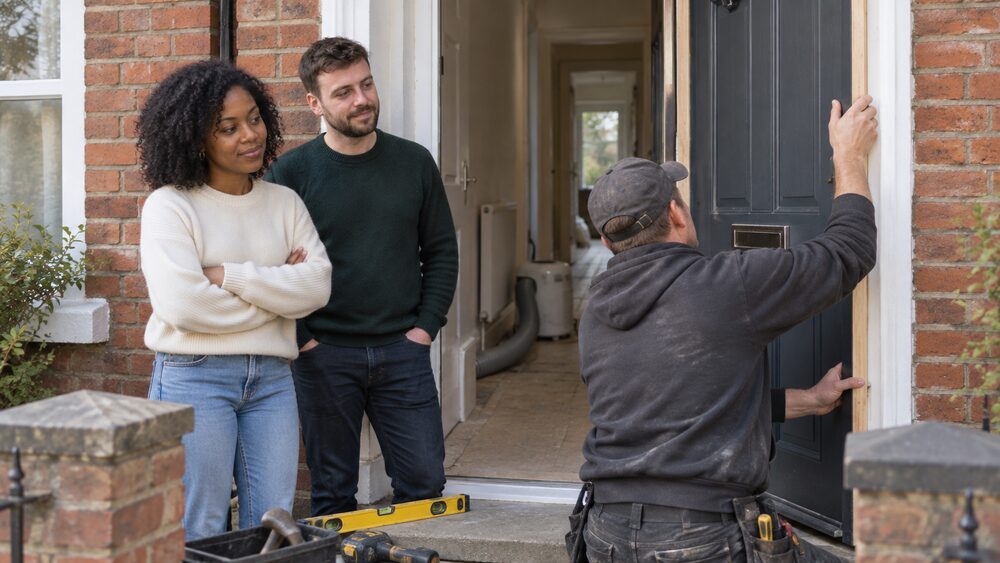
After a flood, insurers will generally pay for cleaning up and repairing your property, as well as temporary accommodation if your home has been made uninhabitable8. A flood claim can include replacing flood-damaged items, professional help to clean up, and temporary alternative accommodation while repairs are carried out9. What a policy pays, and how it pays it (repair, replacement or cash), is set by its terms, and the sections below explain where those terms commonly bite.
Storm damage: wind, rain, hail, snow and fallen trees
Buildings insurance covers damage caused by hail, wind, rain, snow and ice, including broken roofs, burst pipes, falling trees and power cuts4. The same list appears in independent guidance on bad-weather damage: broken roofs, frozen pipes, fallen trees and loss of power are all standard storm consequences8.
The practical difficulty is that insurers do not pay for weather damage simply because the weather was bad. They look for evidence that the event was severe enough to count as a storm. Axa's policy documents refer to evidence of windspeeds of 55mph or higher when deciding storm claims10. Tesco's policy sets out four weather events, one of which needs to have taken place for a storm claim to be viable: wind speeds exceeding 55mph, snowfall exceeding 30cm depth in 48 hours, torrential rainfall exceeding 25mm per hour, or hail causing damage to hard surfaces7. The dedicated page on what counts as a storm explains these definitions in more detail.
Two boundaries catch people out. First, garden items: policies may have exclusions regarding weather damage to things like garden items, so the policy wording rather than assumption determines what on your property is included11. Second, the cause of the damage matters more than the weather on the day. If a tree falls because it was dead and neglected rather than because the wind was exceptionally strong, an insurer may argue the loss was not caused by a storm at all. Keeping records of the weather at your address on the day, and photographing the damage before anything is moved, can strengthen a claim.
Flood cover is standard, even in high-risk areas
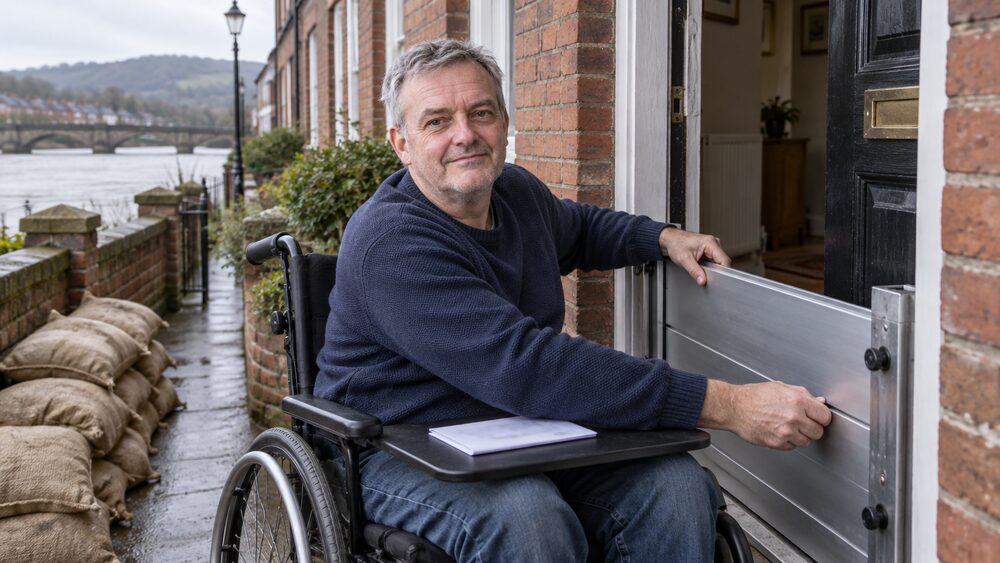
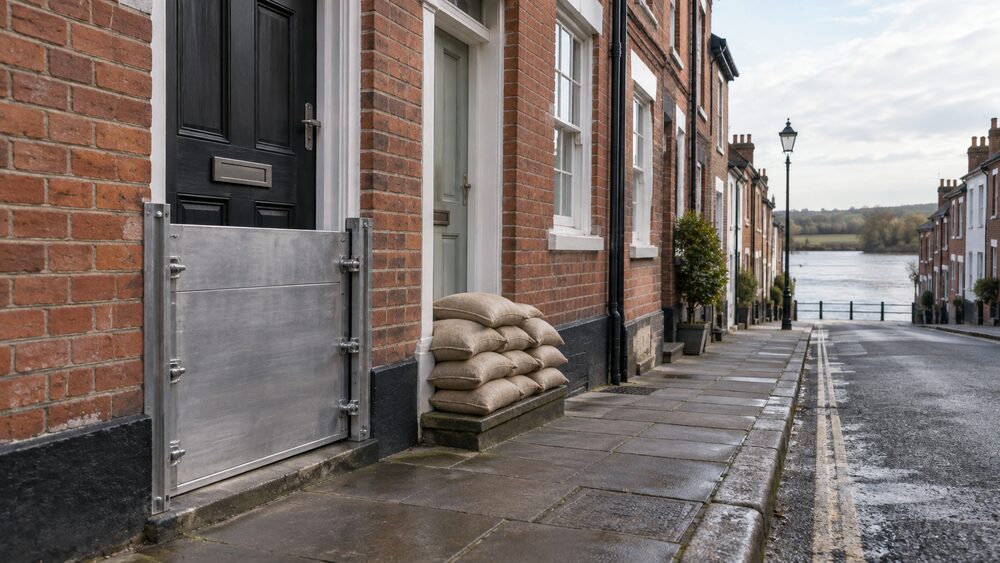
Flood cover is a standard feature of home insurance3. A typical buildings policy provides cover, at least in principle, for damage caused by floodwater entering your home from an external source, including a river or canal bursting its banks, storms and high tides, and heavy rainfall3. Independent guidance confirms flood cover is usually included as standard with buildings insurance and is widely available, even for homes in high-risk areas4.
For homes at high risk, the market works through Flood Re, a commitment by the industry to offer insurance in high-risk areas at affordable prices12. The scheme has aimed to enable householders in areas of high risk of flooding to get adequate cover at a "reasonable" price13. There are limits: Flood Re does not cover buildings insurance for a block of more than three leasehold flats13.
Being in a high-risk area still costs more. If you live in a high-risk flood area or your home has flooded in the past, the quotes you are offered may exclude flood cover or add a high excess3. Policies in flood-risk areas often have much higher excesses for flood claims14. Welsh Government analysis found that a home in a high-flood-risk area with a flood claim typically sees a jump of about another 50%, meaning these homes typically see prices that are 100 to 120% higher than low-risk, no-claim properties15. The same analysis notes the data behind this is limited, drawn from a UK-level sample of only 100 high-risk properties with former claims, and does not address take-up or those ineligible for the scheme15.
Groundwater flooding sits in a grey area. Some policies do not cover it at all; others cover it only if it occurred rapidly. Insurers usually cover groundwater flooding if it built up rapidly, but not where it has risen gradually3. Previous flooding or flood risk has to be disclosed when an insurer asks, because leaving it out can invalidate the policy14. Some insurers are stricter than others: Allianz's buildings and contents insurance does not currently insure properties that have suffered a flood or are under a current flood warning16. The pages on Flood Re, getting home insurance after a flood and Build Back Better cover the high-risk market in more detail.
Burst pipes: the damage is covered, the pipe usually is not
Frozen and burst pipes are a standard insured risk on buildings insurance1, and burst pipes cover is included in the buildings sections of policies such as Tesco's standard home insurance7 and Nationwide's Enhanced home insurance17. What catches people out is the split between the damage and its source.
Most buildings insurance policies cover damage to underground pipes, drains, cables and tanks, often called "underground services". But cover tends to be for the pipes themselves, not for any damage beyond the pipe, for example a leak that has damaged parts of the property, though escape of water or flooding cover might apply18. Policies generally only cover pipes you are responsible for, so they will not cover problems with pipes owned by water companies or neighbours18. Many policies also do not cover damage to pitch fibre pipes18.
Escape of water claims can fail on the cause. Policies do not usually cover sulphate damage unless it is caused by an insured event, for example a leak from a water tank19. Where damage is gradual rather than sudden, insurers often point to exclusions for rising groundwater, excess moisture or rot20. The ombudsman's guidance on gradual damage makes the same point: it is important to see expert reports and photos of the damage to back up a claim that the problem was sudden21.
Home emergency cover, an add-on explained on its own page, works differently again. It does not usually cover any damage the emergency has caused22. Its definition of emergency can be narrow: in one ombudsman case study, the policy defined an emergency as "sudden and unexpected", and the insurer argued that damage to a pipe was not sudden or unexpected because the pipe had not been insulated23. Accidental damage cover, where bought, typically includes accidental breakages of window glass or damage to pipes or cables as standard, sometimes with limits24.
Where storm and flood cover does not apply
The main exclusions cluster around maintenance, gradual damage and parts of the property outside the main building.
- Wear and tear. You might not be covered by a standard home insurance policy if the damage results from general wear and tear, for example water entering through a poorly maintained roof8. General wear and tear is not included in accidental damage cover either24.
- Fences, gates and garden items. Storm damage is covered, but fences, gates and outbuildings are often excluded2. Some insurers will not cover damage to patios, garden walls or driveways unless the main building is affected2. Many policies do not cover damage to other parts of your property, such as patios, paths and terraces, unless your main residence is also affected19. Tesco's storm cover, for example, does not cover fences, gates or hedges, or fixed items in the open such as outdoor hot tubs7.
- Unoccupied homes. A standard policy may not pay out if the loss or damage was caused while the home was unoccupied4.
- Unfinished building work. Admiral's buildings insurance excludes storm or flood damage to unfinished extensions or alterations25.
- Cars. Comprehensive car insurance usually includes damage caused by floods, storms, fallen trees or flying debris, but third party only and third party, fire and theft policies do not cover storm or flood damage to your own car26.
- Gradual damage. In one ombudsman case, the insurer argued the policy excluded damage caused by rising groundwater, excess moisture or rot, and that the damage was gradual20.
One indirect effect is worth knowing: while chewed wires caused by rodents might not be covered, any fire they cause should be4. The same logic applies to many exclusions: the underlying cause may be excluded, but a resulting insured event can still be claimed. The pages on gradual damage and why claims are rejected go further into these boundaries.
Who claims: owners, landlords, freeholders and tenants
Who claims depends on who insures what. If you own your home, buildings insurance is your responsibility and is usually a condition of your mortgage27. If you rent, your landlord is responsible for buildings insurance, while your personal belongings need their own cover2. Tenants' claims for damage to the building go through the landlord, who contacts the company that insures it, and possessions are claimed on the tenant's own contents policy9. The landlord's insurance will not provide cover for a tenant's belongings, so tenants must insure their own possessions at the property28.
Leasehold flats work differently again. Your lease may require buildings insurance with a named insurer, or the freeholder may take out insurance and charge you for it1. If you own a leasehold flat, check whether your freeholder's insurance covers repair costs; buildings insurance should cover flood risks29. The ombudsman can usually look at complaints about claims for damage to a leased property, and, if the policy was sold or renewed after 31 December 2023, complaints about information the insurer provided30. The page on buildings insurance for leasehold flats covers this in full.
For renters whose homes flood, the practical questions go beyond insurance: council and housing association landlords might have to give you somewhere to stay if flooding in your home is an emergency hazard29. The page on renting after a flood covers rehousing, rent and benefits.
How to make a storm or flood claim
The process is broadly the same whichever peril caused the damage.
- Report the damage. When your home is flooded, flood damage needs to be reported to your home insurance company9. Contact your insurer, tell them what happened and say you want to make a claim. Keep a record of the dates and times you contact your insurer9.
- Record the damage before anything is cleared away. Use a permanent ink pen to mark the highest level the flood water reached on the walls of each room, take photographs or a video of the damage, list details of all flood damage in your home, and list food you had to throw away because it was contaminated or gone off, all before the loss adjuster visits9.
- Cooperate with the loss adjuster. The insurer sends someone to assess the damage and decide what the policy pays. The comparison page on loss adjusters and loss assessors explains who does what.
- Receive the decision and settlement. The insurer may offer repair, replacement or cash. If you insist on cash when the insurer is willing to repair or replace, the insurer will only pay the amount it would cost them, usually less than market rates because insurers get discounts from suppliers and contractors31.
Evidence matters most when the cause is disputed. In one ombudsman case study, an insurer refused a storm damage claim, but the ombudsman's investigation showed wind was indeed the cause; the ombudsman upheld the complaint and told the insurer to deal with the claim under the storm damage section of the policy32. In another, involving damage to a minaret blamed on a design fault, the ombudsman told the insurer to treat the claim as one for storm damage33. When the ombudsman weighs these disputes, it considers expert opinions, photos of the damage, a report including photos from a surveyor, loss adjuster or other expert, and customer testimony34.
One cost warning applies to car claims rather than home claims, but is often asked alongside: insurers often treat storm or flood damage as an "at-fault" claim, because there is no third party to recover the costs from, which can push up the renewal premium26.
Excess, sum insured and underinsurance: what reduces a payout
Three things shrink a payout before any dispute about cause: the excess, the sum insured and the basis of cover.
The excess is the amount you pay towards each claim, and policies in flood-risk areas often carry much higher excesses for flood claims14. The page on insurance excess explains compulsory and voluntary excess.
Underinsurance is the bigger risk. Buildings insurance is based on the rebuild cost, not the market value35, and the sum insured needs to be the amount it would cost to completely rebuild your home, which is usually less than the sale price27. If the figure on your policy is too low, you could be underinsured, meaning your insurer may reduce any payout if you need to claim35. BIBA warns that where the sums insured for a building and its contents are not correct, a claim payout could be reduced11. Policies differ in how cover is set: a specific buildings sum insured, a high standard limit, bedroom-rated cover, or unlimited cover35.
The reduction is worked out by an average clause: you pay a proportion of any loss or damage if you have insured something for less than its replacement value, and the insurer has a formula for working this out36. The ombudsman's guidance gives a worked example: if the sum insured is £300,000 but should have been £500,000, the insurer will pay 60% of the claim value5. In one complaint the ombudsman records, underinsurance issues reduced a buildings insurance claim payout by 50%36.
Whether the ombudsman finds a reduction fair depends on what the insurer would have done with the right information. If the insurer would still have insured the consumer but at a higher premium, the ombudsman is likely to find the insurer can reduce the claim in line with the proportion of the premium paid: for example, if they paid £400 but should have paid £500, they receive 80% of the claim value5. If the insurer would not have insured the consumer at all, the ombudsman is likely to find it fair for the insurer to reduce or decline the claim, and the insurer may also void the policy5. If the insurer would have insured them at the same premium, the ombudsman is unlikely to find a reduction or decline fair5. The pages on underinsurance and rebuild cost cover this in depth.
Temporary accommodation if your home is uninhabitable
Policies generally include cover for temporary accommodation if your home has been made uninhabitable3. Insurers will generally pay for cleaning up and repairing your property, as well as temporary accommodation8. After a flood, you may be able to get flood-damaged items replaced, professional help to clean up, and temporary alternative accommodation if you need to move out while your home is being repaired9.
Home emergency policies can also provide alternative accommodation while the problem is being fixed, if your home is unsafe or uninhabitable22. The amount and duration of cover varies by policy: Which?'s review criteria for buildings cover include alternative accommodation of £50,000 with no time limit7, but other policies set lower sums or time limits, so the figure in your own policy document governs.
For renters and social tenants there is a further route: council and housing association landlords might have to give you somewhere to stay if flooding in your home is an emergency hazard29. Disputes about the suitability of repairs or of alternative accommodation can be taken to the ombudsman like any other part of the claim; the page on repairs and alternative accommodation covers the common complaints.
Complaints about buildings claims and where to get help
Buildings insurance generates a substantial volume of complaints. The Financial Ombudsman Service opened 1,766 buildings insurance complaints in the first quarter of 2026/27 and upheld 33% of them6, up from 1,668 in the first quarter of 2025/2637.
The common complaints about settled claims are recognisable to anyone who has been through one: the insurer arranged the repairs but has not fixed the damage; the repairs caused additional damage; the insurer says repair but the customer thinks replacement; the replacement is not the same as the lost item; the money offered is not enough; or dissatisfaction with the quality of the insurer-appointed builder's work38.
The route is fixed: a complaint goes to the insurer first, in writing, setting out what went wrong and what you want. The insurer should reply to a complaint within eight weeks39. If you are not satisfied with the final response, or eight weeks pass without one, the complaint can be taken to the Financial Ombudsman Service, which can look at complaints about an insurance company or claim40. The ombudsman's decisions are free to the consumer and binding on the insurer if accepted. The pages on complaining about an insurer, insurer response times and compensation for distress and inconvenience explain each stage.
Sources40 cited
- Buildings insurance Citizens Advice, 20 February 2020
- 6 questions to ask before you choose a home insurance policy Which?, 15 October 2025
- Home insurance and flooding Which?, 17 September 2026
- 5 winter risks your home insurance might not cover Which?, 26 September 2026
- Underinsurance in home insurance complaints Financial Ombudsman Service, 26 September 2026
- Quarterly complaints data Q1 2026/27 Financial Ombudsman Service, 2026
- Tesco Home Insurance review Which?, September 2026
- Does your insurance cover damage caused by bad weather? Which?, 8 December 2025
- After a flood: making an insurance claim nidirect, 29 August 2024
- Five reasons insurers deny claims that could catch you out Which?, 17 February 2018
- Storm protection British Insurance Brokers' Association, 10 November 2022
- Flood Re briefing House of Commons Library, 8 July 2026
- Insurance and flood: a Wales perspective Welsh Government, 17 March 2025
- Home insurance National Flood Forum, 26 September 2026
- Flood insurance: a Wales perspective consultation report Welsh Government, November 2025
- Is it worth paying extra for flood and storm cover? Which?, 12 June 2024
- Nationwide Home Insurance review Which?, September 2026
- Storm damage Financial Ombudsman Service, 27 September 2026
- Subsidence and types of ground movement Financial Ombudsman Service, 26 September 2026
- Gradual damage irrelevant where problem not covered by policy Financial Ombudsman Service, 26 September 2026
- Gradual damage Financial Ombudsman Service, 27 September 2026
- Home emergency insurance Financial Ombudsman Service, 26 September 2026
- Customer's boiler stops working and insurer disagrees it was an emergency Financial Ombudsman Service, 27 September 2026
- Do you need home insurance add-ons? Which?, 17 September 2026
- Will your insurance cover home improvements? Which?, 26 July 2025
- Is your car covered for flood damage? Which?, 8 November 2025
- Shopping around for insurance Independent Age, 26 September 2026
- Renting a property Royal Institution of Chartered Surveyors, 26 September 2026
- Housing help if your home is flooded Shelter England, 27 October 2025
- Multiple occupancy buildings insurance Financial Ombudsman Service, 26 September 2026
- Settling home insurance claims Financial Ombudsman Service, 26 September 2026
- Insurer refuses storm damage claim, but investigation shows wind was the cause Financial Ombudsman Service, 27 September 2026
- Minaret damage: design fault or storm damage? Financial Ombudsman Service, 26 September 2026
- Accidental damage Financial Ombudsman Service, 26 September 2026
- Could you be underinsured? Why your rebuild cost matters Which?, 22 May 2026
- Underinsurance Financial Ombudsman Service, 26 September 2026
- Quarterly complaints data Q1 2025/26 Financial Ombudsman Service, 7 August 2025
- Home insurance complaints Financial Ombudsman Service, 26 September 2026
- Accidental damage: handling complaints Financial Ombudsman Service, 27 September 2026
- Complaints we can help with Financial Ombudsman Service, 26 September 2026

 MoneyHelperFree, impartial money and pensions guidance, set up by government
 Financial Ombudsman ServiceFree, independent help when a complaint about a firm is not put right
 FSCSProtects your money if a bank, insurer or investment firm fails
 Citizens AdviceFree advice on money, consumer and legal problems in England and Wales
 GOV.UKOfficial information on tax, benefits and government services