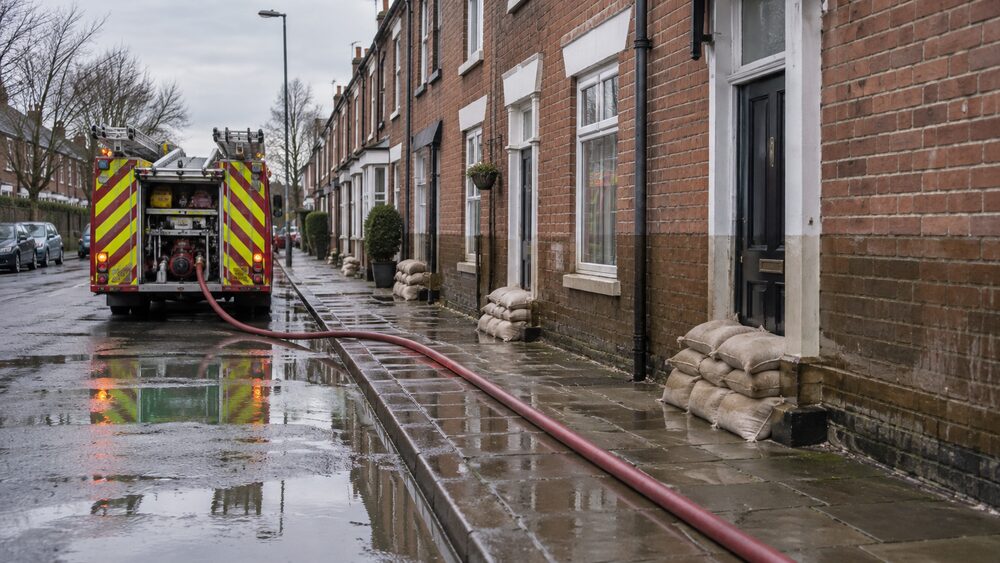
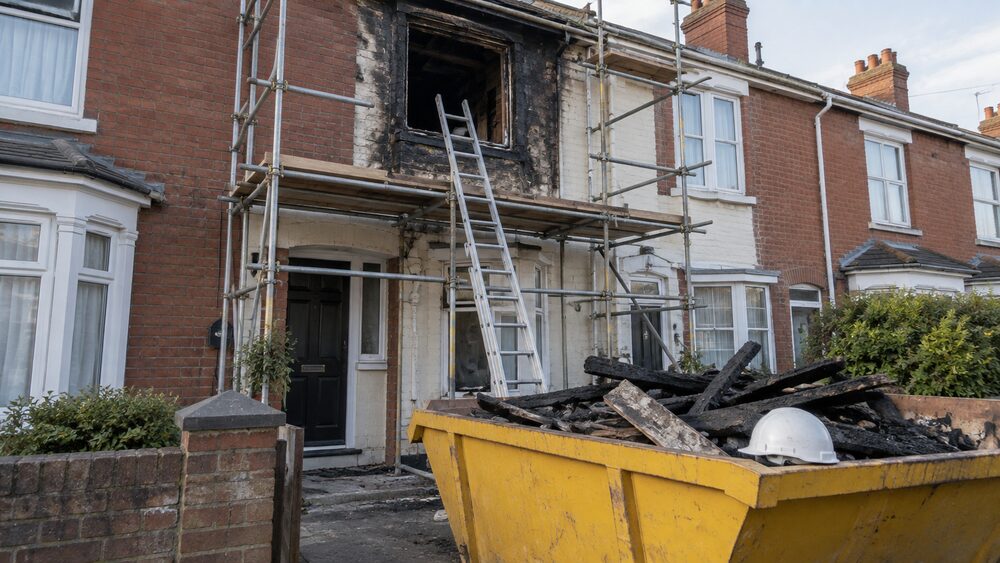
If your home has flooded, the first step is to report the damage to your home insurance company and to stay out of the property until it is safe to return1. Flood cover is usually a standard part of buildings insurance, but it will not cover your belongings unless you also have contents insurance2. If you rent, your landlord arranges the buildings cover and you need contents insurance for your own things3.
If your home has flooded, the first step is to report the damage to your home insurance company and to stay out of the property until it is safe to return1. Flood cover is usually a standard part of buildings insurance, but it will not cover your belongings unless you also have contents insurance2. If you rent, your landlord arranges the buildings cover and you need contents insurance for your own things3.
Before a loss adjuster visits, use a permanent ink pen to mark the highest level the flood water reached on the walls of each room, take photographs or a video of the damage, and list everything damaged, including food you had to throw away because it was contaminated or had gone off1. The National Flood Forum has teamed up with the Association of British Insurers to publish a step-by-step guide explaining what to expect when recovering your home after a flood, setting out each stage of the insurance and reinstatement process4.
The average cost to repair a flooded home is now in excess of £70,000, according to a Welsh Government consultation report published in November 20255. That figure explains why insurers take flood claims seriously, and why the settlement route they choose matters so much to what you end up with.
What your home insurance covers after a flood
Home insurance is usually made up of two main parts: cover for the building itself and cover for the contents within it9. Flood insurance, sometimes called flood risk insurance, can cover your home and its contents if they are damaged or destroyed by floods2. A typical buildings policy provides cover, at least in principle, for damage caused by floodwater entering your home from an external source, including a river or canal bursting its banks, storms and high tides, and heavy rainfall3.
What you may be able to get from a claim includes flood damaged items replaced, professional help to clean up, and temporary alternative accommodation if you need to move out while your home is being repaired1. Shelter advises checking whether your insurance covers repair costs if your home is flooded, replacing your belongings, another place to stay, and legal cover and legal advice10.
If you own your home, you are usually responsible for repairs due to flood damage10. If you rent, the split is different: your landlord is responsible for arranging buildings insurance, while you need a home contents policy for your personal belongings3. Tenants with contents insurance should contact their insurer, say the home was flooded and ask to make a claim for contents1.
Flood cover is usually included as standard with buildings insurance and is widely available, even for homes in high-risk areas6. That said, if you live in a high-risk flood area or your home has flooded in the past, the quotes you are offered by some insurers may exclude flood cover or add a high excess3. It is worth checking the policy schedule rather than assuming.
Where flood cover stops: groundwater, gardens, outbuildings and empty homes
The edges of flood cover are where most disputes start. Groundwater is the clearest example. Home insurers will usually cover groundwater flooding if it has built up rapidly, but not where it has risen gradually3. Many insurers will not cover damage caused by groundwater flooding at all, and some policies also exclude damage to certain parts of the property such as outbuildings or fences11.
Cover for groundwater varies by insurer. NFU Mutual Bespoke lists groundwater flooding as not covered for buildings12. Nationwide Enhanced home insurance lists groundwater flooding as included in buildings cover as of September 202613, and Tesco standard home insurance lists it as included for buildings as of September 202614. The differences are in the policy wording, not in the headline price.
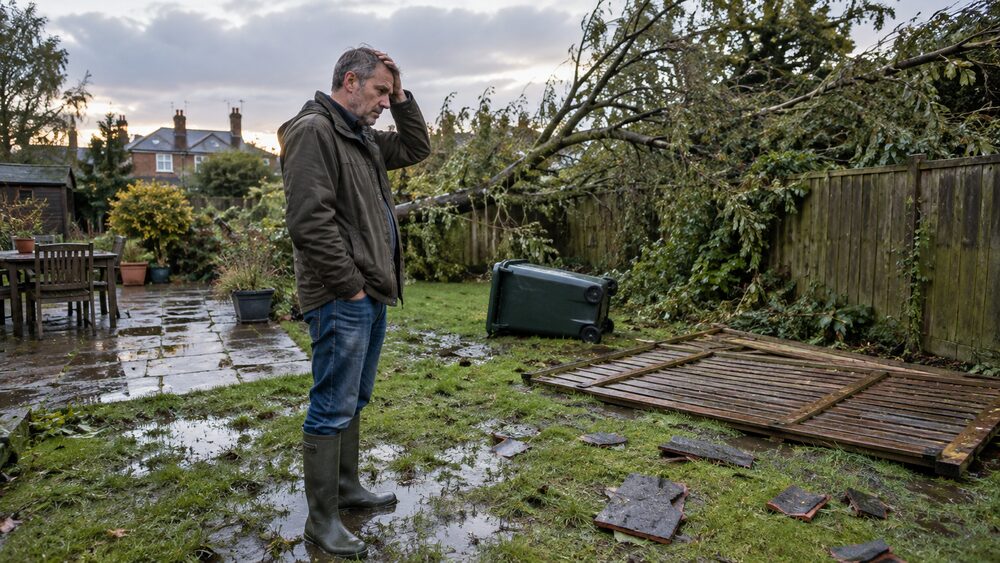
Gardens and outbuildings are a second gap. Cover for items in your garden may vary: some policies include cover for garden furniture, trees, hedges, lawns and fences, while others do not15. Movable belongings deliberately left outside but within your property boundaries, such as garden furniture, plant pots and barbecues, are covered by some contents policies6. Esure, by contrast, states that it cannot cover any damage in a garden caused by storm, flood or subsidence16. Outbuildings cover, where it exists, applies to structures detached from your private residence, such as sheds, summer houses and garages17. Storm damage is covered, but fences, gates and outbuildings are often excluded7.
Empty homes are a third limit. If your home is going to be empty for more than 30 consecutive days, you may need a specialist unoccupied home insurance policy7. Standard policies restrict cover for properties left empty, so an insurer needs to know before the property is left.
Making a claim: repair, replace or cash settlement
Insurers settle home claims in one of three ways: repairing the damage, replacing something lost or damaged, or paying cash to cover the cost of repair or replacement19. Policies commonly contain a term along the lines of: "We will decide whether to repair, replace, pay cash or reinstate the damaged part of the building."19
That wording matters. If the customer insists on cash when the insurer is willing to repair or replace, the insurer will only pay the amount it would cost them, which is usually less than market rates because insurers get discounts from suppliers and contractors9. If you go ahead with the repair yourself, you are responsible for the cost until your insurers have agreed, and the insurer may pay a lesser amount if repairs could have been done cheaper elsewhere20.
The practical steps before the loss adjuster arrives are set out in official guidance: mark the highest level the flood water reached on the walls of each room with a permanent ink pen, take photographs or a video of the flood damage, list details of all flood damage in your home, and list food you had to throw away because it was contaminated or had gone off1. If a complaint about a claim reaches the Financial Ombudsman Service, it may ask the insurer to make necessary repairs, replace the item, offer a cash settlement, or compensate for distress or inconvenience21.
Somewhere to stay while your home is repaired
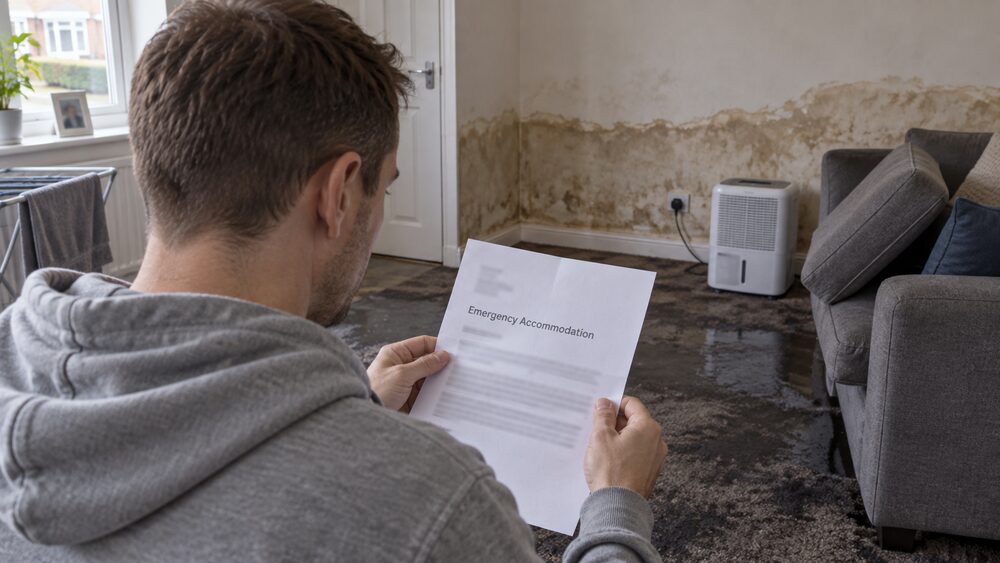
If you cannot live in your home because of flooding, the first place to look is your own policy. Halifax Home Insurance Select, for example, includes a place to stay if you cannot live in your home due to flooding on combined building and contents policies2. More generally, temporary alternative accommodation if you need to move out while your home is being repaired is one of the things a home insurance policy may provide1.
If you rent from a council or a housing association, your landlord might have to give you somewhere to stay if flooding in your home is an emergency hazard10. Councils in England must give you emergency accommodation if you are homeless after flooding10. Tenants whose flood damaged belongings are not covered may be able to get help from a local assistance fund10.
Renters should be aware that the rent obligation continues. In Wales, guidance for renters states that you must keep paying the rent even if your home is being repaired and you can only use one or two rooms22. Housing Rights can also help you find suitable alternative accommodation if you are not able to stay in your home23.
Home emergency insurance is a separate product and does not fill this gap. It does not usually cover any damage the emergency has caused, and most home emergency policies are only meant to cover stopping the emergency rather than consequential damage21. If you were evacuated but your home was not damaged, a home emergency policy is unlikely to pay for a hotel.
If you have no insurance or your mortgage lender requires it
Home insurance is not a legal requirement in the UK8. If you have a mortgage, though, your lender will normally require buildings insurance as a condition of the loan, and the ongoing costs of owning a home include mortgage repayments, mortgage protection insurance, life assurance, contents insurance, rates, utility bills, ground rent and service charges24.
If you do not have insurance, you will not be able to make a claim for damage to your property25. That leaves other routes. If you are struggling with mortgage payments after a flood, Support for Mortgage Interest is a loan that can help, but if no arrangement is made to pay future mortgage or secured loan payments, payments to your mortgage will stop and you may begin to run up arrears, and your mortgage lender could eventually take court action to evict you from your home26.
There is no law requiring life insurance to get a mortgage, even where a lender says otherwise27. If a mortgage indemnity guarantee was taken out when the property was bought, the insurance will pay all or part of the shortfall to the lender, but the borrower remains responsible for the money and can be asked to pay it back after the property is sold28. If the property has to be sold, a lender can claim any shortfall from the insurance company, but the borrower is still responsible for the debt29.
Sources29 cited
- After a flood: making an insurance claim nidirect, 2024-08-29
- Flooding guidance Halifax, 2026-09-27
- Home insurance and flooding Which?, 2026-09-17
- After a flood National Flood Forum, 2026-09-26
- Flood insurance: a Wales perspective Welsh Government, 2025-11
- 5 winter risks your home insurance might not cover Which?, 2026-09-26
- 6 questions to ask before you choose a home insurance policy Which?, 2025-10-15
- Santander home insurance review Which?, 2026-09-17
- Home insurance complaints Financial Ombudsman Service, 2026-09-26
- Housing help if your home is flooded Shelter England, 2025-10-27
- Does your insurance cover damage caused by bad weather? Which?, 2025-12-08
- NFU Mutual home insurance review Which?, 2026-09
- Nationwide home insurance review Which?, 2026
- Tesco home insurance review Which?, 2026-09
- ABI shares advice following recent wildfires across the UK Association of British Insurers, 2026-08-14
- Garden insurance esure, 2026
- Your cover explained Halifax, 2026-09-27
- Subsidence and ground movement Financial Ombudsman Service, 2026-09-26
- Settling home insurance claims Financial Ombudsman Service, 2026-09-26
- Accident checklist British Insurance Brokers' Association, 2026-09-26
- Home emergency insurance Financial Ombudsman Service, 2026-09-26
- Llifogydd Shelter Cymru, 2026-09-10
- Mortgage arrears or payment difficulties nidirect, 2025-11-07
- Buying a home: things to consider nidirect, 2026-02-25
- ABI offers advice to anyone affected by wildfires in Suffolk and across the UK Association of British Insurers, 2026-07-31
- How do I claim Support for Mortgage Interest? Turn2us, 2026-09-26
- Life insurance for mortgages Scope, 2026-04-01
- Sale by mortgage lender Shelter Cymru, 2026-08-28
- Selling voluntarily Shelter Cymru, 2026-08




 MoneyHelperFree, impartial money and pensions guidance, set up by government
 Financial Ombudsman ServiceFree, independent help when a complaint about a firm is not put right
 FSCSProtects your money if a bank, insurer or investment firm fails
 Citizens AdviceFree advice on money, consumer and legal problems in England and Wales
 GOV.UKOfficial information on tax, benefits and government services