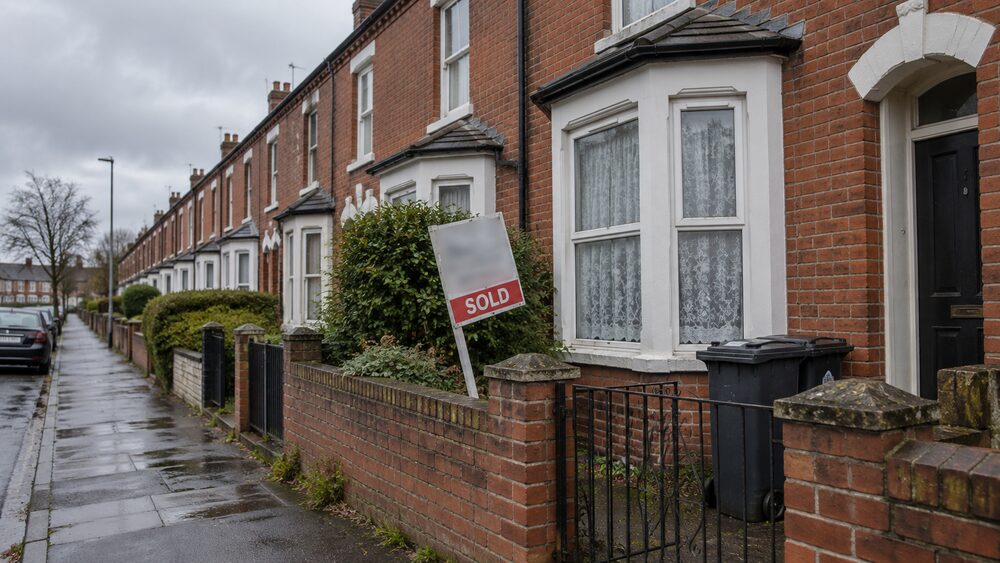
A retrospective valuation puts a figure on what an asset was worth on a date that has already passed. You might need one to complete an Inheritance Tax account after a death, to work out a Capital Gains Tax bill on a property or shareholding, to divide assets in a divorce, or to settle a dispute about what something was worth at a particular moment.
The person who can do it depends on the asset. For property, a surveyor accredited by the Royal Institution of Chartered Surveyors (RICS) is the standard for anything formal, and several government schemes require a valuer who is both RICS qualified and registered1. For shares and investments, HMRC's own guidance sets out which price to use: the closing value on the day the person died for listed stocks and shares2.
There is no single national rule on how far back a valuation can go. What matters is the evidence available for the date in question, and the further back you look, the thinner that evidence tends to be. Some schemes impose their own windows: a Help to Buy equity loan valuation report is valid for three months from the date it was produced, and can only be extended within two weeks of expiring1.
What a retrospective valuation is and when you need one
A retrospective valuation is an assessment of market value at a date in the past rather than today. The definition used in the Help to Buy Wales scheme captures the idea: it is "the estimated amount for which your property should sell for on the valuation date on an arms length sale in the open market"4. The valuation date is fixed, and the valuer's job is to reconstruct what a willing buyer would have paid then, not what the property is worth now.
The situations that call for one are mostly legal or tax-driven. An estate has to be valued before probate is applied for, if probate is needed3. A property sale that falls within Capital Gains Tax needs a value at acquisition and at disposal, and tax relief may be available if the property is a business asset5. A divorce settlement that transfers the family home from one spouse to the other should use a valuation at the date of separation, with a current valuation also obtained if significant time has passed6.
There are also narrower triggers. If you have external cladding or there is a breach of planning permission, a Help to Buy equity loan valuation may need to be a specialist one1. Where a down valuation is due to a need for remedial works, a revaluation following completion of the work may resolve the issue7.
Common reasons: probate, Capital Gains Tax, divorce and disputes
Probate is the most common reason. The estate must be valued before probate is applied for, and valuing an estate can take several months, longer if it is big or complicated, for example if it involves trusts or there is tax to pay3. Every asset is valued as if it had been sold on the date the deceased died, at what the law calls open market value, with asset values rounded down to the nearest pound and liabilities rounded up3.
Capital Gains Tax is the second. When a property is sold, the gain is measured between acquisition and disposal, and both ends need a value. Tax relief may be available if the property is a business asset5. For shares acquired through an employee share scheme, you are generally treated for capital gains purposes as acquiring your shares at the date when you exercise your option, which fixes the acquisition value8.
Divorce and separation bring their own rule. If the home is transferred to one spouse, it should be valued at the date you separated, with a current valuation also obtained if significant time has passed6. Disputes between parties, or between a taxpayer and HMRC, are the fourth category, and they usually turn on the quality of the comparables behind the figure.
Valuing property at a past date
For a property, the standard method is comparable sales. A mortgage valuation is done by looking at three sales transactions of similar types of properties in the local area and the professional's knowledge of the local market7. Where a scheme needs more, the bar rises: Help to Buy asks for at least 6 comparable properties and sale prices from the last year if the property has increased or decreased in value1.
The evidence base is public but imperfect. The Land Registry lists sold prices and you can search by town, street or even individual property, but the data is not up to the minute because sales must be completed and processed first9. A desk-based valuation uses analysis of local house price data, from the Land Registry or another house price index, plus an algorithm to produce an automated figure7. That is a starting point, not a substitute for a report where a tax authority or court needs one.
For a sale rather than a tax purpose, Which? suggests inviting three local estate agents who have recently sold properties similar to yours to value your home, and going with the middle valuation or calculating an average9. If you are hoping to sell, it is possible to check what property value your existing lender has on file7.
Valuing shares, investments and other assets at a past date
Shares have their own rules, and HMRC sets them out. For listed stocks and shares, use the closing value of the shares on the day the person died2. For UK government and municipal securities, use the closing price on the day the person died2. If the stock exchange was closed on the day of death, use the closing price on either the last day when the stock exchange was open before the person died or the first day when the stock exchange was open after the person died, and you can use the price on whichever day is lower2.
For non-monetary consideration in a land transaction in Scotland, the rule is that it should be valued at its market value at the effective date of the transaction unless expressly provided otherwise11. For investments with a set end date held with National Savings and Investments, you can choose 'Get a valuation' from your homepage.
The general principle across all of these is the same as for property: value as at the date in question, using the price or evidence that the rules specify for that asset class. Where a scheme or a tax sets a specific price source, that source governs, and a general opinion of what something was worth carries less weight.
Retrospective valuation fees and charges
Valuation fees vary with the asset, the purpose and the amount of research the date requires. A few specific charges are documented. There is often a fee for any further advance applications on a mortgage12. If you port a mortgage to a new property, you will usually have to pay a valuation fee so your lender can check that the new property is worth roughly what you are planning to pay for it13.
For a formal report, the cost reflects the work: a basic valuation, a homebuyers report and a structural survey are the three most common property reports, and each does more than the last10. A retrospective valuation adds research time on top, because the comparables have to be assembled for a past date rather than observed in the current market.
Where a scheme sets the rules, it may also set who pays. Under the Open Market Shared Equity Scheme in Scotland, you obtain a valuation from an independent professionally qualified valuer registered with RICS, and that valuation forms part of the Home Report unless the property is a new build, in which case you obtain a valuation at your own expense14.
How to get a retrospective valuation step by step
- Identify the valuation date. This is set by the event: the date of death for probate, the date of separation for a divorce transfer, the disposal date for Capital Gains Tax3.
- Identify the asset class and the rule that governs it. Property uses comparable sales; listed shares use the closing price on the day2.
- Check whether a scheme or authority prescribes the valuer. Help to Buy requires a valuer who is both RICS qualified and registered1; the First Homes scheme asks for a surveyor registered with RICS15.
- Gather the evidence. For property, that means comparable sales, Land Registry data and local knowledge9. For shares, the closing price on the relevant day2.
- Commission the report. For a sale, three agent opinions with the middle figure or an average is the common approach9.
- Keep the report and its date. A Help to Buy valuation report is valid for 3 months from the date it was produced, and must be sent within 5 days1.
Where a past-date valuation can be challenged
A past-date valuation can be challenged by HMRC, by a scheme administrator, by a lender, or by another party to a dispute. HMRC may ask the Valuation Office Agency or Shares and Assets Valuation to check the valuations submitted16. If you receive a revenue correction notice and reject it, HMRC will either agree with your rejection and remove the correction, or carry out further checks17.
Some schemes have their own internal review. Under the House Sales Scheme in Northern Ireland, an independent valuer assesses the market value of your home, and if you disagree you can ask for a redetermination by Land & Property Services, whose valuation is final and can go up or down18. Under the Right to Buy, if you have asked to have your house valued by the District Valuer, you must tell your landlord what you want to do within 12 weeks of getting that valuation19.
For a down valuation in a purchase, the first step is to try to renegotiate the sale price with the seller, since a down valuation is a strong bargaining tool7. Customers may appeal against down valuations but strong evidence will be needed to challenge such as recent local sales data, and a revaluation following completion of remedial works may resolve the issue7.
Getting help if HMRC or another party disputes the value
If HMRC disputes a figure, the route depends on the tax. For Inheritance Tax on a gift or trust, there is a specific form, IHT100, to tell HMRC that tax is due20. If you receive a revenue correction notice, you can reject it, and HMRC will either remove the correction or carry out further checks17. For a refund of a decreased annual allowance charge where the decrease was between 6 April 2015 and 5 April 2019, HMRC will send the details to your pension scheme, which may pay compensation or increase pension benefits after review21.
For Council Tax band disputes, you can challenge your Council Tax band if you think your home is in the wrong valuation band, and you can ask the Valuation Office if you want to know if changes to your property will affect your band22. If a dispute becomes a money claim, you can apply to a county court to claim money you are owed by a person or business, and if a claim is made against you, you can make a counterclaim if you think they owe you money, though you might have to pay a court fee23.
If an organisation holds inaccurate personal data about you, including a valuation, you can challenge the accuracy of personal data held about you by an organisation, and ask for it to be corrected or deleted12. For free, impartial help with a money problem, StepChange offers debt advice, and there is often a fee for any further advance applications on a mortgage12.
Sources25 cited
- How to get a valuation of your Help to Buy home GOV.UK, 2025-08-18
- Valuing stocks and shares for Inheritance Tax GOV.UK, 2022-02-01
- Valuing the estate of someone who has died GOV.UK, 2026-09-26
- Help to Buy valuation guide Welsh Government, 2024-07
- Tax when you sell property GOV.UK, 2026-09-26
- Dividing the family home and mortgage during divorce or dissolution MoneyHelper, 2026-09-25
- Mortgage valuations explained Which?, 2025-12-18
- Check the value of investments NS&I, 2021-04-27
- How much is your house worth? Which?, 2026-06-23
- Mortgage valuations and surveys Financial Ombudsman Service, 2026-09-26
- Your right to buy your home: a guide GOV.UK, 2026-04-08
- Help to Buy Wales post-completions guide Welsh Government, 2024-08
- Land and Buildings Transaction Tax: chargeable consideration Revenue Scotland, 2026-08-19
- Make a court claim for money GOV.UK, 2026-09-25
- Selling the property: First Homes scheme GOV.UK, 2026-09-28
- Disagree with a revenue correction notice GOV.UK, 2026-08-13
- Council Tax GOV.UK, 2026-09-26
- Your right to get your data corrected Information Commissioner's Office, 2026-09-26
- Open Market Shared Equity Scheme buyer information Scottish Government, 2025-04
- Tell HMRC that Inheritance Tax is due on a gift or trust GOV.UK, 2026-09-28
- Report a death without Tell Us Once GOV.UK, 2026-09-28
- Changes in your annual allowance following the public service pensions remedy GOV.UK, 2023-10-05
- Mortgages StepChange, 2026-09-25
- Porting a mortgage Which?, 2026-06-08
- Understand Simple Assessment GOV.UK, 2026-09-25



 Citizens AdviceFree advice on money, consumer and legal problems in England and Wales
 MoneyHelperFree, impartial money and pensions guidance, set up by government
 Financial Ombudsman ServiceFree, independent help when a complaint about a firm is not put right
 GOV.UKOfficial information on tax, benefits and government services
 StepChangeFree debt advice and solutions from a charity