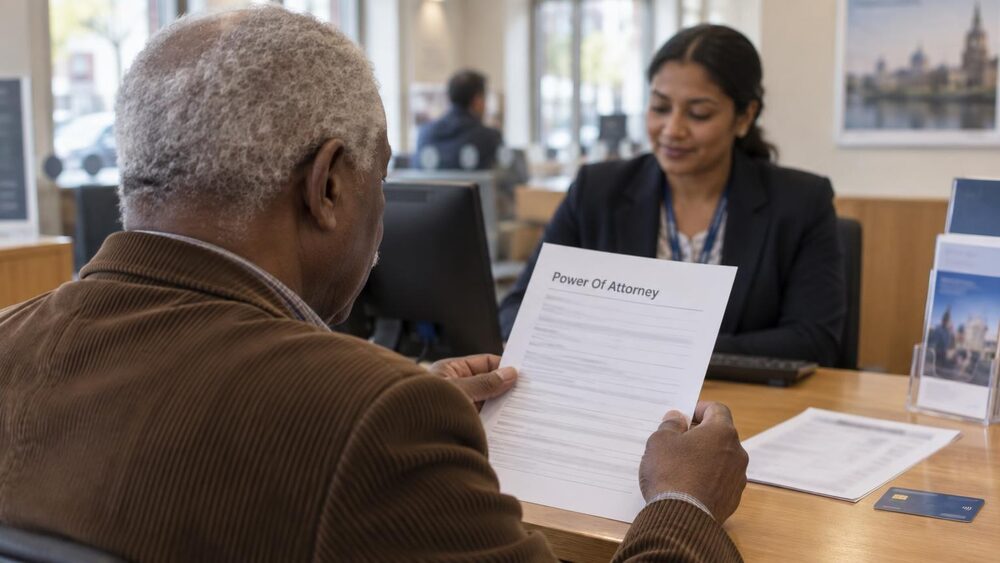
Which? published research on 3 April 2023 finding that banks make power of attorney registration difficult for people acting for a loved one, and that frontline bank staff repeatedly gave conflicting or misleading advice1. The consumer body surveyed 2,906 of its members who had used powers of attorney within the past three years, and separately made mystery calls to 14 banks posing as attorneys wishing to register a lasting power of attorney (LPA) on behalf of an aunt1.
Among the survey findings, 20% of attorneys said banks were fairly difficult or very difficult to deal with, compared with less than one in ten who said the same about private pension providers1. Yorkshire Bank was rated poor on the registration process by 32% of attorneys surveyed, followed by Co-op Bank and HSBC on 27% each; more than one in five attorneys also gave those three banks below average scores for communication1. Building societies fared better, with Yorkshire Building Society rated highly by 85% of attorneys for the registration process and its ability to carry out instructions efficiently1.
On access, Post Office Money, Tesco Bank and Virgin Money all refuse to let an attorney use online banking, even where the donor can no longer manage their own affairs, according to the research1. Nationwide only allows online access and telephone banking where the donor is declared not to have mental capacity, and was the only provider surveyed that did not give attorneys an additional debit card1. Post Office Money and Tesco Bank require registration by post, with Tesco Bank demanding the original document rather than a certified copy; at Co-op Bank all paperwork must be posted to a specialist head office team, though branch staff will scan and verify documents1.
In the mystery calls, HSBC and TSB said on numerous occasions that the donor needed to register the power of attorney in person, despite both banks telling Which? this is not necessary, and staff at both also said attorneys would not have access to the donor's online banking, though both banks confirmed to Which? that attorneys are entitled to the same access as the donor1. Halifax, Lloyds, Nationwide and Santander all directed researchers to a specialist power of attorney team and answered questions clearly and mostly consistently1.
"We welcome this report from Which?, and will continue to work closely with the financial sector to improve levels of service to attorneys and deputies. We are currently developing an online register of donors and attorneys, and looking at how LPAs can be made more practical and accessible."
Which? said there are currently more than three million registered powers of attorney, the legal document giving someone (the attorney) authority to make financial, health or welfare decisions for another (the donor)1. It said attorneys must register their powers with each financial company the donor has an account with, and that this initial registration process is where most of the problems lie1.
Why it matters for households
An attorney can only act on an account once the bank or building society has accepted the registration, so delays and rejected paperwork leave bills, pensions and other payments in the hands of someone who may already have lost the ability to manage them. The research indicates the practical differences between providers: whether registration can be done in branch or only by post, whether the original document is required, whether online and telephone banking are available to the attorney, and whether a second debit card is issued1. Where an attorney cannot use online banking, day to day management of the donor's money has to be done another way. The findings also suggest that what staff say on the phone may not match a firm's actual policy, which matters for anyone relying on that guidance when deciding how to register a power of attorney with a bank or building society. The survey covered Which? members who had used powers of attorney in the previous three years, and the calls covered 14 banks, so the results describe those respondents and those firms rather than the whole market1.
What happens next
The Office for the Public Guardian said it is developing an online register of donors and attorneys and looking at how LPAs can be made more practical and accessible1. No dates for those changes have been reported. Which? has not reported any commitment from the individual banks named to change their processes.
Anyone dealing with a firm over power of attorney and third party access to bank accounts can find the general process set out in the guide to extra support, accessibility and letting someone act for you, and the route for raising a dispute in complaining about a bank or building society.

 FSCSProtects your money if a bank, insurer or investment firm fails
 Financial Ombudsman ServiceFree, independent help when a complaint about a firm is not put right
 MoneyHelperFree, impartial money and pensions guidance, set up by government
 Citizens AdviceFree advice on money, consumer and legal problems in England and Wales