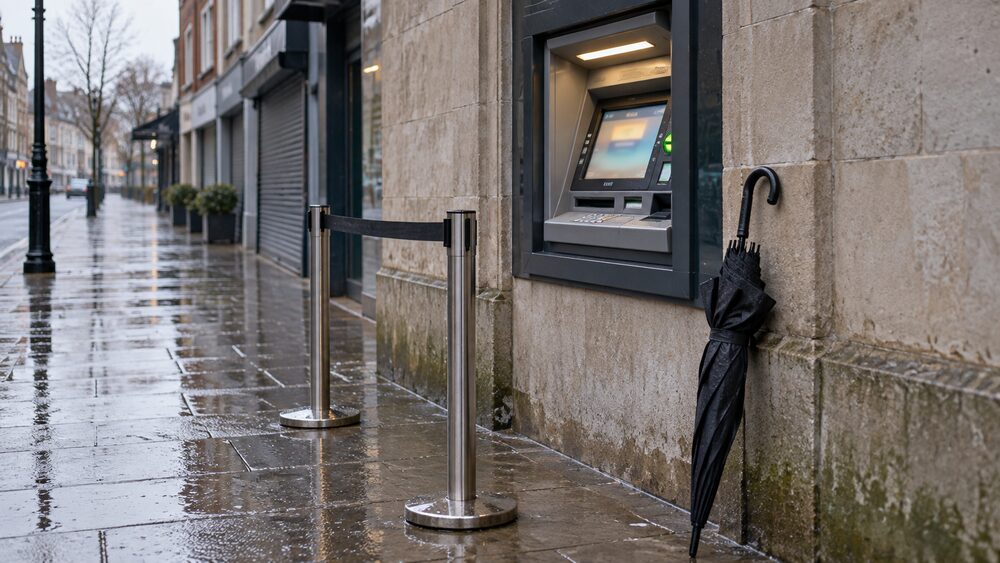
Getting money out the same day is usually free if you send it as a Faster Payments transfer between UK bank accounts. It costs money if you need a CHAPS payment, if you break into a fixed-term or notice savings account early, or if you withdraw cash abroad. The cost is not one fee but a set of them, and which one applies depends entirely on where the money is sitting and how fast you need it.
The fastest route, a CHAPS payment, is a same-day bank transfer often used when transferring a large amount of money1. It is guaranteed to arrive the same day, and there is usually a charge for it2. One provider charges £25 for a same-day CHAPS transfer instructed by 3.40pm3, while another sends payments over £100,000 by CHAPS free of charge4. Most banks advise using CHAPS for payments of more than £25,0005.
The slowest and most expensive route is usually breaking a savings lock-in. Fixed rate accounts either permit no withdrawals during the fixed term, or allow them at the expense of a withdrawal penalty6. Where a provider does allow earlier access, the penalty is typically between 90 and 365 days of interest7.
Same-day bank transfers: Faster Payments or CHAPS
Two systems move money between UK accounts on the same day, and they behave very differently.
Faster Payments are near immediate electronic transfers sent directly from your bank account8. They are the default for ordinary transfers, and standing orders run through the same service, processed on the same day or on the first day after a weekend or bank holiday11. There is no published charge for a Faster Payments transfer in the sources behind this page, which is why it is the route most people use without thinking about cost.
CHAPS is the high-value alternative. It is a same-day payment system used for high-value transfers, such as paying a deposit for a property, and it often involves a fee8. Money is transferred on the same day when the bank receives the request before its cut-off time12, and payments usually arrive the same day, though your bank may charge a fee13. The system has existed for high-value transactions for decades, moving money from one bank to another on the same day14.
The practical difference is the cut-off. A CHAPS instruction given after the bank's deadline rolls into the next working day, so an urgent payment arranged late on a Friday can arrive on Monday. One provider's cut-off for a same-day CHAPS transfer is 3.40pm3. If the payment is in euros or US dollars, funds can arrive the same day if sent before the cut-off time15.
Fees and charges for sending money the same day
The charge for urgency is not a single number. It varies by provider, by amount and by whether the payment crosses a border.
For CHAPS, one provider charges £25 for a same-day transfer instructed by 3.40pm3. Another sends payments of more than £100,000 by CHAPS free of charge4. A third notes that CHAPS payments usually arrive the same day but that a bank may charge a fee13. The consistent message across providers is that the fee exists and that it varies, so the figure to work from is the one the sending bank states16.
International payments add a second layer. For payments in euros and US dollars, funds can arrive the same day if sent before the cut-off time15. Travel money cards often charge a percentage on the transaction as well as a flat rate fee for each withdrawal or transaction17.
Card-based withdrawals are the most expensive way to get cash quickly. If you withdraw cash on a credit card abroad you may be charged a foreign transaction fee on top of the usual cash advance fee18, and interest on cash advances is usually charged immediately, even if you repay your balance in full8. Using a debit card abroad typically carries a spending or cash machine charge of between £1 and £3 each time, except for euros in the EU19.
Withdrawing early from a notice or fixed-term savings account
This is where an urgent withdrawal usually costs the most, because the penalty is measured in interest rather than pounds.
Notice accounts require you to give notice to withdraw funds, or to pay an interest penalty fee to withdraw immediately20. There is sometimes an option to take out your money immediately, but you will be charged an interest penalty for this21. The penalty is calculated on the amount withdrawn, not the entire balance: on a 100 Day Notice account the penalty is equivalent to 100 days' interest on the amount withdrawn at the gross rate payable at the time of withdrawal or closure20. On a 60 Day Notice account, the charge is the same as 60 days' interest on the money you withdraw22.
Fixed-term accounts are stricter. Fixed rate savings accounts either permit no withdrawals during the fixed term, or allow them at the expense of a withdrawal penalty6. Withdrawing money early from a fixed-term account can mean losing some or all the interest you have earned, or even paying a penalty23. Some accounts make you lock away your money for a certain number of years or pay a fee to withdraw it early24. Closing a savings bond early or withdrawing money may lead to withdrawal fees or lower interest rates25. Where providers do allow earlier access, they charge interest penalties typically between 90 and 365 days7.
There is one exception that matters. If the account holder has died, a fixed-term account that has not matured can still be closed immediately, with interest paid up to the date of death26.
Cash withdrawals: limits at cashpoints, branches and the Post Office
Cash has its own set of limits, and they are set by the account rather than by the amount you need.
One current account allows up to £800 a day from cash machines or cashback9. Basic current accounts may carry restrictions on how much you can withdraw from cash machines in a single day, and come with no chequebook or arranged overdraft facility27. Basic bank accounts also offer the facility to withdraw cash at a local Post Office28, and you can deposit money and withdraw cash over the counter at any Post Office or bank branch on the same terms as other personal current account customers29.
Post Office withdrawals are fee-free for customers of selected banks, subject to restrictions17, and depend on the account balance and daily limits17. Cash withdrawn at a Post Office branch using a card counts towards the daily withdrawal limit that applies to that card18. Standard cash machine withdrawal limits apply, and some Post Offices will not allow you to withdraw more than £1,00015.
The pattern is that the daily limit follows the card, not the counter. Moving to a branch or a Post Office does not raise the ceiling, and in some branches it lowers it.
Scams that exploit urgency
Urgency is the tool. A request that has to be acted on immediately is one of the recognised warning signs of a scam, alongside offers you were not expecting, requests to share bank account details or verify a password or PIN, prizes needing money up front, and offers you are told to keep secret30.
Payment method matters as much as the story. It might be a scam if you are asked to pay a fee quickly or in an unusual way, such as with vouchers or a money transfer31. Once a criminal has your details they can contact you and gain your trust, then convince you to make a payment or provide access to your accounts, set up accounts or take out loans in your name, or access your accounts directly to steal money32.
Investment and pension scams add a second wave. Criminals may contact you again pretending they can recover your money for a fee33. So-called early access pension services often come with fees of up to 30% of what you are withdrawing34.
What can I do if my bank delays an urgent payment?
Banks have a limited right to hold a payment, and a duty to make good the cost when they get it wrong.
Your bank can delay a payment by 72 hours if it thinks it might be fraudulent and needs to investigate10. If the delay means you have to pay any money in interest or for fees, your bank will pay you back10.
Some payment methods are faster to reverse than others. Pay by Bank refunds should be instant, whereas card refunds can take days or even weeks35. National Savings and Investments processes withdrawals on a set timetable: a phone instruction before 20:00 on a banking day is processed that day and normally reaches your account between two and four banking days later, while a postal instruction before 13:00 is processed on the next banking day and normally reaches your account two banking days after that36.
If a payment goes wrong and the bank will not put it right, the route is a formal complaint to the bank first, then the Financial Ombudsman Service. Free, impartial help is available from MoneyHelper and from Citizens Advice.
Where to get help if a withdrawal goes wrong
Some accounts let you take money out at any time but attach a cost to doing so, and it is worth knowing which type you hold before you need the money urgently.
Help to Save lets you withdraw money at any time, but this may reduce the amount of bonus payment you receive37, and withdrawing could mean you are not able to earn a final bonus depending on how much you withdraw and when16. Peer-to-peer platforms are a different case entirely: you could face waits of several months to withdraw your money36. Prepaid foreign currency cards can also trap funds, and if your card has expired you contact your provider to request your money back, which may involve a fee29.
The rules on what a savings provider must tell you are set out in a Summary Box, which must explain how money may be withdrawn from the account, including any conditions or consequences for making withdrawals, and for fixed-term savings accounts what happens at the end of the fixed term38. That document is the place to check before you commit money you might need quickly.
If a withdrawal goes wrong, the sequence is: complain to the provider in writing, keep the reference, and escalate to the Financial Ombudsman Service if the response does not resolve it. Free help with the wording and the process is available from Citizens Advice and MoneyHelper.
Sources38 cited
- Authorised Push Payments fraud UBL UK, 2026-09-25
- Understanding savings terms The Nottingham, 2026-09-26
- Bank savings Scottish Widows, 2026-09-26
- Saver Issue 42 Virgin Money, 2026
- Friday afternoon fraud: the scam that wipes out your house deposit Which?, 2023-03-27
- Savings advice for couples Newcastle Building Society, 2026-09-26
- Trapped in a fixed-term account? Here's what you can do Which?, 2022-11-14
- Fraud victims who pay the wrong way could be left with nothing Which?, 2024-10-16
- Payment limits Lloyds Bank, 2026-09-27
- Banking security and fraud Citizens Advice, 2021-03-18
- Direct Debits and standing orders explained Which?, 2026-03-05
- CHAPS payments Santander, 2026
- What minimum amount do I need to deposit to open a cash savings hub? AJ Bell, 2026
- Ombudsman News issue 42 Financial Ombudsman Service, 2004-12
- Ways to bank Santander, 2026
- Buying a used car Citizens Advice, 2026-09-25
- Everyday banking Post Office, 2026
- Post Office service for personal customers Virgin Money, 2026
- How to open, switch or close your bank account MoneyHelper, 2026-09-25
- Savings glossary Cambridge Building Society, 2026-09-26
- Types of savings accounts The Nottingham, 2026-09-26
- 60 Day Notice Savings Account Bath Building Society, 2026-09-25
- Different types of savings account Yorkshire Building Society, 2026-09-26
- Investing versus cash savings Bestinvest, 2026
- What is a savings bond? HSBC, 2026
- More families risk paying inheritance tax on savings Which?, 2025-08-16
- Choosing a bank account HSBC, 2026
- Basic bank accounts University of Bristol Personal Finance Research Centre, 2012
- I can't get my money out of my prepaid foreign currency card Which?, 2021-10-08
- How to avoid a scam Independent Age, 2026-09-26
- Personal loans Citizens Advice, 2026-09-25
- Online scams Take Five, 2026-09-26
- Investment fraud Take Five, 2026-09-26
- 7 pension scams to watch out for Which?, 2022-08-10
- Pay by Bank: can you trust this new way to pay? Which?, 2025-06-12
- Help to Save scheme StepChange, 2026-09-25
- Help to Save: what you'll get GOV.UK, 2026-09-28
- Summary Box requirements for savings accounts FCA Handbook, 2016-12-01



 Citizens AdviceFree advice on money, consumer and legal problems in England and Wales
 MoneyHelperFree, impartial money and pensions guidance, set up by government
 Financial Ombudsman ServiceFree, independent help when a complaint about a firm is not put right
 GOV.UKOfficial information on tax, benefits and government services
 StepChangeFree debt advice and solutions from a charity