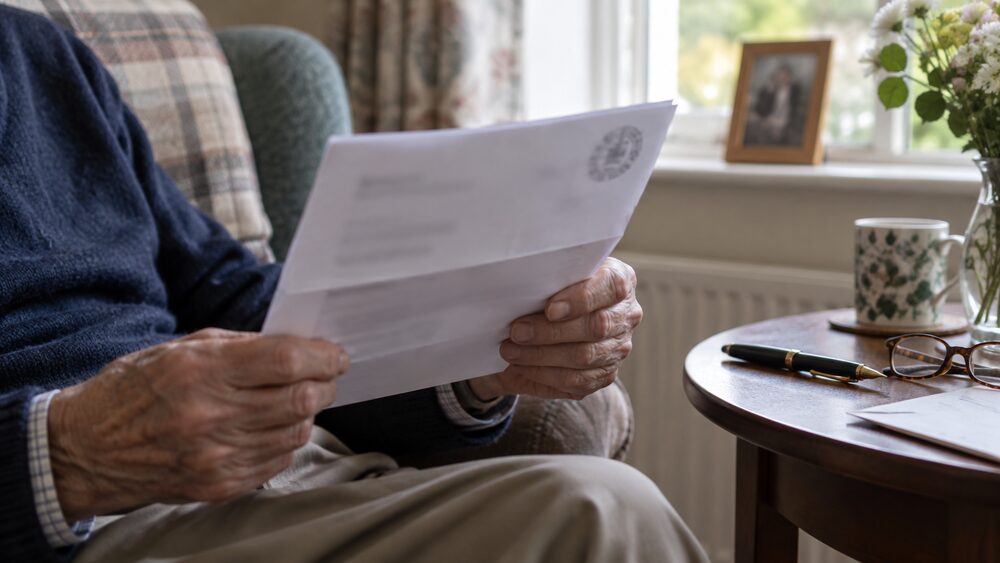
An enduring power of attorney, or EPA, is a document that appoints someone, called an attorney, to help manage a person's property, money and financial affairs1. It is the older form of power of attorney in England and Wales: it was replaced by the lasting power of attorney (LPA) on 1 October 2007, and no new EPAs can be made there1. But an EPA that was made and signed before that date is still valid, and it can still be registered with the Office of the Public Guardian (OPG) if it has not been already2.
What makes EPAs different from the LPAs that replaced them is when they take effect and when they must be registered. An EPA can be used straight away, with the donor's permission, while the donor still has mental capacity, even if it is not registered2. The moment the donor starts to lose, or has lost, mental capacity, the attorney must register the EPA with the OPG before they can carry on acting1. Registration costs £922. This page explains each stage: what the document covers, how to use it with banks, how to register it, and how to cancel one.
What an enduring power of attorney covers: money and property only
An EPA is a document that appoints an attorney to manage the donor's property, money and financial affairs1. The decisions it covers are about the donor's finances, their property and their investments2. In practical terms this means the sorts of everyday money jobs that become hard when someone can no longer manage alone: a power of attorney for property and financial affairs is used to help someone deal with debts, mortgaged property and investments4. Banks describe the same scope in their own terms: an EPA covers decisions about the account owner's property and financial affairs, and comes into effect if they lose mental capacity or if they would like the attorney to act on their behalf5.
What an EPA never covers is health and welfare. It only applies to financial affairs6. This is the sharpest difference from the newer lasting power of attorney in England and Wales, which comes in two types: one for property and financial affairs, and a separate one for health and welfare7. A family holding nothing but an EPA has no legal authority over the donor's medical treatment, care home arrangements or daily welfare decisions, however obvious the donor's wishes seem. Anyone who needs those powers covered has to make a separate health and welfare LPA while the donor still has the capacity to do so.
It also helps to know what an EPA is not. It is not an ordinary power of attorney, which is a temporary arrangement that only covers financial decision-making and stops the moment the donor loses mental capacity8. The whole point of the "enduring" form is that it survives that loss, provided it is registered at the right time. And it is not a joint account: an attorney acts on the donor's account under the EPA, while a joint account makes the helper a co-owner of the money, which is a different arrangement with different risks9. The wider differences between all these options are explained in powers of attorney explained.
Which EPAs are still valid in England and Wales
The cut-off date is fixed in law. Enduring powers of attorney can still be used if they were signed, dated and witnessed by all parties on or before 30 September 2007, whether or not they have been registered3. From 1 October 2007, LPAs replaced EPAs in England and Wales, and it is no longer possible to make a new EPA there3. Banks put the same rule in their own terms: an EPA signed in England or Wales before 1 October 2007 is still valid and can be accepted, while one signed on or after that date cannot5. Nationwide, for example, states it can only accept an EPA that was made and signed before 1 October 2007, otherwise an LPA is needed10.
Two points follow from this. First, an unregistered EPA made before the cut-off is not a dead document: it can still be registered with the OPG at any time, including many years later, when the donor begins to lose capacity11. Second, the validity test is about the document's date, not its quality. A properly signed and witnessed EPA from before 1 October 2007 works today exactly as it did then; a document signed on or after that date that calls itself an enduring power of attorney is not an EPA at all and will be refused by banks10.
If you are holding an old power of attorney and are unsure which type it is, the date is the first thing to check. If the document was signed before 1 October 2007, it is likely to be an enduring POA12. Santander adds a practical identification test: an enduring power of attorney registered with the OPG or Court of Protection is a document at least four pages long, with parts A, B, B continued, C and C continued filled in, signed by the customer and all attorneys with signatures witnessed13. If the document is newer, it is likely an LPA, and the guide to making and registering a lasting power of attorney covers that route instead.
Using an EPA while the donor still has mental capacity
An EPA does not sit in a drawer until it is needed. The attorney can use it while the donor still has mental capacity, even if it is not registered2. This is the arrangement's main advantage over an LPA, which must be registered with the OPG before it can be used at all14. The donor decides how the EPA is to operate: it can be used immediately with their permission, or only take effect if they lose capacity15. So a donor who wants help with the banking now, while keeping the document's protection for the future, can have both from the one EPA.
While the donor still has capacity, the balance of power stays with the donor. They can continue to manage their own affairs, and they can change or cancel their power of attorney16. The attorney acts alongside them, not instead of them. Guidance for banks on operating accounts for someone else confirms this: with a registered EPA or LPA, the bank will allow the attorney and the account holder with capacity to operate the account independently of each other, unless the account holder with capacity objects, in which case the bank will usually only allow the account to operate on a both-to-sign basis17.
The document the bank needs at this stage is the filled-in and signed EPA, which can be unregistered if the donor still has mental capacity17. There is no need to register the EPA with the OPG while the donor has capacity; registration only becomes a requirement when capacity starts to go12. Some banks note one further effect worth knowing before anyone acts: HSBC states that if it is asked to add a registered EPA to its records, it will treat this as confirmation that the donor has lost mental capacity, and the donor's access to their accounts will be removed5. A donor who is merely choosing to share the work, and who wants to keep their own card and login, should therefore think carefully about when registration happens.
When an EPA must be registered
Registration becomes compulsory at a defined moment: as soon as the donor starts to lose mental capacity, the EPA needs to be registered with the Office of the Public Guardian18. Official guidance is blunt about the consequence: if the donor loses mental capacity, the attorney must register the EPA to start or continue using it1. Until registration is complete, the attorney's authority is suspended. Cynergy Bank summarises the position: the EPA ends automatically if the donor dies, and is suspended if the donor loses mental capacity, until the attorney has registered it with the Office of the Public Guardian19.
The trigger is "starting to lose" capacity, not "completely lost" capacity. Attorneys do not have to wait until the donor cannot make any decisions at all; the duty bites when the attorney thinks the donor is beginning to become unwell or already lacks capacity to manage their own finances20. This matters because registration is not instant, and a gap between the donor losing capacity and the EPA being registered can leave bills unpaid and accounts frozen. An attorney who sees capacity slipping is expected to start the process early, not at the last moment.
There is a safeguard built into this stage. Before registering, the attorney must tell the donor and at least three of the donor's relatives that they intend to register the EPA2. This gives the donor and the family the chance to object if they doubt the attorney's suitability or the donor's capacity. The wider question of what mental capacity means in practice, and how a diagnosis such as dementia affects money management, is covered in extra support and letting someone act for you.
How to register an EPA with the Office of the Public Guardian: £92 fee
Registration is done by the attorney, not the donor, and it goes to the Office of the Public Guardian. The steps are fixed:
- The attorney decides the donor is starting to lose, or has lost, mental capacity18.
- The attorney tells the donor and at least three of the donor's relatives of the intention to register2.
- The attorney completes the Application for Registration form, EP2PG, and submits it to the OPG2.
- The attorney pays the £92 registration fee2.
- Once registered, the attorney can act again on the donor's accounts1.
The EP2PG form can be filled in online, or the OPG can be called on 0300 456 0300 and asked to post a copy20. The fee is £92 to register2. For comparison, registering a lasting power of attorney in England and Wales also costs £92 per application, a fee that took effect from 17 November 202521, so the two routes cost the same at the registration stage. Fee exemptions and reductions exist for people on lower incomes and certain benefits, and the guide to LPA registration fee exemptions explains how those work.
One point on timing: the unregistered EPA is not sent to the OPG before it is needed. Official guidance is explicit that the unregistered EPA and any deed of revocation are not sent to the Office of the Public Guardian, because they need to be kept1. The unregistered original stays with the donor, in a safe place known to the attorneys, until the day registration is actually required.
Using an EPA with banks and building societies
A power of attorney is only as useful as a bank's willingness to act on it, so the EPA has to be shown to the institutions involved. The donor or the attorney will need to show signed copies of the EPA to banks and financial providers so the attorney can manage the accounts1. Age UK puts the same point simply: you need to show signed copies of your EPA to your bank and any financial advisers so that your attorneys can manage your accounts2. Each bank then registers the attorney's authority on its own records, and the process for doing that is covered in registering a power of attorney with a bank.
What the bank needs to see depends on the donor's condition at the time. The filled-in and signed EPA can be unregistered if the donor still has mental capacity; if the donor has lost mental capacity, the bank needs the registered EPA17. Banks are used to both stages. Yorkshire Building Society confirms that EPAs are only valid if they were signed and written before 1 October 2007, and that if the donor starts to lose mental capacity the document must be registered at the Office of the Public Guardian12. Rothesay, which handles pension policies, states the same: although EPAs cannot be created in England or Wales any more, those created before 30 September 2007 are still valid22.
Once the attorney is on the bank's records, what they can and cannot do on the account follows the EPA's terms and the bank's own rules. An attorney can manage the donor's accounts if mental capacity is lost, but cannot arrange an overdraft, a limit that applies to LPAs as well23. The attorney's powers are also not a licence to move money wherever they like: guidance for attorneys and deputies on investing for someone sets out the duties that come with the role24. The narrow page on what an attorney can and cannot do lists the everyday permissions and refusals in one place.
What attorneys must do once the EPA is registered
Registration changes the attorney's obligations. When the EPA is registered, the attorney must involve the donor in making decisions wherever possible, only make decisions the donor cannot make themselves, and follow any instructions the donor has given in the EPA1. These duties recognise that losing the ability to manage money is rarely the same as losing all ability to decide anything: a donor who can still express a preference about, say, selling a house, should be asked, even though the attorney holds the legal authority.
The duty to follow the EPA's instructions is worth dwelling on. Many EPAs were drafted decades ago and include conditions: limits on gifts, requirements to consult a named person, or restrictions on selling particular assets. Those words bind the attorney now just as they did in 2005, and a bank may refuse a transaction that falls outside the document's terms. Where the EPA is silent, the attorney falls back on the general duties in guidance: acting in the donor's best interests, keeping the donor's money separate from their own, and keeping records24.
There are also events the attorney must report. If an attorney under a registered EPA dies, the Office of the Public Guardian must be told, and the original POA document and all certified copies sent in18. And the whole arrangement ends at death: an EPA ends when the donor dies1, at which point control passes to the personal representative or executor9, and the attorney should get in touch with the Office of the Public Guardian, sending the power of attorney document, any certified copies and a copy of the death certificate25. The steps that follow a death, including notifying banks, are set out in the guide to what to do when someone dies.
Keep the EPA or replace it with a lasting power of attorney
A donor holding a valid EPA faces a choice, and official guidance states it plainly: if you made an EPA that was signed and witnessed before October 2007, you can either continue to use it, or cancel it and set up a property and financial affairs LPA1. Both routes are lawful, and the right one depends on circumstances rather than on any rule that new always beats old.
The case for keeping the EPA is cost and simplicity: the document already exists, it works now, and the only future outlay is the £92 registration fee if capacity is lost2. The case for replacing it is coverage. An EPA cannot be changed1, so if the named attorneys have died, moved away or fallen out with the family, the document is stuck with them. It also covers nothing on health and welfare, so a donor who wants both halves of the modern arrangement needs an LPA anyway, and many prefer to have one consistent set of documents. Which? notes that LPAs replaced EPAs in England and Wales in 2007 and no new EPAs have been issued since7, so the LPA is where the law has settled.
The replacement can only happen while the donor has capacity. If the donor has the capacity to make decisions, they can cancel the old EPA and register a new LPA20. A diagnosis does not close the door on its own: the Alzheimer's Society explains that a person with dementia can still set up a power of attorney provided they have the mental capacity to understand the document, their choice of attorneys and the consequences of the decision26. Once capacity is gone, the EPA is the document the family is left with, and if it no longer suits, the Court of Protection route described in becoming a deputy is the fallback.
Cancelling an EPA: registered and unregistered
How an EPA is cancelled depends on whether it has been registered. To cancel an EPA before losing mental capacity, the donor makes a deed of revocation stating that they are cancelling it, keeps it with the EPA form, and both the donor and a witness must sign the deed1. The donor must then let the attorneys and any relevant banks and financial providers know the EPA is cancelled1. Leeds Building Society summarises the same two-stage rule: if unregistered, keep the completed deed of revocation with the EPA and let the attorneys know; if registered, an application needs to be made to cancel it18.
A registered EPA is harder to undo. The route is an application to the Court of Protection to cancel a registered EPA, and it costs £432 to apply to revoke an EPA1. The donor may also need to provide evidence that they still have mental capacity1. There are further grounds on which an EPA can be brought to an end by others: Hodge notes that an EPA can be cancelled with a court order, and the Court of Protection can end it if it believes the attorney has abused their position, or if the EPA was made as a result of fraud or pressure6.
Two warnings apply. First, do not send the unregistered EPA and the deed of revocation to the Office of the Public Guardian: you need to keep them1. Second, cancellation only works while the donor has capacity. An EPA also ends automatically when the donor dies1, and a separate property and financial affairs LPA can be cancelled at any time while the donor has mental capacity by sending the original LPA document and a deed of revocation to the Office of the Public Guardian11, a process covered in how to cancel a lasting power of attorney.
Enduring powers of attorney in Northern Ireland
Northern Ireland is different in one important way: the enduring power of attorney is still a live document there. EPAs are still issued in Northern Ireland, but not in England or Wales5. In Northern Ireland a new EPA can be made, allowing someone to manage the donor's property or financial affairs but not their personal welfare27. As in England and Wales, an EPA in Northern Ireland covers financial matters only15, and the two main types of power of attorney there, the general POA and the enduring POA, both cover property and financial affairs28.
The registration machinery is also different. When the donor lacks capacity, the attorney must register the enduring power of attorney with the Office of Care and Protection, not the Office of the Public Guardian3. Royal London describes the same duty for families: when the donor can no longer manage their affairs, the attorneys need to register the power of attorney with the Office of Care and Protection and pay the registration fee, with exemptions available depending on circumstances28. The fee to register an EPA in Northern Ireland is £180, payable to the Office of Care and Protection21.
An EPA made in Northern Ireland before capacity is lost can be used without registration while the donor remains mentally capable, in the same way as in England and Wales29. The full Northern Ireland process, including the Office of Care and Protection's role, is covered in power of attorney in Northern Ireland. Scotland uses a different document again, the continuing power of attorney, explained in powers of attorney in Scotland.
Where to get help
Several bodies can assist with an EPA, and the right one depends on the problem. The Office of the Public Guardian is the registry: it handles EP2PG registration, queries about an attorney's duties, and reports that an attorney has died or is acting improperly. Its contact line, 0300 456 0300, is also how to get the registration form posted20. The Court of Protection handles applications to revoke a registered EPA1 and appoints deputies where no workable power of attorney exists.
If the dispute is with a bank rather than with the attorney, the Financial Ombudsman Service can look at complaints about how a firm has dealt with a power of attorney, including refusals to accept one or mistakes in operating an account16. The process for escalating is covered in complaining on behalf of a relative or friend and writing an effective complaint. For free, impartial help with the underlying money questions, free consumer advice lists the services available, and where a firm has stalled, what to do if a company hasn't replied sets out the next steps.
Sources29 cited
- Use or cancel an enduring power of attorney GOV.UK, 2026-09-26
- Enduring power of attorney Age UK, 2026-01-09
- Manage savings for an adult NS&I, 2026-04-02
- Power of attorney and debt StepChange, 2026-09-25
- Types of power of attorney HSBC UK, 2026
- Power of attorney Hodge Bank, 2025-07-24
- What is power of attorney Which?, 2026-02-26
- Ordinary power of attorney Age UK, 2026-03-23
- Can a joint bank account help me manage a loved one's finances Which?, 2026-01-19
- What is a power of attorney Nationwide, 2026
- Power of attorney Age UK, 2026-01-09
- Power of attorney Yorkshire Building Society, 2026-09-26
- Supported banking: power of attorney Santander, 2026
- Legal and regulatory matters: lasting power of attorney Equity Release Council, 2026-09-26
- Dementia and managing money nidirect, 2026-09-03
- Complaints about power of attorney Financial Ombudsman Service, 2026-09-26
- Manage a bank account for someone else GOV.UK, 2023-05-02
- Power of attorney Leeds Building Society, 2026-09-26
- Power of attorney Cynergy Bank, 2026-09-26
- What is lasting power of attorney Mental Health and Money Advice, 2025-03-10
- Power of attorney fees rise this month: what you need to know Which?, 2025-11-17
- Power of attorney Rothesay, 2026-04-27
- Managing someone else's money: power of attorney first direct, 2026
- Investing for someone as their attorney or deputy GOV.UK, 2019-05-08
- What to do when someone dies Age UK, 2026-02-16
- Managing money after a dementia diagnosis Which?, 2026-09-20
- Customer access tool Bank of Scotland, 2026-09-27
- Power of attorney guide Royal London, 2025-08-28
- Power of attorney AIB (NI), 2026





 Citizens AdviceFree advice on money, consumer and legal problems in England and Wales
 MoneyHelperFree, impartial money and pensions guidance, set up by government
 Financial Ombudsman ServiceFree, independent help when a complaint about a firm is not put right
 GOV.UKOfficial information on tax, benefits and government services
 StepChangeFree debt advice and solutions from a charity