
Putting a complaint in writing is the step that turns a disagreement with a bank, insurer, lender or investment firm into something that has to be dealt with formally. The rules give the firm a set period to investigate and reply, and if it does not resolve things, the Financial Ombudsman Service can look at the case for free. For most complaints, a business has up to 8 weeks to consider it1, and once you have its final response you generally have 6 months to refer the matter to the ombudsman1. The ombudsman can tell a business to pay compensation of up to £455,000 for complaints referred on or after 1 April 2026 about acts or omissions on or after 1 April 20192.
A written complaint serves three purposes. It creates a dated record of what went wrong and what was asked for, it starts the clock on the firm's response deadline, and it preserves the right to go to the ombudsman later, because the ombudsman will only look at a complaint after the firm has had its chance. The ombudsman's own guidance is consistent on this point: before bringing a complaint to it, a formal complaint must be made to the company involved, and if the company does not send a final response letter within eight weeks, or the consumer is unhappy with its response, the complaint can be brought to the ombudsman3. The same first step applies across the financial sector, from banking and payments to insurance, investments and credit4.
Complain to the company first
Whatever the problem, the first step is the same in every case: it goes to the business involved, not to a regulator, an ombudsman or anyone else. The ombudsman's guidance across every product area repeats this rule. For banking and payment problems, the complaint goes to the company involved before it is brought to the ombudsman4. For insurance complaints, a formal complaint is made to the company involved first6. For investment complaints, the same applies: before bringing a complaint to the ombudsman, a formal complaint is made to the company involved7. The FSCS, which handles claims against failed firms, likewise requires that a complaint has been made to the provider the consumer is unhappy about first8.
The reason is practical rather than bureaucratic. The firm is the only body that can actually fix most problems, whether that is refunding a charge, reinstating a policy or correcting a record, and it holds the files, recordings and account history that explain what happened. The ombudsman exists to check the firm's answer, not to replace it. Even where a complaint ends up elsewhere, the pattern holds: complaints about insolvency practitioners go first to the practitioner, with your formal complaint and their reply forming the core of any escalation9, and complaints about claims management companies start with giving the CMC a chance to sort things out10.
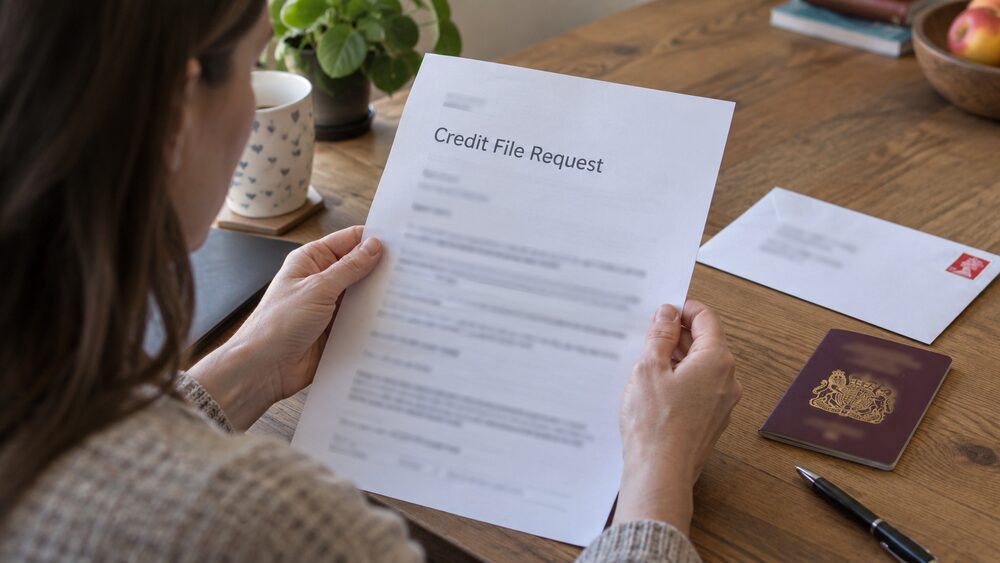
Complaining in writing, rather than only by phone, matters because it fixes the start date of the eight-week period and gives you something to show the ombudsman if the firm's answer falls short. If you complain by phone, follow it up in writing so there is no argument about when the complaint was made or what you asked for. Some routes are more flexible: the FSCS accepts complaints made over the phone or in writing, or using its contact form11. But a written record is what carries weight later, so keep a copy of everything you send and everything you receive back.
What to put in your complaint letter or email
A complaint letter does not need legal language. It needs to tell the firm, in order: who you are, what went wrong, when it happened, what it cost you, and what you want done about it. The Information Commissioner's Office, which handles complaints about data, describes the same core structure for putting a complaint to an organisation: state clearly what you believe is inaccurate or incomplete, explain how the organisation should correct it, and where available provide evidence12. That structure works for any financial complaint.
A workable letter or email contains:
- Your name, address, account or policy number, and a contact preference
- The date of the event you are complaining about, and the dates of any contact since
- A short, factual account of what happened, in date order
- What the problem has cost you, in money, time or inconvenience
- What you want the firm to do to put things right
- Copies of the evidence that supports your account
- A request for a final response letter, so the eight-week clock and your onward rights are clear
Templates exist where a sector has a standard process. For car finance complaints, the FCA publishes a list of lenders and you can download its template complaint letter or email, fill in your details and send it to your lender13. For claims management companies, GOV.UK advises asking the company for a copy of its complaints procedure or checking its website, contacting it with your complaint so it has a chance to put things right, and keeping a record of your complaint14. Firms are required to tell you how to complain: mortgage offer documents must include information on how to complain to the firm and whether complaints may be referred to the Financial Ombudsman Service15.
Keep the tone factual and keep a copy. A letter that sets out dates, amounts and the outcome you want is easier for the firm to investigate, and easier for the ombudsman to assess if it gets that far.
Evidence that backs up your complaint
Evidence is what turns an account of events into a complaint that can be upheld. The responsibility for providing it sits with you as the complainant: the body that reviews insolvency practitioner complaints states this plainly, noting that the responsibility for providing evidence falls on the complainant, while it can access open source documentation such as Companies House filings itself9. In practice that means gathering your own records before you write, not after.
What counts as evidence depends on the complaint, but the ombudsman's guidance for firms shows the range it expects to see. In debt collection complaints referred to it, the typical information includes copies of any relevant correspondence or call recordings to and from the customer, a copy of the notice of assignment and the underlying credit agreement, a statement of account confirming the current balance outstanding and an explanation of any new charges or interest, a copy of the notice of sums in arrears and default notice if the account defaulted, evidence of a County Court Judgment where the debt concerns one, and evidence that the customer's dispute was raised with the original creditor along with their response where fraud or a wrong-person claim is alleged16. For insurance misrepresentation complaints, examples of evidence include recordings of the sales call, copies of the application form completed by the customer, or screenshots of an online application17.
For everyday banking complaints the same logic applies in miniature:
- Statements showing the charges or transactions in dispute
- Screenshots of error messages, where the complaint involves IT problems at a bank18
- Copies of letters or emails you sent and the replies you received
- A note of phone calls, with dates and what was said
- The account terms or policy wording that applied at the time
Keep the originals and send copies. If the firm has recordings of calls you made to it, you can ask it to check them, and the ombudsman can require a firm to produce them once a case is with it. Do not delay a complaint because one document is missing: send what you have, list what you are still gathering, and add it later.
Say what you want the company to do to put things right
A complaint that ends with "please sort this out" leaves the firm to guess what you want, and leaves the ombudsman, if it comes to that, guessing too. State the outcome plainly. The ICO's guidance on getting data corrected is a good model for any complaint: state clearly what you believe is inaccurate or incomplete, and explain how the organisation should correct it12. The same directness works for money: name the refund, the compensation, the correction to a credit file or the reinstatement of a policy that would resolve the matter for you.
The ombudsman's approach to redress shows what firms can be told to do. If it thinks the business treated you unfairly, it will tell the business to put you back where you would have been if it had not made a mistake, and possibly to make an award for distress and inconvenience on top4. So the two things worth asking for are: the money or position you lost, and recognition of the hassle the problem caused. In a published contents insurance case, the award for distress and inconvenience was up to £30019. Asking for a specific amount is not required, but it focuses the firm's answer and gives you a yardstick for whether the response is adequate.
Be realistic as well as specific. A request the firm could actually carry out, such as refunding a specific charge plus interest, or paying for a cost the problem caused you, is more likely to be met than an open-ended demand. If the firm's final response offers less than you asked for, you do not have to accept it: that is the point at which the ombudsman can be brought in.
Up to eight weeks for the company to reply
Once the firm has your complaint, the clock starts. For most complaints, a business has up to 8 weeks to consider it1. The FCA's rule behind this, in its complaints handling sourcebook, requires a written response within 8 weeks of the firm's receipt of the complaint for most complaint types20. The same eight-week period appears across the ombudsman's guidance for firms and consumers: businesses responding to insurance misrepresentation complaints should reply within eight weeks17; firms handling underinsurance complaints should reply within eight weeks21; a firm that referred you to a credit hire or credit repair company must give you its final response within eight weeks22; and credit unions have eight weeks to investigate and give a final response23.
There are two things worth knowing about how the period works. First, it runs from the firm's receipt of the complaint, which is why a dated written complaint matters. Second, the firm may respond sooner, and it may send a holding letter in the meantime; a holding letter is not a final response, and the deadline still stands. If your complaint does not involve a payment from your account, the business has eight weeks to respond18; complaints involving payments can work on different timescales, so ask the firm to confirm the deadline that applies to yours.
Firms must also tell you about your onward rights. Under FCA rules, where a complaint is resolved within three business days the firm must send a written summary resolution communication explaining that you can refer the complaint to the ombudsman if you are still unsatisfied25. A final response letter must do the same. If a response arrives with no mention of the ombudsman, that is a gap worth noting, but it does not remove your right to refer the complaint.
If the reply doesn't resolve things: the Financial Ombudsman Service
If the firm's final response does not satisfy you, or eight weeks pass with no final response at all, the next step is the Financial Ombudsman Service. Its guidance is consistent: if the company does not send you a final response letter within eight weeks, or you are unhappy with its response, you can bring the complaint to the ombudsman3. The same wording appears across its product pages, from savings and endowments3 to subsidence insurance complaints26, and for complaints involving gambling-related harm27 and ISAs28.
The ombudsman can usually help individual or joint consumers of a financial business that provides services or products in the UK, regardless of nationality or where they live31. Its coverage is broad: banking and payment services include current accounts, savings accounts, direct debits, money transfers, electronic payment platforms, cheques and banker's drafts, and it helps resolve complaints about issues such as account closures, disputed transactions, IT failures and problems with switching services4. Consumer credit complaints cover payday loans, the affordability of lending, the quality of goods bought or hired with credit, and other types of lending including mortgages30. The Payment Systems Regulator also points consumers to the ombudsman where a payment situation is still not resolved32.
Once a case is with the ombudsman, it considers the facts and evidence from both the business and the customer, then sets out its findings explaining the decision and what needs to be done to put things right30. Its decisions are based on relevant law and regulations, the regulator's rules, guidance and standards, industry codes of practice and, where appropriate, good industry practice33. The service is free and easy to use34, and you fill in its complaint form to start35. If you are unsure whether your case qualifies, the free consumer advice routes on our consumer protection page and our guide to free consumer advice can help you check before you commit time to it.
Six months to refer your complaint after a final response
The window to go to the ombudsman is short and firm: you will need to make a complaint to the ombudsman within 6 months from the date on your final response1. The same limit appears across the ombudsman's guidance: complaints must be brought within six months36, and for car finance commission complaints you have six months from the date of the business's response to refer your complaint if you are not satisfied with it37. Claims management company complaints follow the same rule, with six months from the date of the CMC's final response10, and the Help to Buy: Equity Loan complaints process requires referral to the ombudsman within 6 months of the date on the final response38.
There are exceptions, and they extend rather than shorten the period. For certain motor finance discretionary commission arrangements, where a final response was sent between 12 July 2023 and 20 November 2024, the six-month period to refer a complaint to the ombudsman was extended to fifteen months39. Some exceptions to the six-month rule for CMC complaints also apply10. But these are specific, published extensions: the working assumption for any complaint should be six months from the final response, or from the point eight weeks elapsed without one.
What the ombudsman can award: up to £455,000
The ombudsman's award limits are set by complaint date and by when the events complained about happened. For complaints referred on or after 1 April 2026 about acts or omissions that occurred on or after 1 April 2019, the limit is £455,0002. For complaints referred on or after 1 April 2025 about acts or omissions on or after 1 April 2019, it was £445,0002. The limits are adjusted over time, so check the current figure on the ombudsman's compensation page before relying on one.
| Complaint referred | Act or omission occurred | Maximum award |
|---|---|---|
| On or after 1 April 2026 | On or after 1 April 2019 | £455,0002 |
| On or after 1 April 2025 | On or after 1 April 2019 | £445,0002 |
Two things about the limit are worth understanding. First, most awards are far smaller: the limit is a ceiling, not a typical outcome, and redress is designed to put you back where you would have been, plus an amount for distress and inconvenience where warranted4. Second, the limit has grown over the years: the ombudsman's annual report for 2016 records that it could tell a business to pay a specific amount of money up to £150,00040, and earlier material cites compensation of up to £150,000, or £100,000 for complaints received before 1 January 201241. The current figures are the ones that matter for a new complaint.
If you accept the ombudsman's final decision, it is binding on the business and settles the matter. If you do not accept it, the complaint cannot be taken further through the ombudsman, but you can still go to court instead10. Neither side can appeal a final decision to another ombudsman or to court simply because they disagree with it33. So the decision to accept is a real one: read the findings, compare them with what a court might achieve, and take advice if the sums are large.
You don't need to pay anyone to complain for you
The ombudsman is explicit on this: you don't need to pay anyone to represent you, for example, a lawyer or claims management company1. The service is free for consumers5, and its complaint form is designed to be filled in without professional help35. A claims management company may offer to pursue a complaint for you, typically in return for a fee or a share of any compensation, but nothing in the process requires one, and the ombudsman treats a complaint from a CMC the same way it treats one from you.
Where a CMC is involved, the same rules apply to it as to any other firm. The ombudsman's guidance is that a CMC is given a chance to sort things out before a complaint about it is brought to the ombudsman10, and the ombudsman can tell a CMC to put things right, including paying compensation10. Complaints about CMCs cover companies providing services from, or to consumers in, England, Scotland or Wales31. For a consumer who has already signed with a CMC and wants to complain about it, GOV.UK sets out the route: ask for its complaints procedure, contact it with the complaint, and keep a record14.
Doing it yourself has a second advantage beyond cost. You know the chronology of what happened, and the ombudsman's case handlers work from the facts and evidence you and the firm supply30. A clearly written letter with the evidence attached, in the order set out above, is what the process is built around. If you need help rather than representation, free support exists: the ombudsman's consumer advisers can explain how a complaint might be looked at and the rules that apply36, and our page on free consumer advice lists where to get it.
Using AI to help write your complaint
The ombudsman now addresses AI directly. Its complaint guidance says that anyone considering using AI to help complete its complaint form is asked to read its guidelines on using AI before starting35. Its guidelines say AI can be used to help organise information or put it clearly, which is what a complaint letter needs.
The ombudsman's guidelines set three conditions1:
- Avoid entering personal information that you would not want shared, such as health or banking information
- Only use AI to help you organise information or put it clearly
- Check the resulting text carefully
The first condition is the one that matters most. Complaints often involve exactly the material the warning covers: account numbers, medical details behind an insurance claim, or records of financial hardship. Anything typed into an online tool leaves your control, so the safe approach is to draft with the personal details removed, then add them yourself before sending. The third condition matters too: AI-generated text can state facts you never gave it, and a complaint is a formal account that the firm and the ombudsman will rely on. Read every line, correct anything that is not true of your case, and keep your own copy of what you send.
AI is a drafting aid, not a shortcut past the process. The complaint still needs your dates, your evidence and the outcome you want, and it still goes to the firm first, with the eight-week and six-month clocks running as described above.
Sources41 cited
- How to complain to the Financial Ombudsman Service Financial Ombudsman Service, 2026-09-25
- Compensation the ombudsman can award Financial Ombudsman Service, 2026-04-01
- Complaints about savings and endowments Financial Ombudsman Service, 2026-09-27
- Banking and payment complaints Financial Ombudsman Service, 2026-09-25
- Alternative dispute resolution and the ombudsman Financial Ombudsman Service, 2026-09-27
- Complaints about insurance misrepresentation and non-disclosure Financial Ombudsman Service, 2026-09-26
- Complaints about capital protected structured investments Financial Ombudsman Service, 2026-09-26
- Targeted support claims: how to complain Financial Services Compensation Scheme, 2026-09-25
- How to complain about an insolvency practitioner GOV.UK, 2025-12-23
- Complain to the Claims Management Ombudsman Claims Management Ombudsman, 2024-08-20
- FSCS complaints process Financial Services Compensation Scheme, 2026-09-25
- Your right to get your data corrected Information Commissioner's Office, 2026-09-26
- FCA car finance complaints: list of lenders Financial Conduct Authority, 2026-09
- Complain about a claims management company GOV.UK, 2026-09-26
- MCOB 6A.3: mortgage offer documents FCA Handbook, 2016-03-21
- Handling debt collection complaints Financial Ombudsman Service, 2026-09-27
- Insurance misrepresentation: evidence for firms Financial Ombudsman Service, 2026-09-26
- IT problems at banks Financial Ombudsman Service, 2026-09-25
- Underinsurance complaints Financial Ombudsman Service, 2026-09-26
- DISP 1.6: complaints time limit rules FCA Handbook, 2026-06-01
- Underinsurance home insurance complaints: guidance for businesses Financial Ombudsman Service, 2026-09-26
- Credit hire and credit repair services after a no-fault accident Financial Ombudsman Service, 2026-09-16
- Credit union current accounts MoneyHelper, 2026-09-25
- Complaints about car finance commission Financial Ombudsman Service, 2025-12-05
- Summary resolution communications consultation Financial Ombudsman Service, 2014-12
- Subsidence and ground movement insurance complaints Financial Ombudsman Service, 2026-09-26
- Complaints involving gambling-related harm Financial Ombudsman Service, 2026-09-26
- Complaints about individual savings accounts Financial Ombudsman Service, 2026-09-26
- Sending money abroad complaints Financial Ombudsman Service, 2026-09-26
- Consumer credit complaints: guidance for businesses Financial Ombudsman Service, 2026-09-25
- Who the ombudsman can help Financial Ombudsman Service, 2026-09-27
- How the Payment Systems Regulator helps consumers Payment Systems Regulator, 2026-09-26
- How the ombudsman makes decisions Financial Ombudsman Service, 2026-09-27
- Wedding insurance complaints Financial Ombudsman Service, 2026-09-27
- Complaints about unregulated collective investment schemes Financial Ombudsman Service, 2026-09-27
- Information for customer advisers Financial Ombudsman Service, 2026-09-25
- Claims management complaints time limits Claims Management Ombudsman, 2021-01-28
- Help to Buy: Equity Loan complaints procedure GOV.UK, 2022-11-17
- FCA Handbook instrument 2024/1: motor finance complaint extensions Financial Conduct Authority, 2024-01-10
- Financial Ombudsman annual report 2016 Financial Ombudsman Service, 2016-05
- Financial Ombudsman annual report 2013 Financial Ombudsman Service, 2013-05




 Citizens AdviceFree advice on money, consumer and legal problems in England and Wales
 MoneyHelperFree, impartial money and pensions guidance, set up by government
 Financial Ombudsman ServiceFree, independent help when a complaint about a firm is not put right
 GOV.UKOfficial information on tax, benefits and government services
 StepChangeFree debt advice and solutions from a charity