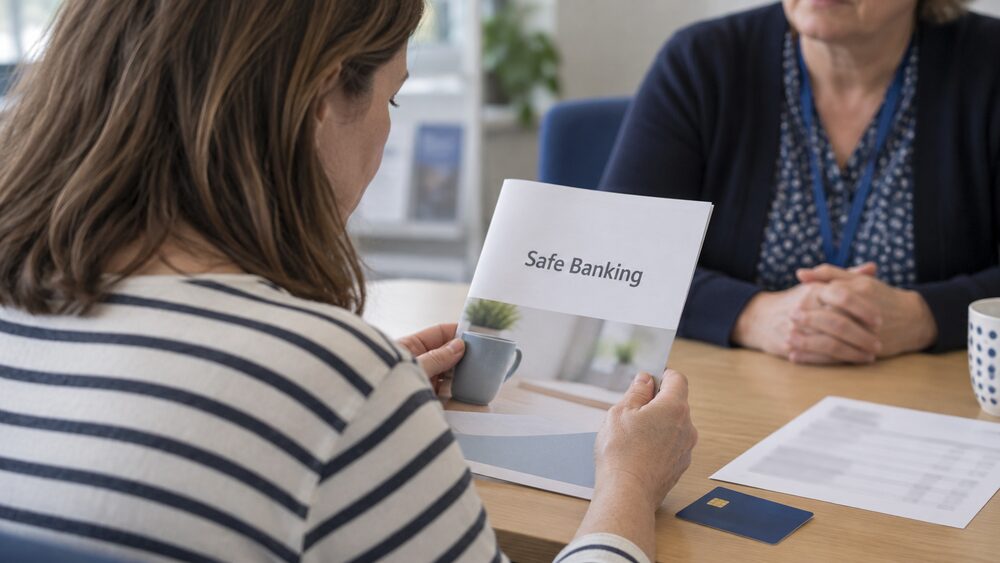
If someone is controlling your money, watching your spending or running up debt in your name, you can take steps to protect your account even before you decide what to do about the relationship. Banks are not allowed to speak to unauthorised third parties about your account, and the bank should help if you suspect financial abuse1. You can change your password, PIN and security question answers to stop anyone else getting in2, and you can ask your bank to send letters somewhere safe3.
If someone is controlling your money, watching your spending or running up debt in your name, you can take steps to protect your account even before you decide what to do about the relationship. Banks are not allowed to speak to unauthorised third parties about your account, and the bank should help if you suspect financial abuse1. You can change your password, PIN and security question answers to stop anyone else getting in2, and you can ask your bank to send letters somewhere safe3.
The practical steps fall into a few groups: spotting the signs early, locking down access to your existing account, understanding what you can and cannot change on a joint account on your own, opening an account in your own name if you need one, and telling your bank so it can put protections in place. Free, confidential help is available from charities and from the police.
Signs someone is controlling or watching your money
Financial abuse often shows up as unusual activity on your statements before anything else changes. Checking bank statements regularly for transactions you do not recognise is one of the clearest ways it comes to light, and any unrecognised transaction is reported to the bank immediately8. The same applies to credit card statements and to the credit report, which is monitored for suspicious activity9. Bank alerts set up in an app show when a card has been used, and ATMs are worth checking for signs of tampering9.
Setting up bank alerts in your app so you know when your card has been used gives you a real-time signal if someone else has your card details10. If you use cash machines, check them for signs of tampering11. If someone knows your personal information, that alone does not mean they are genuine, so treat unexpected contact about your money with care12.
Some patterns point to coercion rather than ordinary fraud. If someone asks you to pay by bank transfer in a way that feels pressured, that can be a sign of a scam13. The Payment Systems Regulator has looked at how criminals exploit consumer vulnerabilities, including through authorised push payment fraud, where a person is persuaded to authorise a payment themselves14. Romance fraud is one route into this, and the advice if you are targeted is straightforward: contact your bank, they are there to help15.
Securing your existing bank account: passwords, PINs, cards and app access
The first practical move is to change the things that let someone else in. If you have been a victim of fraud, changing your password, PIN and the answers to your security questions helps prevent future access by criminals2. Banks use several methods to keep an account safe, including a memorable word, a PIN and a password, so all three need to be things only you know16.
Use strong and unique passwords to protect your online accounts17, and set strong, separate passwords for your accounts along with up to date anti-virus software18. If you bank on your phone, make sure you have different passcodes and PINs for your lock screen and your banking app, and that they are completely unique from anything else you use19. When you enter your PIN in public, always shield it20.
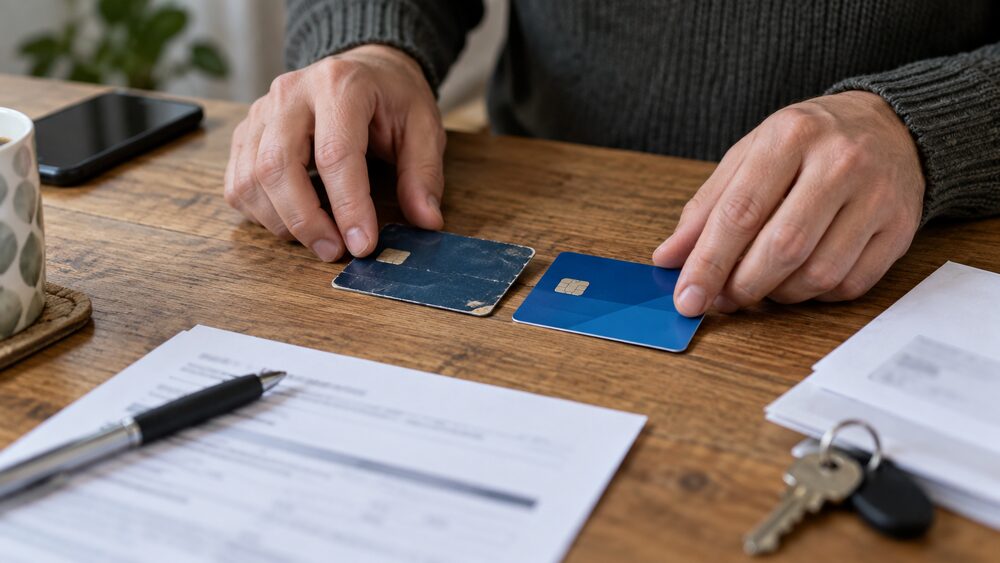
If your card or phone is lost or stolen, or you think your online bank account or cheque book has been hacked, speak to your bank or building society straight away21. Reporting a lost or stolen card is a separate process with its own steps, and it is worth knowing how it works before you need it.
Joint accounts and shared credit: what you can change on your own
A joint account gives shared access to your money, and either person can withdraw whatever money they want from it23. That is the core risk: you cannot control what the other account holder does with the balance. Opening a joint account with someone you trust matters because it could damage your credit score if they have poor credit, and you could be responsible if they run up debt24.
You can close a joint account at any time, but any overdraft will need to be repaid first. Some banks need permission from all account holders, while others let one person close it unless a dispute is registered5. Closing the account will not remove the link to the other person from your credit file, but you can ask credit reference agencies for a notice of disassociation if there is no other financial connection between you5.
There are limits on what a bank can move between accounts. The right of set off allows transfers from your sole bank account to a debt only in your name, from your sole bank account to a debt you have jointly, and from your joint bank account to a joint debt if the same two people are named. It does not allow transfers from your joint account to a sole debt in your name, or from your joint account to another joint account you have with a different person25.
If a partner loses mental capacity, the joint account could be frozen unless there is a power of attorney in place5. In Scotland, a bank arrestment freezes the full amount in a joint account apart from the protected minimum balance, and the argument that the creditor is not entitled to the full amount can be made26. If a joint bank account is held and one of you goes bankrupt, it will be frozen, and the bank may close it and refund half the money to the other person or remove your name from the account27.
Opening an account in your own name, including without a fixed address
An account in your own name only is the cleanest way to keep your money separate. Some accounts, such as NS&I Direct ISA, can be opened in your own name only28, while others such as NS&I Direct Saver can be opened in your own name or jointly with one other person29.
Not having a fixed address is not a barrier. A basic bank account can be opened even with no fixed address6. Some banks have special schemes for people with no fixed address and work with a local homeless charity to help confirm identity30. Where ID documents are missing, or do not match your gender, someone from a homeless charity or an LGBTQ+ organisation can go to the bank with you31.
To open an account you usually fill in an application form in a branch, online, or sometimes over the phone, and provide proof of identity including your full name, date of birth and address32. If you are opening an account to receive Universal Credit, there are specific things to look for in the account you choose24.
What your bank can do if you tell it about abuse
Telling your bank is the step that unlocks most of the practical protections. The bank should help if you suspect financial abuse34. Contact your bank and all other banks where you hold accounts, whether current accounts, savings or lending, so measures can be put in place to protect your money2. If there are unusual transactions on your statement, inform your bank, building society and credit card company9.
Some banks have dedicated support. Bank of Ireland UK offers practical support to help you take back control of your money if you have experienced domestic, financial or economic abuse, including confidential support with personal data and contact details kept private, and a support form that tells the bank how to contact you safely35. Al Rayan Bank can update your address to send mail to another secure location and help you access your account information through its secure Digital Banking app3. HSBC UK branches offer a Safe Space for people experiencing domestic abuse1.
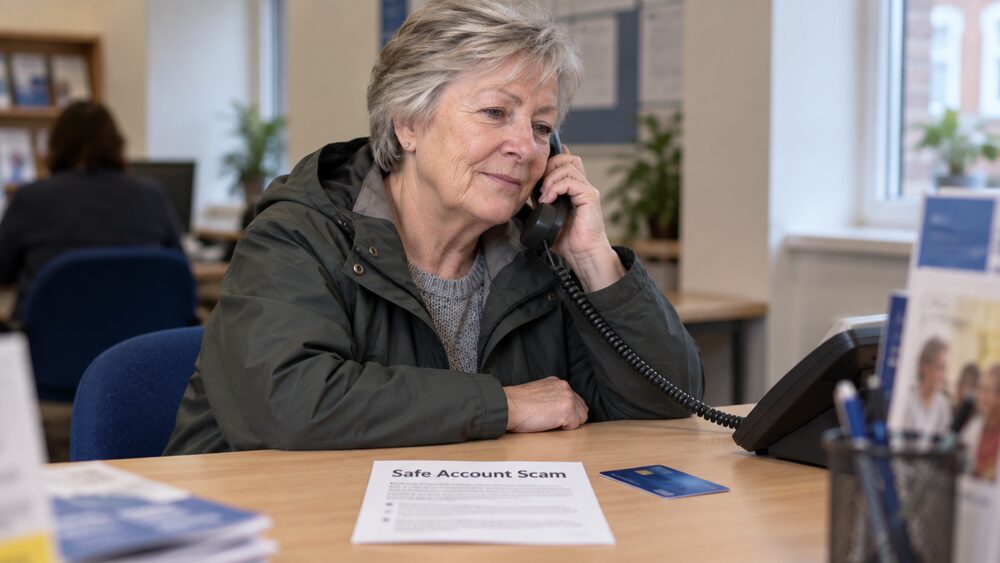
If you have fallen victim to a scam, contact your bank immediately to report it37. If you are worried about your account security, contact your bank directly using the number on your card or by calling 1597. Banks will not speak to unauthorised third parties about your account4.
"The bank should help if you suspect financial abuse"
Where to get help: banks, charities and the police
Report financial abuse to the police34. If your concern is about an adult at risk, talk about your concerns with your local council's adult social services department38. The Sanctuary scheme can help, and the people who can confirm your circumstances include a health care professional, the police, a support worker or social worker, a housing officer, or any public, voluntary or charitable organisation that has had contact with you about the domestic abuse39.
For debt and money problems, StepChange can make sure no letters go to your home if that is something you are concerned about40. Victim Support is a specialist charity for victims of crimes, including fraud41. If you are homeless or at risk of homelessness, Shelter has guidance on keeping a bank account31.
If a complaint about your bank is not resolved, the Financial Ombudsman Service can look at it. Businesses and consumer advisers can contact the Business Support Hub on 020 7964 1400 for information on how a particular complaint might be looked at, or guidance on rules and how the Ombudsman works42. Writing a clear complaint is often the step that moves things forward.
Sources42 cited
- How banks can help Surviving Economic Abuse, 2023-11
- What to do if you're a victim of fraud Secure Trust Bank, 2026
- Financial abuse Al Rayan Bank, 2026
- What we do to protect you Secure Trust Bank, 2026
- Joint accounts MoneyHelper, 2026-09-25
- Help from your council if you're homeless Independent Age, 2026-09-26
- Types of scam MoneyHelper, 2026-09-25
- Cheque scams Take Five, 2026-09-26
- Identity theft Information Commissioner's Office, 2026-09-25
- Digital wallet fraud Take Five, 2026-09-26
- Card fraud Take Five, 2026-09-26
- Banking fraud Take Five, 2026-09-26
- Shop safely online MoneyHelper, 2026-09-25
- Using behavioural economics to understand and prevent authorised push payments fraud Payment Systems Regulator, 2026-09-26
- Romance fraud Take Five, 2026-09-26
- Internet banking security help Secure Trust Bank, 2026
- Online scams Take Five, 2026-09-26
- Conveyancing scams Take Five, 2026-09-26
- Stolen mobile phone Take Five, 2026-09-26
- Holiday fraud Take Five, 2026-09-26
- Protect your identity nidirect, 2025-10-28
- Manage your Universal Credit claim after you apply GOV.UK, 2025-09-03
- How joint debts affect me StepChange, 2026-09-25
- Choosing a bank account for your Universal Credit payment MoneyHelper, 2026-09-25
- Right of offset StepChange, 2026-09-25
- Diligence (Scotland) National Debtline, 2026-09-25
- Bank accounts after bankruptcy StepChange, 2026-09-25
- Direct ISA NS&I, 2026-09-04
- Direct Saver NS&I, 2026-09-04
- Basic bank accounts MoneyHelper, 2026-09-25
- Keeping a bank account Shelter, 2025-01-23
- Getting a bank account Citizens Advice Scotland, 2026-09-26
- Types of attack HSBC UK, 2025-12-05
- Managing money for someone else Scope, 2025-11-27
- Together we can work it out Bank of Ireland UK, 2026-09-25
- Life events Bank of Ireland UK, 2026-09-25
- If you've fallen victim to a scam Payment Systems Regulator, 2026-09-25
- How to help someone if you think they're being scammed Independent Age, 2026-09-26
- Sanctuary scheme Entitledto, 2026-09-26
- How we help StepChange, 2026-09-25
- 4 ways to help a fraud victim Which?, 2024-03-20
- Electronic money services Financial Ombudsman Service, 2026-09-27


 Citizens AdviceFree advice on money, consumer and legal problems in England and Wales
 MoneyHelperFree, impartial money and pensions guidance, set up by government
 Financial Ombudsman ServiceFree, independent help when a complaint about a firm is not put right
 GOV.UKOfficial information on tax, benefits and government services
 StepChangeFree debt advice and solutions from a charity