
When a bank, lender or savings provider cannot see an original document, it will often accept a certified copy instead: a photocopy that a suitable professional has compared with the original, signed and dated. The point of the exercise is that the firm is trusting the certifier's word, not yours, so the rules about who can certify, what they must write and how recently they signed it are strict, and each firm sets many of them itself. Family Building Society, for example, requires the certification to be dated within the last 12 months1, while NS&I requires the certification to be dated within three months to be valid2.
There is no single UK-wide list of approved certifiers. Solicitors, accountants and bank staff appear on most firms' lists, but the details differ: one lender may accept a mortgage broker and another may not, and one may refuse teachers while another welcomes them. Before you pay anyone or post anything, get the receiving firm's own instructions, because a certification that satisfies one firm can be rejected by the next.
What a certified copy is and why a bank or lender asks for one
A certified copy is a copy of a document, usually a passport, driving licence, utility bill or legal document, that a professional has checked against the original and then signed and dated. The certifier is confirming two things: that the copy matches the original, and that the original exists and is genuine. That is why firms ask for it in situations where they cannot see you in person: opening an account from abroad, registering a power of attorney, claiming money after a bereavement, or applying for a mortgage through a broker or adviser who handles documents on the lender's behalf.
Firms accept certified copies because the alternative, holding your original passport for weeks, is risky and slow. When a company needs proof that someone is authorised to act, Which? notes that you can show the original power of attorney document or a certified copy3. The same logic applies across finance: the firm wants evidence it can file, and a certification transfers responsibility for the check onto a professional it regards as trustworthy.
The idea of a formally confirmed copy is not unique to consumer finance. Under the FCA's banking conduct rules, a firm must provide a banking customer with a true copy of any statement of account on request4. In Scotland, the Accountant in Bankruptcy will, on request, provide a certified copy of an entry from the Register of Insolvencies5, and under the regulations governing payment service providers, the FCA must provide a certified copy of the register, or any part of it, to any person who asks for it, on payment of any fee fixed by the FCA6. In each case the certified copy stands in for the original record so the holder does not have to part with it.
Do not confuse a certified copy with other documents called certificates. In insurance, a certificate is a document issued by an insurer as evidence that insurance is in force7. A certified copy is not evidence of a right or a policy: it is a checked reproduction of a document that already exists.
Who can certify documents: solicitors, accountants and bank staff
The fullest published list of acceptable certifiers comes from NS&I, which accepts a qualified individual currently practising in the legal, financial or teaching profession, a doctor, dentist or vet, a nurse (RGN or RMN), a minister of a recognised religion, a civil servant, a prison, police or customs officer, an elected official such as a councillor, MP or Mayor2. Family Building Society's list is shorter but overlaps: a solicitor or lawyer, an accountant, a bank or building society official, an independent financial adviser, a mortgage broker, or a medical doctor1.
Reading the two lists together gives a fair picture of the market. The professions that appear again and again are law, accountancy, banking, medicine and regulated financial advice, because these are occupations with professional registration, a career to protect and a fixed work address, all of which make the certification checkable. NS&I adds that the person should currently be practising in their profession2, so a retired solicitor or a former bank manager may not qualify even if they were once a member of the profession.
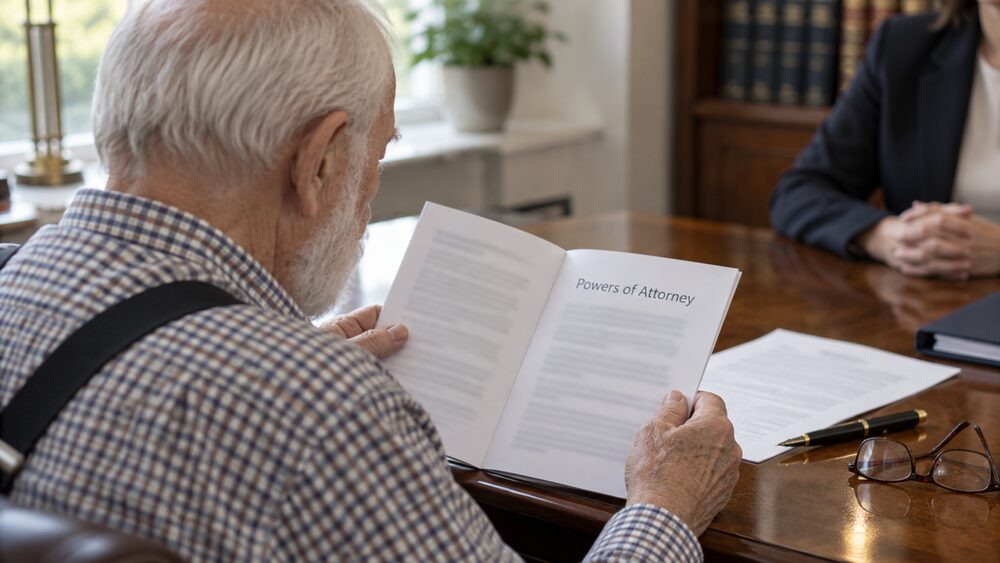
Some firms go wider than the standard list. Which? notes that the person who certifies a lasting power of attorney document should be someone who has known you well for at least two years, or a professional such as a GP, solicitor or social worker8. MoneyHelper similarly reports that some banks will take a letter from a responsible person, such as a teacher or a social worker, or a benefits notification letter, as proof9. These routes are for specific situations, not a general licence, so treat them as options to ask about rather than assumptions.
Scotland has its own family of "authorised persons" for specific certificates. A certificate for sequestration, the Scottish form of bankruptcy, can only be issued by an insolvency practitioner, a money adviser working at a Citizens Advice Bureau or local council, or a money adviser working for any accredited advice agency10. That is a different job from certifying a passport copy, but it shows the same principle: the organisation receiving the document names the professions it trusts.
Lenders set their own lists of approved certifiers
There is no statute that says who may certify a passport copy for a mortgage lender. Each firm publishes or applies its own instructions, and two firms can disagree. Family Building Society accepts a mortgage broker and an independent financial adviser1; NS&I accepts teachers and ministers of religion but, as a savings provider, has no reason to accept a mortgage broker at all2. Neither list is wrong. They reflect who the firm expects to be able to verify.
The same firm-by-firm variation runs through the whole evidence-gathering process, not just certification. Which? reports that when self-employed applicants provide HMRC tax calculations, some lenders will accept two11. On flats affected by the building safety crisis, lenders are expected to ask for evidence to inform their decisions, including confirmation that any remedial works will be paid for by government funding or by the original developer12. The lender decides what it needs to see, and the borrower's job is to ask early rather than guess.
This matters when you are choosing who to pay. The market is large: the National Audit Office reported that there were around 38,000 firms with permissions, around 5,000 of which are lenders13, and each of those firms can set its own documentary requirements within the FCA's broader rules. Citizens Advice advises that if a lender is authorised, it will be on the Financial Services Register14, and payday lenders must be authorised by the Financial Conduct Authority, which publishes a list of licensed lenders on the FCA register15. Checking that a firm is authorised before sending it a certified copy of your passport is a sensible step, because an authorised firm is subject to the FCA's rules on how it handles your information.
Who cannot certify: yourself, relatives and joint applicants
The exclusions are as important as the list of who qualifies. NS&I states that the person you choose must not be related to you by birth or marriage, must not be in a personal relationship with you, and must not live at the same address2. Family Building Society goes further for its own documents: they cannot be certified by you or a family member, or by those with educational professions such as teachers and university tutors1. That last exclusion is a good example of why you must check the specific firm's rules, because teachers appear on NS&I's accepted list2 and are barred by Family Building Society1.
The reason for the family exclusion is straightforward: a certification is only worth anything if the certifier is independent of you. A relative certifying your passport copy is confirming something in which they have a personal interest, and the receiving firm has no way to rely on it. The same logic appears elsewhere in financial paperwork. When NS&I asks for a witnessed letter, the witness must write: "I certify that (your name) signed this letter in my presence and that I am not a member of the same family"16. The witness's independence is the whole point of the statement.
Similar independence rules apply to related roles. Age UK notes that an attorney under a power of attorney cannot be a professional care worker, apart from in exceptional circumstances, for example if they are your only relative17. And where a disabled person cannot sign a written declaration themselves, HMRC guidance allows the signature of a parent, guardian, doctor or another responsible person to be accepted18. In each case the organisation is looking for someone whose position gives a reason to trust their word.
A joint applicant on the same mortgage or account falls under the same principle. They are a party to the application, not an independent professional, so they cannot certify the other applicant's documents. If in doubt, treat anyone who benefits from the application succeeding, or who shares your household, as unable to certify.
The wording a certifier must write on the copy
The wording is not a formality: firms check it, and a copy signed with the wrong words can be rejected even when the certifier is fully qualified. NS&I sets out one of the most detailed requirements. The certifier must write the following on every page of the copied document in English: "I certify that this a true and complete copy of the original [type of document] belonging to [your name]." It must be signed and dated on every page, with the certifier's full name, occupation, work address, daytime telephone number, official stamp where available, and professional registration number if they have one2. For documents certified overseas, NS&I requires: "I certify that this is a true copy of the original [type of document] belonging to [your name]."2
Dudley Building Society requires the specific wording "This is a true copy of the original document" on certified copies1. The firms' wordings are similar but not identical, so the receiving firm's instructions are what determine the formula the certifier must use, rather than the certifier's habitual wording.
Some organisations allow a simpler self-declaration in limited circumstances, which is worth understanding so you do not mistake it for certification. The Court Funds Office asks for a copy that has "I believe this to be a true copy of the original" written on it, signed and dated by you and your witness, on the same day19. That is a witnessed declaration by you, not a professional certification, and banks and lenders do not offer it as a substitute. Where NS&I needs a witness rather than a certifier, the witness's statement is the "not a member of the same family" wording quoted above16.
Certifier details: name, profession, address, phone and date
Alongside the wording, the certifier must leave enough detail for the firm to follow up if it ever needs to. NS&I requires the certifier's full name, occupation, work address, daytime telephone number, official stamp where available, and professional registration number if they have one2. Family Building Society requires the certifier's full name, job title, signature, company address and contact details, together with the date of certification1. The receiving firm may want to contact the certifier to confirm the certification, so a mobile number and a home address are weaker than a work address and a work phone line.
The date deserves particular attention. It is the only part of the certification that decays: the signature, the wording and the details stay valid, but the date starts the clock on the firm's freshness limit, covered in the next section. The certifier should date the copy on the day they actually compare it with the original, not the day you collect it or the day you plan to send it. The Court Funds Office's requirement that a witnessed copy be signed and dated by you and your witness on the same day19 reflects the same concern: the declaration and the comparison belong together in time.
Certification must be recent: within the last 12 months
A certification does not last indefinitely. Family Building Society requires the certification to be dated within the last 12 months1. NS&I is stricter: the certification must be dated within three months to be valid2. The FSCS applies a 12-month rule of its own when a personal representative confirms their appointment, which must be signed and dated within the last 12 months20. These limits exist because a certified copy only proves the document existed and matched the copy on the day of certification; the older the certification, the less it says about your document now.
The same freshness principle governs the supporting documents that travel with a certified copy. MoneyHelper advises checking whether a bank will accept other recent documents, typically under three months old, such as a Council Tax bill, utility bill, bank or building society statement, credit card statement, HMRC letter or tax statement, mortgage statement, tenancy agreement, benefit or state pension statement, or a letter from your employer, college or training provider21. The Court Funds Office similarly asks for a copy of a bank statement or a letter from your bank dated within the last 3 months to confirm your account details19.
The practical consequence is that a certified copy is not a keepsake. If you had your passport certified for a mortgage application last year and a new firm asks for one now, the certification may already be too old for that firm even if it was perfect when made. Check the date on the copy before you send it, and if it is close to the limit, consider having it redone so it does not expire while the application is being processed.
Where a certified copy gets rejected
Rejection usually comes down to one of four things: the wrong certifier, the wrong wording, a missing detail, or an expired date. Each firm applies its own rules, so a copy that satisfied one organisation can fail at another. There are also documents for which no copy will do at all. When someone dies, ordinary photocopies of the death certificate are not accepted by some organisations, such as banks or life insurance companies22, and bereavement support guidance likewise warns that photocopies are not accepted23. For these documents you need official copies from the registration authority, not a certification.
Some services insist on originals outright. The Payment Exception Service requires you to show proof of your identity, states that copies are not acceptable, and that it must be the original document24. If the organisation you are dealing with takes that position, no amount of certification will change it, and the only answer is to send or present the original as it asks.
There is a further reason firms are careful: the rules on what a firm may accept when it suspects something is wrong. Under the FCA's consumer credit rules, a firm must not accept an application for credit where the firm knows or has reasonable cause to suspect that the customer has not been truthful in completing the application in relation to information relevant to the creditworthiness assessment25. A certification that looks altered, unsigned, undated or inconsistent with the rest of the application invites exactly that suspicion, and the firm is required to act on it rather than overlook it.
Alternatives when you cannot send originals or find a certifier
If you cannot get to a solicitor or the firm's certifier list defeats you, there are other routes, depending on what the document is for. For powers of attorney, Which? notes that companies can be shown the original document or a certified copy, and that banks may ask for proof of each attorney's identity, such as a passport or driving licence, and proof of address such as a recent utility bill3. Some banks have moved past paper altogether: Bank of Scotland accepts a digital code instead of original or certified documents for lasting powers of attorney registered after September 2019. If the power of attorney was registered recently, ask the bank whether a code exists before arranging a certification.
For identity checks on everyday accounts, MoneyHelper reports that some banks will take a letter from a responsible person, such as a teacher or a social worker, or a benefits notification letter, as proof9, and that banks may accept other recent documents, typically under three months old, in place of a passport or driving licence21. Neither route is guaranteed, but both are worth asking about, because they cost nothing and can avoid the certification process entirely.
Where a signature itself is the obstacle rather than the document, there are established alternatives. HMRC guidance allows the signature of a parent, guardian, doctor or another responsible person on a written declaration when the disabled person cannot sign, for example a child or a person who cannot write18. NS&I's witnessed-letter route, with the witness confirming they are not a member of the same family16, is another lighter-weight option for that provider's own processes. And where a service insists on originals, such as the Payment Exception Service24, plan for the original to be away from you for the time it takes, or use a different service.
Free help
You do not have to pay for advice about any of this. MoneyHelper, the free government-backed money guidance service, explains what banks accept as proof of identity when opening or switching an account21 and covers easier ways to manage money, including the letters and proofs some banks accept9. Citizens Advice offers free guidance on borrowing and on checking that a lender is authorised and on the Financial Services Register14.
For the situations that most often call for certified copies, there are specialist free services too. Age UK covers the legal side of powers of attorney, including who can and cannot take on the role of attorney17, and what to do when someone dies, including which documents organisations accept22. Which? explains what a power of attorney is and who can witness one8, and how to set one up, including the proof of identity attorneys need to show banks3. National Debtline provides free guidance on bankruptcy in Scotland, including who can issue a certificate for sequestration10. For bereavement paperwork, Widowed and Young and Age UK both set out what banks and insurers need after a death23, and Turn2us explains the identity requirements for the Payment Exception Service24. If a savings provider has failed, the FSCS explains what a personal representative needs to sign and when20.
If a dispute with a firm stalls, for example over a rejected document, the guide to free consumer advice lists where to take it next, and writing an effective complaint shows how to put the firm's own requirements back to it in writing.
Sources25 cited
- Certifying documents Family Building Society, 2026-09-26
- Evidence of identity NS&I, 2026-04-15
- Setting up power of attorney Which?, 2026-02-26
- BCOBS 4.2 Banking Conduct of Business Financial Conduct Authority, 2025-02-26
- Register of Insolvencies Accountant in Bankruptcy, 2021-11-01
- Payment Services Regulations 2017 legislation.gov.uk, 2025-04-06
- Jargon buster British Insurance Brokers' Association, 2025-02-11
- What is power of attorney Which?, 2026-02-26
- Make your money easier to manage by yourself MoneyHelper, 2026-09-25
- Bankruptcy (Scotland) National Debtline, 2026-09-25
- Mortgages for self-employed buyers Which?, 2025-12-18
- Mortgages on flats affected by building safety crisis National Housing Federation, 2026-09-26
- Tackling problem debt National Audit Office, 2018-09-06
- Personal loans Citizens Advice, 2026-09-25
- Payday loans nidirect, 2026-02-25
- Take ownership of savings NS&I, 2023-12-05
- Power of attorney Age UK, 2026-01-09
- Reliefs from VAT for disabled and older people (Notice 701/7) HMRC, 2014-12-18
- Get court funds money when you turn 18 GOV.UK, 2026-09-27
- Personal representative claims Financial Services Compensation Scheme, 2026-09-25
- How to open, switch or close your bank account MoneyHelper, 2026-09-25
- What to do when someone dies Age UK, 2026-02-16
- Dealing with paperwork after a bereavement Widowed and Young, 2026-09-26
- Payment Exception Service Turn2us, 2026-05-26
- CONC 5.2A Financial Conduct Authority, 2018-11-01




 Citizens AdviceFree advice on money, consumer and legal problems in England and Wales
 MoneyHelperFree, impartial money and pensions guidance, set up by government
 Financial Ombudsman ServiceFree, independent help when a complaint about a firm is not put right
 GOV.UKOfficial information on tax, benefits and government services
 StepChangeFree debt advice and solutions from a charity