
Getting married or registering a civil partnership changes more of your financial life than most people expect. Some changes save money: the Marriage Allowance lets one partner transfer £1,260 of their tax-free Personal Allowance to the other1, and anything left to a surviving spouse or civil partner is exempt from inheritance tax however large the amount2. Some changes are about what family can give: each parent can hand over up to £5,000 as a tax-free wedding gift, so a couple whose parents are generous could receive up to £20,000 with no inheritance tax consequences3. And some changes are less welcome: benefits are assessed on a couple's joint income, and State Pension inheritance depends on dates that many people do not know matter.
The wedding itself is often the first financial shock. Research by the Money and Pensions Service in May 2025 found that guests spend close to £700 (£692) per wedding or civil partnership on average, and over £2,000 a year attending them4. For the couple, the money coming in from family can matter as much as the money going out, and the tax rules around those gifts have strict conditions attached.
This page explains what changes, in plain terms: the wedding gift exemption and how it works, the Marriage Allowance, what spouses inherit from each other tax-free, when the marriage date affects State Pension rights, and how the benefits system treats a couple differently from two single people.
What weddings cost couples and guests
Before the tax rules, the practical reality: weddings are expensive for everyone involved, not just the couple. The Money and Pensions Service published research in May 2025 showing that UK adults who attended at least one wedding or civil partnership in the previous 12 months spent close to £700 per event on average, £692, and more than £2,000 across the year4. Younger guests feel it most: those aged 18 to 24 spent an average of £872 per wedding or civil partnership, and the average rose to nearly £4,500 a year for 25 to 34 year olds4.
For the couple, the cost of the day itself is only part of the picture. Money given by family to help pay for it can be worth thousands of pounds, and the inheritance tax rules treat wedding gifts far more generously than ordinary gifts, but only if the conditions are met. That is what the rest of this page covers: how much each relative can give, when the gift must be made, and what happens if the giver dies or the wedding does not go ahead.
If you are budgeting for the day, the general guides to savings accounts, loans and credit cards cover the borrowing and saving options, and the life events guide sets out the other money changes that come with big life moments.
Wedding gifts and inheritance tax: what the exemption does
Inheritance tax (IHT) is charged on a person's estate when they die, but not on every gift they made while alive. Most gifts are "potentially exempt transfers": they fall outside the estate only if the giver survives seven years after making them8. Wedding gifts are different. A gift to someone getting married is exempt from inheritance tax immediately, with no seven-year clock, as long as it is made before the wedding and the wedding does go ahead3.
The exemption exists because HMRC treats a wedding gift as a special occasion, not a transfer of wealth. The amounts are capped by the relationship between the giver and the person getting married: £5,000 from a parent, £2,500 from a grandparent or great-grandparent, and £1,000 from anyone else6. A gift within those limits never counts towards the giver's estate for inheritance tax, however soon they die afterwards.
Two things must be true for the exemption to apply. First, the gift must be made in anticipation of the wedding, before it happens rather than after. Second, the wedding must actually take place. If the ceremony is called off, the exemption is lost and the gift falls back under the ordinary rules3.
It is worth being clear about who pays any tax. The person receiving the gift does not usually owe tax on it at all: inheritance tax, where it applies, is a charge on the giver's estate, assessed by their executors after death9. The exemption matters to the giver's family, in other words, not to the couple on the day.
How much each relative can give: £5,000, £2,500 or £1,000
The limits are fixed by relationship, and they are the same across the UK. A parent can give up to £5,000 to their child for a wedding3. A grandparent or great-grandparent can give up to £2,5005. Anyone else, including friends, aunts, uncles and siblings outside the couple, can give up to £1,0006. Gifts between the partners themselves, from bridegroom to bride, the reverse, or between civil partners, also have a £2,500 limit3.
| Giver | Recipient | Tax-free limit |
|---|---|---|
| Parent | Their child | £5,0003 |
| Grandparent or great-grandparent | Grandchild or great-grandchild | £2,5005 |
| Either partner | The other partner | £2,5003 |
| Anyone else | Either partner | £1,0006 |
The relationship that matters is between the giver and the person getting married, not the couple jointly. A gift of £5,000 from a father to his daughter counts against his £5,000 parent limit, whether the money is spent on the dress, the venue or the couple's joint costs. The same father has no £5,000 limit for his new son-in-law or daughter-in-law: for them he is "anyone else", with a £1,000 limit6.
These figures have been stable for many years and are unchanged for the tax years covered by the guidance cited here3. The limits apply per wedding, so a parent with two children marrying in the same year could give £5,000 to each.
The exemption applies per giver, not per couple
A point that catches families out: each giver has their own limit. The £5,000 parent limit is not £5,000 per wedding or per couple, it is £5,000 per parent. A mother and father can each give £5,000 to their marrying child, £10,000 in total, and if the other partner's parents do the same, the couple can receive up to £20,000 entirely free of inheritance tax3.
The same per-person logic runs through the gift rules generally. Everyone also has an annual exemption of £3,000 for gifts each tax year, so as a couple two parents can usually give away £6,000 per year as standard, and potentially £12,000 if neither made substantial gifts in the previous year3. The wedding exemption and the annual exemption are separate: a parent could give £5,000 under the wedding exemption and still use their £3,000 annual exemption on other gifts in the same tax year.
Where an estate is small enough to be dealt with under the simplified "excepted estates" procedure, HMRC's guidance is strict about which exemptions can be taken into account: only the spouse or civil partner exemption and the charity exemption count, and no other exemption or relief can be taken into account11. For most families this is an administrative detail for the executors rather than the couple, but it shows that the wedding gift exemption is recorded and checked as part of the estate process, not just ignored.
Gifts must be made before the wedding
Timing is a condition of the exemption, not a formality. The gift must be made before the wedding, and the wedding must go ahead3. A gift made after the ceremony does not qualify, however close the giver's relationship, and a gift made for a wedding that is later cancelled loses the exemption too.
If the wedding is called off, the money does not become taxable on the day, but it loses its special status. It falls back under the general gift rules: if the giver dies within seven years, the amount above any available exemptions counts towards their estate and may attract inheritance tax8. The giver may still be able to shelter some or all of it using their £3,000 annual exemption for the year it was made3.
There is a related trap worth knowing about even though it rarely applies to wedding gifts. A "gift with reservation" is one where the giver keeps a benefit from what they gave away, such as giving away a home but continuing to live in it rent-free. Gifts like that still count towards the value of the estate5. Cash wedding gifts do not normally create this problem, since the couple spends the money outright, but gifts of property or items the giver keeps using can.
Where a gift does exceed the exemptions and the giver dies within seven years, the tax bill may be reduced by taper relief, so long as the giver survived at least three years after making the gift8. Taper relief reduces the tax on a sliding scale rather than eliminating it, and it applies only to the amount above the available exemptions, not the whole gift.
Combining the wedding allowance with other exemptions
The wedding gift exemption can be combined with the giver's other allowances, which is how larger family contributions stay tax-free. The main one is the annual exemption: everyone can give away £3,000 of gifts each tax year, and unused annual exemption from the previous year can be carried forward, which is how a couple can give £6,000 as standard or up to £12,000 if neither gave substantially the year before3. A parent giving £5,000 for a wedding could add £3,000 under the annual exemption in the same tax year, £8,000 in total, with both amounts exempt.
The exemption that cannot be combined is the small gifts exemption. Gifts of up to £250 to any one person in a tax year are tax-free, but not if they are part of a larger gift that uses another exemption12. A parent cannot give £5,250 by stacking the £5,000 wedding limit and the £250 small gift limit: the wedding gift is one gift, and the £250 exemption cannot be added to it.
Beyond the fixed exemptions, there is a more flexible route for parents with surplus income. Gifts out of income can also be tax-free, but the conditions are demanding: they must be made regularly, come from normal income rather than savings, and not affect the giver's standard of living12. One-off amounts are unlikely to qualify, and gifts funded by selling assets do not count10. A parent who regularly contributes a set amount each month from their salary towards a child's household costs is the sort of pattern HMRC looks for; a single lump sum from a savings account is not.
The Marriage Allowance: £1,260 of Personal Allowance
Marriage and civil partnership also open up an income tax break while you are both alive. The Marriage Allowance lets one partner transfer £1,260 of their Personal Allowance to their husband, wife or civil partner1. It works where one partner's income is below the Personal Allowance, currently £12,570, so that part of their allowance would otherwise be wasted, and the other partner pays income tax at the basic rate, which usually means an income between £12,571 and £50,27013.
The transfer reduces the giving partner's tax-free allowance by £1,260 and increases the receiving partner's by the same amount, so the couple as a whole pays less tax. HMRC describes the relief as giving a tax reduction to a person whose spouse or civil partner has elected for a reduced Personal Allowance14.
Once claimed, the transfer continues automatically: your Personal Allowance will transfer to your partner every year until you cancel Marriage Allowance1. That is convenient, but it means a couple whose circumstances change, because a pay rise pushes the lower earner above £12,570, for example, needs to remember to cancel it, since the lower earner could end up paying tax on income covered by an allowance they no longer have.
There is an older, separate relief that most couples cannot claim. The Married Couple's Allowance is available where one or both spouses were born before 6 April 193513, with a maximum amount of £11,270 for the 2025 to 2026 tax year and £11,700 for 2026 to 202715. Where a couple married or became civil partners on or after 5 December 2005, the allowance is given to the partner with the higher income13. You cannot get Marriage Allowance and Married Couple's Allowance at the same time1.
Inheritance between spouses and civil partners
The most valuable inheritance tax rule for married couples is also the simplest: anything left to a surviving spouse or civil partner is exempt from inheritance tax2. Property left to a spouse is exempt16, and the exemption applies regardless of the amount, covering savings, Isas, possessions and everything else, provided both partners are domiciled in the UK17. A surviving spouse or civil partner never pays inheritance tax on anything left to them17.
The exemption also works in combination with the nil-rate band, the amount everyone can leave tax-free to others. Where the first partner's estate passes to the survivor, their unused nil-rate band can be transferred, and a married couple leaving a family home to children can pass on up to £1m tax-free in total17. The surviving spouse's own estate then benefits from both allowances when they die.
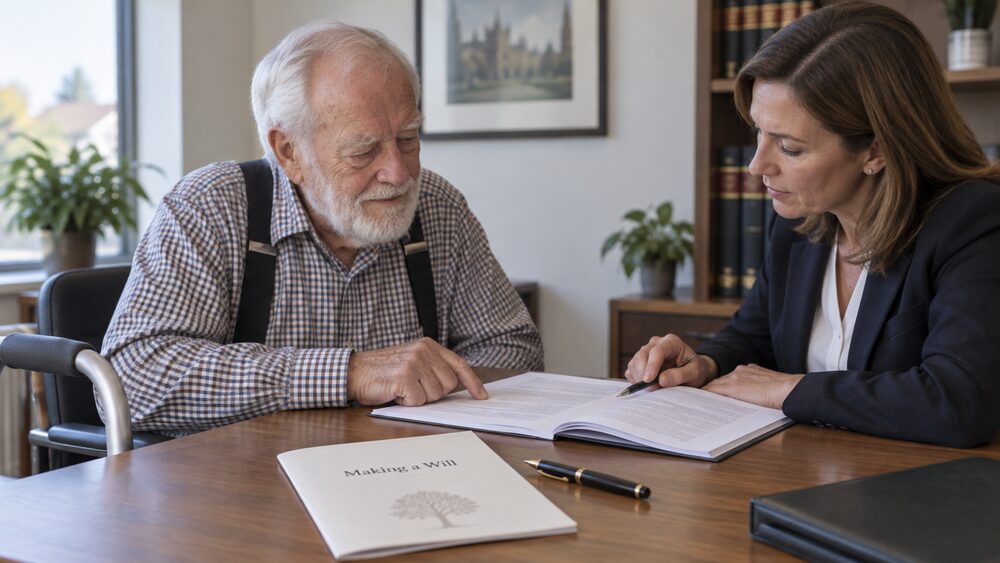
Marriage also changes what happens without a will. Under the intestacy rules, a surviving spouse or civil partner is first in line to inherit, whereas someone living with the deceased but not married or in a civil partnership may not receive anything from the estate16. That is one reason the question of whether marriage revokes a will matters so much: an existing will is generally cancelled by a marriage unless it was made in contemplation of it, and the intestacy rules then decide who gets what. The guides to making a will and to dying without a will cover the detail.
Lifetime gifts between spouses are treated generously too. You do not usually need to pay Capital Gains Tax on gifts to your husband, wife or civil partner, whether the gift is a personal possession18 or property19. The recipient effectively takes over the giver's position, so any gain is deferred rather than wiped out, but there is no tax charge on the gift itself.
Where inheritance tax is due on an estate, it must be paid before probate can be granted16, and once the grant has been issued any outstanding tax is expected to be paid as soon as possible20. HMRC must also be told when inheritance tax is due on a gift or trust using form IHT10021. These are matters for the executors, but a surviving spouse should know that the spousal exemption usually removes most or all of this burden for assets passing to them. In Scotland, guidance on inheritance tax support is available through mygov.scot22.
Pensions for a spouse or civil partner: when the marriage date matters
State Pension rights between spouses depend heavily on dates, and the rules changed fundamentally on 6 April 2016. If you reached State Pension age before 6 April 2016, you may be able to inherit some of your spouse or civil partner's State Pension when they die7. If you reached State Pension age on or after 6 April 2016, you cannot increase your State Pension using your spouse's or civil partner's National Insurance record: payments are based on your own record23.
The marriage or civil partnership date matters in its own right. You might be able to inherit part of your partner's additional State Pension if your marriage or civil partnership began before 6 April 201624. Under the new State Pension you generally cannot inherit any State Pension, though there are exceptions that ensure no one is worse off than under the old rules24.
Inheriting a deferred State Pension has its own conditions: your partner must have reached State Pension age before 6 April 2016, you must have been married or in a civil partnership when they died, they must have deferred their State Pension or been claiming the deferred amount, and you must not have remarried or formed a new civil partnership before you reached State Pension age26. There is also a category of top-up to know about: if your spouse or civil partner topped up their State Pension between 12 October 2015 and 5 April 2017, you may be able to inherit some or all of that top-up7.
Two further points are worth knowing. First, underpayments have been systematic enough that HMRC runs an exercise to check estates where the person who died may have missed State Pension they were entitled to inherit from a spouse or civil partner, covering both those who reached State Pension age before 6 April 2016 and those who reached it on or after that date27. Executors can request this check. Second, some bereavement provisions are not limited to married couples: you may be entitled to a War Widow's or Widower's Pension if you lived with a partner as husband and wife or as civil partners28.
Private and workplace pensions are separate from all this. What a surviving spouse receives depends on the rules of the individual scheme and any expression of wish form, and pensions can also be part of a divorce settlement: the Scottish Public Pensions Agency notes that in a divorce or dissolution under the law of England and Wales, the calculation covers the whole period of scheme membership29. Awareness is low: Money and Pensions Service research published in January 2026 found only around four in ten people know a pension can be part of a divorce settlement, with 57% of 55 to 64 year olds aware30. The pensions guide covers the wider picture.
How benefits treat couples
Marriage changes the benefits system's view of a household. Most means-tested benefits are assessed on a couple's joint income and circumstances, so marrying or moving in together as a couple can reduce or end an award that one partner received as a single person. The details differ by benefit, but the principle is consistent: two people living together as a married couple or civil partners are treated as one unit.
Some rules are surprisingly specific. Child benefit is not payable in respect of a qualifying young person who is living with another person as if they were a married couple or civil partners, unless that cohabitee is receiving relevant education or approved training and the claimant is not the cohabitee31. For tax credits, the rules on what counts as income exclude certain payments, including maintenance payments from a former partner, tax credits payments, student loans and most student grants32, which matters when a couple's combined income is being worked out.
For pension-age benefits, from May 2019 both partners in a couple were required to have reached State Pension age to make a successful claim for income-related pension age benefits33. Pension Credit includes a Savings Credit element worth up to £20.10 per week for a couple34. For working-age support, Universal Credit includes advances for new claimants: a budgeting advance of up to £464 is available if you are part of a couple35. In Northern Ireland, the benefit cap limits what certain households can receive to £22,020 per annum for couples and households with children36.
Scotland has its own additions. The Best Start Grant Pregnancy and Baby Payment provides £754.65 on the birth of a first child and £377.35 for any subsequent child37, with a rate of £398.35 where the parent has older children38. These are not marriage-specific, but they are part of the joint household assessment that follows a couple.
Where to get free help
Several of these topics are complicated enough that free, impartial help is worth having. MoneyHelper, the government-backed money guidance service run by the Money and Pensions Service, is the starting point for questions about budgeting for a wedding, the Marriage Allowance and joint finances. HMRC's guidance on the Marriage Allowance covers the claim process, including backdating1.
For inheritance tax questions, HMRC's guidance covers what tax is due on what you inherit9, and in Scotland mygov.scot signposts inheritance tax support22. National Debtline provides free guidance on debts and estates after a death16. For wills, the guides to making a will, wills in Scotland and whether marriage revokes a will cover the detail, and the cohabiting couples page explains how the rules differ for unmarried partners.
If the marriage later ends, the pages on separation, divorce settlements, dividing money in Scotland and untangling joint finances set out the money steps involved, including the pension sharing that so few people know about30.
Sources38 cited
- Marriage Allowance GOV.UK, 2026-09-26
- Will trusts and lifetime trusts Which?, 2026-03-23
- Inheritance tax planning and tax-free gifts Which?, 2026-04-06
- UK adults spend £2,000 a year attending weddings and civil partnerships Money and Pensions Service, 2025-05-27
- 6 ways to avoid inheritance tax on gifts Which?, 2026-04-06
- Ways to avoid inheritance tax Which?, 2026-04-06
- Qualifying for the basic State Pension nidirect, 2026-09-09
- More families risk paying inheritance tax on savings Which?, 2025-08-16
- Tax on property, money and shares you inherit GOV.UK, 2026-09-26
- Inheritance tax planning and tax-free gifts Which?, 2026-04-06
- IHT400 Notes HM Revenue and Customs, 2026
- 5 inheritance tax planning mistakes to avoid Which?, 2026-04-22
- Tax reliefs Which?, 2026-04-06
- Non-structural tax relief statistics HM Revenue and Customs, 2024-12-05
- Budget 2025: rates and allowances HM Treasury, 2025-12-05
- Debts after death National Debtline, 2026-09-25
- Will my pension be subject to inheritance tax? Which?, 2026-07-23
- Capital Gains Tax on personal possessions GOV.UK, 2026-09-26
- Tax when you sell property GOV.UK, 2026-09-26
- Applying for a grant on credit for inheritance tax GOV.UK, 2024-04-01
- Tell HMRC that inheritance tax is due on a gift or trust (IHT100) GOV.UK, 2024-08-12
- Inheritance tax support mygov.scot, 2026-08-18
- Guidance on social security abroad (NI38) GOV.UK, 2026-07-07
- Widow's pension and bereavement allowance Which?, 2026-04-06
- What happens to my pension when I die? Which?, 2026-09-17
- Claiming or inheriting deferred State Pension nidirect, 2026-06-26
- Request information about underpaid State Pension for someone who has died GOV.UK, 2022-07-08
- War Widow's or Widower's Pension GOV.UK, 2026-09-27
- SPPA: Pensions on Divorce, NHS and Teachers, 1 April 2026 Scottish Public Pensions Agency, 2026-04
- Just four in ten aware that pensions can be part of a divorce settlement Money and Pensions Service, 2026-01-05
- Child benefit entitlement regulations legislation.gov.uk, 2006
- Tax credits: working out income GOV.UK, 2014-04-02
- Income-related benefits: estimates of take-up, financial year ending 2023 Department for Work and Pensions, 2024-10-10
- A detailed guide to Pension Credit Department for Work and Pensions, 2026-04
- Help while waiting for your Universal Credit payment nidirect, 2026-06-30
- Universal Credit two-child limit: Advice NI response Northern Ireland Assembly, 2026-01
- Best Start Grant Scottish Government, 2026-09-26
- Bereaved Parents Day announcement Social Security Scotland, 2026-07-03


 MoneyHelperFree, impartial money and pensions guidance, set up by government
 Citizens AdviceFree advice on money, consumer and legal problems in England and Wales
 Turn2usFree benefits calculator and grants search from a charity
 GOV.UKOfficial information on tax, benefits and government services