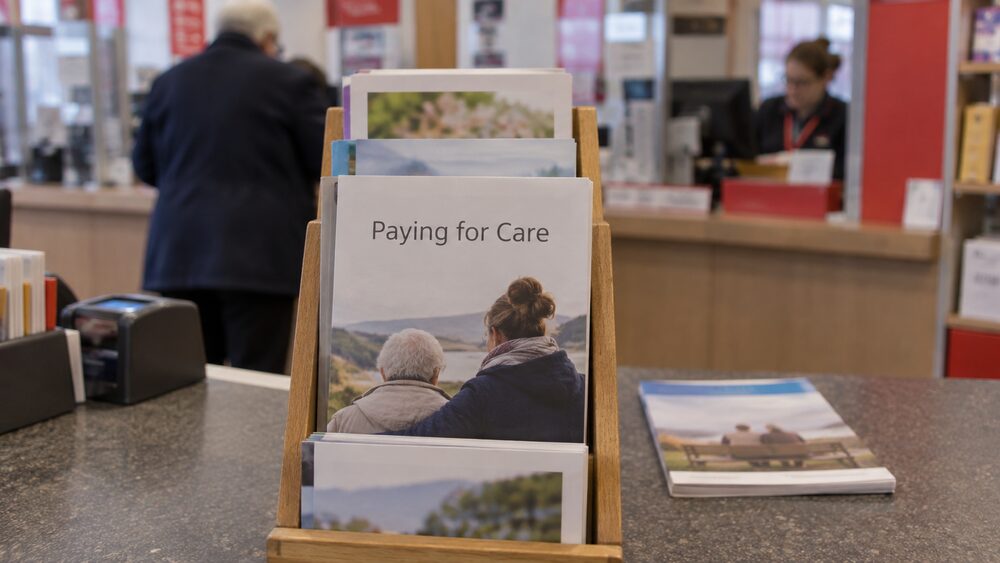
Scotland is the only part of the UK where personal care is free wherever you receive it. If a council has assessed you as needing personal care or nursing care, at home or in a care home, it cannot charge you for that care1. The policy began on 1 July 2002 for people aged 65 and over and has since been extended, and it remains the biggest single difference between care funding in Scotland and in England, Wales and Northern Ireland2.
Free does not mean everything is free. Councils can still charge for help that is not personal care, such as housework, shopping and laundry, after a financial assessment3. In a care home, accommodation and living costs are means tested, and the free personal care payment towards them was £193.50 a week in the most recent independent figure, with a separate nursing care payment4. For unpaid carers, Scotland has its own benefit, Carer Support Payment, worth £86.45 a week in 2026/27, plus a weekly Scottish Carer Supplement5.
Personal care in Scotland is free if you are assessed as needing it
The starting point for all council-funded care is a needs assessment, which is free of charge4. Once a council has assessed someone as needing personal care or nursing care, that care must be provided free, whether it is delivered in their own home or in a care home1. Personal care covers the intimate help most people associate with care: washing, dressing, toileting, help with eating and food, and prompting or help with medicines. Nursing care, meaning care that needs to be given or supervised by a nurse, is also free in Scotland1.
This is a Scottish rule and it does not apply south of the border. In England, only a fixed weekly amount towards nursing care is free and personal care is means tested, while in Northern Ireland the health and social care trust can charge but rarely does8. The practical effect of the Scottish rule is that the most expensive element of someone's care, the hands-on personal and nursing support, is removed from the bill whatever their income or savings. What remains chargeable is everything around it, which is where the means test and the financial assessment come in. The care needs assessment is the gateway: without one, there is no entitlement to the free care payments, and the assessment itself costs nothing4.
The free personal care and nursing care payments in care homes
For people living in a care home, the free care is delivered through fixed weekly payments made by the council. Independent guidance puts the free personal care payment at £193.50 a week for care home residents in Scotland4. Earlier figures from when the rates were last published in detail were £177 a week for personal care and £80 a week for nursing care from April 2019, with the local authority paying these directly to the care provider on the resident's behalf2. The rates are uprated over time, which is why the more recent £193.50 figure is higher.
The payments go to the care home, not to the resident, and they only cover the care element of the fees. Accommodation, food, heating and everyday living costs are still the resident's responsibility, subject to the means test6. If someone is assessed as needing nursing care, the nursing care payment is added on top of the personal care payment2.
Two points are worth knowing in practice. First, you may be asked for details about your application for free personal and nursing care when dealing with benefits related to going into a care home, so keep the paperwork9. Second, if receiving the free payments has left you better off and you can afford to, you may be able to pay your own top-up fees for a more expensive room, which is a different situation from a third party paying top-ups on your behalf6. The guides to the personal expenses allowance and top-up fees cover these in detail.
What councils can charge for: non-personal care
Everything that is not personal or nursing care can be charged for. Local authorities can charge for non-personal care, such as activities like housework and shopping, and if they decide to charge they must carry out a financial assessment first3. The same principle applies in care homes, where accommodation and living costs sit outside the free care payments6. Independent guidance gives the everyday examples: help with housework and laundry is social care that is not covered, and you may have to pay for it8.
The line between the two categories is what the assessment says you need, not what the service is called. A care worker who helps someone wash and dress in the morning and then does their shopping is delivering two different kinds of support: the first is free, the second can be charged for. This is why the assessment matters so much, and why families who disagree with what has been classed as personal care can ask the council to look again.
Financial assessments for care charges
When a council decides to charge for non-personal care, it must carry out a financial assessment to work out how much the person should pay3. The law behind charging for adult social care in Scotland is the Community Care and Health (Scotland) Act 20023. The assessment looks at income and capital, and there are set rules about how each is treated.
For care at home, the treatment of savings depends on age. Below State Pension age, if you have more than £6,000 in savings, you are assumed to have £1 a week of extra income for each £250 over £6,000. Over State Pension age, the assumed income is £1 a week for each £500 over £10,0001. These are assumed figures, sometimes called tariff income: the council does not count the savings themselves, only the notional weekly income they generate.
There are also floors that protect people on low incomes. The charging threshold for a single person is £167 per week, uprated each year by the Scottish Government, which limits how much of someone's income can be taken in charges3. And the council cannot charge anyone else, such as your partner or someone you live with: the assessment is of the person receiving the care alone1.
For care homes, the means test works on capital. If you have over £35,500, your council will not help you with paying care home fees, aside from any free personal and nursing care payments6. Below that, the council contributes towards the fees, but the resident keeps only the Personal Expenses Allowance, currently £37.65 a week in Scotland (2026/27 rate), for personal spending6. The rules on whether your home counts towards that figure are covered in the guide to care home assessments.
Paying for care at home in Scotland
Care at home is where the Scottish rules show their value most clearly. If you have been assessed as needing personal or nursing care, it will be provided free of charge, and in Scotland nursing care is free1. That means the core care someone needs to stay living in their own home does not eat into their income or savings, however much they have.
What the council can charge for is the practical support around it: housework, shopping, laundry and similar help, charged after a financial assessment3. The charging rules described above then apply, including the £167 weekly threshold for a single person and the tariff income on savings3. Someone with only state pension income may pay little or nothing for non-personal care, while someone with larger income and savings can be charged the full cost.
A few protections are worth remembering. The council cannot charge your partner or anyone else you live with for your care1. The needs assessment is free4. And if money is tight, councils can offer urgent support including loans or grants, food, fuel and other essentials1. For a picture of how the whole UK compares, see the guides to paying for care in England and paying for care in Wales, and the overview of how the rules differ between the nations.
Carer Support Payment: £86.45 a week in 2026/27
Carer Support Payment is the Scottish benefit for unpaid carers, paid at a standard rate of £86.45 a week in 2026/275. The weekly rate is set in the Carer's Assistance (Carer Support Payment) (Scotland) Regulations 2023, which state the weekly rate of payment as £86.4510. Official statistics published in May 2026, covering an earlier period, record the full amount as £83.30 a week, so figures from different dates differ; the 2026/27 rate is £86.4511. The rate matches Carer's Allowance, which is also £86.45 a week for carers elsewhere in the UK12.
To get the full payment, you must not earn more than £196 a week after tax, National Insurance and expenses11. The payment is for people looking after a friend, partner or relative, and it is only available for people in Scotland13. In March 2026, 95,420 individuals received payments in respect of Carer Support Payment, and it is estimated that 134,380 carers in total were on the caseload11. From launch to 31 March 2026, the payment had been paid to 109,260 individuals11.
Who can get Carer Support Payment
The conditions are set out in the regulations and in official guidance. You must usually live in Scotland11, and you must provide care for 35 hours or more a week, which includes caring all day every day11. The person you care for must receive a qualifying disability benefit. These include the daily living component of Adult Disability Payment at the standard or enhanced rate, the middle or highest care rate of Child Disability Payment, Attendance Allowance, the daily living component of Personal Independence Payment, the middle or highest care rate of Disability Living Allowance, and Constant Attendance Allowance at specified rates with Industrial Injuries Disablement Benefit or a War Disablement Pension11.
The care itself must not be provided under a contract, or as voluntary work done for a charity or other not-for-profit organisation for which no payment is received other than reasonable expenses10. There is also an earnings limit of £196 a week after tax, National Insurance and expenses11.
People moving to Scotland from elsewhere in the UK are covered: anyone who moves to Scotland and was getting Carer's Allowance at the time of their move can apply for Carer Support Payment14. Carers who care for more than one person can receive an additional £10.40 per week per additional cared-for person, known as Carer Additional Person Payment, paid alongside Carer Support Payment11. If the person you care for dies, carers in Scotland now receive up to 12 weeks of continued support, an extension of the previous provision15.
Who pays Carer Support Payment, and how to claim
Carer Support Payment is paid by Social Security Scotland, the Scottish Government's benefits agency16. Applications can be made online through the Social Security Scotland portal17. The legal definition is carer's assistance given in accordance with the Carer's Assistance (Carer Support Payment) (Scotland) Regulations 202318, under powers in the Social Security Act 2018, which provides that carer's assistance is assistance given by the Scottish Ministers19.
In most cases the payment is made to the carer, but the regulations allow the Scottish Ministers, where they consider it appropriate, to make the payment to another person to be used for the benefit of the individual10. Processing takes time: the median average processing time for applications processed to 31 March 2026 was 48 working days, though official statistics for March 2026 also record a figure of 71 working days, so the documents differ on this point11.
If a claim is refused or an existing award is changed, there is a route to challenge it. Short-term Assistance is available when a disability or carer benefit is reduced or stopped and the person challenges that decision, and it does not have to be paid back20. Carer Support Payment also carries National Insurance credits, which protect a carer's state pension record21.
Carer Support Payment has replaced Carer's Allowance
Carer Support Payment has replaced Carer's Allowance for most carers in Scotland22. The change is part of the wider transfer of benefits from the Department for Work and Pensions to Social Security Scotland, alongside Adult Disability Payment replacing Personal Independence Payment and Pension Age Disability Payment replacing Attendance Allowance23. UK-wide statistics on Carer's Allowance now exclude Scotland, because recipients there are administered by Social Security Scotland25.
If you already receive Carer's Allowance, you do not need to do anything. The Department for Work and Pensions will carry on paying your Carer's Allowance until Social Security Scotland starts paying your Carer Support Payment26. Existing recipients are moved automatically, with no new application, and the amount stays the same16. If you live in Scotland, you must apply for Carer Support Payment rather than Carer's Allowance for any new claim5.
One point that catches people out is the qualifying benefit for the person being cared for. Pension Age Disability Payment, Scotland's replacement for Attendance Allowance, is a qualifying benefit for Carer Support Payment28. It is for people of State Pension age who are disabled or have a long-term health condition and need help looking after themselves or supervision to keep them safe, or who are terminally ill24. Applications under Special Rules for Terminal Illness are handled on a fast-track basis28. The guides to money help for unpaid carers and benefits cover the wider picture.
Scottish Carer Supplement: £11.70 a week in 2026/27
On top of Carer Support Payment, carers in Scotland get the Scottish Carer Supplement, worth £11.70 a week in 2026/277. The weekly rate is set in legislation, which states the weekly rate of payment of Scottish Carer Supplement as £11.7010; a regulation made in March 2026 gives the rate as £11.29, so the documents differ, with the 2026/27 figure being £11.7029. The payment is only available in Scotland22.
You do not need to claim it. It is paid automatically, weekly, alongside Carer Support Payment, without the need to apply22, and it is paid for every week in which the carer is paid the Carer Support Payment component30. Those eligible for Carer Support Payment are also entitled to the supplement31. All three components, Carer Support Payment, Scottish Carer Supplement and any Carer Additional Person Payment, are paid at the same time30.
The supplement replaces Carer's Allowance Supplement, which from 15 March 2026 was replaced for carers in receipt of Carer Support Payment11. Carer's Allowance Supplement had been introduced in 2018 as a twice-yearly top-up, worth £230.10 a payment in 2019-20, or £460.20 a year, to bring carers' support in line with Jobseeker's Allowance32. The new supplement spreads the money across the year instead.
Two tax points matter. Scottish Carer Supplement is taxable, and you need to notify HMRC if you receive it7. It is treated as income for Pension Credit purposes, but it is disregarded in the calculation of income for Income Support, income-based Jobseeker's Allowance, income-related Employment and Support Allowance and Housing Benefit34.
Where to get free help
Several organisations provide free, impartial information on paying for care in Scotland. Independent Age publishes detailed advice on paying for care services at home and in a care home1. Carers UK Scotland covers free personal care and the carer payments13. MoneyHelper, the government-backed money guidance service, sets out the benefits carers can claim5, and Contact supports families with disabled children moving into adult services3. For urgent money problems, Scottish councils can offer loans or grants, food, fuel and other essentials1. Related guides on this site cover care needs and financial assessments, money when someone is terminally ill and what happens to benefits when someone dies.
Sources34 cited
- Paying for care services at home Independent Age, 2026
- Free personal care in Scotland Carers UK Scotland, 2019
- Paying for adult care services Contact, 2026
- Which? paying for care guide Which?, 2021
- Benefits and tax credits you can claim as a carer MoneyHelper, 2026
- Paying for care: a care home Independent Age, 2026
- Carer's Allowance Supplement and Scottish Carer Supplement in Scotland Carers UK Scotland, 2026
- Paying for social care Marie Curie, 2022
- Going into a care home and benefits GOV.UK, 2026
- The Carer's Assistance (Carer Support Payment) (Scotland) Regulations 2023 legislation.gov.uk, 2023
- Carer Support Payment statistics to 31 March 2026 Social Security Scotland, 2026
- Carer's Allowance GOV.UK, 2026
- Carer Support Payment Carers UK Scotland, 2026
- Supporting clients moving to Scotland from the rest of the UK Social Security Scotland, 2025
- Support during breaks in caring Social Security Scotland, 2026
- Benefits for carers Macmillan Cancer Support, 2025
- Public funds accessible GOV.UK, 2025
- The Universal Credit, Personal Independence Payment, Jobseeker's Allowance and Employment and Support Allowance (Transitional Provisions) (Amendment) Regulations 2023 legislation.gov.uk, 2023
- Social Security (Scotland) Act 2018 legislation.gov.uk, 2018
- Short-term Assistance mygov.scot, 2025
- Carer Support Payment One Parent Families Scotland, 2026
- Spread the word this Carers Week Social Security Scotland, 2026
- Pension Age Disability Payment and Scottish Adult Disability Living Allowance statistics to 31 July 2026 Social Security Scotland, 2026
- Pension Age Disability Payment factsheet Social Security Scotland, 2026
- Annual DWP benefits statistics compendium 2026 Department for Work and Pensions, 2026
- Carer's Allowance changes in Scotland: what will happen with your benefit mygov.scot, 2025
- Carer's Allowance Carers UK, 2026
- Assistance under special rules for terminal illness mygov.scot, 2025
- The Scottish Carer Supplement Regulations 2025 legislation.gov.uk, 2026
- Carer Support Payment decision making guide: rates and form of payment Social Security Scotland, 2017
- Help spread the word on financial help for student carers Social Security Scotland, 2026
- Social Security Act 2018 progress report 2019-2020 Scottish Government, 2020
- Benefit combinations official statistics to March 2026 Department for Work and Pensions, 2026
- The State Pension Credit (Amendment) Regulations 2026 legislation.gov.uk, 2026

 MoneyHelperFree, impartial money and pensions guidance, set up by government
 Citizens AdviceFree advice on money, consumer and legal problems in England and Wales
 Turn2usFree benefits calculator and grants search from a charity
 GOV.UKOfficial information on tax, benefits and government services