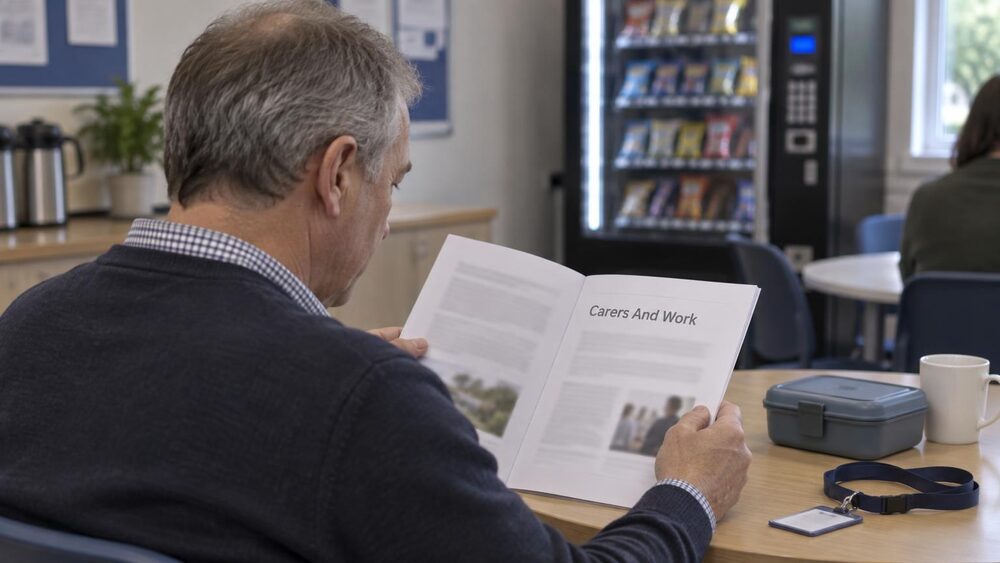
Carers UK published a press release on 16 September 2026 stating that 1,500 people quit work to care for older and disabled relatives every day, a 150% increase in seven years1. The charity also reported new polling by Opinium for Carers Scotland, published on 14 September 2026, which found that 8% of people in Scotland, an estimated 362,182 people, have quit their job to provide unpaid care for someone who is older, ill or disabled1.
The two figures cover different populations and are not directly comparable. The 1,500-a-day figure is a UK-wide daily rate reported by Carers UK1. The 362,182 figure is a stock estimate for Scotland alone, based on Opinium polling for Carers Scotland1. The sources do not set out the methodology behind the 1,500-a-day figure, nor the fieldwork dates or sample size for the Opinium polling, and these have not been reported1.
Separately, the Department of Health and Social Care has published the findings of its biennial survey of adult carers in England, which Carers UK says provides a snapshot of the experiences of 43,460 unpaid carers who are caring for an adult and are in contact with their local authority1. That survey was reported by Carers UK on 25 September 2026, after the 16 September release1.
"1,500 people quit work to care for older and disabled relatives every day, 150% increase in seven years"
Carers UK has also called for urgent action to accelerate progress on the Carer's Allowance reassessment process, after evidence given at a Work and Pensions Select Committee session2. The sources do not state what specific changes Carers UK is seeking, or what the committee session concluded2.
| Measure | Figure | Coverage | Date reported |
|---|---|---|---|
| People quitting work to care | 1,500 per day | UK | 16 September 20261 |
| Increase over seven years | 150% | UK | 16 September 20261 |
| People who have quit work to provide unpaid care | 362,182 (8% of people) | Scotland | 14 September 20261 |
| Adult carers surveyed | 43,460 | England | 25 September 20261 |
Why it matters for households
Leaving work to care unpaid removes a wage from a household and, in most cases, ends employer pension contributions at the same time. The figures indicate the scale at which this is happening rather than who is affected individually: the UK-wide rate is reported as a daily flow1, while the Scottish number is a cumulative count of people who have already left work1.
For households where someone has already stopped working to care, Carers UK's guidance pages set out the areas where costs and entitlements commonly arise, including bills and household costs and benefits checks run through the Turn2us calculator, which Carers UK notes is supplied by Turn2us and passes the information entered to that charity rather than to Carers UK3. Carers UK also points to grants and schemes for one-off costs, and to its helpline for a benefits check3. Where a trust is being considered for a disabled person, the site's page on a Disabled Person's Trust or Discretionary Trust covers the distinction between the two.
The sources do not report any change to Carer's Allowance rates, earnings limits or eligibility rules, and no date has been given for when any reassessment changes would take effect2.
What happens next
Carers UK has called for urgent action to accelerate progress on the Carer's Allowance reassessment process following evidence to the Work and Pensions Select Committee2. No timetable, government response or implementation date is given in the sources2.
Sources4 cited
- Ways to save money at home | Carers Scotland carersuk.org
- Help with bills and household costs | Carers UK carersuk.org
- Benefits calculator | Carers Scotland carersuk.org
- Benefits calculator | Carers UK carersuk.org

 MoneyHelperFree, impartial money and pensions guidance, set up by government
 Citizens AdviceFree advice on money, consumer and legal problems in England and Wales
 Turn2usFree benefits calculator and grants search from a charity
 GOV.UKOfficial information on tax, benefits and government services